Linen Fabric Properties — What Makes It Different from Every Other Natural Fabric
Linen Fabric Properties — What Makes It Different from Every Other Natural Fabric
The specific properties of linen — strength, breathability, moisture management, softening, biodegradability — and what distinguishes them from other natural fabrics.
Linen has a specific set of properties that distinguish it from cotton, wool, silk, and synthetic fabrics. Understanding what these properties are explains why linen has remained the dominant natural fabric for warm-weather dressing for thousands of years — and why it remains the preferred natural fabric for warm-weather dressing.
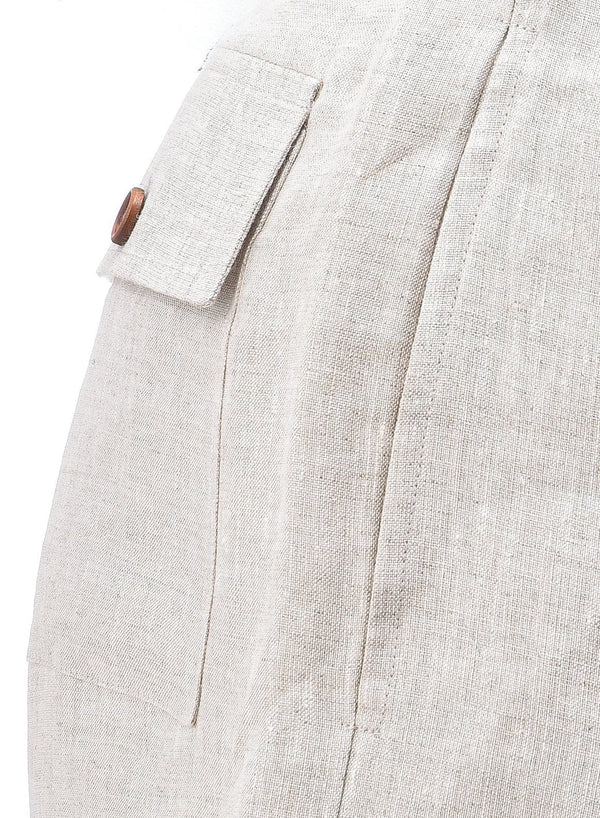
Strength. Flax fibre is among the strongest natural fibres used in textile production. A linen garment made from long-staple Belgian flax will outlast an equivalent cotton garment under the same conditions of regular wear and washing. The tensile strength of the fibre means it resists tearing, fraying at seams, and the structural breakdown that affects weaker natural fibres over time.
“The property most specific to quality linen: it softens with each wash cycle, becoming progressively more refined rather than more worn.”
— Pieter Petros, founderBreathability. The structure of flax fibres and the relatively open weave commonly used in linen fabrics allow air to circulate through the cloth rather than trapping it against the skin. This is why linen is widely regarded as one of the most breathable natural fabrics for sustained heat — the fabric actively manages the thermal environment rather than simply covering the body.
Moisture management. Linen absorbs moisture from the skin and releases it as vapour rather than holding it as liquid. The result is that the skin remains drier during wear in hot conditions. Unlike synthetic fabrics, which trap moisture against the body, linen manages the perspiration cycle continuously throughout the day.
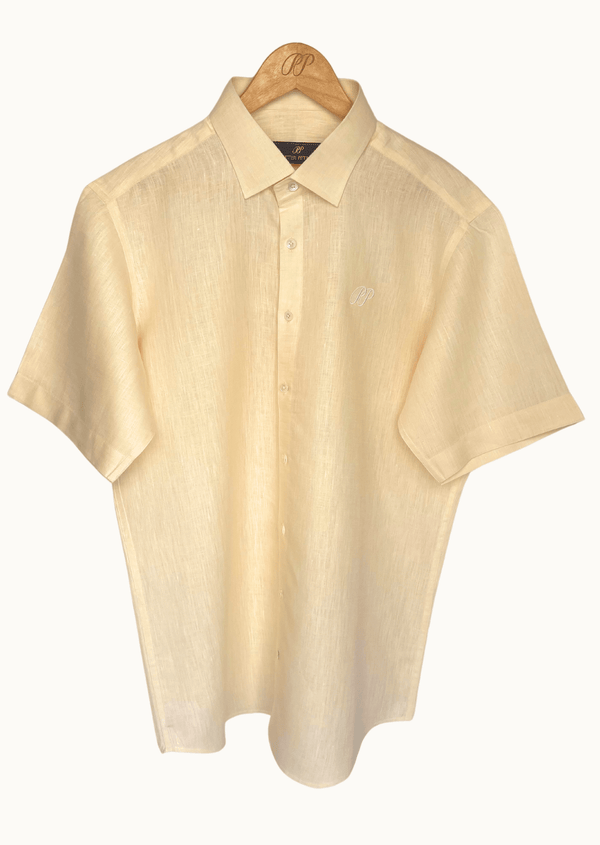
Softening with use. This is the property most specific to quality linen. Most fabrics degrade with washing — they thin, pill, or lose structural integrity. Long-staple linen softens with each wash cycle, becoming progressively more refined rather than more worn. A linen shirt made from long-staple flax — such as certified Belgian linen — in its second year of regular washing is a better fabric than when it arrived.
Biodegradability. Linen is a natural fibre with no synthetic components. At the end of its useful life, it decomposes completely. No microplastic residue, no synthetic trace, no contribution to the accumulation of material that does not break down. This is a property of the flax fibre, not a treatment applied to it.
Temperature regulation. Linen insulates slightly in cool conditions and breathes in hot ones. The same fabric that works in a Gulf July works layered through a Mediterranean October. This versatility — the ability to perform across a range of temperatures — is specific to natural fibres and distinguishes them from synthetic fabrics optimised for a single condition.
What Is Linen Fabric · Is Linen Breathable · Men's Linen Collection