What Is Linen Fabric? — The Complete Guide to the Natural Fibre
What Is Linen Fabric? — The Complete Guide to the Natural Fibre
What linen fabric is — the flax plant, retting, fibre properties, weights, uses, and why Belgian linen carries a certification of origin.
Linen is a natural textile made from the fibres of the flax plant. It is one of the oldest fabrics in human history — evidence of linen production dates back thousands of years — and it remains among the most useful natural fabrics available for warm-weather dressing.
The production process begins with flax cultivation. Flax is a plant that grows well in temperate climates with consistent rainfall and mineral-rich soil. The finest flax in the world is grown in the coastal plain of northern Belgium and northern France — a region where the specific combination of climate and soil has produced long-staple flax fibres of exceptional consistency for centuries. This geographic specificity is the basis of Belgian linen certification.
“Belgian linen is the only linen in the world with a protected designation of origin. It begins as flax and returns to the earth when done.”
— Pieter Petros, founderOnce harvested, flax goes through a process called retting — the controlled decomposition of the outer stalk to release the inner fibres. This can be done with water (water retting, which produces finer fibres) or with dew (dew retting, the traditional method used for the finest Belgian linen). The released fibres are then combed, spun into yarn, and woven into cloth.
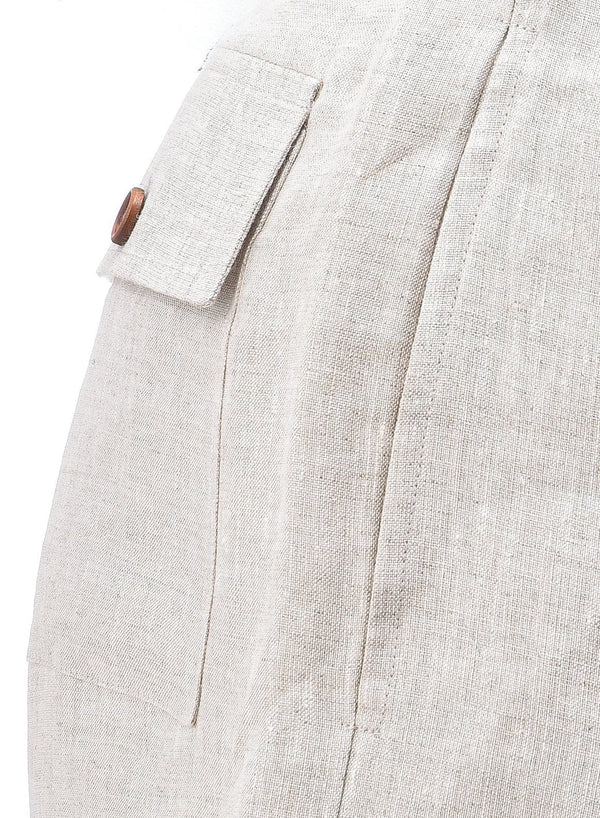
The resulting fabric has specific properties that distinguish it from other natural textiles. Linen is strong — the flax fibre is among the strongest natural fibres used in textile production, which is why linen garments last significantly longer than cotton equivalents when cared for correctly. It breathes well, managing heat and moisture through the structure of the fibre and the typically open weave used in linen fabrics. And it softens with washing — a quality unique among natural fabrics, where the garment improves with use rather than degrading.
Belgian linen carries a certification of origin — documentation that confirms the flax was grown and processed in the certified corridor and meets the quality standards that the designation requires. This certification distinguishes verified Belgian linen from linen that simply uses the name.
Linen is produced in a range of weights, from lightweight sheers used in summer shirts and sets to medium-weight fabrics used in trousers and blazers to heavier weights used in upholstery and homeware. For garments, the most common weights for warm-weather dressing range from approximately 120 to 200 grams per square metre — lighter weights for maximum breathability, heavier weights for more structured pieces that hold their drape.
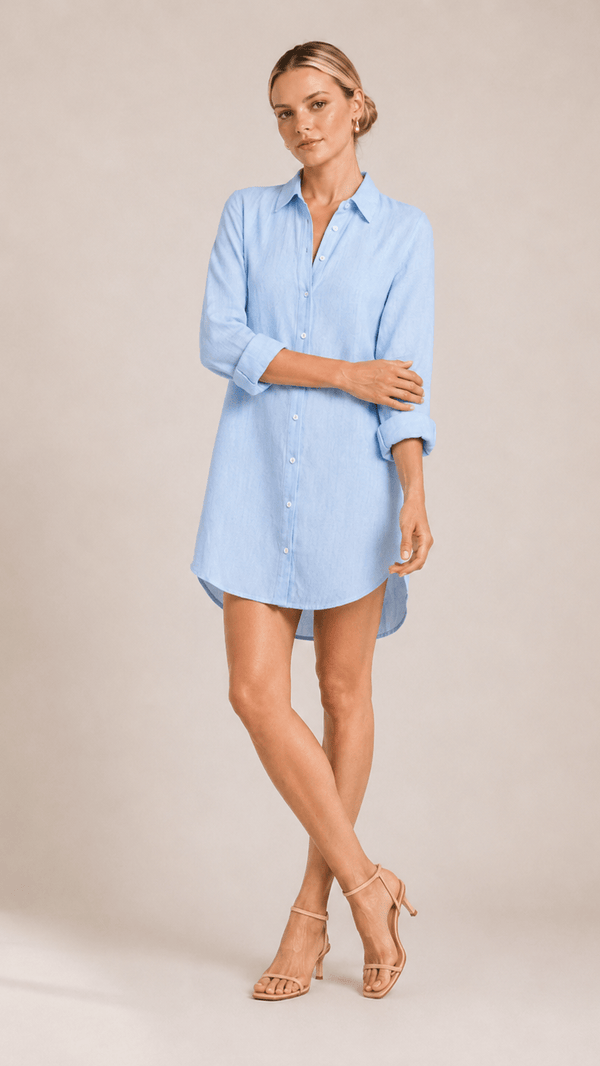
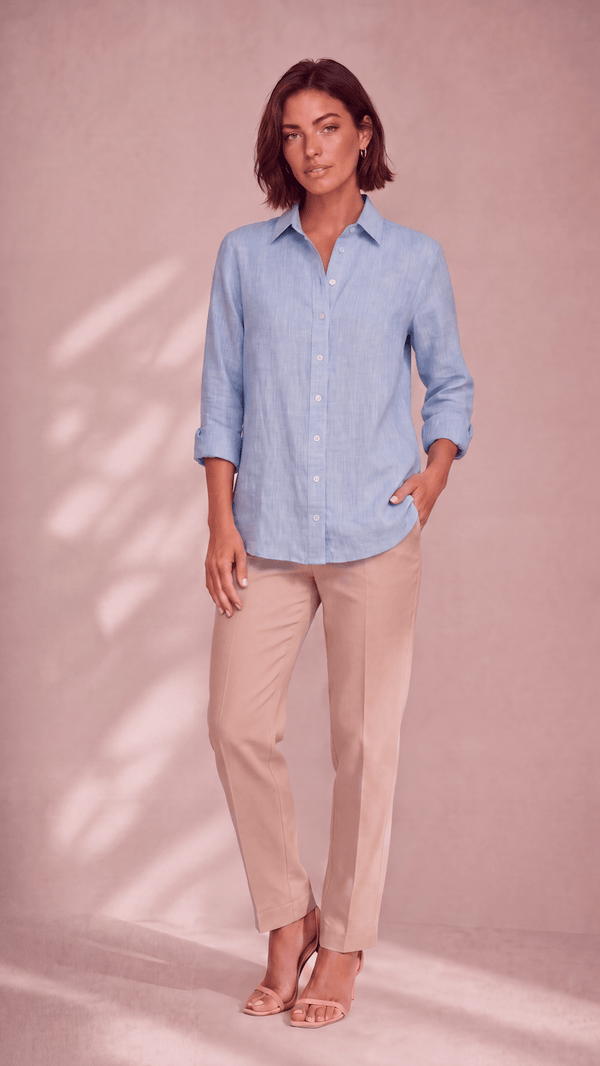
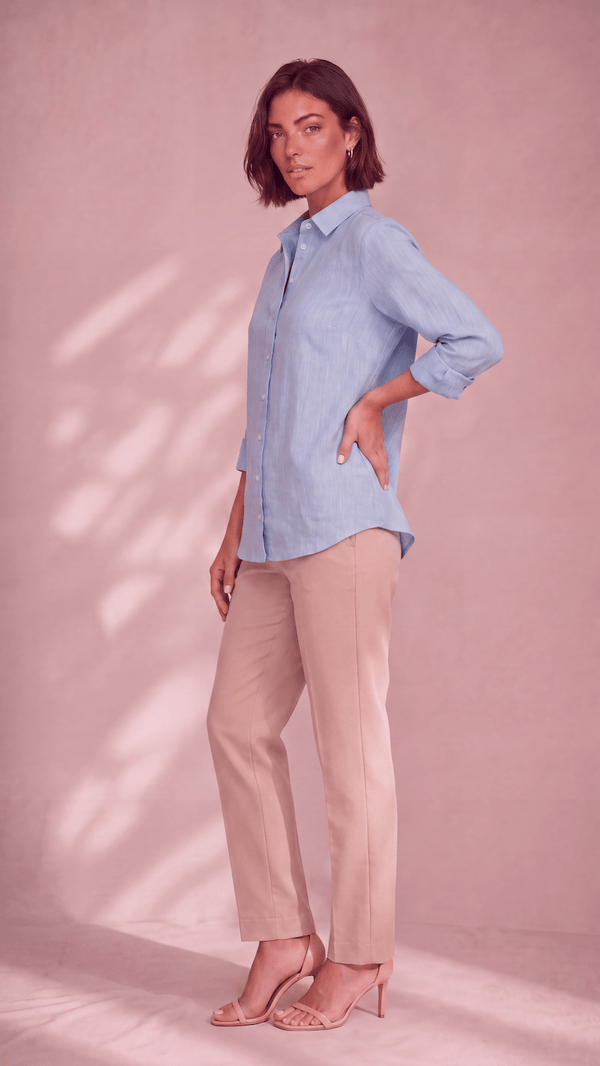
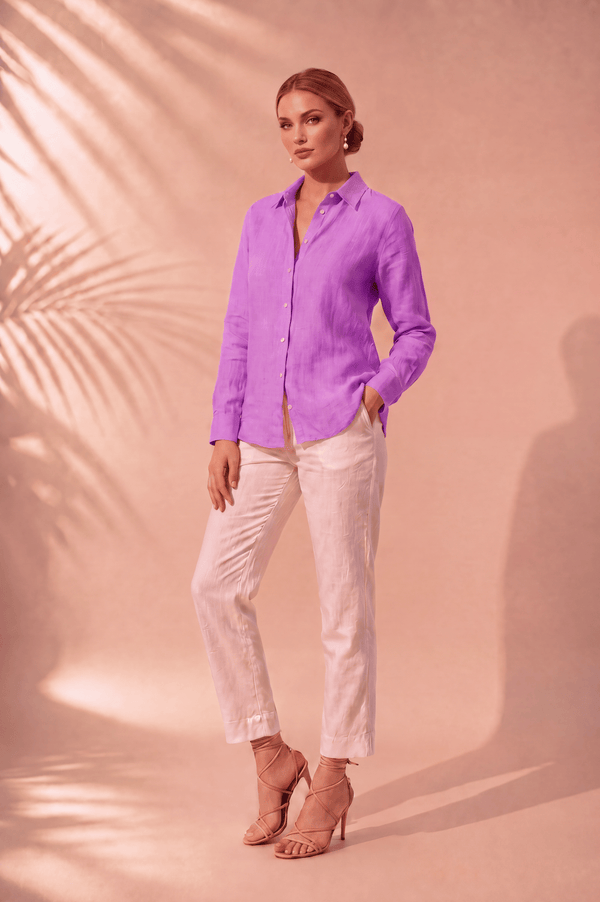
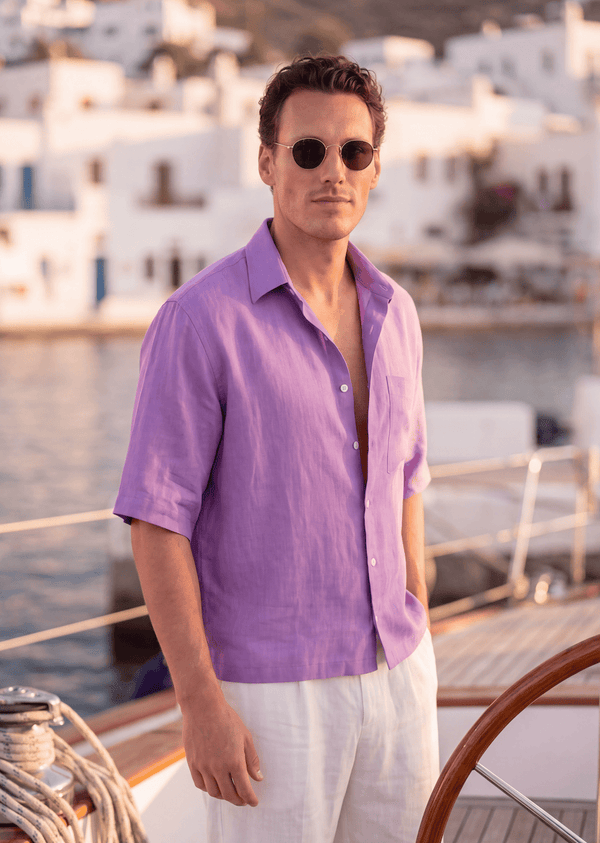
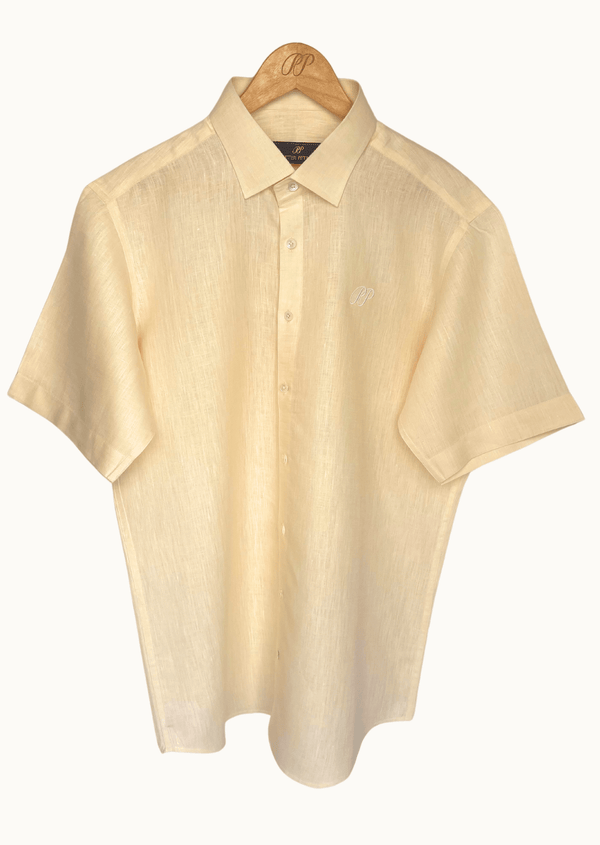
Common uses of linen fabric: shirts, trousers, shorts, sets, blazers, dresses, bed linen, and home textiles. In warm climates, linen is the dominant natural fabric choice for everyday and resort dressing because of its breathability and moisture management. Compared with cotton, linen is stronger, more durable, and generally more breathable — though it creases more readily, which is a characteristic of the natural fibre rather than a defect.
PP uses certified Belgian linen in every garment. The collection is available at pieterpetros.com.
How Linen Is Made — From Flax Field to Finished Cloth · The Belgian Linen Certificate · Men's Linen Collection