Is Linen Breathable? — What the Fabric Actually Does in Heat
Is Linen Breathable? — What the Fabric Actually Does in Heat
On why linen breathes — the structure of flax fibres, moisture management, and how the fabric performs in sustained heat.
Yes. Linen is widely regarded as one of the most breathable natural fabrics available. The reasons are structural rather than marketing, and they explain why linen has been the preferred fabric for hot climates for centuries.
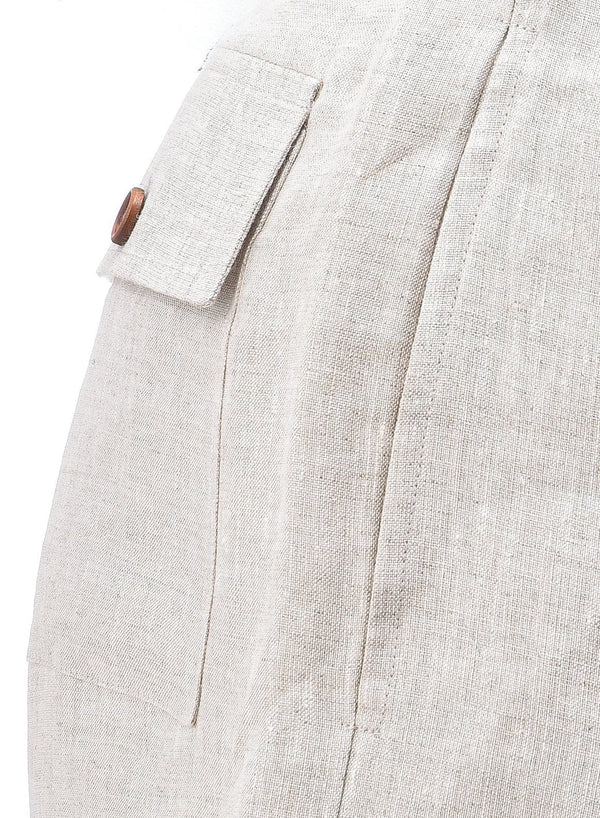
The structure of flax fibres and the relatively open weave commonly used in linen fabrics allow air to circulate through the cloth rather than trapping it against the skin. Heat generated by the body passes outward through the fabric rather than accumulating between fabric and skin. This is the mechanism behind the cooler sensation that linen provides in hot conditions — not a chemical treatment or synthetic engineering, but a property of the natural fibre.
“The breathability of linen is a property of the fibre. In heat, it works continuously — not as a feature, but as a function.”
— Pieter Petros, founderLinen also manages moisture differently from most fabrics. It absorbs a degree of perspiration from the skin and releases it as vapour rather than holding it as liquid against the body. The result is that the skin remains drier during wear, which is a significant factor in sustained comfort in high heat. A fabric that cannot release moisture becomes progressively heavier and more uncomfortable as the day continues; linen manages this cycle continuously.
The breathability of linen is not constant across all linen fabrics. A loosely woven linen will breathe more freely than a tightly woven one. A lighter-weight linen will be cooler than a heavier one. Belgian linen, which uses long-staple flax that produces finer, more consistent yarn, tends to be woven into fabrics with a more refined structure than shorter-staple alternatives — which contributes to both its breathability and its drape.
In practical terms: in the Gulf summer, in the Mediterranean in July, in any sustained heat above 30 degrees Celsius, linen is generally regarded as more breathable than cotton in sustained hot-weather conditions. The performance is a property of the fibre, not a feature added to it. The performance is a property of the fibre, not a feature added to it.
Is Linen Good for Hot Weather · Is Linen Cooler Than Cotton · Men's Linen Collection