Is Linen Stronger When Wet? — What the Flax Fibre Actually Does
Is Linen Stronger When Wet? — What the Flax Fibre Actually Does
A property of the plant fibres, and the reason linen has always been trusted with water.
Yes. Linen is stronger when wet than when dry, and this is one of the oldest observations about the fibre. Measurements vary with the test and the yarn, but flax is commonly reported to gain somewhere between about 10 and 20 percent in tensile strength when it is wet. For anyone wondering whether linen can be washed, worn in humid heat or caught in the rain without harm, it is the most reassuring fact there is.
Many fibres behave the other way. Wool, silk and viscose all lose strength when wet, which is why some fabrics need careful hand washing and others stretch out of shape in the water. Flax shares the opposite behaviour with the other cellulose plant fibres, cotton and hemp among them, and that behaviour explains a great deal of linen's long history.
“Linen was trusted with water long before anyone could measure why. The fibre had already proved it.”
— Pieter Petros, founderWhy it happens. A flax fibre is made largely of cellulose, arranged in long, highly ordered chains that run almost parallel to the length of the fibre. When water enters, the fibre swells, and the absorbed moisture appears to help the cellulose chains share the load more evenly, so that the fibre resists breaking more effectively. The exact mechanism is still described in slightly different ways by textile scientists, but the effect itself is consistent and well documented. It is the same structure that makes flax strong and stiff when dry, and the same absorbency that lets linen breathe and take moisture away from the skin.
Where it shows in history. Flax was spun and woven for thousands of years before cotton was widely available in Europe, and much of what it was trusted with involved water: sailcloth, fishing lines and nets, the towels and table linen of every household, and the sheets that were boiled and laundered week after week. A fibre that weakened in water would never have earned that role. Even the way flax is prepared depends on water; retting, the process that frees the fibre from the stem, traditionally took place in dew or in rivers, and the finest yarns are still wet spun, drawn through warm water as they are twisted.
What it means for washing. A linen shirt can go into the washing machine with confidence. Wash it on a gentle cycle at 30°C; it can then be dried in the sun, in the shade or in a tumble dryer on a low setting. The fibre itself is not at risk in the water. What does need care is everything that is not fibre: very high temperatures can shrink the cloth slightly, and natural buttons, shell or wood, deserve a gentle cycle rather than a hard spin. The settings, step by step, are in can you machine wash linen.
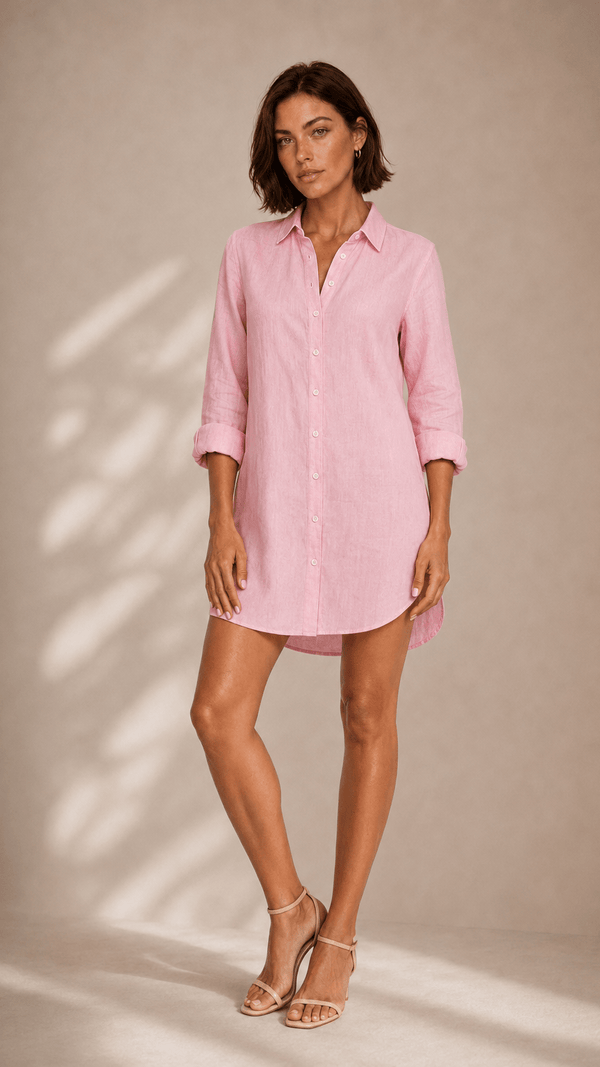
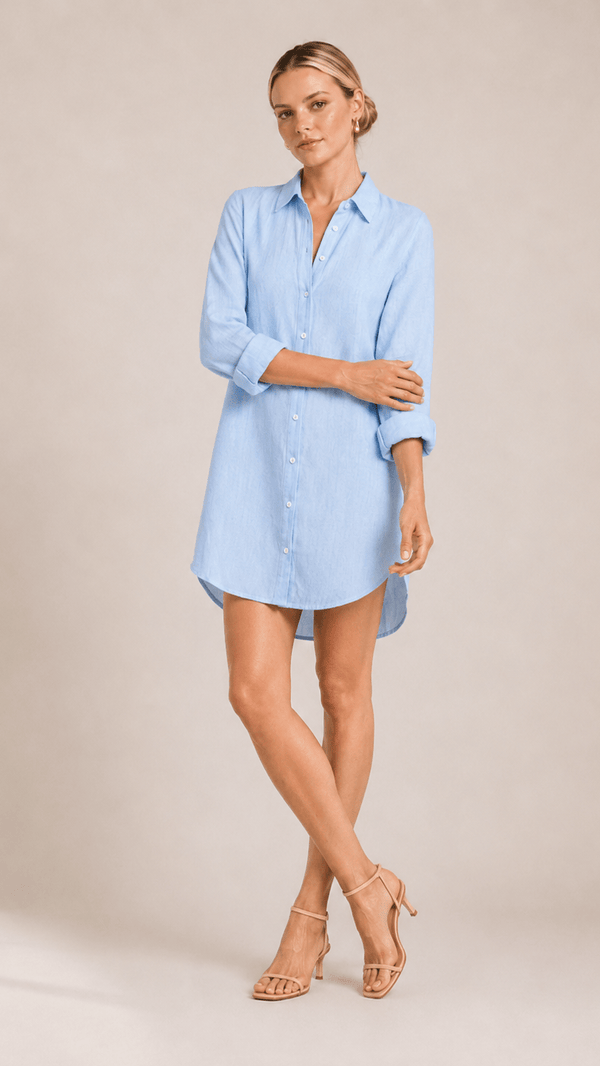
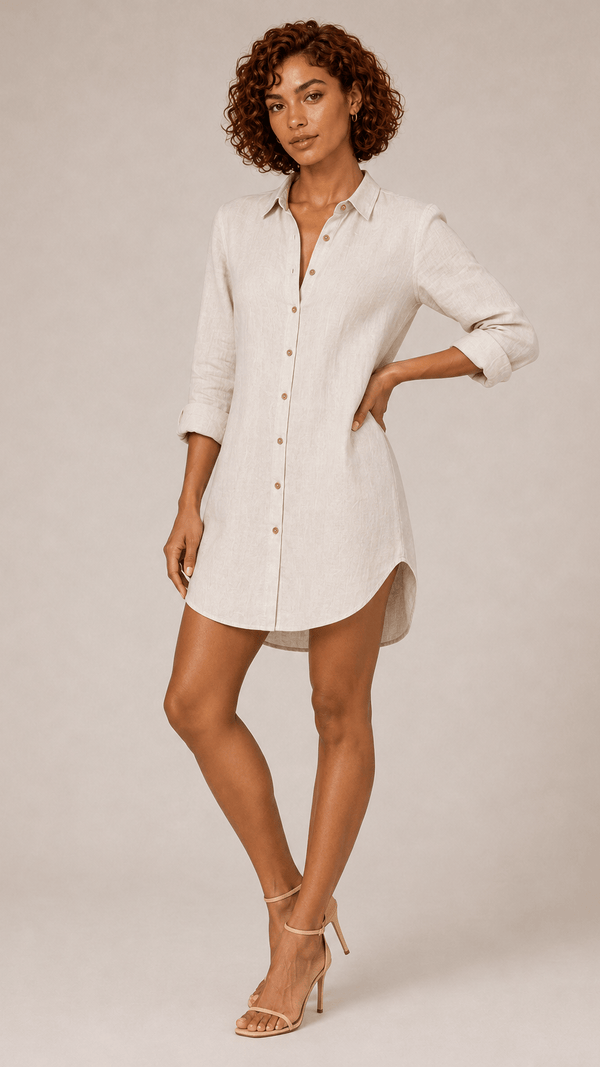
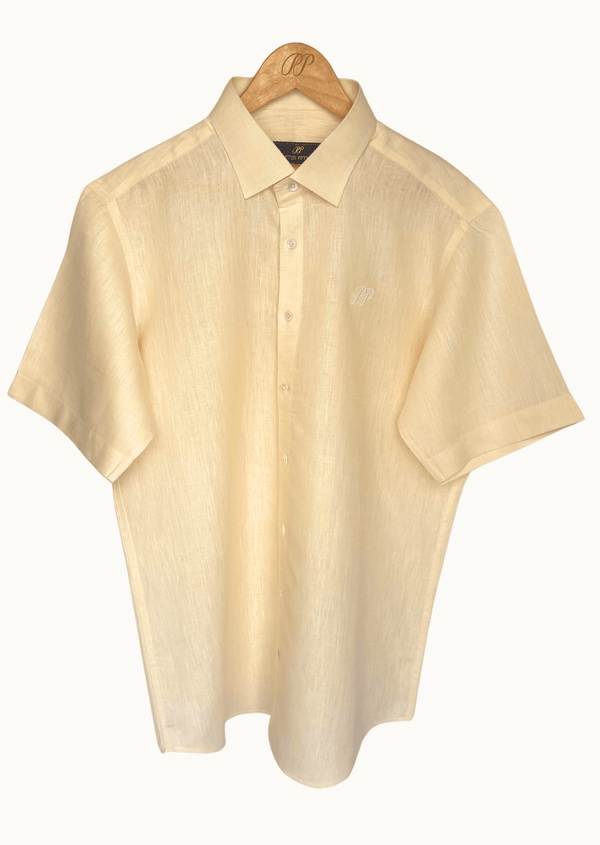
What it means for wearing. In a humid climate, linen takes up perspiration and the moisture in the air without losing its integrity, which is why it has always been the fabric of the tropics and of a Mediterranean summer. A shower on the way to dinner does no damage; the shirt dries and is ready again. It is also part of why linen lasts: a well-made linen garment, washed regularly, becomes softer rather than weaker over the years. The shirts are in the men's linen collection, and the women's pieces in the women's linen collection.
What it does not mean. Strength when wet does not make linen waterproof; it absorbs water readily, which is precisely the property that makes it comfortable. Nor does it change the fact that linen creases, which comes from the stiffness of the same cellulose chains. Both are part of the same character. And for the water itself, a swim in the sea, the PP natural swim shorts in 100% Belgian linen put this quality to use where it counts most, in the natural swim shorts collection.
The answer, then, is a simple yes with a long story behind it. Linen becomes more robust at exactly the moment many fabrics are at their weakest, and it is a large part of why the fibre has been with us, at the table, in the bed and on the body, for as long as people have woven cloth.
Read more: Is Linen Durable? · How Long Does Linen Last? · Can Linen Be Worn in the Rain?