How to Get Wrinkles Out of Linen Without an Iron — What Works
How to Get Wrinkles Out of Linen Without an Iron — What Works
Steam, water, the warmth of the hands and a little time: what genuinely works when there is no iron in the room.
The suitcase is open, the dinner is in an hour, and the linen shirt that was folded so carefully at home has come out with a line across the chest. There is no iron in the villa, or no wish to use one. Knowing how to get wrinkles out of linen without an iron is one of the more useful small skills of travel, and the methods are simple. They rely on the same thing that causes the creases in the first place: the way flax fibre responds to water and warmth.
It helps to understand why linen creases. Flax fibre is long, strong and not very elastic. When the cloth is bent and pressed, the fibres hold the fold rather than springing back, and the fold sets most firmly when the cloth is dry. Add moisture and a little warmth, and the fibres relax; let them dry again while the cloth hangs straight, and most of the fold is gone. Every method below is a version of that.
“Linen keeps a memory of how it was treated.”
— Pieter Petros, founderThe bathroom steam method is the most reliable. Hang the garment on a proper hanger, not over a door, in the bathroom, run the shower hot with the door closed, and leave it while the room fills with steam. Keep it well clear of the water itself. When the room clears, smooth the cloth with flat palms, along the grain, and let it hang for another half hour to dry. Deep creases soften considerably; light ones usually disappear.
The water and hands method works for a single crease. Dampen the palm of the hand, or mist the cloth lightly with clean water from a spray bottle if there is one, and press and smooth the crease outward with the flat of the hand. Then hang the garment and leave it. The warmth of the hand helps, and so does a gentle tug along the seam. This is the method for a sleeve or a collar that has caught a fold in the bag.
A hotel steamer, if one is available, does the same job faster; held a short distance from the cloth and moved slowly, it relaxes creases without touching the surface. A travel kettle is not a substitute, and a hair dryer on a cool setting over a lightly dampened crease is a last resort that can help a little. Heat applied directly and dry, however, tends to set a fold rather than release it.
Prevention is worth more than any of these. Roll shirts and trousers rather than folding them sharply, and pack them near the top of the case where they are not crushed. Hang them as soon as the case is opened. After a gentle 30°C wash, linen can dry in the sun, in the shade or in a tumble dryer on a low setting. Whichever is used, reshaping it while still slightly damp, pulling the seams straight and smoothing the collar and placket by hand, leaves far fewer creases to deal with later.
Then there is the simplest method of all: wearing it. The warmth and movement of the body relax linen gradually through the first hour, and a shirt that looked creased in the mirror looks lived in by the time the first course arrives. This is the honest truth about the cloth. Linen will always crease a little as it is worn, at the elbow, across the lap, below the waist, and that soft texture is part of its character rather than a failure of care.
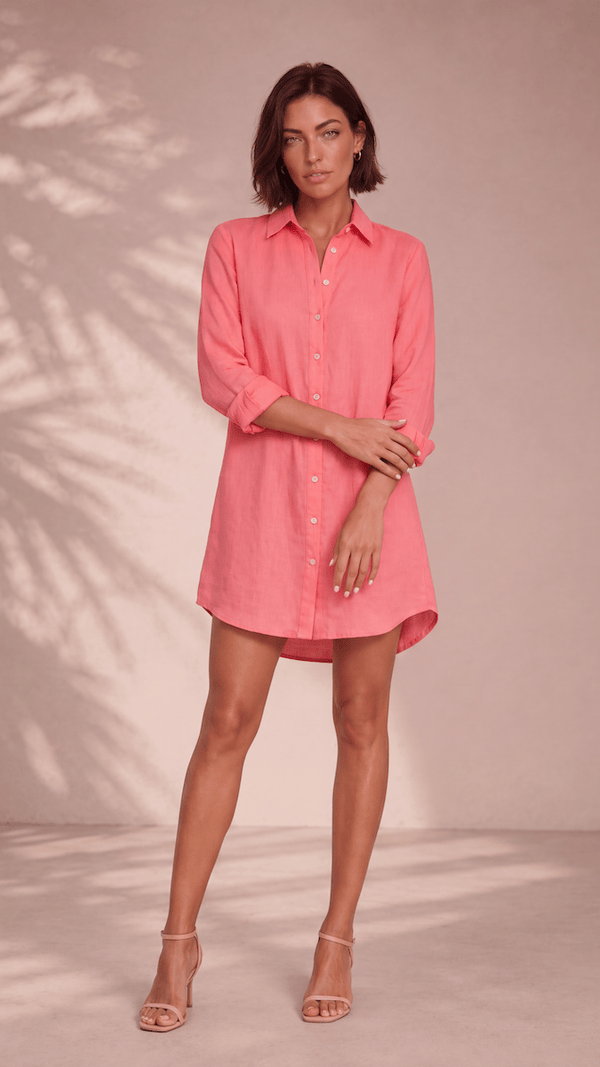
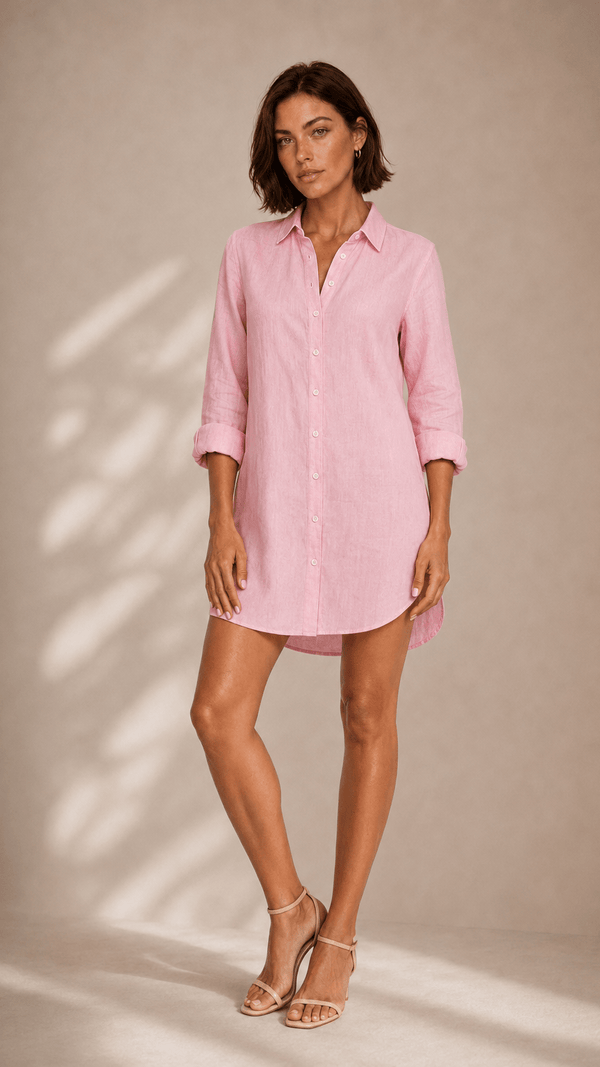
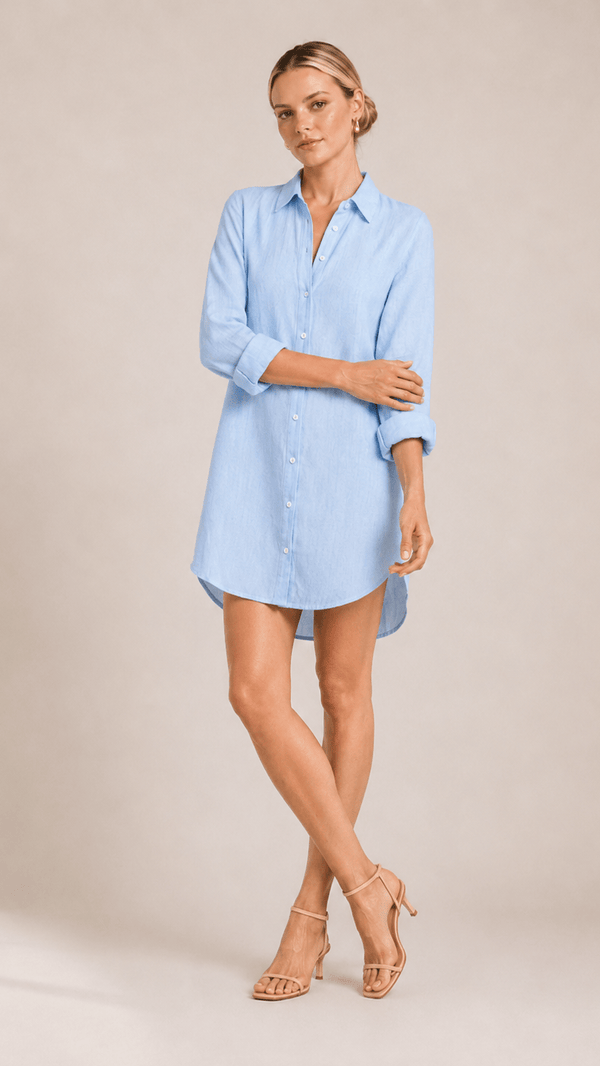
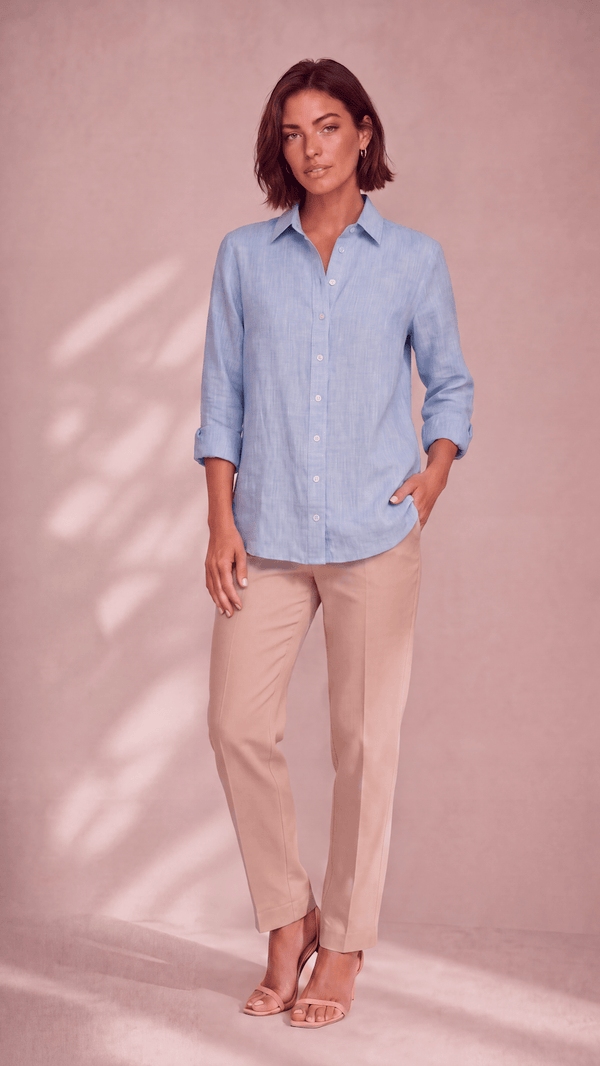
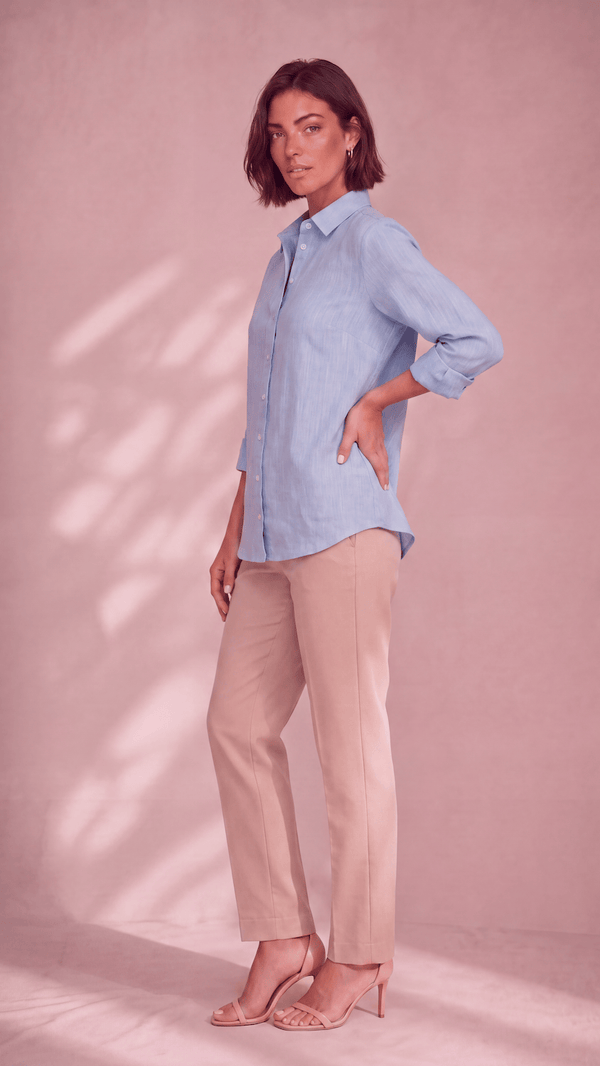
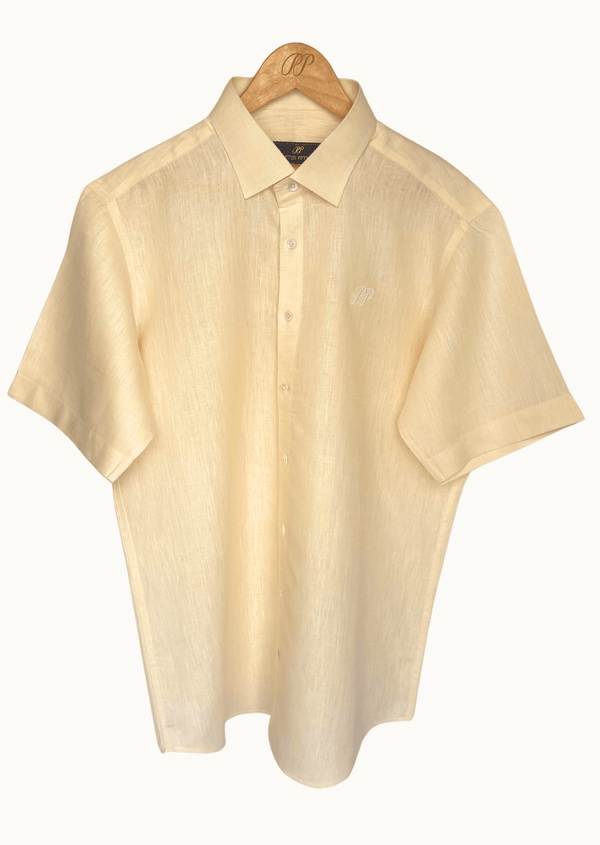
Some garments make all of this easier. A shirt worn untucked hides the creases that a tucked shirt shows at the waist, and an oversized cut like the Vibes Linen Shirt falls away from the body in a way that softens lines. Deeper colourways, Dark Blue or Dubarry, show creases less than White or Vanille.
None of this aims at the stiff, flat finish of a freshly pressed shirt. Linen is not meant to look like that for long, and the attempt to keep it so is what makes many people think it difficult. A cloth that relaxes with steam, smooths under the hand and settles as it is worn is, in the end, an easy cloth to live with.
Read more: Can You Steam Linen? · How to Iron a Linen Shirt · How to Pack Linen Shirts for Travel