Linen for Slow Travel — A Month, a House, a Few Garments
Linen for Slow Travel — A Month, a House, a Few Garments
A month in one house, a few garments, and cloth that softens as the weeks go by.
Slow travel is less a style of holiday than a change of tense. Instead of passing through a place, you live in it for a while: a month in a house on Lamu, a season in a Cycladic village, a long autumn on a farm in the hills of Tuscany. The days settle into a pattern, the baker learns your name, and the clothes you brought stop being outfits and become simply what you wear. Linen for slow travel makes sense for exactly that reason. It is a cloth that improves when it is worn often and washed often, which is what a long stay does to every garment in the bag.
Most travel wardrobes are planned around variety, so that each day of a short trip can look different. A long stay reverses the logic. Variety matters less than the willingness of a few garments to be worn again and again without tiring, and linen is unusually good at this. Flax fibre is long and strong, and with each wash a linen garment loosens slightly, softens and drapes more easily, while keeping its body. On a long stay, the way linen improves with wear happens before your eyes.
“On a long stay, the cloth settles in at the same pace as you do.”
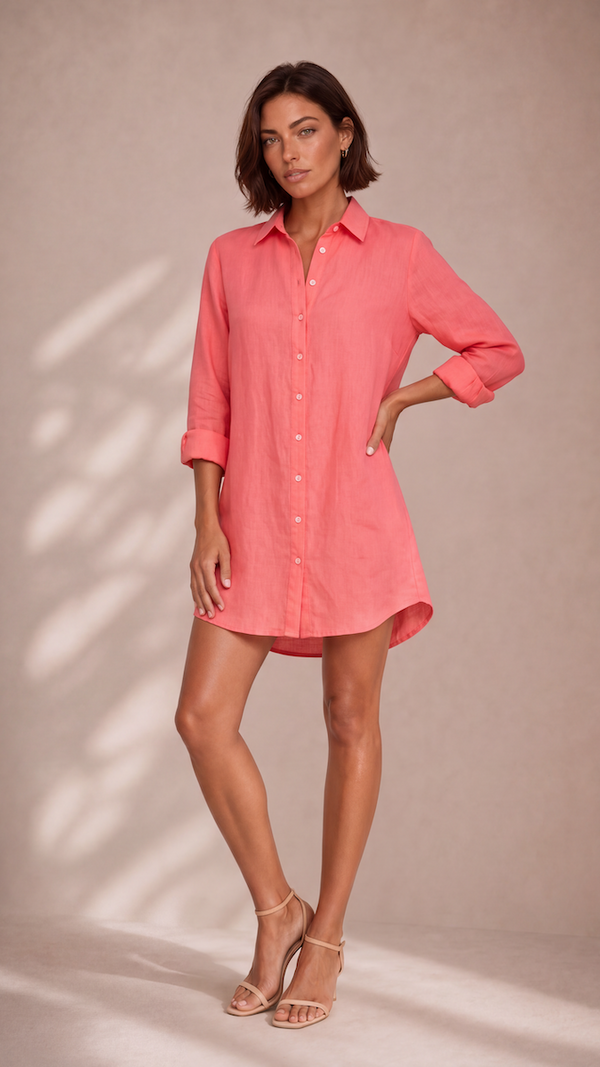
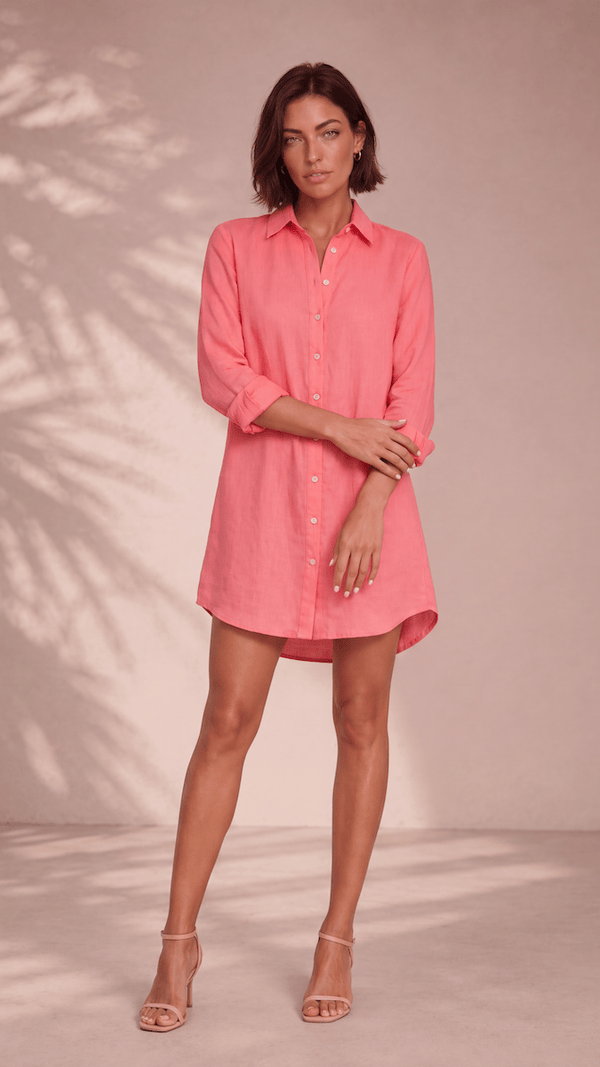
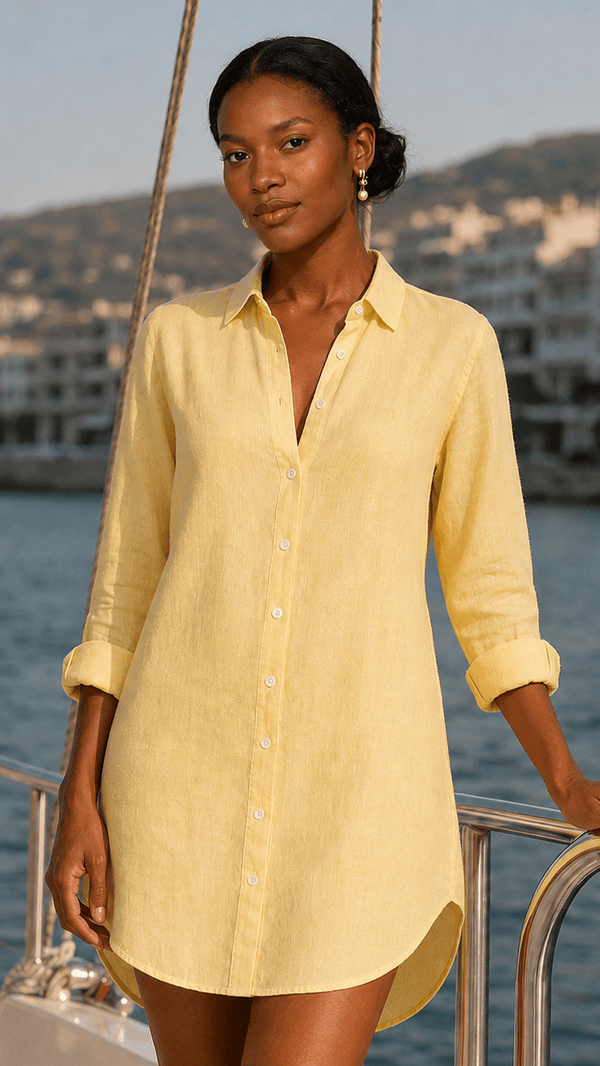
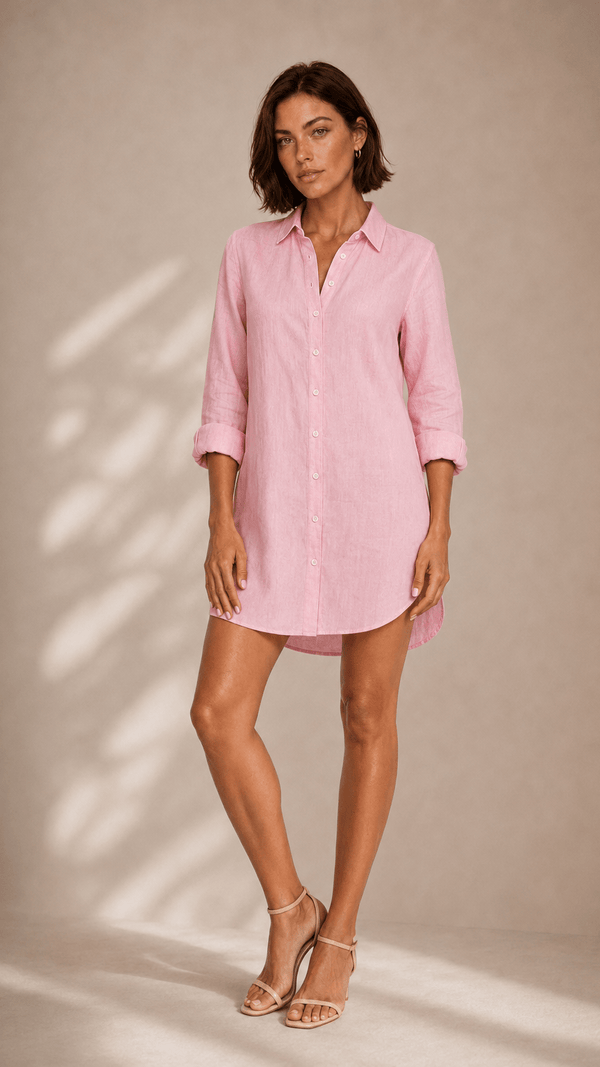
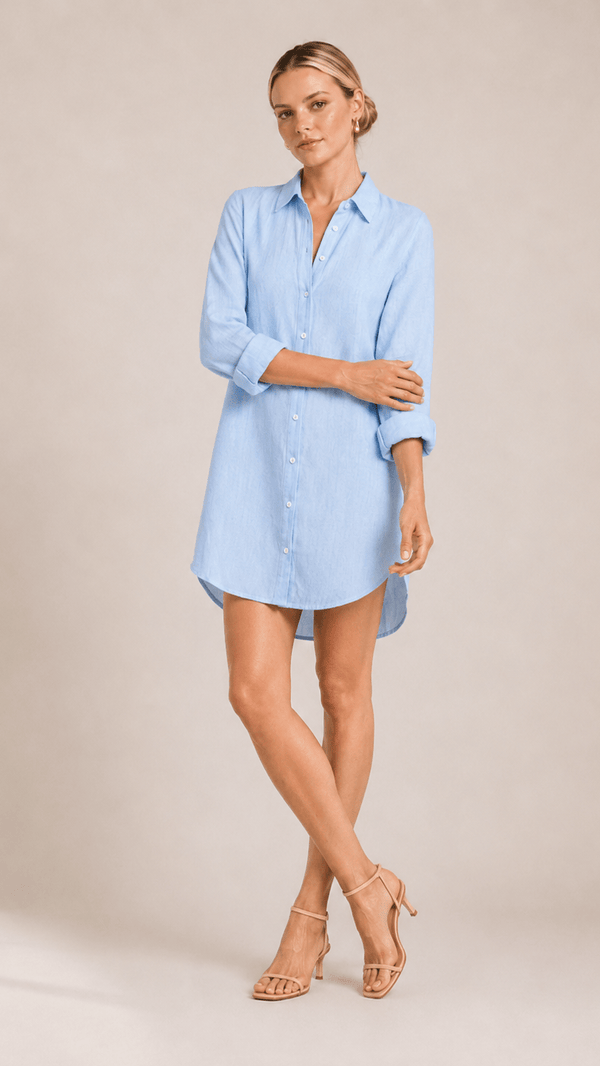
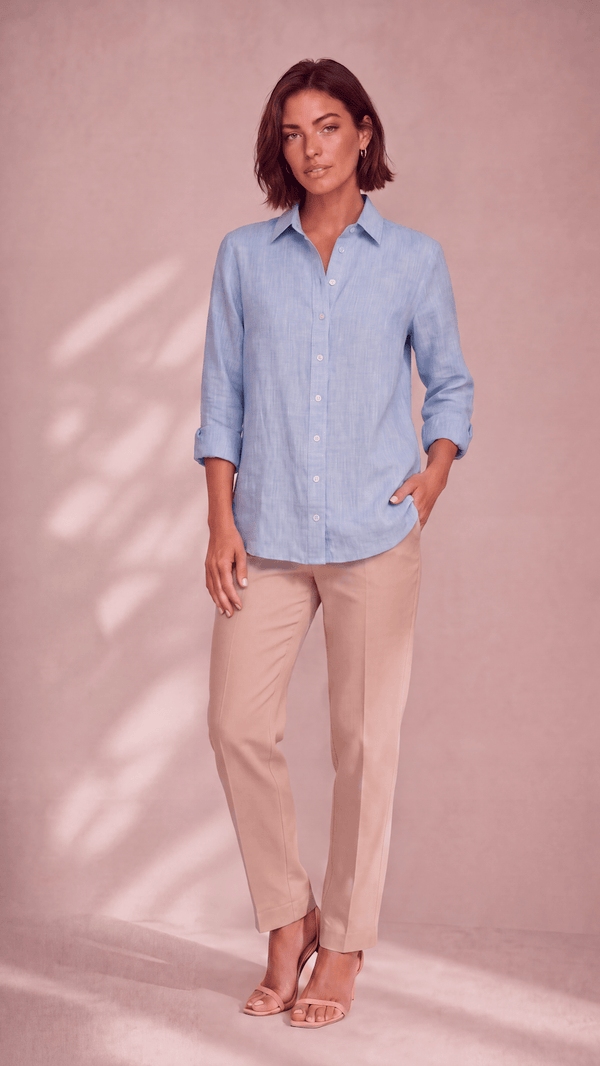
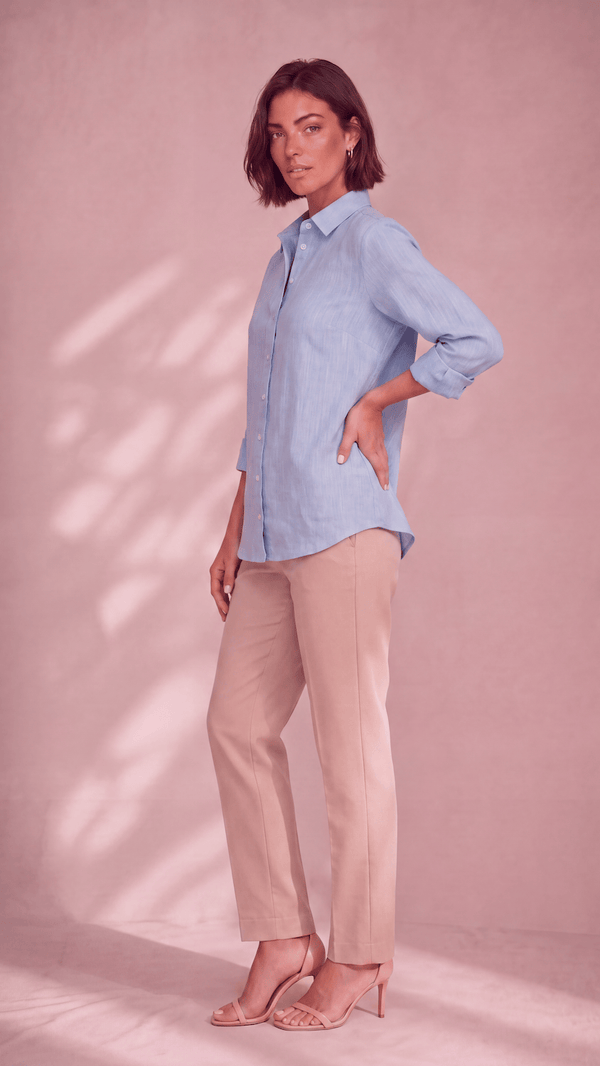
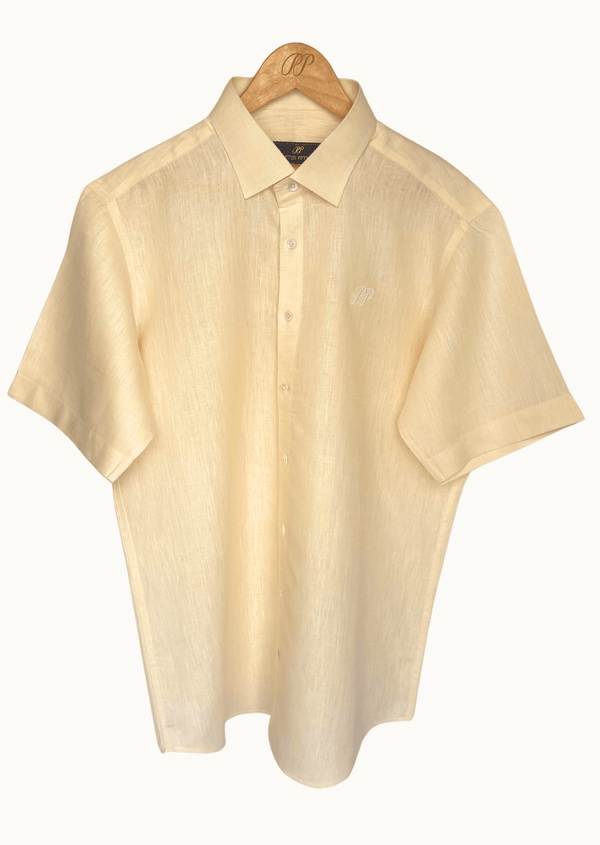
— Pieter Petros, founderRepetition becomes a pleasure rather than a compromise. The same shirt worn to the market in the morning and to dinner on a terrace at night carries the day with it, and by the third week it fits differently than it did on arrival. A man staying a month might live in a Laos Short Sleeve Linen Shirt in Vanille, a Male Linen Shirt in Blue and a Bliss Linen Shirt in Grey for the cooler evenings, all from the PP linen shirts, with PP Casual Linen Trousers and PP linen shorts beside them. A woman might rely on the Amelia linen dress shirt in Oyster, the PP linen blouse in Lemon and the ladies linen set in Mint Green, from the women's linen collection. None of them needs to be new each morning.
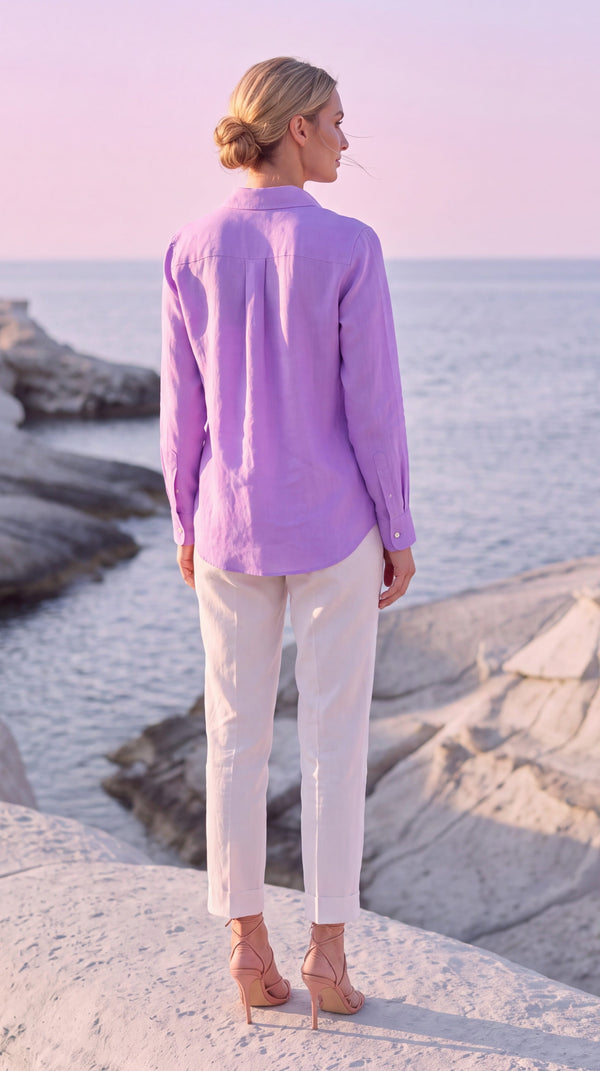
Dressing for the village rather than the resort is the second change. A long stay usually means life outside the hotel: shopping in the local market, eating where residents eat, attending a church festival or a wedding by invitation. Clothes that are understated and natural fit that life better than holiday wear. In a Muslim town such as Lamu, it means long sleeves and long trousers or skirts in the streets, so the PP linen blouse goes into town with a long skirt or long loose trousers, and the Amelia linen dress shirt and the ladies linen set stay for the house and the beach; in a Greek village, a covered shoulder in church; in rural Tuscany, a composed shirt for Sunday lunch. Linen sits comfortably in all three.
Laundry becomes part of the rhythm of the house, and the linen shirt care guide covers what a long stay needs.
There is a quieter benefit too. A long stay makes the traveller aware of what the place gives: its own markets, its tailors, its weavers. In Lamu, the kikoi and the kanga are sold in the market and worn every day; in Tuscany and the Cyclades, household linens have long been woven at home. A wardrobe of natural fibres sits alongside these local textiles without contradiction. Lamu, where houses are still taken by the month, has its own wardrobe guide.
The swimming wardrobe follows the same principle. For a month by the sea, a couple of pairs of PP natural swim shorts cover every swim; on land, the shirts take over again.
Slow travel has no fixed length, but the change it makes to a wardrobe is easy to recognise: on the morning of departure, the garments that come out of the cupboard are softer, lighter and more one's own than the ones that went in.
Read more: Linen for Island Hopping · The Linen Shirt Travel Capsule