Linen vs Cotton for Hot Weather — Which Keeps You Cooler
Linen vs Cotton for Hot Weather — Which Keeps You Cooler
Linen vs cotton in hot weather — the fibre comparison, dry heat, humid heat, and how the feel comparison reverses over time.
For hot weather, linen generally keeps you cooler than cotton: its open weave lets more air move across the skin, and it releases perspiration more readily, so it feels drier in both dry and humid heat. Cotton is softer when new and remains a fine summer fabric, but in sustained heat linen is the more comfortable of the two.
Linen and cotton are both natural fabrics that have been used in warm climates for millennia — and while both perform significantly better than synthetic alternatives in heat, they perform differently from each other in ways that matter when choosing the correct fabric for sustained hot-weather wear.
The fibre comparison. Linen is a bast fibre from the flax plant stem; cotton is a seed fibre from the cotton boll. The structural difference between these fibres produces different properties at the fabric level. Linen's hollow tubular fibre and characteristically open weave produce more airflow through the fabric in sustained heat. Cotton's denser fibre and tighter weave produce a fabric that feels softer initially but allows less airflow in direct comparison at equivalent weights.
“Cotton is softer than linen when new. This reverses over time with certified Belgian linen — the progressive softening that long-staple flax develops with correct washing means that after months of wearing, the PP linen shirt is softer than a cotton alternative.”
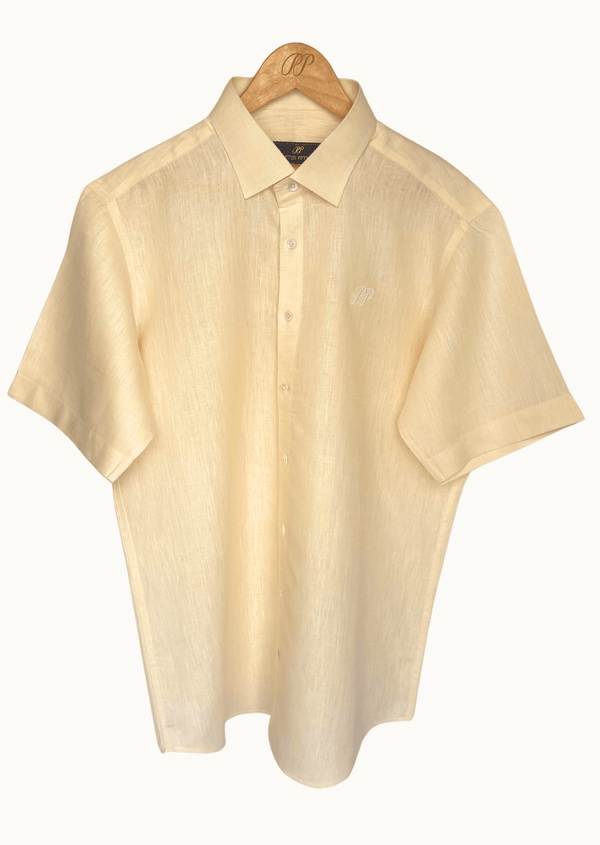
— Pieter Petros, founderIn dry heat above 30 degrees. Linen generally outperforms cotton in breathability in dry heat above 30 degrees. The open weave allows more air movement across the skin; the hollow fibre allows heat to escape through the fabric rather than being retained. In the Gulf's dry summer heat, a PP certified Belgian linen shirt at a midweight is generally regarded as more comfortable in sustained outdoor exposure than a comparable cotton shirt at the same weight.
In humid heat. In high humidity — Bangkok, Singapore, Miami in August — both linen and cotton manage moisture by absorbing perspiration. Linen's moisture absorption is higher relative to its weight than cotton's, and linen releases moisture more readily through evaporation. The practical difference in tropical conditions is that linen feels drier against the skin in sustained humid heat. More on the tropics in linen in humid weather.
Do linen trousers stay cooler than cotton on a humid island holiday?
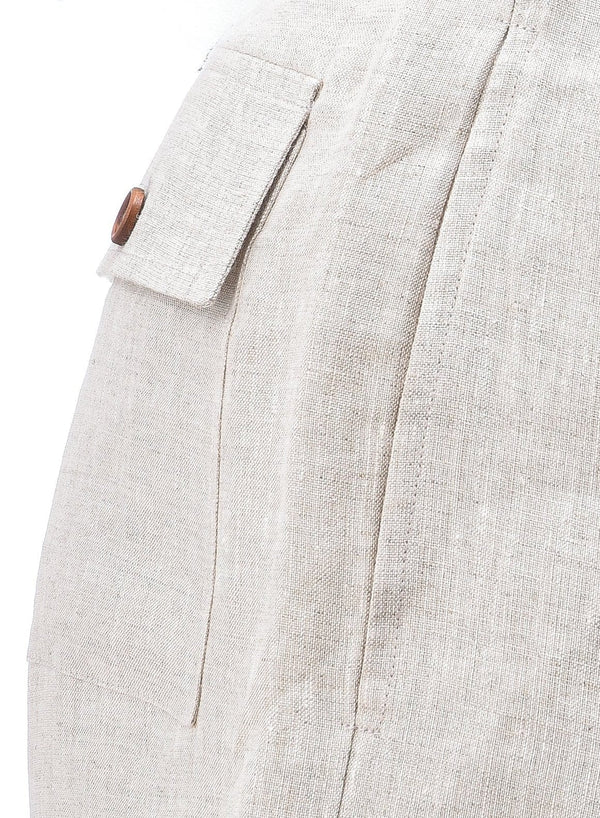
Yes, as a rule. Trousers cover more skin than a shirt, so the difference in airflow is felt even more: a loose linen trouser moves away from the leg with every step and dries between the beach and the terrace, while a dense cotton chino of the same weight holds warmth and damp for longer. On an island in high summer, the cut matters as much as the fibre — a relaxed, straight leg in linen is the coolest combination.
Does linen dry faster than cotton?
Generally, yes. Because linen gives up moisture more readily, a linen shirt that has been rinsed or caught in a shower is usually dry well before a cotton shirt of the same weight. For travel this is practical: a piece washed in the evening is often ready by morning. Typical drying times are covered in how long linen takes to dry.
Linen or cotton for hot-weather resort pieces
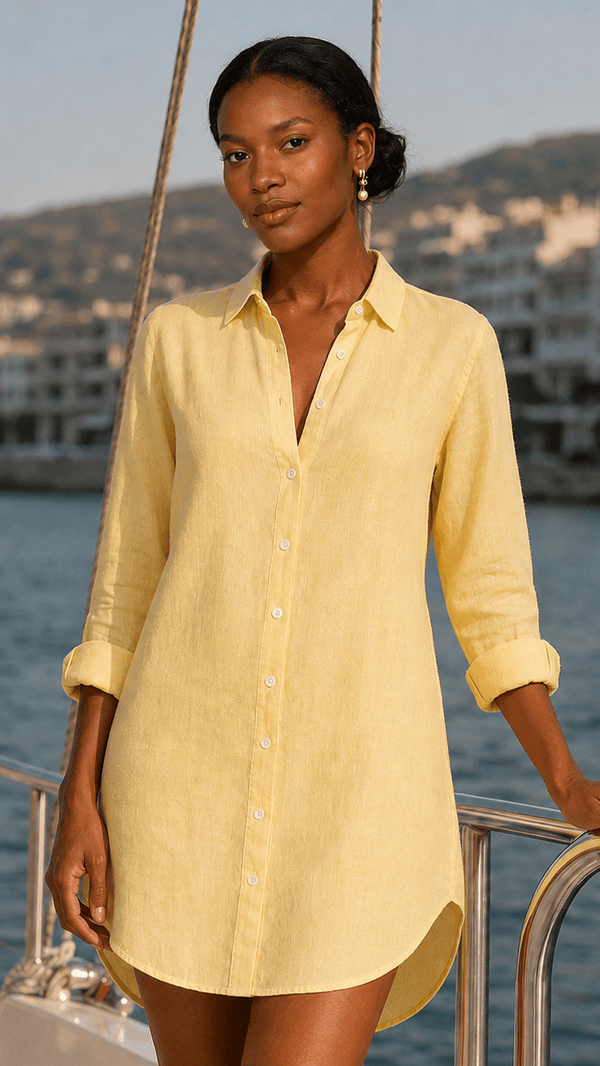
For the resort wardrobe — the long lunch, the boat transfer, the evening on the terrace — linen is the more natural choice in heat: it breathes, it softens with every wash, and its matte texture belongs to the setting. Cotton has its place in the same suitcase, particularly in a crisp evening shirt for air-conditioned rooms. For luxury warm-weather clothing, linen is the fabric that joins comfort in the heat with a refined, natural surface.
Linen vs cotton poplin for hot-weather travel
Poplin is a tightly woven, smooth cotton cloth. It looks sharp and resists the casual crease, but the dense weave lets less air through than an open linen weave of similar weight. For a long day of travel in heat, linen is the cooler companion; poplin suits the meeting or the dinner where a smooth surface is wanted.
Linen or cotton tops and dresses — and the tumble dryer
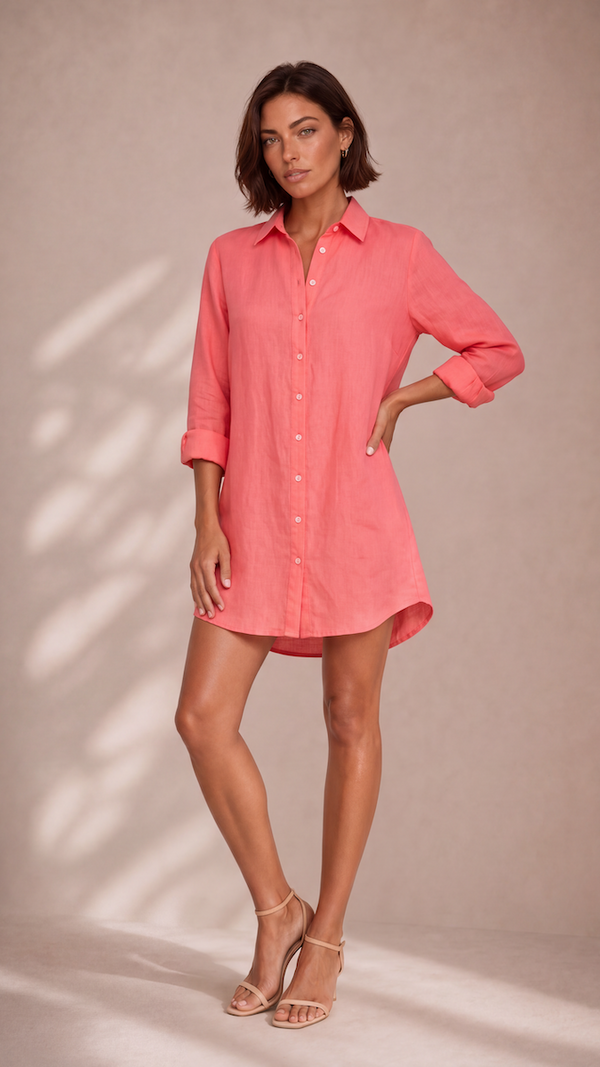
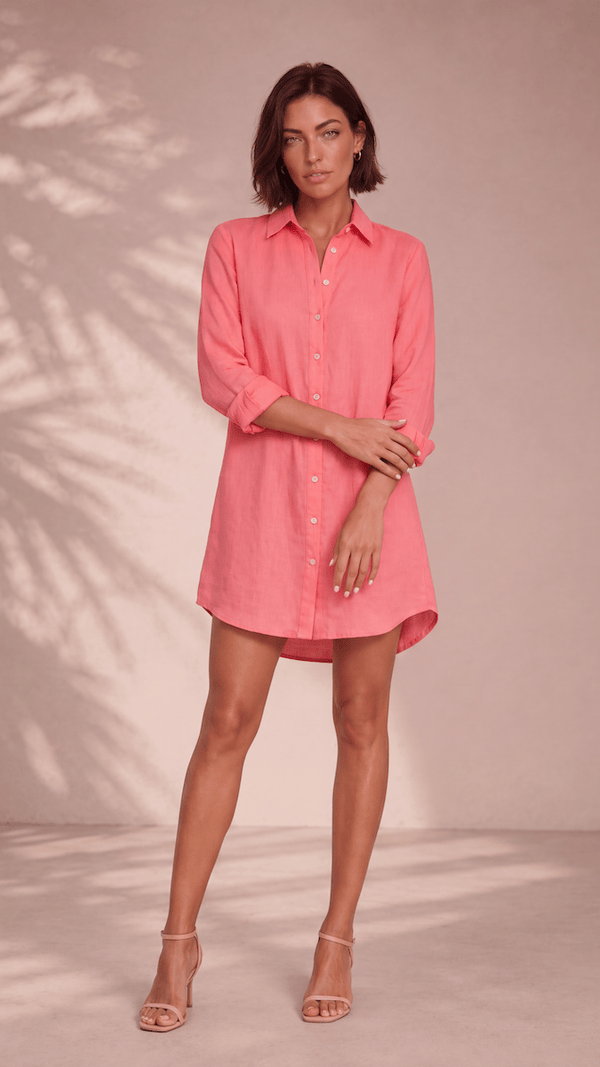
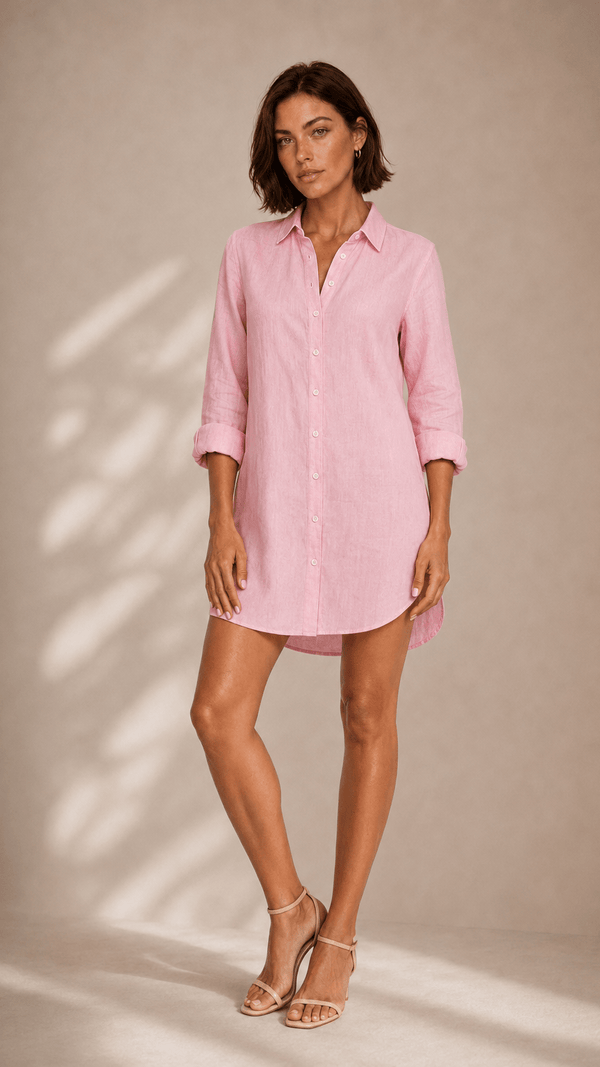
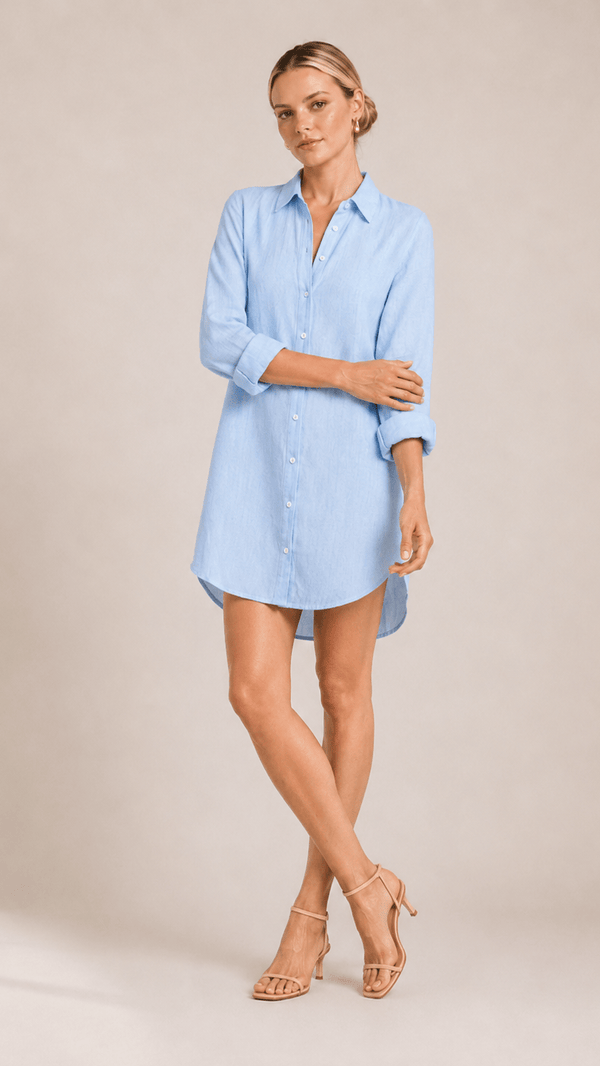
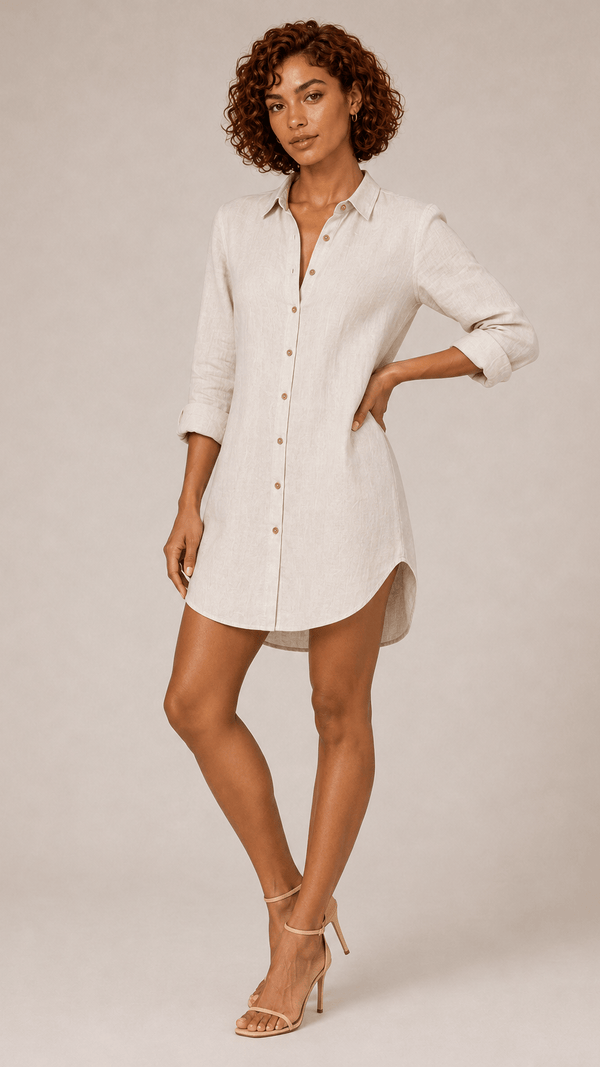
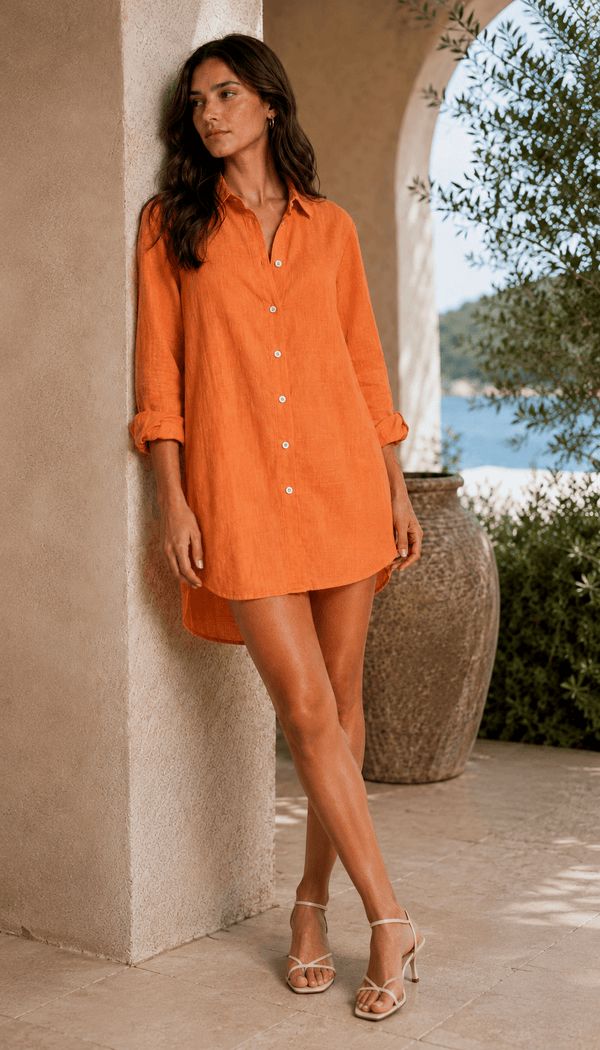
For women, the same logic holds for tops and dresses: linen keeps air moving around the body in heat, which is why the Amelia linen dress shirt, cut to the thigh and worn as a dress in itself, is made in linen. Both fibres can go in a tumble dryer on a low setting; high heat is what shrinks natural fibres. Wash linen on a gentle cycle at 30°C, dry it on low, and it will hold up for years — the details are in can linen go in the dryer.
100% linen or a linen blend in humid weather
Blends that pair linen with another fibre change the hand and the drape of the cloth, and they change how the fabric handles moisture. Pure linen keeps the full character of the flax fibre — the airflow, the release of moisture, the softening with every wash — which is why PP's linen garments are made in 100% linen.
The initial feel. Cotton is softer than linen when new — the seed fibre has a natural softness that bast fibre does not. This reverses over time with certified Belgian linen: the progressive softening that the long-staple flax fibre develops with correct washing means that after several months of regular wearing, a PP Belgian linen shirt is softer than a cotton alternative that has not developed.
Linen vs Cotton Shirt · Is Linen Good for Summer · Men's Linen Collection