Is Linen Good for Summer? — What the Fabric Delivers in Heat
Is Linen Good for Summer? — What the Fabric Delivers in Heat
Is linen good for summer — the breathability mechanism, moisture management, temperature range, and the certified Belgian linen difference.
Linen is the fabric most consistently recommended for summer across cultures and centuries — and the reason is specific and mechanical rather than aesthetic or traditional. Understanding why linen performs in heat helps in evaluating which type of linen delivers the best summer performance and why the certified Belgian variety specifically is the reference standard.
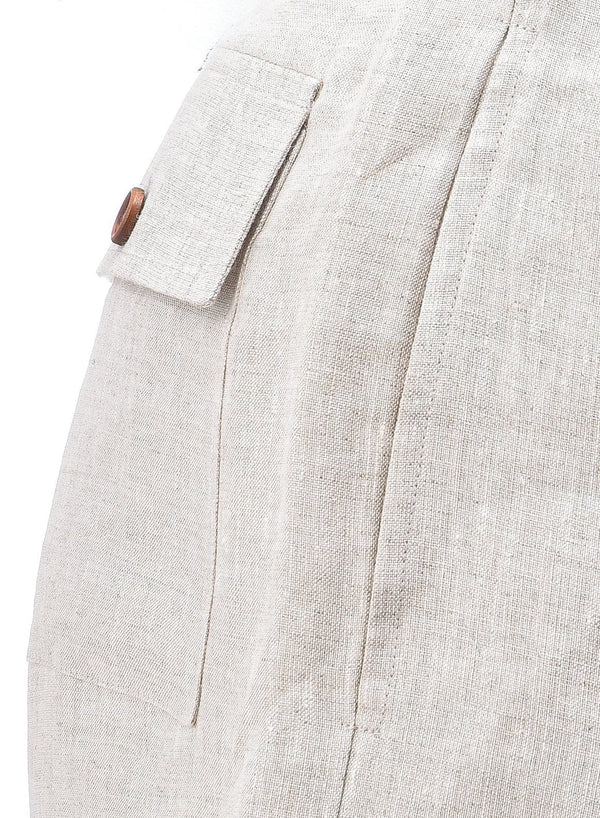
The breathability mechanism. Linen is made from flax fibre — a bast fibre extracted from the stem of the flax plant rather than from a seed or a synthetic process. The flax fibre has a tubular structure with a hollow channel at its centre that allows air movement through the fibre itself. In combination with linen's characteristically open weave — the gaps between warp and weft threads that allow airflow through the fabric surface — this produces a genuinely breathable garment that allows heat to leave the body rather than being trapped against the skin.
“Linen’s summer performance is most pronounced above 25 degrees. Above 30 degrees — in sustained heat and sun exposure — the difference between linen and synthetic alternatives is noticeable to most wearers.”
— Pieter Petros, founderThe moisture management. Flax fibre absorbs moisture without feeling damp against the skin — the fibre holds perspiration away from the skin surface while releasing it gradually through evaporation. This moisture management is the specific mechanism behind the cooling sensation that linen produces in humid as well as dry heat. In tropical humidity — Bangkok, Singapore, Miami in August — this property is more relevant than in dry heat.
The temperature range. Linen's summer performance is most pronounced above 25 degrees. Below this temperature, the breathability advantage over denser alternatives is less significant. Above 30 degrees — and particularly in sustained heat and sun exposure — the difference between linen and synthetic alternatives in the same conditions is noticeable to many wearers.
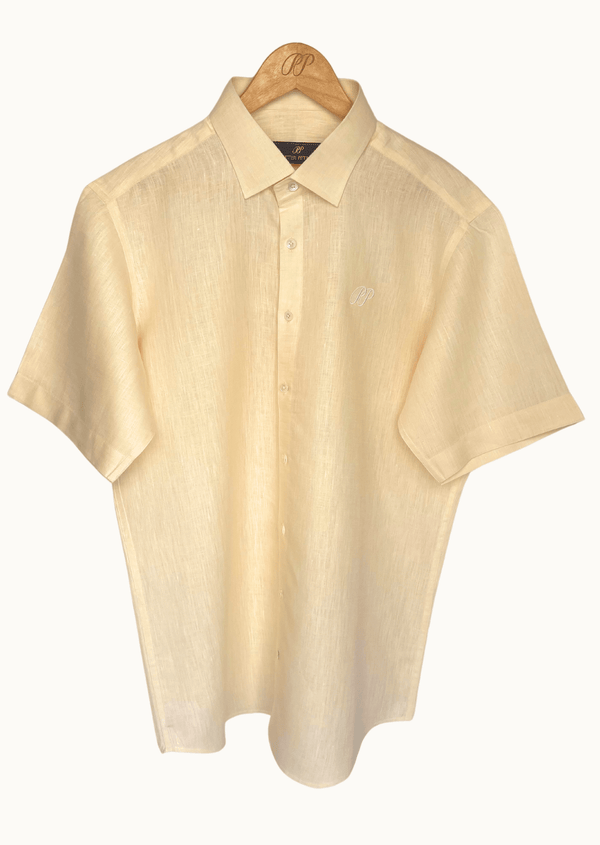
The certified Belgian linen difference. Long-staple flax from the certified Belgian growing corridor produces a finer, more consistent fibre and a more regular weave construction than short-staple alternatives. The breathability of a PP certified Belgian linen shirt in sustained summer heat is more consistent across the garment than a short-staple alternative at the same nominal weight.
Is Linen Breathable · Linen Fabric Summer · Men's Linen Collection