Does Linen Shed? — Lint, Short Fibres and What Good Cloth Does
Does Linen Shed? — Lint, Short Fibres and What Good Cloth Does
A little lint in the first washes, the short fibres behind it, and what a good cloth does differently.
The question usually arrives after the first wash. A new linen shirt comes out of the machine and the lint filter holds a soft grey fringe, or a pair of dark trousers shows pale specks where it brushed against something lighter. Does linen shed? A little, at first, and for reasons that have to do with how flax becomes yarn. Understanding those reasons explains why the shedding settles, why some cloths shed more than others, and what the amount of lint says about the quality of the linen itself.
Linen is spun from the fibres that run along the stem of the flax plant. After harvest, the stems are retted, broken and scutched to free the fibre from the woody core, and then hackled: drawn through a series of ever finer combs that separate the long fibres, called line, from the short, tangled ones, called tow. Line flax is spun into the fine, smooth yarns used for shirting; tow is spun into coarser yarns for heavier cloths. What is linen hackling follows the process step by step, and it is the key to the whole question.
“The length of a fibre decides how quietly a cloth ages.”
— Pieter Petros, founderEven in a yarn of long line fibres, a few shorter fibres are held only loosely, and a few fibre ends lie on the surface of the cloth. When the fabric is woven, cut and sewn, more of these ends are exposed at the seams and edges. The first washes loosen them: water swells the fibres, the movement of the drum works them free, and the filter catches what comes away. After a few cycles the loose ends are gone, and what remains is fibre locked firmly into the twist of the yarn. That is why shedding is most noticeable in the first weeks of a garment’s life, and why it fades.
The amount varies with the cloth. A linen spun from long-staple fibre has fewer ends per metre of yarn and so fewer to lose, while a cloth containing a higher share of short fibre will keep shedding for longer. Shedding is therefore a modest but honest quality marker: a little in the first washes is normal, while persistent heavy lint over many months suggests a yarn of shorter fibre. The slubs that give linen its texture, small thickenings in the yarn, are something else altogether, part of the cloth rather than loose on its surface, as linen slubs explains.
Shedding is also different from pilling. Pills are small balls of tangled fibre that form on the surface of a fabric where it rubs, and they stay attached. Linen’s long, smooth fibres make it far less prone to pilling than many cloths, and does linen pill looks at why. Lint comes away; pills stay.
A few habits keep the first washes tidy. Wash a new linen garment with similar colours, so that pale lint does not settle on dark cloth or dark lint on white. Turn shirts inside out, which protects the surface. Keep towels out of the same load: towelling sheds heavily, and its lint clings to the smooth surface of linen far more than linen’s own. Wash on a gentle cycle at 30°C, then dry on a line, in the sun or the shade, or in the tumble dryer on a low setting, whichever is easiest; the tumble dryer has the small advantage of collecting loose lint in its filter, as can you put linen in the dryer explains. A soft clothes brush lifts any stray fibres from dark trousers in a few strokes.
Colour plays a part in what is noticed. Shedding has little to do with colour, but it shows more on dark garments, where pale fibres stand out, and less on white or natural tones. A pair of PP Casual Linen Trousers in Black or Sapphire Blue will reveal a stray thread that the same trousers in Vanille would hide. This is a matter of visibility rather than of quality.
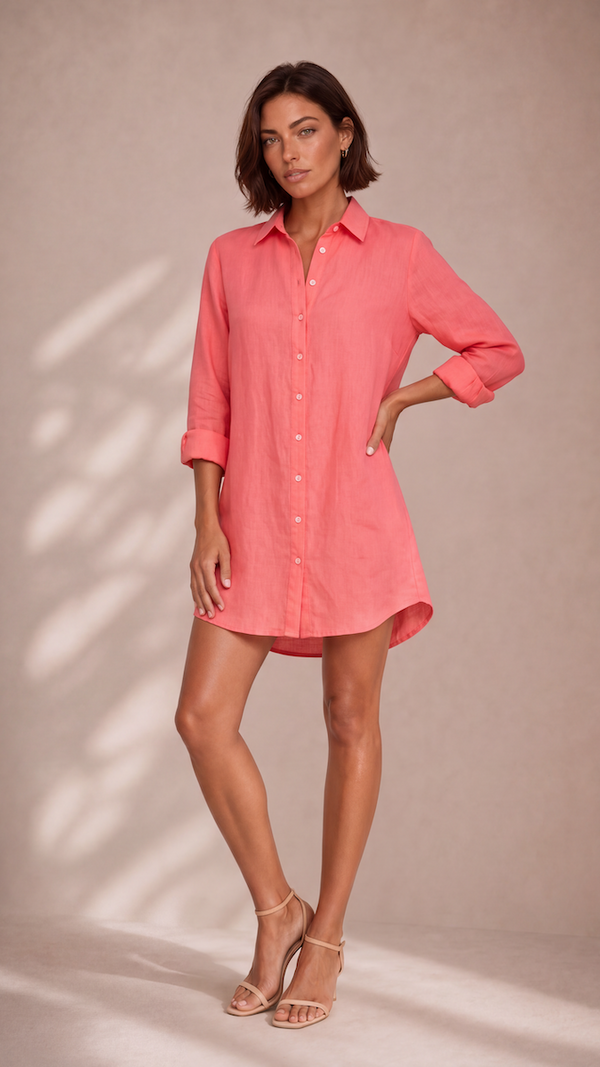
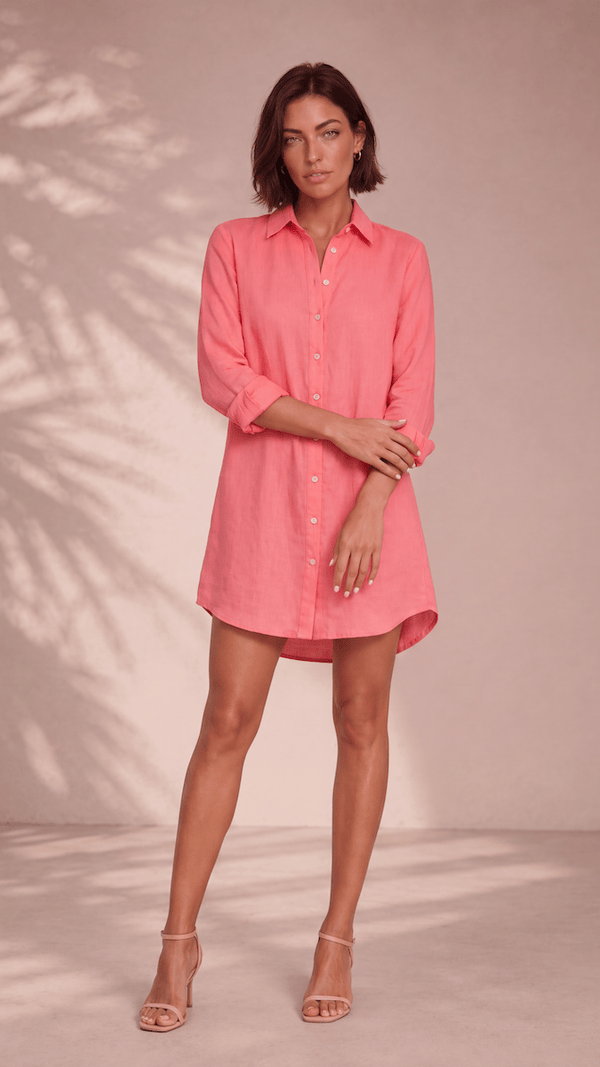
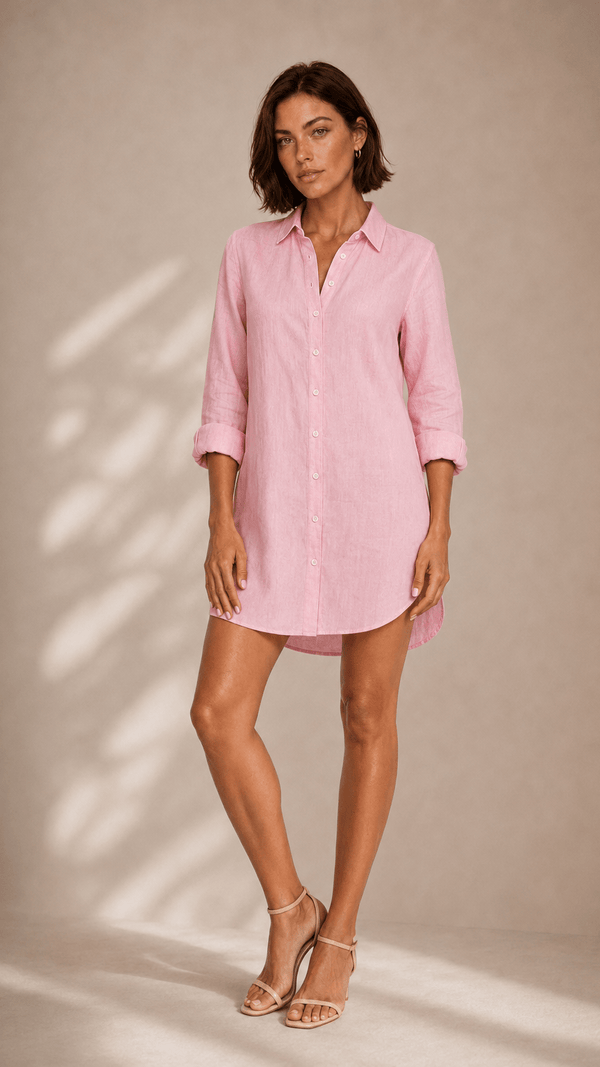
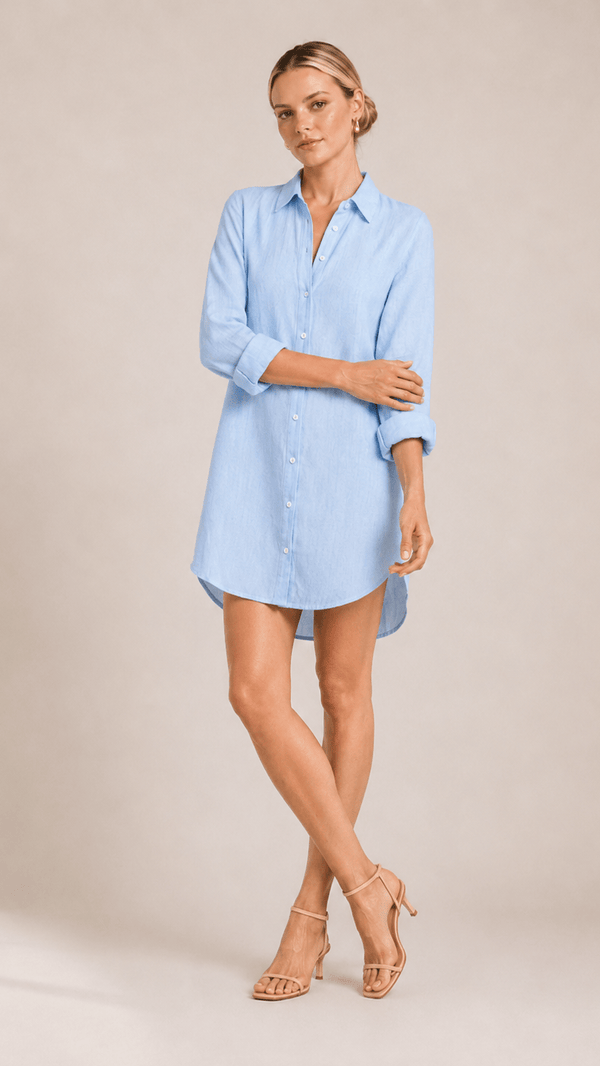
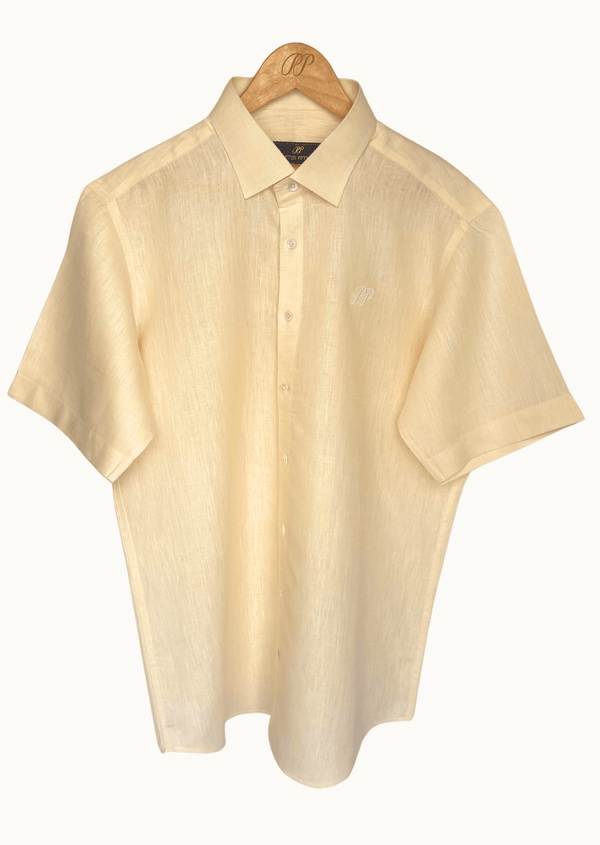
Pieter Petros shirts are made by hand at the atelier in Dubai, and most of those in the PP linen shirt collection are cut from certified Belgian linen. A fine shirting cloth of this kind behaves as described here: a little lint in the first washes, then a surface that settles and softens with every month of wear.
The lint in the filter after the first wash, held up to the light, turns out to be fibre: pale, fine and soft, the same material as the shirt, simply the part of it that was never quite attached.
Read more: The First Wash of a Linen Shirt · The 100% Belgian Linen Guide