What Is Linen Hackling? — Combing Flax Into Fine Fibre
What Is Linen Hackling? — Combing Flax Into Fine Fibre
Steel pins, long line and short tow, and an old English word that began in the flax mills.
Hackling is the combing of flax. After the plant has been pulled, retted and scutched, its fibres are drawn through rows of steel pins, from coarse to fine, until the tangled strands have been split, straightened and laid parallel. What comes out of the comb is long, silky line fibre, ready to be spun; what stays behind in the pins is tow, the shorter fibre that goes to coarser yarns. Linen hackling is a quiet step in the long journey from field to cloth, and one of the steps that most decides how smooth a finished linen shirt will feel.
To see why, it helps to follow the flax up to that point. The plant is pulled from the ground rather than cut, so that the fibre keeps its full length from root to tip. It is then retted, left on the field so that dew, rain and natural microorganisms loosen the fibre from the woody stem; our piece on linen retting explains the process. Next comes scutching, in which the dried stems are broken and beaten so that the woody core falls away, a step described in what is linen scutching. What leaves the scutching mill is a long, golden hank of fibre, still matted, still uneven, with short and broken pieces mixed through it. Hackling is what puts it in order.
“Most of what makes a linen shirt good happens long before anyone cuts the cloth.”
— Pieter Petros, founderThe comb does three things at once. It separates the fibre bundles into finer strands, which is what eventually allows a fine yarn to be spun. It aligns them, so that each strand lies in the same direction along the length of the hank. And it removes the short fibres, which would otherwise make the yarn weaker and rougher. The pins are set in a sequence, each row finer and closer than the last, so that the flax is opened gradually rather than torn.
For most of linen's history this was done by hand. Workers known as hecklers drew handfuls of flax through boards studded with pins, and the trade gave English a word: to heckle once meant only to comb flax, before it came to mean pulling apart a speaker's argument. Today hackling is done by machine, but the principle is unchanged, and so is its result.
That result is the difference between line and tow. Line fibre, the long fibre that survives the hackle, runs to a large part of the plant's height, and it is the raw material for fine linen yarns. It is usually spun wet, with the fibre drawn through warm water so that it can be pulled out finer and smoother, which is why wet-spun linen is associated with shirting. Tow is shorter and less regular; it is carded rather than combed and spun dry into heavier yarns for rougher cloths. Both are linen, and both have their uses, but a fine shirt begins with line.
How does this show in a garment? Mostly in the hand. A cloth woven from long, well-combed line feels smooth and dense, with a soft lustre, and it tends to stay that way through years of washing. It still has the small thickenings in the yarn known as slubs, a natural feature of flax rather than a flaw. The length of the fibre is the deeper point, and long-staple linen fibre goes into what it means for strength and softness.
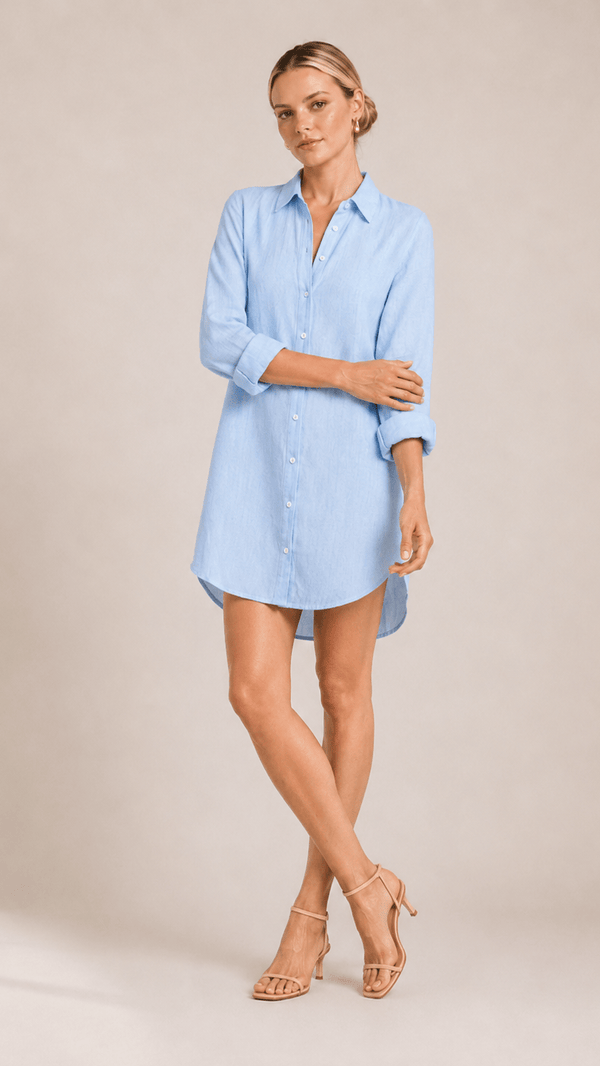
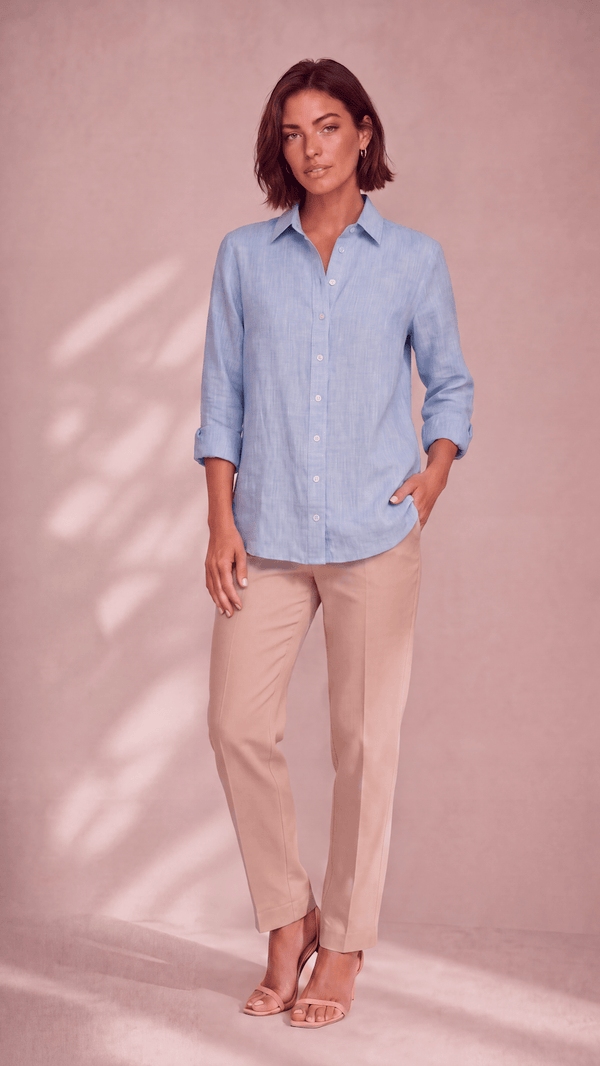
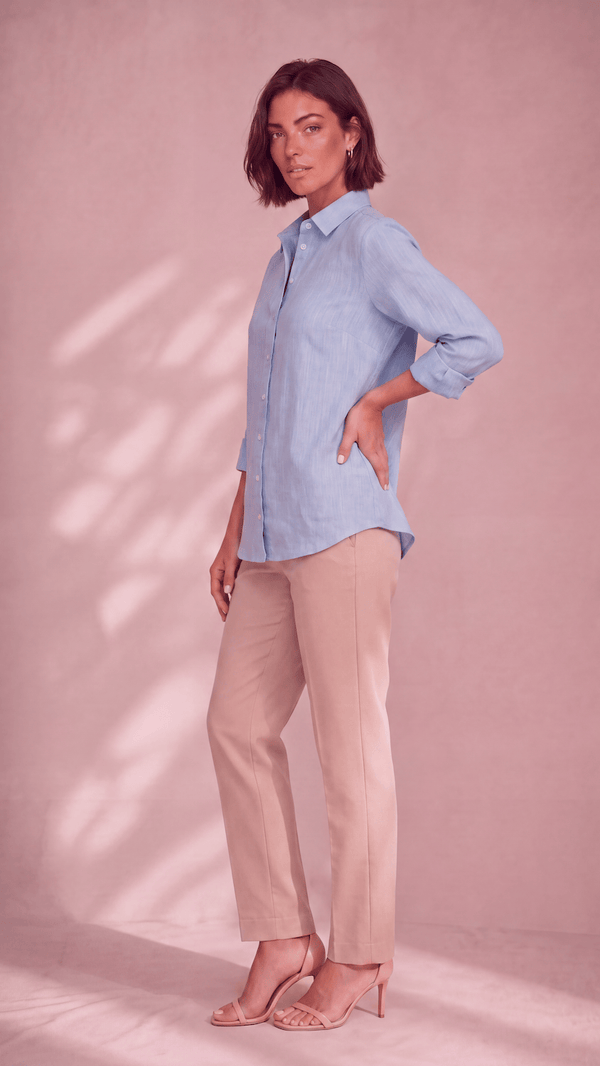
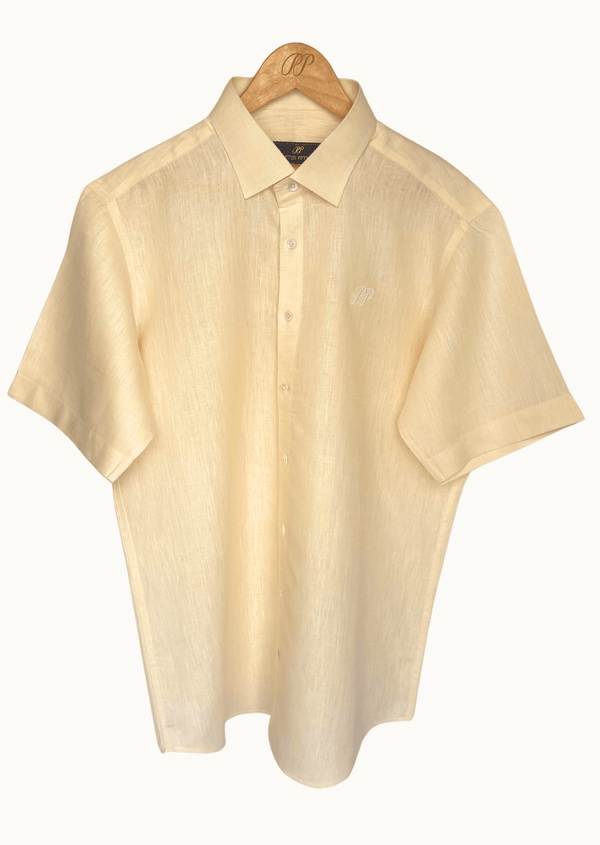
Certified Belgian linen in the Pieter Petros collection has passed through the same comb. Its certificate traces the flax back to the field it grew in and forward to the woven cloth, as the Belgian linen certificate explains; from there, the cloth is made by hand into the men's linen shirts and the garments of the women's collection.
A hank of hackled line, held up to the light, is pale gold and almost glossy, and it moves like hair. It is one of the few moments in the making of a shirt when the fibre can be seen for what it is, before the spinning, the weaving and the dye take it somewhere else.
Read more: How Linen Is Made, from the Flax Field · The 100% Belgian Linen Guide