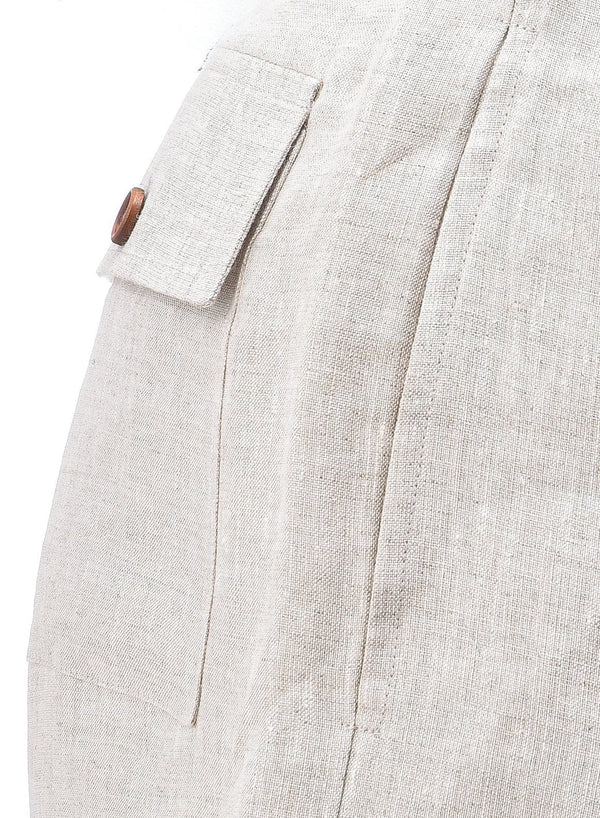
Belgian Linen vs Egyptian Cotton — Two Premium Natural Fabrics Compared
Belgian Linen vs Egyptian Cotton — Two Premium Natural Fabrics Compared
Belgian linen vs Egyptian cotton — fibre, surface, thermal performance, visual register, and why they are complementary rather than competing.
Belgian linen and Egyptian cotton are both premium natural fabrics with long-staple fibre traditions and quality certifications attached to their regional origins. Comparing them directly reveals different performance characteristics, different visual registers, and different wardrobe roles — the comparison is not a simple better-or-worse judgement but a question of which is correct for a specific context.
The fibre. Belgian linen is a bast fibre from the flax plant — extracted from the stem rather than the seed. Egyptian cotton is a seed fibre from the Gossypium barbadense cotton variety, grown in the Nile Delta, known for its exceptionally long staple length among cotton varieties. Both have long-staple fibre credentials; the fibres are entirely different in origin and properties.
“Belgian linen and Egyptian cotton are complementary rather than competing. Each has a specific role; understanding which is the fastest route to choosing correctly.”
— Pieter Petros, founderThe surface and feel. Egyptian cotton, particularly at higher thread counts, has a softness from the first wearing that Belgian linen does not match until after several wash cycles. Cotton's seed fibre is naturally soft; linen's bast fibre is naturally firm. This initial difference reverses over time — Belgian linen softens progressively with each correct wash, while Egyptian cotton does not develop in the same trajectory. After a year of regular wearing and washing, a Belgian linen garment is noticeably softer than when purchased; a cotton garment of equivalent quality is approximately the same.
The thermal performance. In sustained heat above 30 degrees, Belgian linen generally outperforms Egyptian cotton in breathability and moisture management. The flax fibre's structure and the open weave of linen allow more airflow than cotton's denser weave typically permits. In cooler conditions, the difference is less pronounced and Egyptian cotton's softness may make it the more comfortable choice.
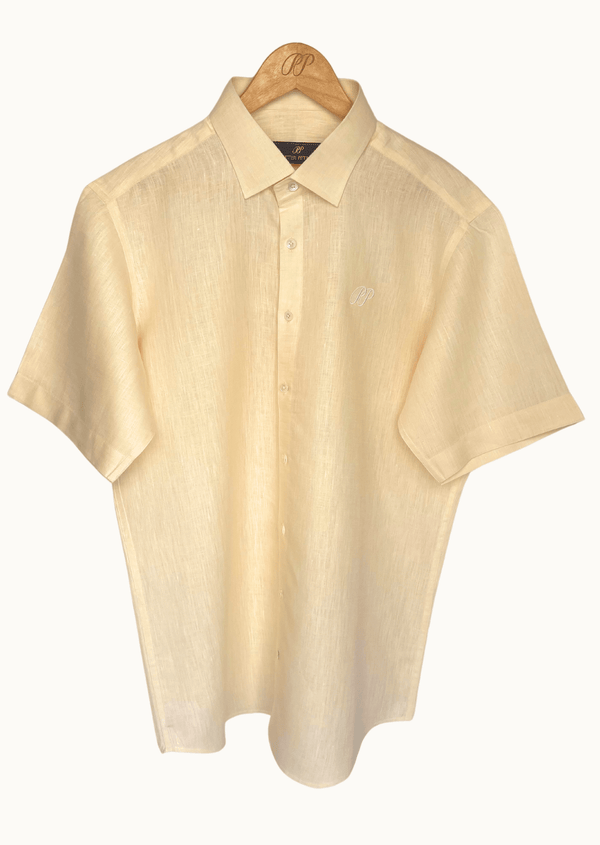
The visual register. Egyptian cotton shirts read as formal — they belong to the business shirt category, to the crisp white shirt under a suit, to the formal context where linen's natural texture and wrinkle character would not read as appropriate. Belgian linen shirts read as resort, outdoor, and warm-weather — contexts where Egyptian cotton's formal register is less relevant. They are complementary rather than competing.
Belgian Linen Fabric · Linen vs Cotton Shirt · Men's Linen Collection