100% Linen vs Linen Blend — What the Difference Actually Means
100% Linen vs Linen Blend — What the Difference Actually Means
100% linen and a linen blend are not the same fabric. What the difference means for breathability, softening, biodegradability, and certification.
The difference between 100% linen and a linen blend is not simply a matter of percentage — it is a difference in what the fabric does, how it behaves over time, and what it leaves behind.
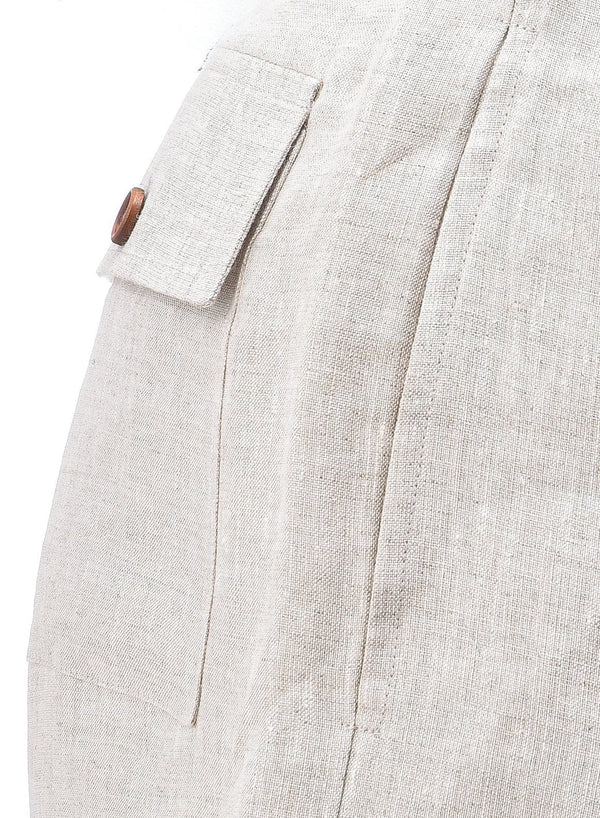
100% linen is a natural fibre with no synthetic components. It breathes, manages moisture, softens with washing, and when the garment reaches the end of its life, it decomposes completely. At end of life, 100% linen biodegrades naturally, unlike synthetic-blend fabrics. The fabric is entirely what it claims to be.
“100% linen is a natural fibre with no synthetic components. At end of life, it returns to the earth. That is what the percentage means.”
— Pieter Petros, founderA linen blend introduces a second fibre — most commonly polyester, sometimes cotton, occasionally elastane for stretch. Each addition changes the behaviour of the fabric in specific ways. Polyester reduces wrinkling and cost but adds synthetic content, reduces breathability, and creates a fabric that releases microplastic fibres with every wash. A cotton blend softens the texture and may reduce wrinkling but dilutes the thermal and moisture-management properties that make linen valuable in hot conditions.
The marketing appeal of linen blends is typically wrinkle resistance. This is a genuine property — blending polyester with linen does reduce the natural wrinkling that some people find inconvenient. But linen's tendency to crease is a characteristic of the natural fibre, not a defect. The natural texture of a linen shirt is part of its visual identity — a signal of the material rather than a sign of neglect. A blend that removes this character also removes the properties that make the fabric worth wearing.
The certification question: Belgian linen certification applies to 100% Belgian linen. A blend that uses Belgian linen as a component does not carry the same certification and is not the same fabric. When traceability and origin matter, 100% certified linen is the only product that delivers them.
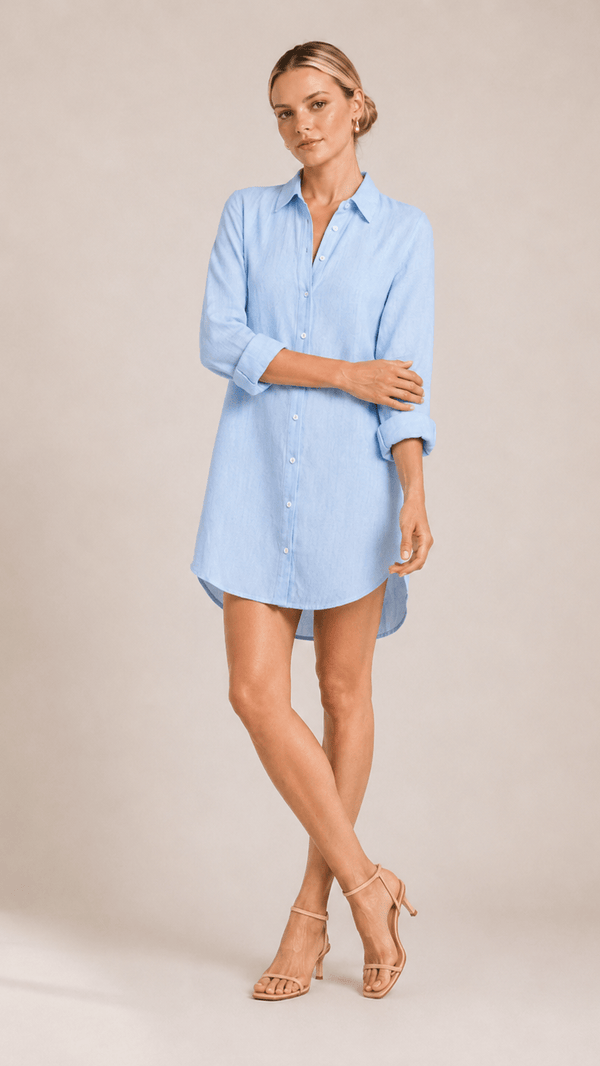
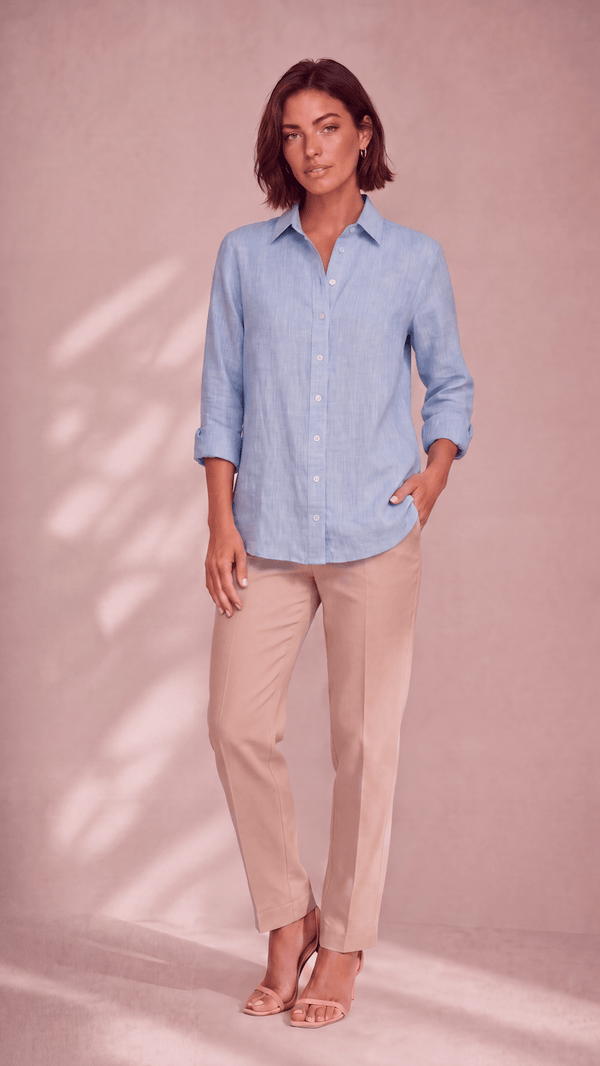
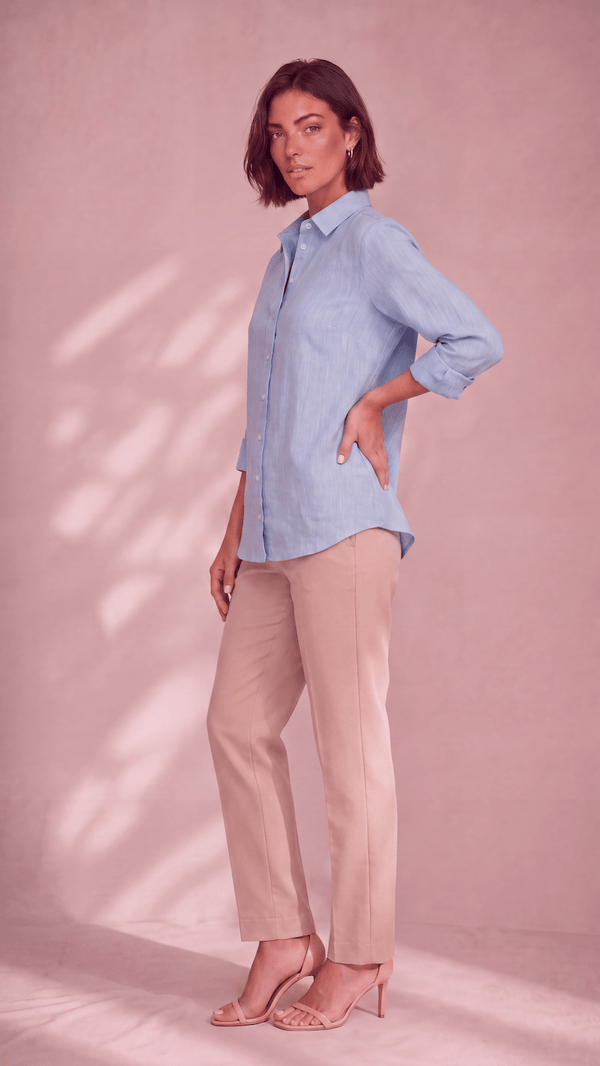
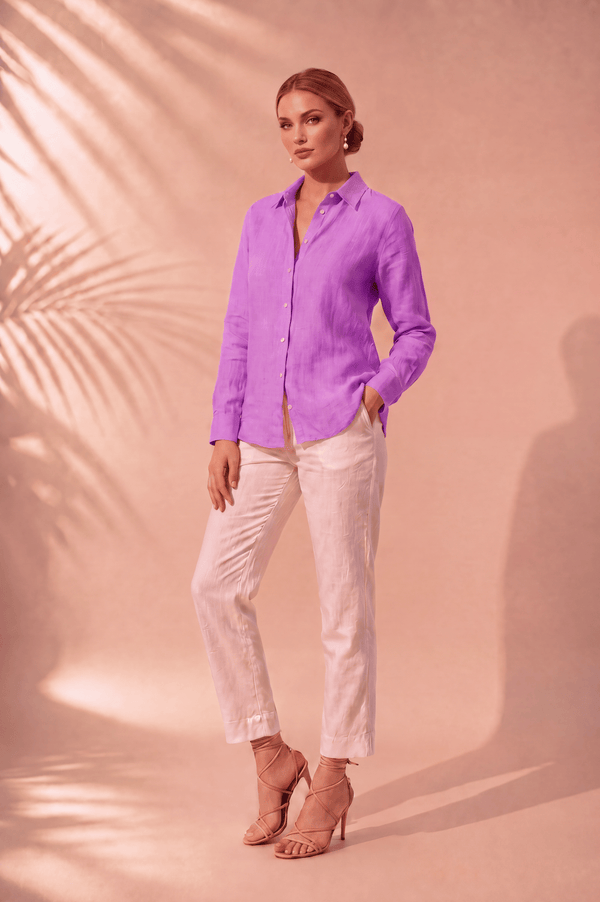
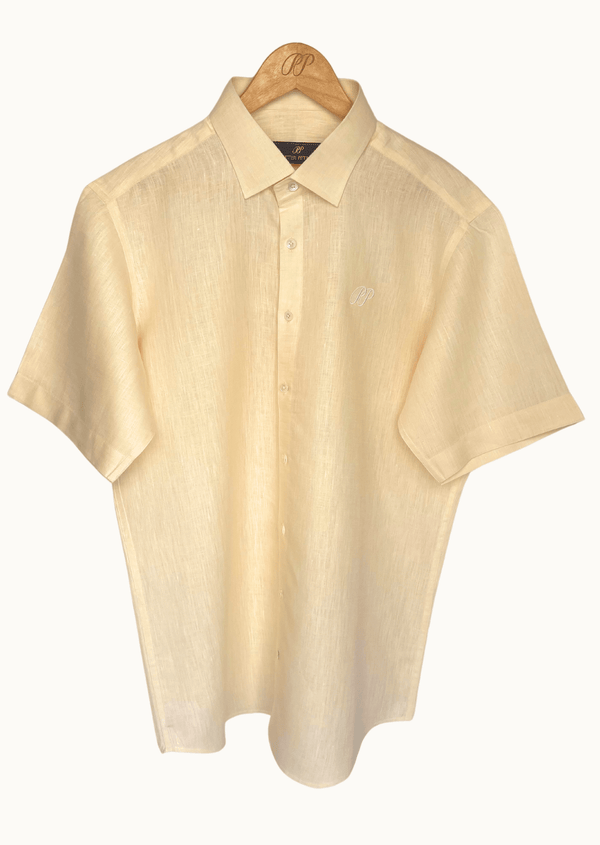
PP uses 100% certified Belgian linen in every garment. No blends. No polyester. No compromise on the natural properties of the cloth.
100% Belgian Linen — What It Means · Linen vs Polyester · Men's Linen Collection