Linen vs Cashmere — A Cool Fibre and a Warm One
Linen vs Cashmere — A Cool Fibre and a Warm One
A cool fibre and a warm one, and why a considered wardrobe has room for both.
One grows in a field in Normandy or Flanders and is pulled from the earth in July. The other is combed by hand from the soft undercoat of goats on the high plateaus of Mongolia and northern China in spring, as the animals shed their winter down. Linen and cashmere are both natural fibres, both counted among the luxuries of cloth, and they do almost opposite things. Comparing linen vs cashmere is less a contest than a way of understanding what each is for.
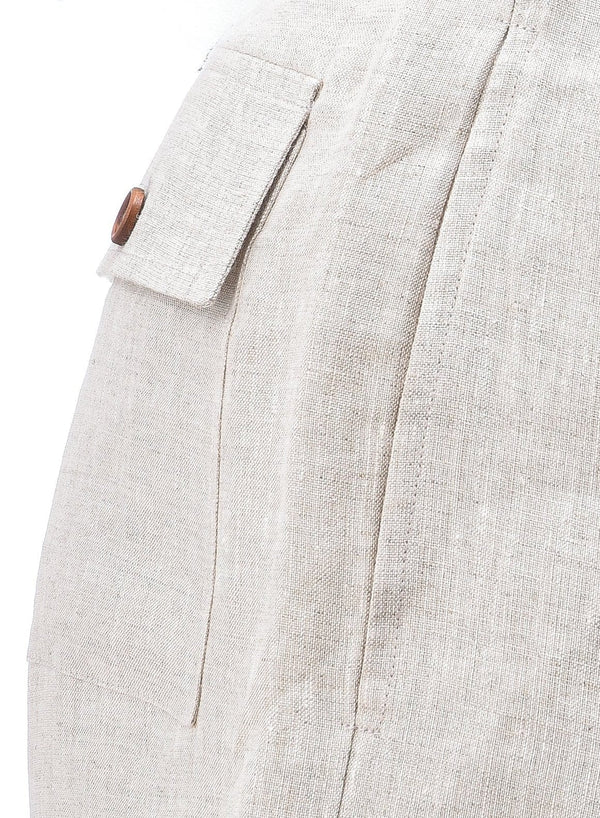
Linen comes from the stem of the flax plant. Its fibres are long, smooth and strong, with a slight natural lustre; spun and woven, they make a crisp, cool cloth that takes up moisture and releases it readily into the air, and lets heat escape from the body. Cashmere is a protein fibre, extremely fine, crimped and soft. Its fine hairs trap still air between them, which is why a cashmere knit holds warmth for its weight, and why it feels soft against the skin from the first wear.
“Each natural fibre has its season. The skill is in letting it have it.”
— Pieter Petros, founderIn feel, the difference is immediate. Cashmere is soft and yielding from the start. Linen begins with a certain crispness and a dry hand, and softens with every wash and wear, without losing its structure; the way linen improves with wear is one of its quiet pleasures. Cashmere has drape and fall; linen has body and a clean line.
In warmth, they divide the year. Cashmere belongs to cold air, autumn evenings and winter, and a fine cashmere layer over a shirt is a long-standing way of travelling light into a cool night. Linen belongs to heat, humidity and sun, and to the months when a shirt is the outermost layer. In warm climates, the two meet: a Gulf winter evening, a desert dinner, a terrace in the Mediterranean in late October. A long-sleeved linen shirt worn with a light cashmere knit over the shoulders is a natural pairing there, and the comparison of linen and wool follows the same logic.
In durability, linen has the advantage. Flax fibre is among the strongest of the natural fibres, and a well-made linen shirt lasts for many years of regular washing. Cashmere's fineness makes it delicate: it can pill where it rubs, and it needs gentle handling to keep its shape. Both reward care, but in different ways.
Care is the clearest practical difference. Linen is washed on a gentle cycle at 30°C, and can be dried on a line, flat or in a tumble dryer on a low setting; it is ironed or steamed while slightly damp if a crisper finish is wanted. Cashmere is washed by hand in cool water with a mild wool detergent, or on a specific wool cycle, pressed gently in a towel and dried flat, never hung. Moths are a concern for cashmere in storage and not for linen.
Both fibres are biodegradable, made by nature rather than by industry. Flax is largely a rain-fed crop in Western Europe; cashmere comes from animals that live on fragile grasslands, which is why its provenance is worth asking about.
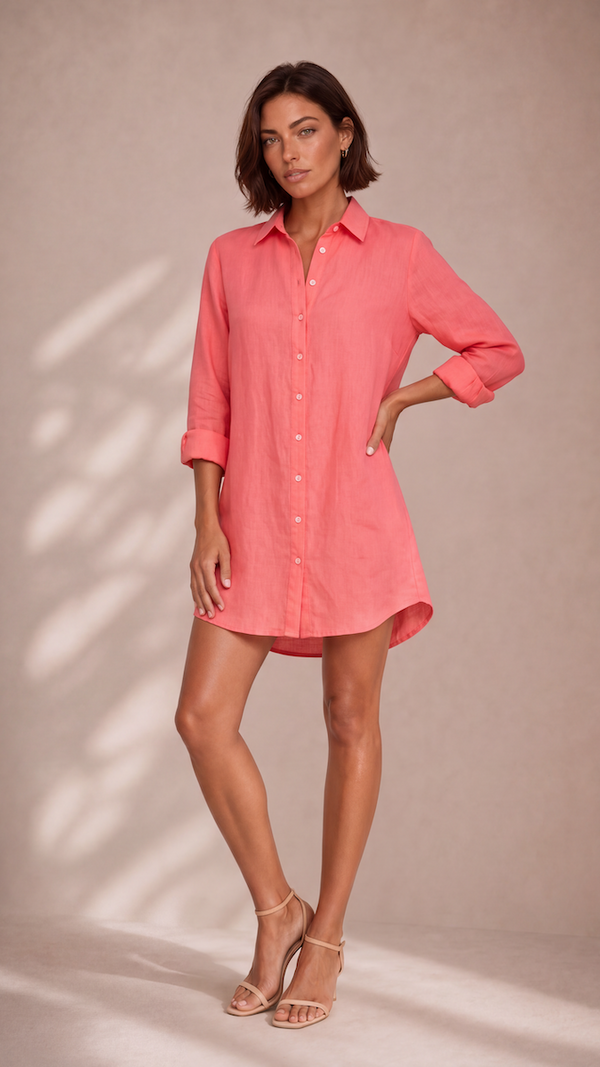
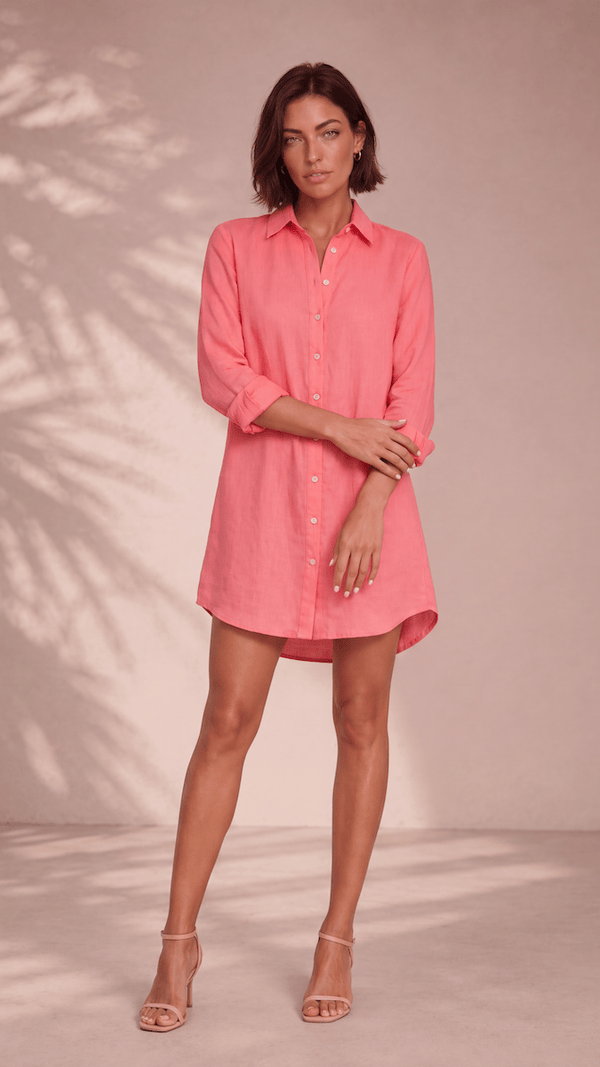
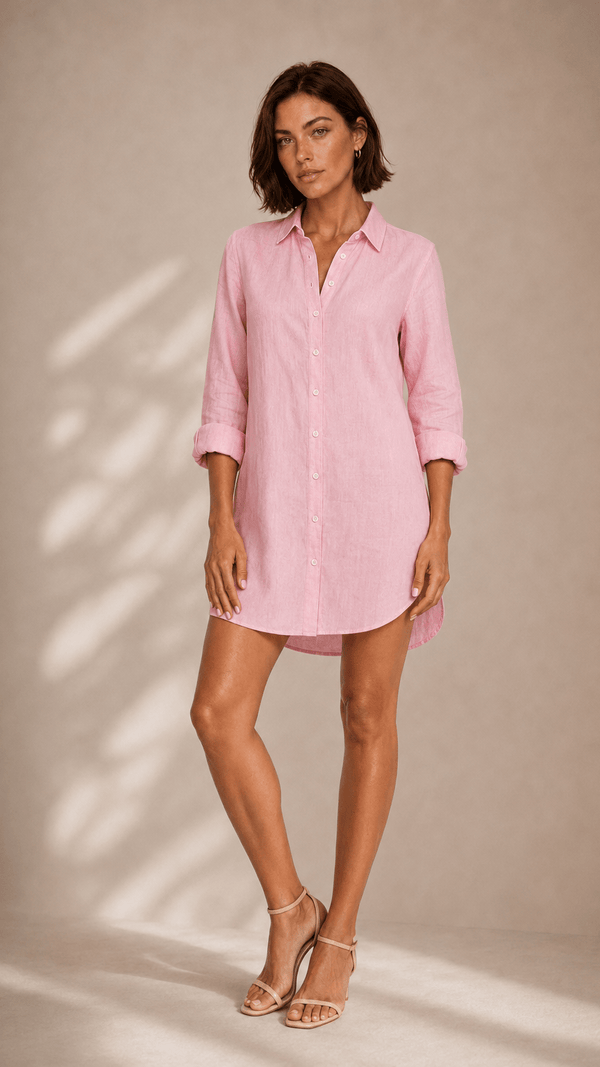
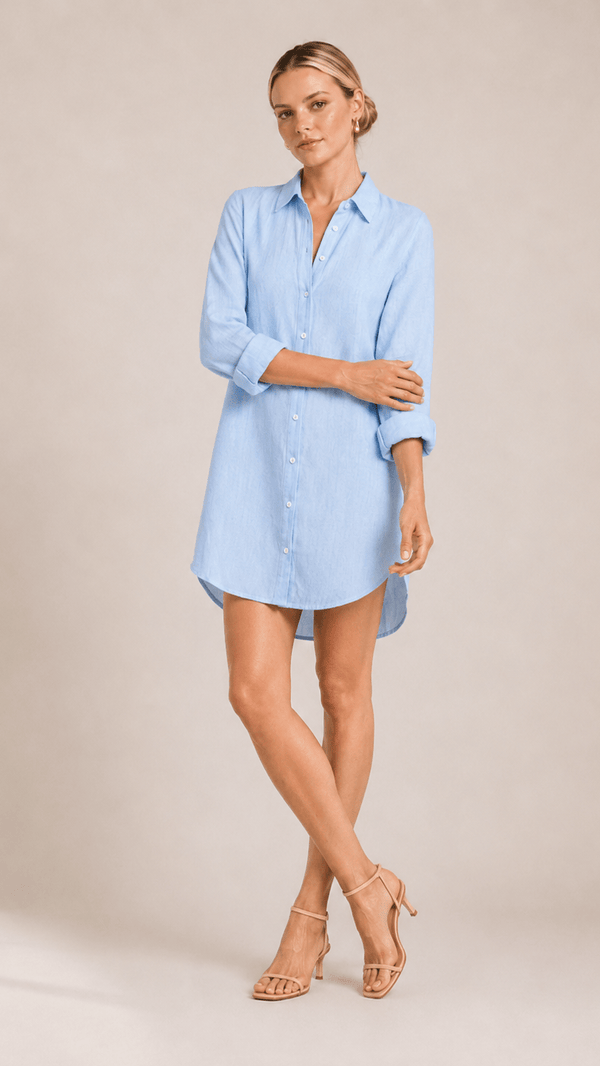
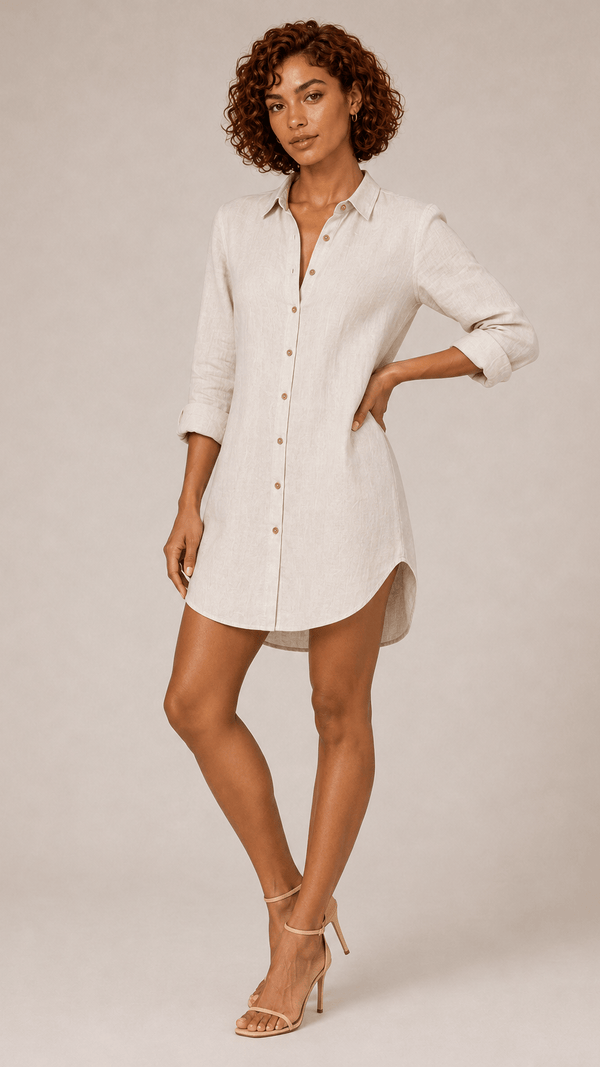
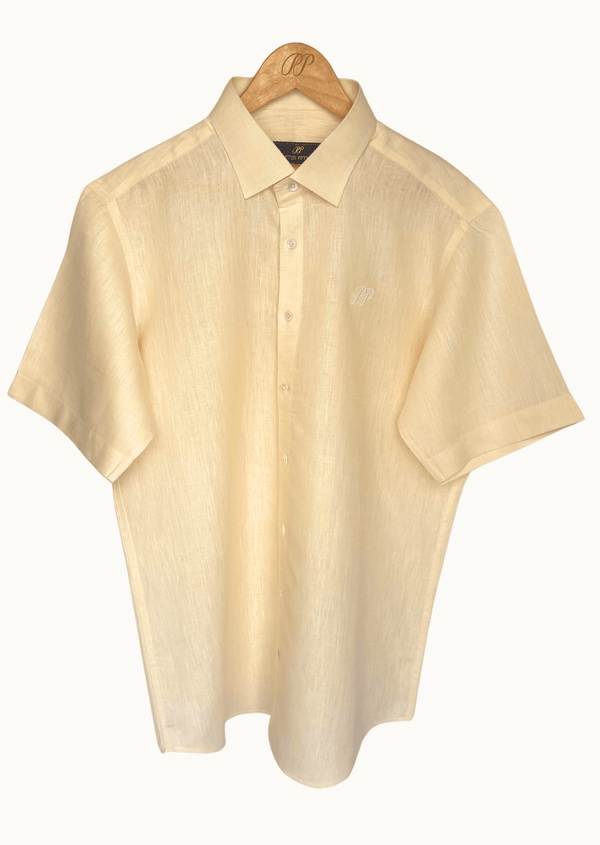
The men's linen shirts and the women's linen collection at Pieter Petros belong to the warm part of the year and to warm places all year round; a cashmere knit sits naturally over them when the air turns.
In practice, the choice is rarely one or the other. A linen shirt for the day, a cashmere layer for the hour after sunset: two natural fibres, each doing what it does well.
Read more: Linen vs Silk · Natural Fabric Types