Is Linen Vegan? — The Fibre, the Making and the Buttons
Is Linen Vegan? — The Fibre, the Making and the Buttons
The cloth is a plant from field to loom. A finished garment has a few more parts worth knowing about.
Linen is vegan. The fibre comes entirely from the stem of the flax plant, Linum usitatissimum, and nothing in its growing, harvesting or spinning requires an animal or an animal product. That distinguishes it from wool, silk and cashmere, which come from sheep, silkworms and goats. Yet anyone asking whether linen is vegan usually wants to know about a garment rather than a fibre, and a garment is made of more than its cloth.
It helps to follow the flax from the field. In Western Europe, along the coastal belt from northern France through Belgium to the Netherlands, flax is sown in spring and flowers briefly in pale blue in June. It is not cut but pulled from the ground, roots and all, so that the full length of the fibre is kept.
“A field of flax, rain, time and patient hands. That is all linen has ever needed.”
— Pieter Petros, founderNext comes retting, the step that separates the fibre from the woody core of the stem. In the European tradition the pulled flax is laid in rows on the field, and dew, rain and the natural bacteria and fungi in the soil slowly break down the pectin that binds the fibres. This is dew retting; older methods used rivers or tanks of water. Either way, the agents at work are water and microbes, not animal products. The full process is set out in what is linen retting, and the later stages, scutching and hackling, are purely mechanical: the stems are broken and combed until only long, clean fibres remain.
Spinning and weaving add no animal input either. Fine linen yarns are often wet-spun, drawn through warm water so that the fibres lie smooth and give the cloth its characteristic lustre; one of the later stages in how linen is made. Dyes and finishing treatments vary between mills, and a careful vegan buyer may wish to ask about them, but plain linen cloth is, from beginning to end, a plant product.
The questions start at the sewing table. A shirt has thread, and it has buttons. Thread can be spun from different fibres, plant or otherwise. Buttons are the more visible choice, and the more interesting one, because a luxury shirt rarely uses plastic.
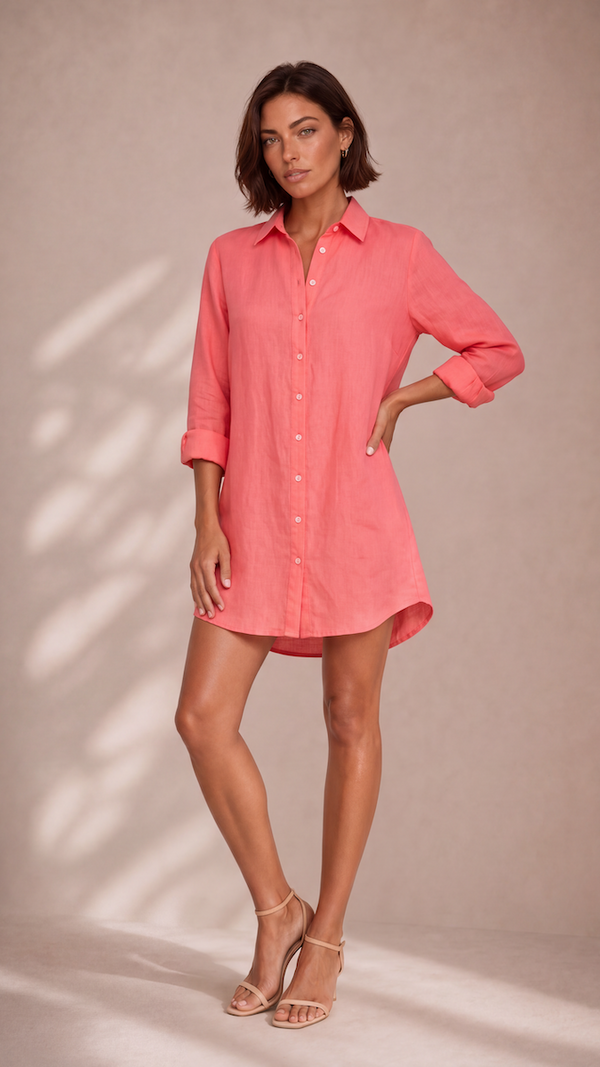
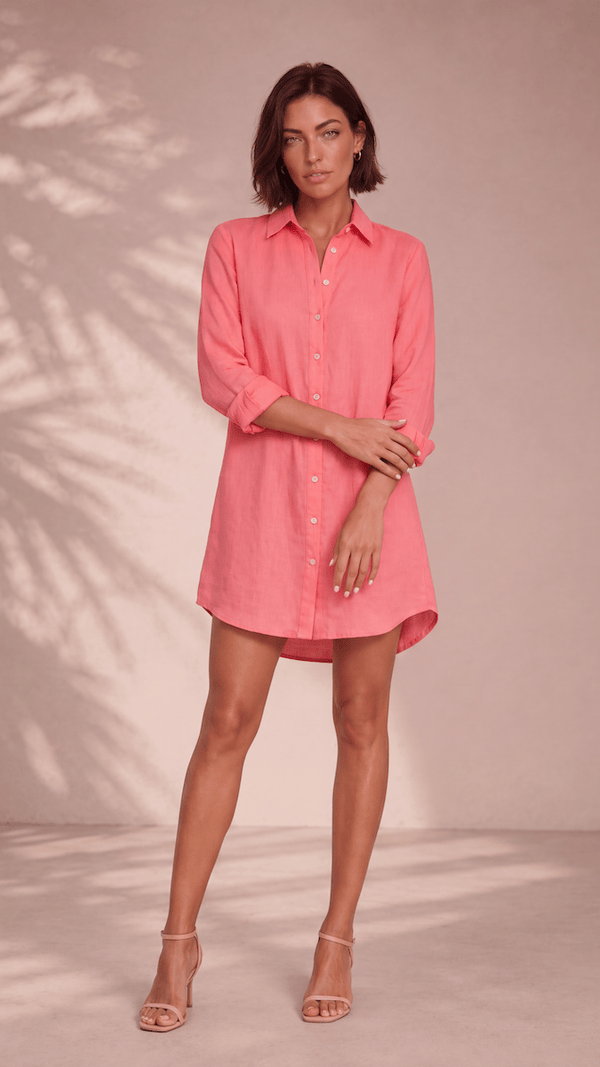
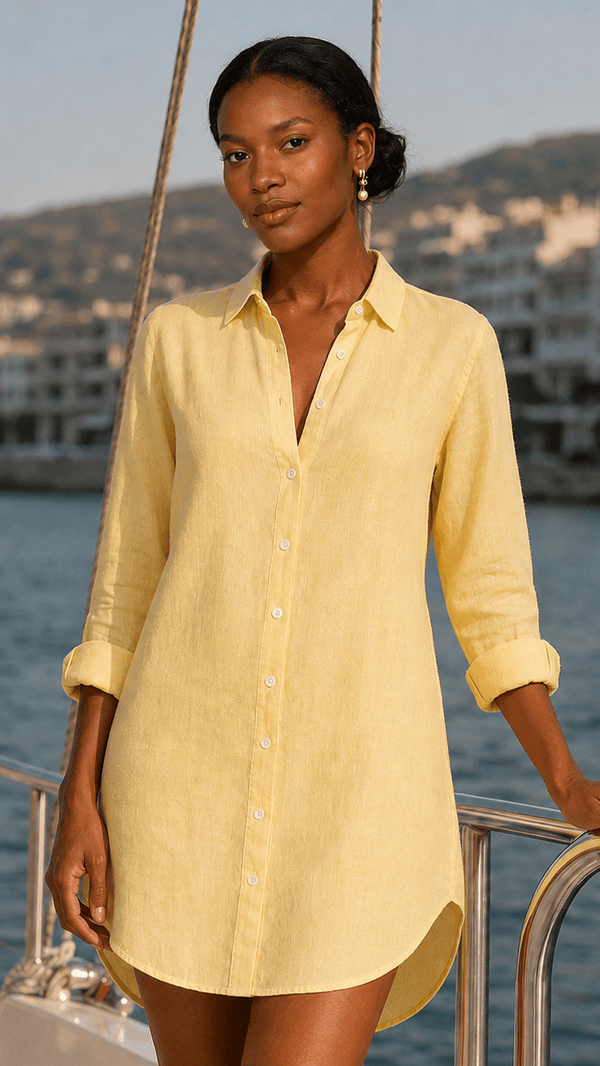
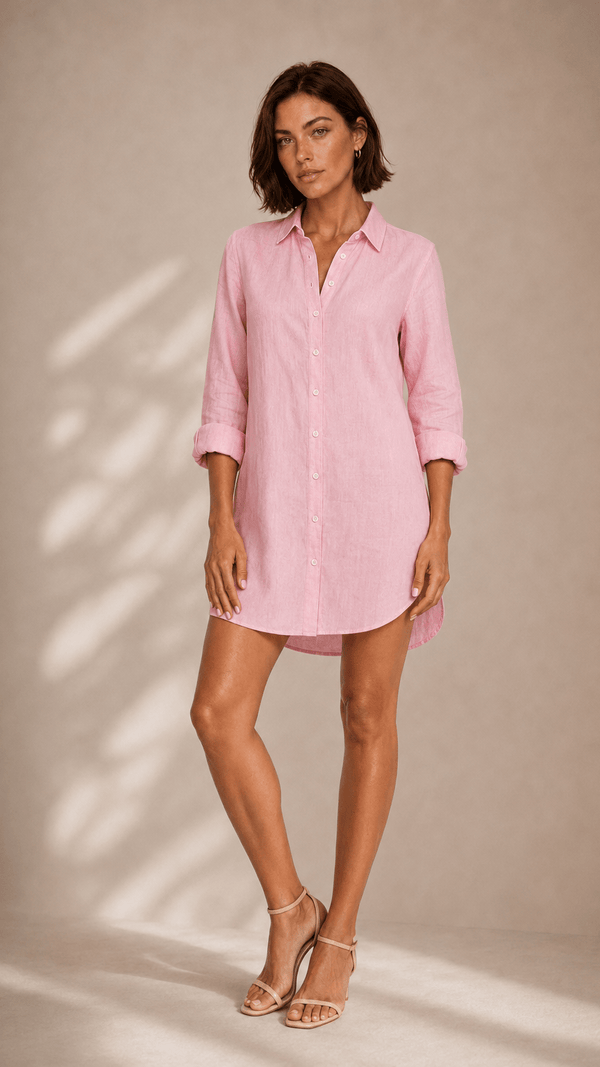
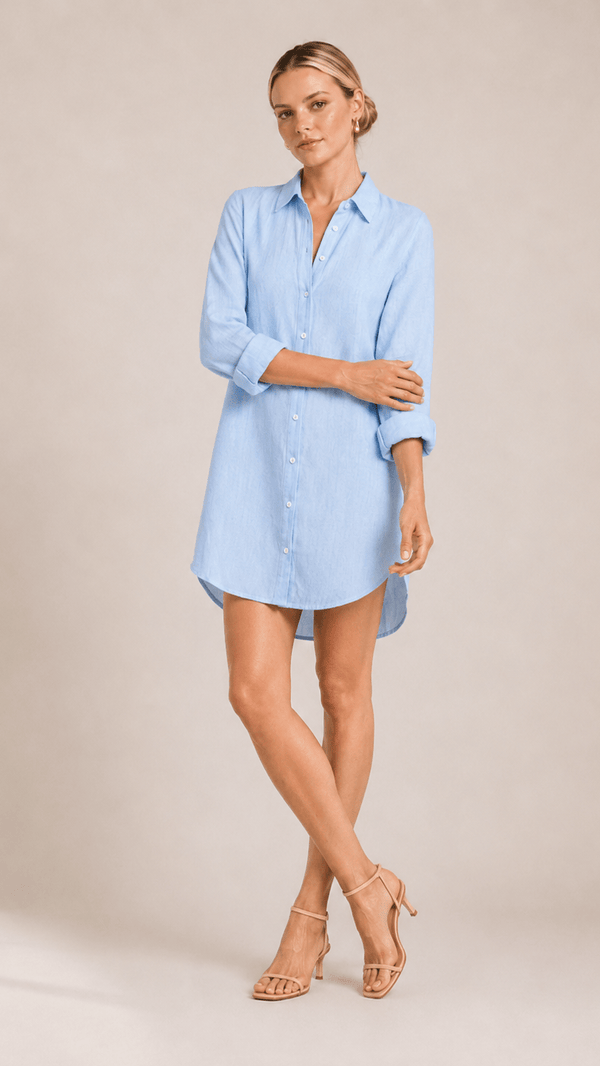
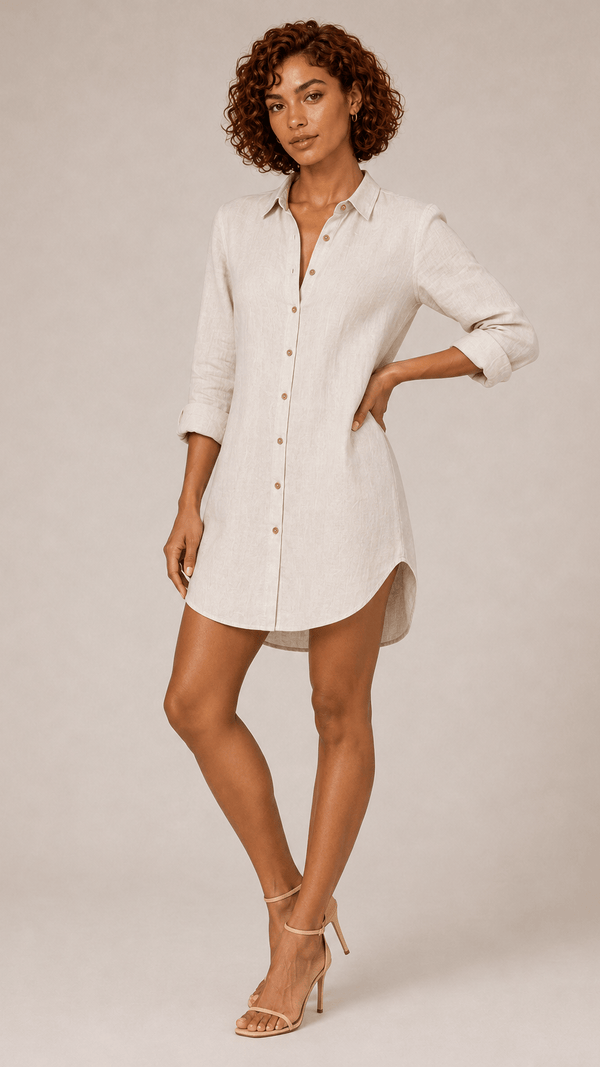
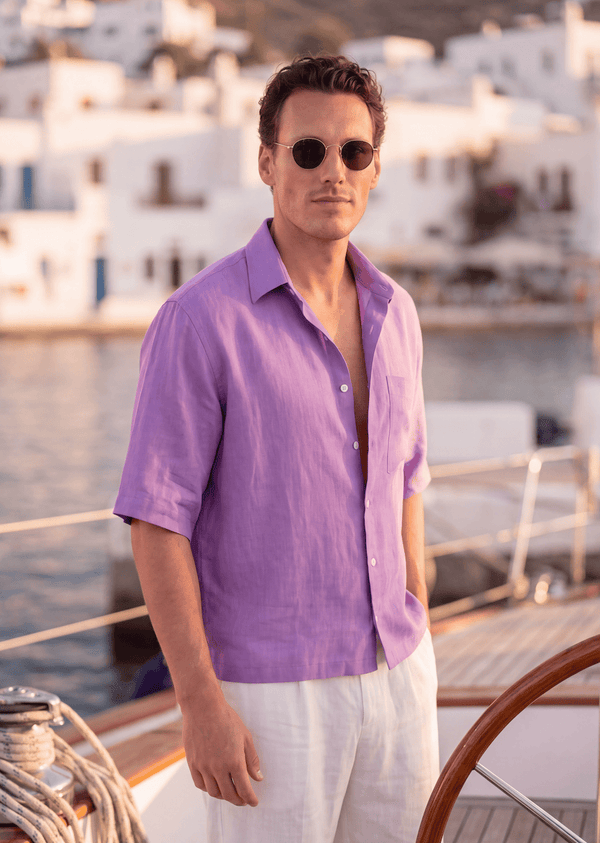
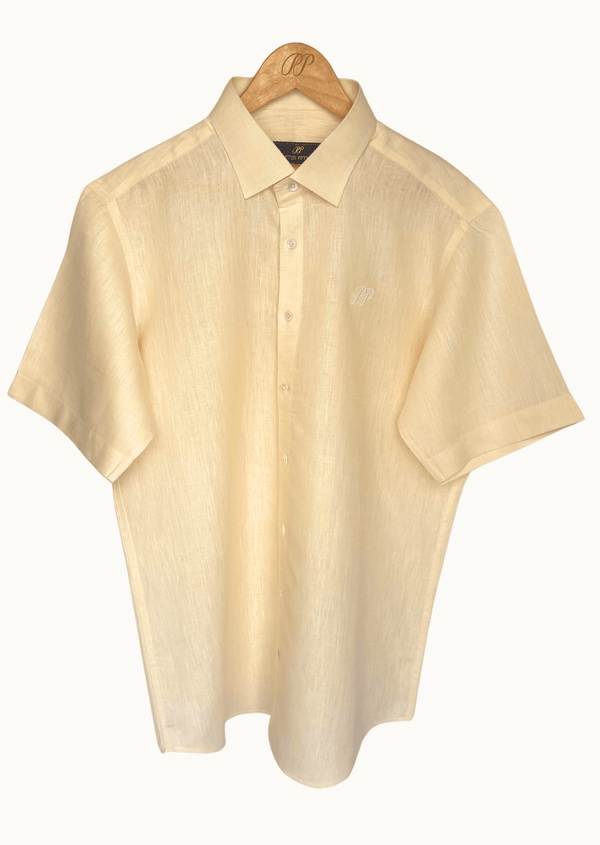
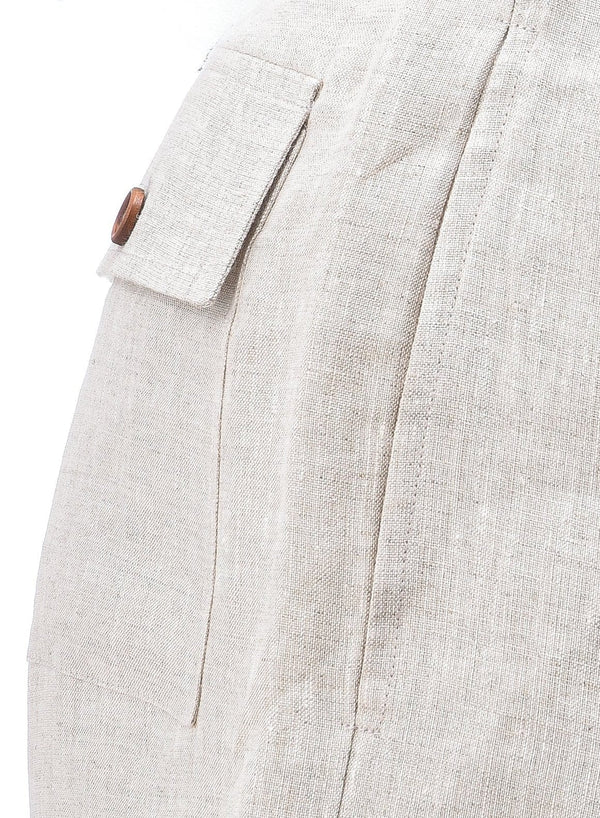
At Pieter Petros, natural buttons are part of the identity of the collection, and they come from two sources. The seashell buttons on most PP shirts are cut from shell, a material from the ocean and from a living creature; for a strict vegan, that makes them an animal product. The walnut buttons, by contrast, come from the nut of a tree. They appear on the Monte-Carlo Male shirt, in Oatmeal, Oyster and Vanille, on the Amelia linen dress shirt in Oyster, and on PP linen trousers, tennis shorts, swim shorts and the shorts of the PP Natural Set. Corozo, the nut of a palm, closes the shorts of the ladies linen set; its blouse carries seashell. Seashell, walnut and corozo buttons differ in weight and lustre as well as in origin.
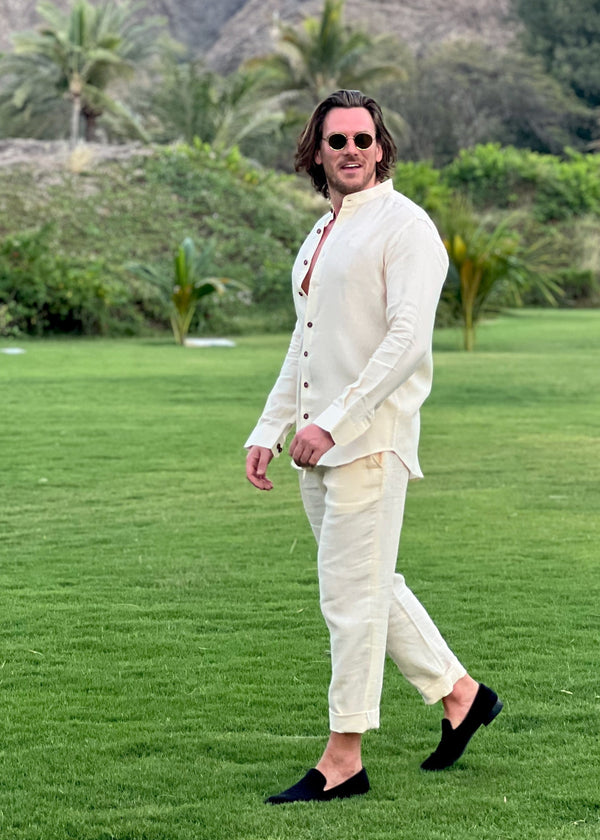
That leaves a clear way to choose. The cloth of every PP linen garment is certified Belgian linen or natural linen: a plant, and biodegradable by design. For a wardrobe that is fully plant-based in its visible materials, a man might choose the Monte-Carlo Male shirt with PP Trousers 100% Linen; a woman, the Amelia linen dress shirt in Oyster, closed with walnut. Some other pieces are made with animal materials by nature: the PP Sauna Hat is wool, and PP shoes are finished on leather soles.
Vegan and natural are not the same word, though they often overlap. A plant fibre that grows on rainfall in Europe, needs no animal input and returns to the soil at the end of its life answers both questions at once. For many who ask whether linen is vegan, that is the deeper question, and flax has answered it the same way for thousands of years.
Read more: What Is Belgian Linen · Biodegradable Luxury Clothing