Is Linen Sustainable? — What Natural and Biodegradable Actually Mean
Is Linen Sustainable? — What Natural and Biodegradable Actually Mean
Whether linen is sustainable — irrigation, pesticides, biodegradability, and what natural and biodegradable actually mean.
Linen is among the most sustainable natural fibres available. The case for this rests on four specific properties, each of which is verifiable rather than aspirational.
Flax is typically grown with far less irrigation than cotton. In the temperate climates where it thrives — northern Belgium, northern France — it relies primarily on natural rainfall. Cotton, by contrast, is among the more water-intensive fibre crops in agricultural production, often requiring significant irrigation in the regions where it is commercially grown.
“From nature, back to nature. PP garments are 100% natural throughout — Belgian linen, natural buttons, no synthetic components.”
— Pieter Petros, founderFlax often requires fewer pesticides than many conventional fibre crops. It has reasonable natural resistance to common pests and diseases, and the volume of pesticide use in flax cultivation is generally lower than in conventional cotton farming, reducing the chemical burden on the soil and surrounding ecosystems.
The fabric is fully biodegradable. Linen is a natural fibre with no synthetic components. At the end of its useful life, a linen garment decomposes completely — returning to the earth without leaving microplastic residue, chemical coating, or synthetic trace. This is categorically different from polyester, nylon, or any blended fabric containing synthetic fibre.
The production does not release microplastics. Every wash of a synthetic garment releases microplastic fibres into the water system. Linen releases nothing. The wash water from a linen garment contains the same fibres as the wash water from any natural fabric — biodegradable, non-accumulating.
The honest qualification: sustainability in fashion involves the full supply chain — dyeing, finishing, transportation, packaging — and no garment is without environmental impact of some kind. What linen offers, specifically, is a base material that begins as a plant, produces no microplastic pollution during use, and returns to the earth when its life is done. That is a meaningful starting point.
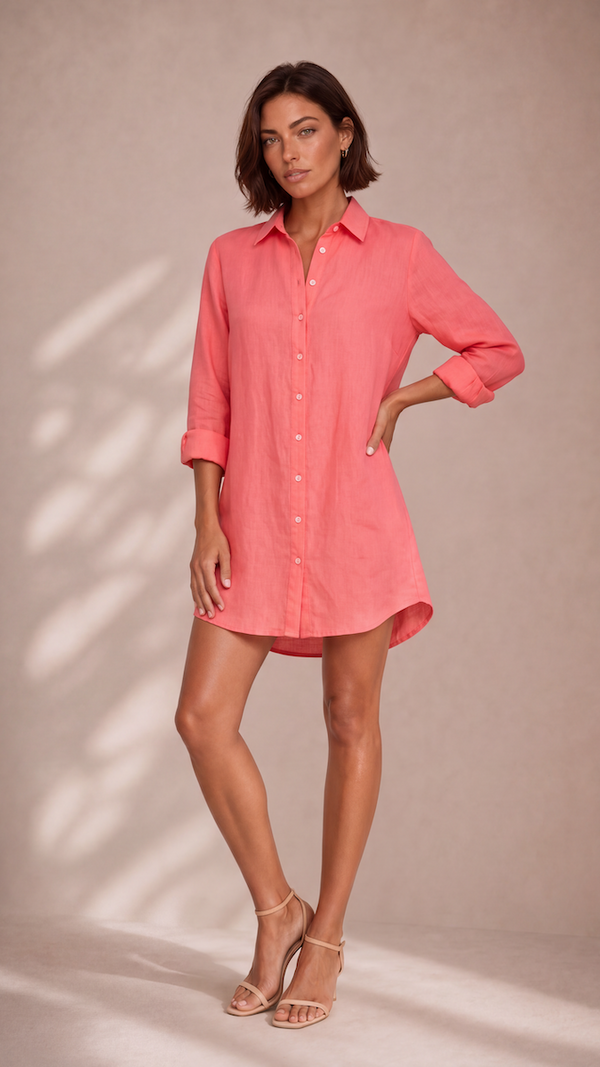
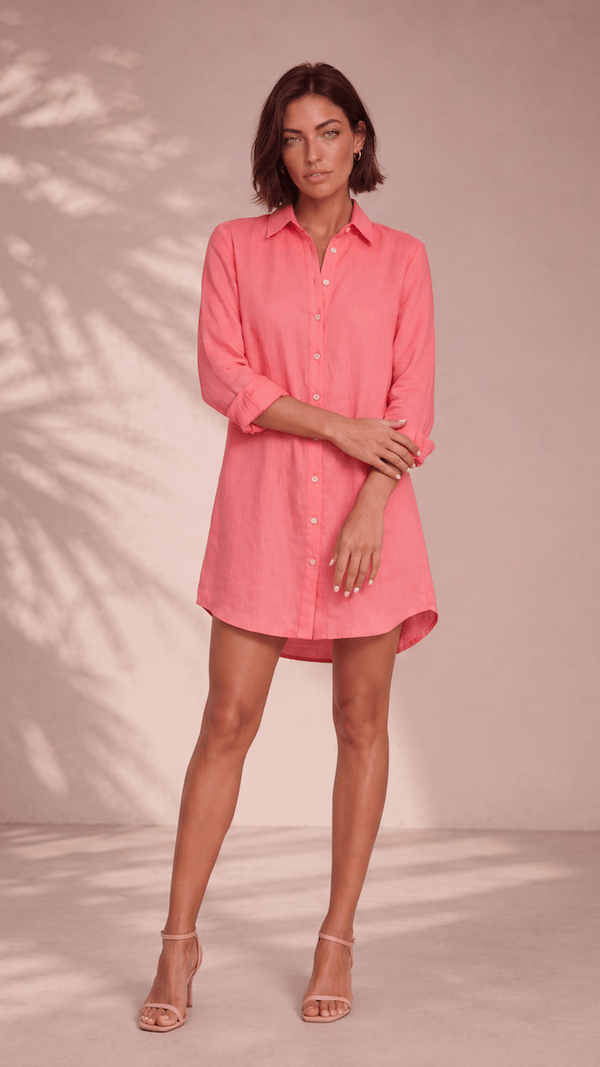
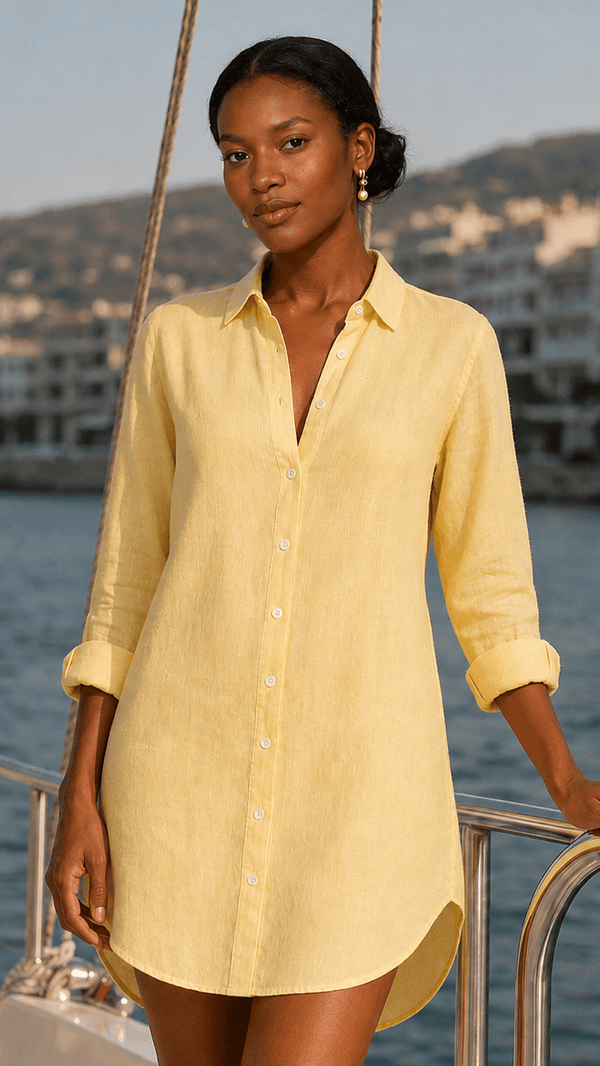
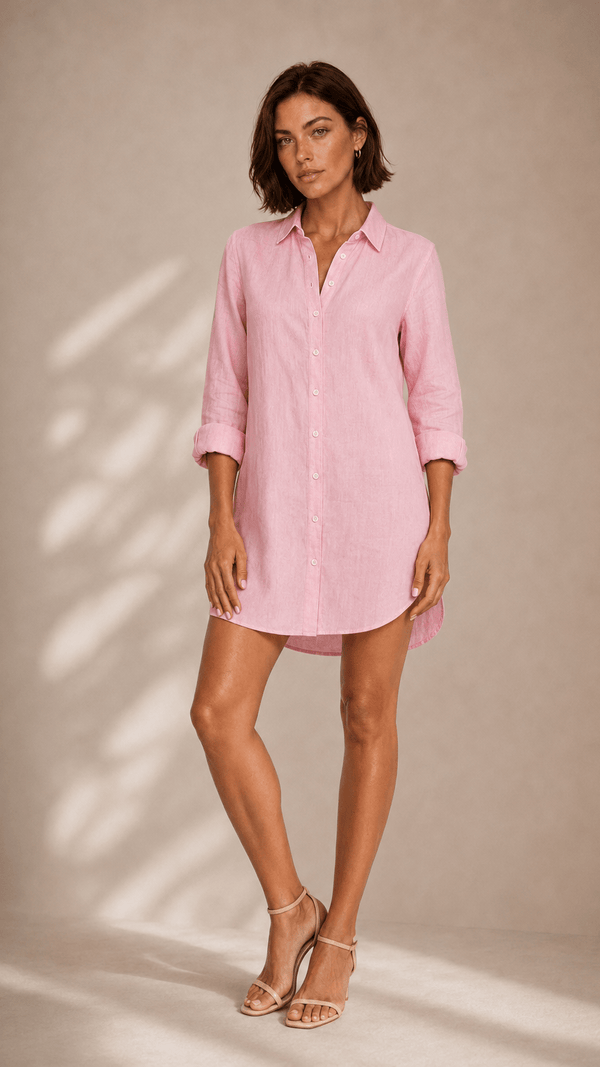
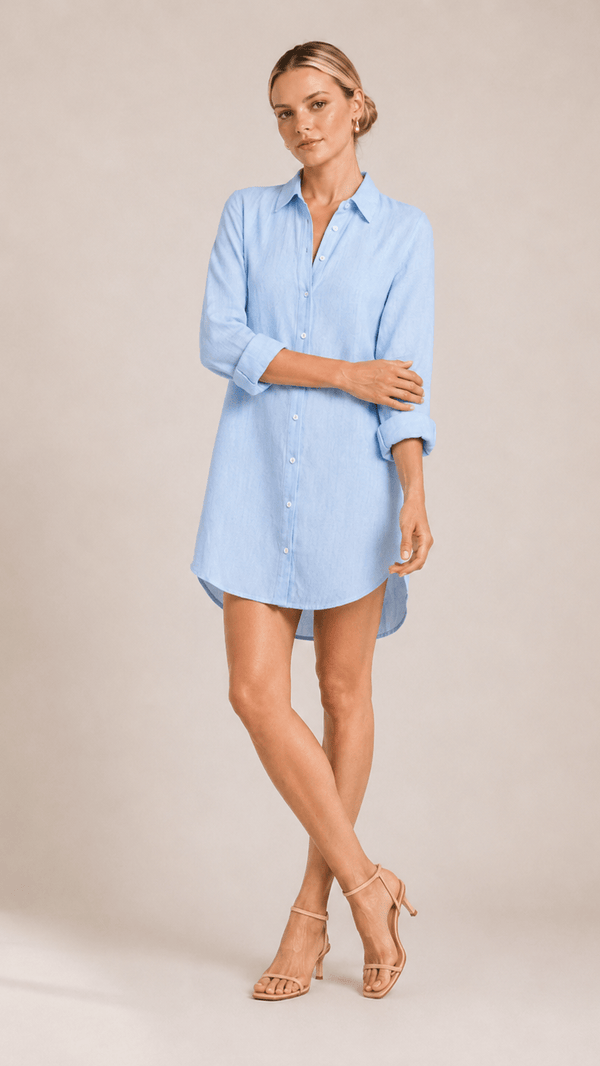
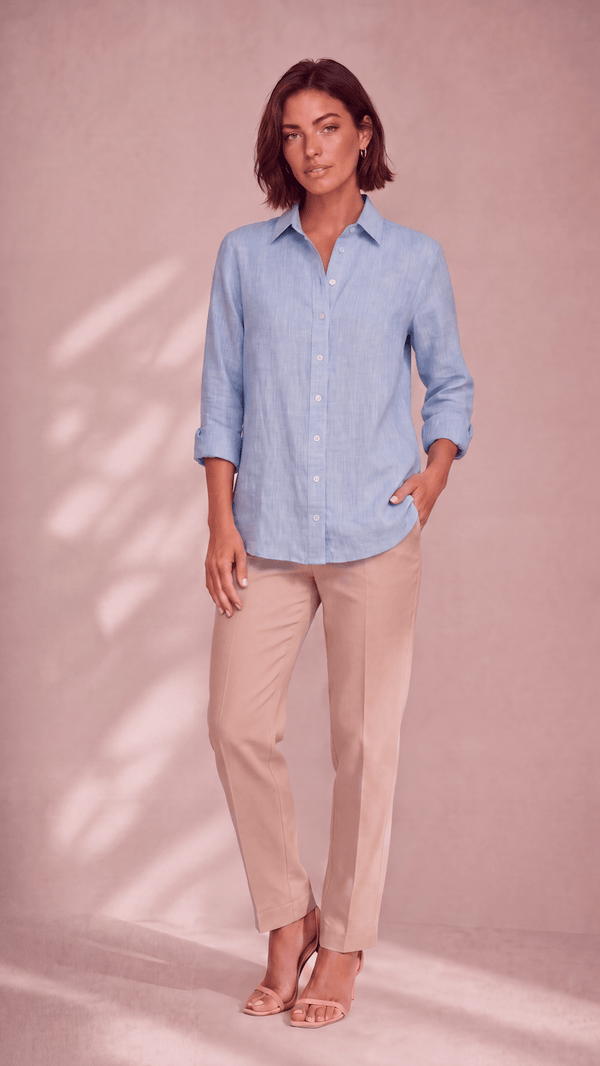
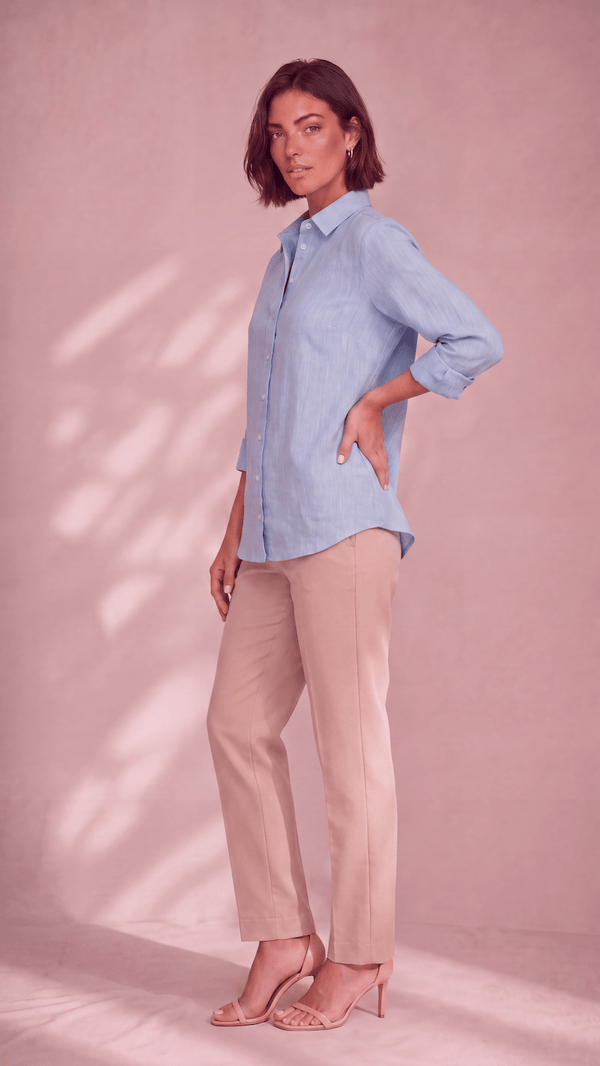
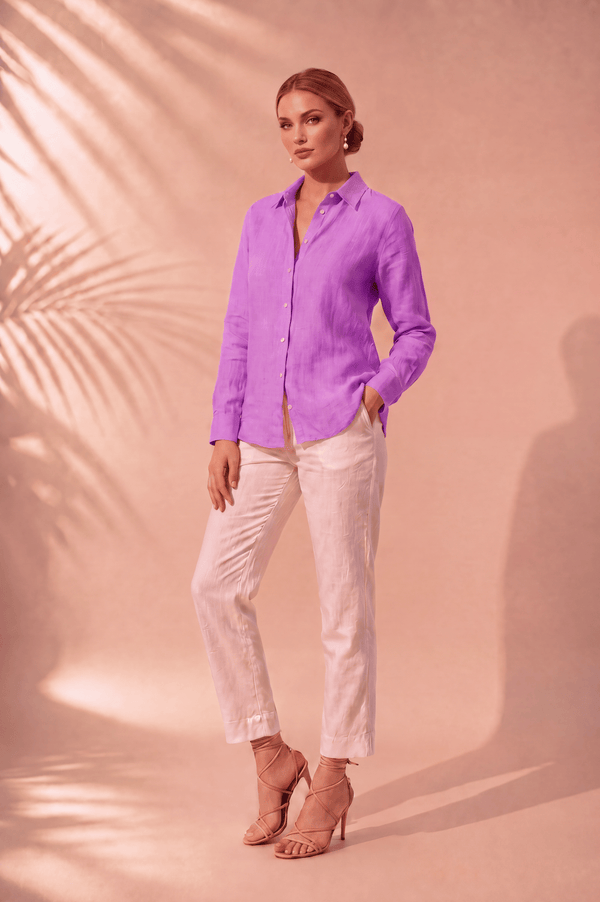
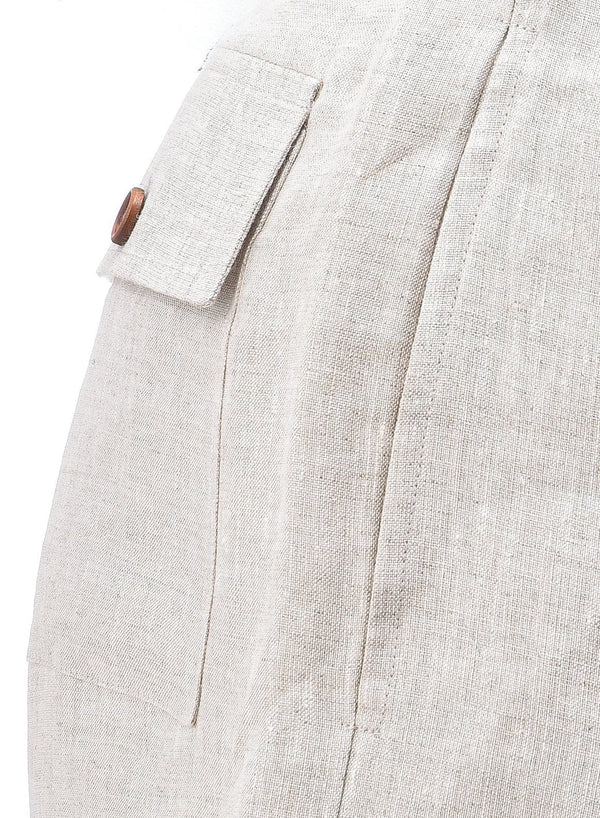
PP garments are 100% natural throughout. Belgian linen fabric. Natural buttons — walnut, seashell, corozo nut. No synthetic components at any point in the construction.
From nature, back to nature.
What Your Clothes Are Doing to the Ocean · The Case for Biodegradable by Design · Men's Linen Collection