How to Identify Premium Linen — What to Look For
How to Identify Premium Linen — What to Look For
Four markers that distinguish premium linen from ordinary — hand, drape, certification, and what happens after a year of wear.
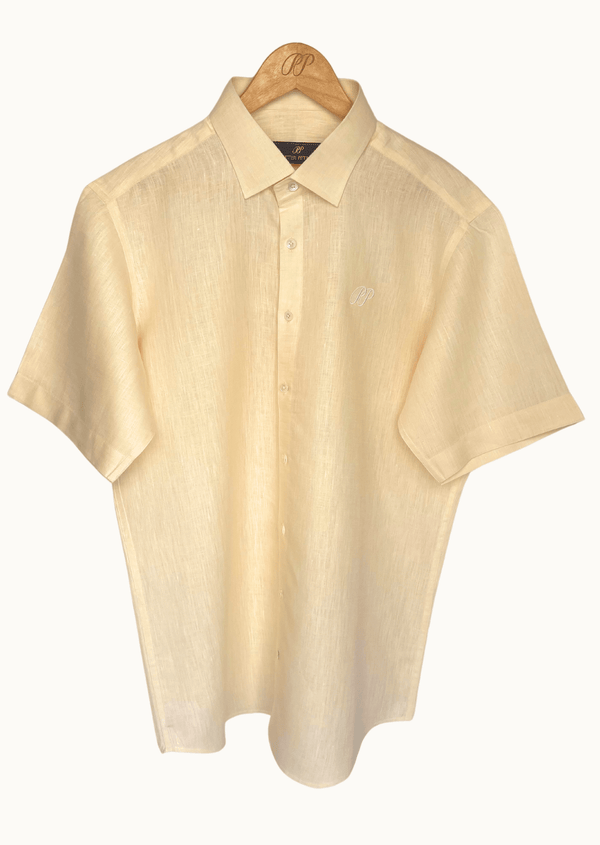
Most linen is not premium linen. The word linen on a label describes a fibre category, not a quality. Within that category the range is wide — from short-staple flax grown quickly and woven coarsely, to the long-staple Belgian linen that PP uses in every garment. The difference is real and felt immediately.
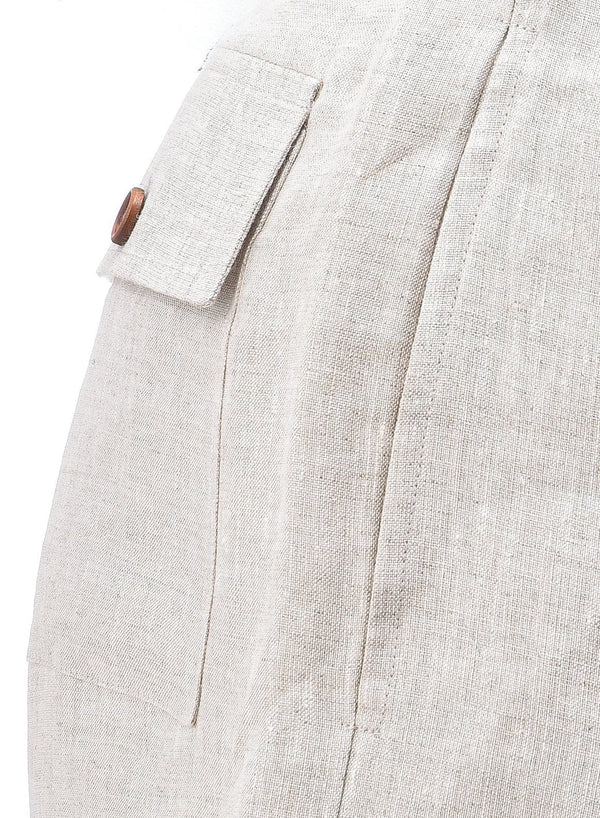
The hand. Premium linen has a weight and presence immediately distinct from lower-grade cloth. Not thin or papery. Not stiff or rough. A particular solidity — substantial enough to hold its structure, smooth enough that the individual fibres do not register against the fingertips. If linen scratches on first contact, the fibre is short-staple or poorly processed. Belgian flax is smooth from the first wear and becomes more so.
“If linen scratches on first contact, it is not premium linen. The hand tells you immediately. You do not need the certificate.”
— Pieter Petros, founderThe drape. Hold it away from the body and let it fall. Premium linen falls in a continuous, fluid line. Lower-grade linen creases into angular folds or hangs without movement. The drape is a consequence of long, fine fibres spun into consistent yarn.
The certification. Belgian linen is governed by a protected certification of origin — a legal standard that confirms the flax was grown and processed in the designated region. A certificate accompanying the finished garment is the clearest confirmation: not a label, a document. Every PP garment includes one.
The improvement over time. This is the test that takes patience. Premium linen softens with every wash without losing structure. A garment worn for a year should feel noticeably better than the one that arrived. If it has stiffened, pilled, or lost its drape, the linen was not premium at the start.
Most people only discover this distinction after wearing both. By then, it is difficult to go back.
The case for Belgian linen is made in full in the PP Journal.