Luxury Linen Brand — What Separates a Fashion House from a Label
Luxury Linen Brand — What Separates a Fashion House from a Label
From the flax field to the last button: the four things a luxury linen house controls, and a label usually does not.
A luxury linen brand is defined by what it controls between the flax field and the finished garment: where the fibre was grown, whether that origin can be proved, how each piece is made, and what it is finished with. Price follows from those decisions. It never replaces them.
The distinction matters because linen is one of the oldest textiles in the world and one of the most generous words on a label. A shirt from a market stall and a garment finished by hand can both carry it. On the hanger they look alike; after a summer of wear, they no longer do.
“Linen is one word on a label. Everything that matters is in what the word leaves out.”
— Pieter Petros, founderIt begins in a field. Flax for fine linen is sown in spring and, in high summer, pulled from the ground with its root rather than cut, so that the full length of the fibre is kept. The stems are then laid in rows on the field for several weeks, where dew, rain and sun loosen the fibre from the woody core. The cool, damp coastal belt that runs from Normandy through Flanders into the Netherlands suits this slow cycle better than almost anywhere: France, Belgium and the Netherlands together grow around three-quarters of the world’s long flax fibre, the grade spun into fine cloth. The whole journey is told in how linen is made, from the flax field.
An origin is only worth what its proof is worth. Belgian Linen® is a certification mark with precise conditions: the cloth must be woven in Belgium, and at least 85 percent of its weight must be flax grown in Europe. Its certificate follows the flax from the field to the fabric. A luxury house works with certified cloth and names it colourway by colourway; where a piece is natural linen without the mark, it says so just as plainly. The Belgian Linen® certificate is the document worth asking about before any other.
Then comes the making. A label buys finished shirts; a house makes them. Pieter Petros garments are handmade in the Dubai atelier and in Belgium, in small quantities, and it shows in places a customer soon learns to look at: two collar points that sit evenly, a placket that lies flat, buttonholes finished cleanly enough to last for years. What changes when a garment is truly handmade is rarely visible in a photograph, and always visible in the hand.
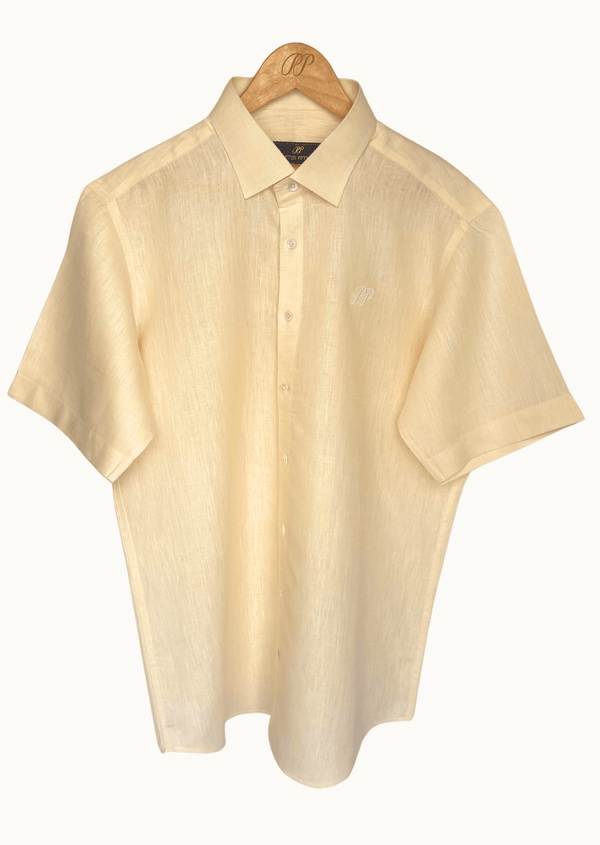
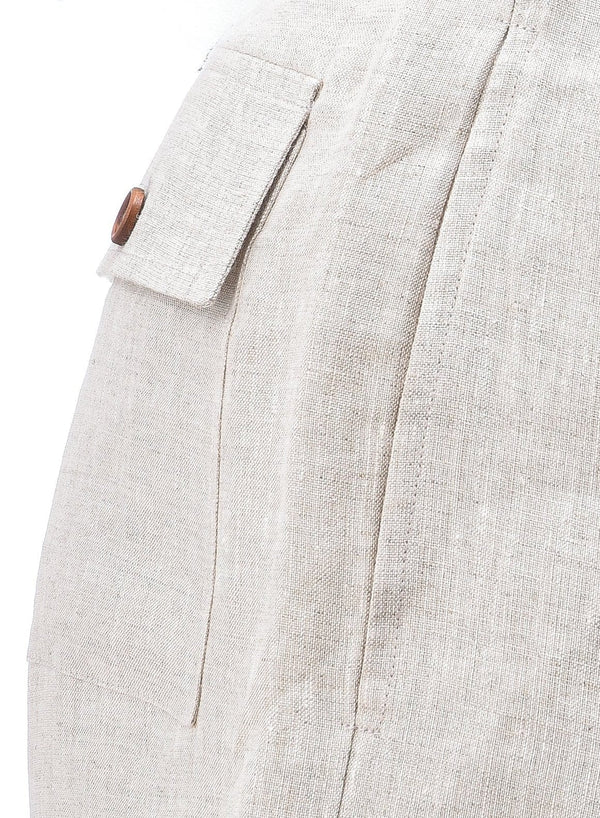
The details close the argument. Buttons are cut from seashell on most PP shirts and from walnut on the Monte-Carlo Male and on the linen shorts, trousers and swim shorts, so that nothing on the garment is synthetic and the whole piece is biodegradable by design. A brand that chooses natural fibre and then finishes it in plastic has abandoned its own reasoning at the final step; the story of seashell and walnut buttons is the story of not doing that.
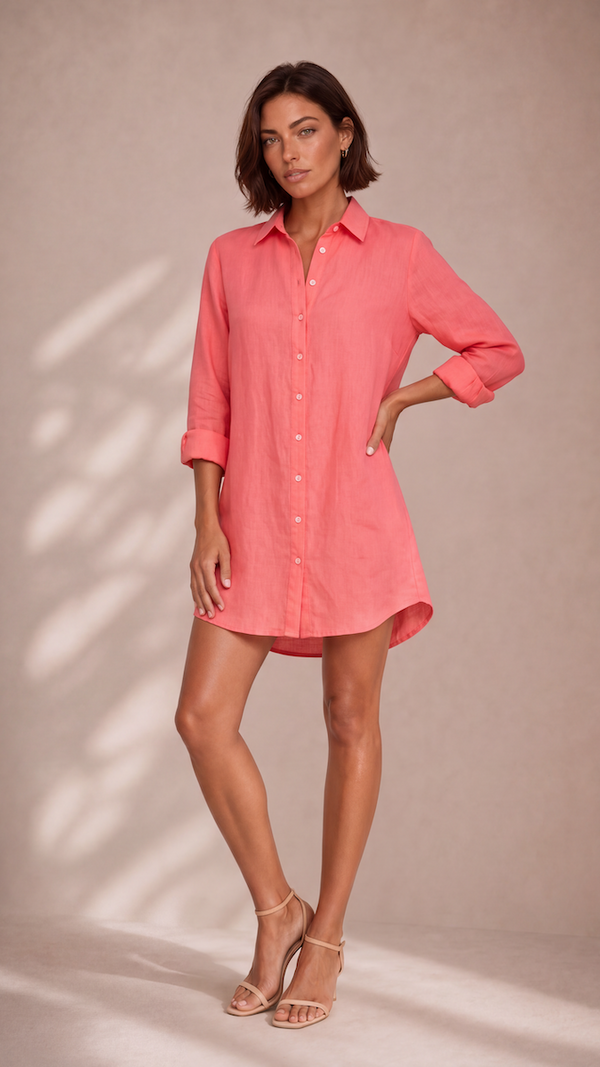
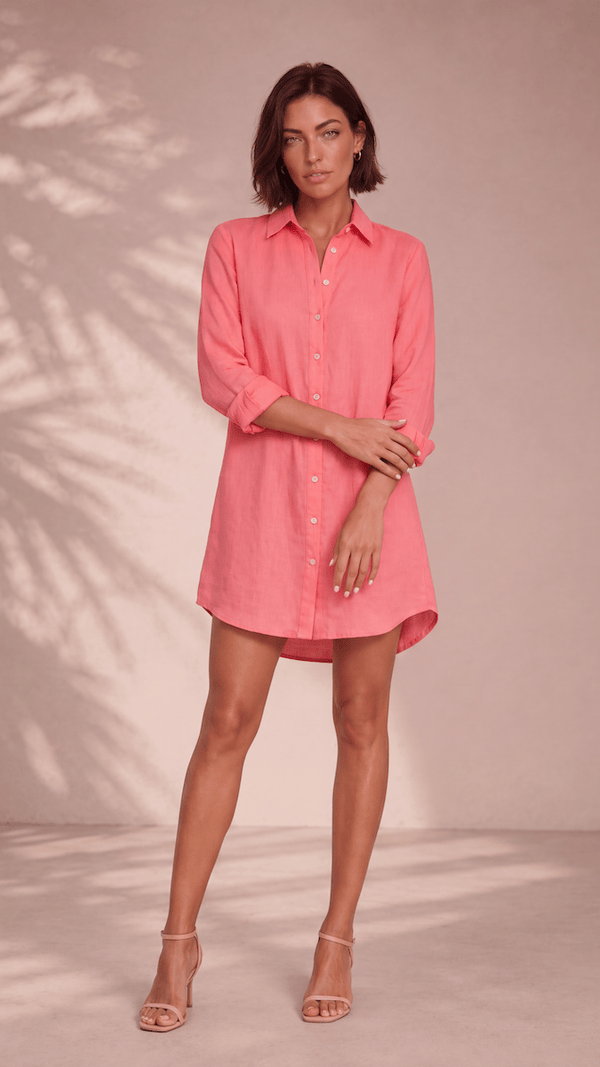
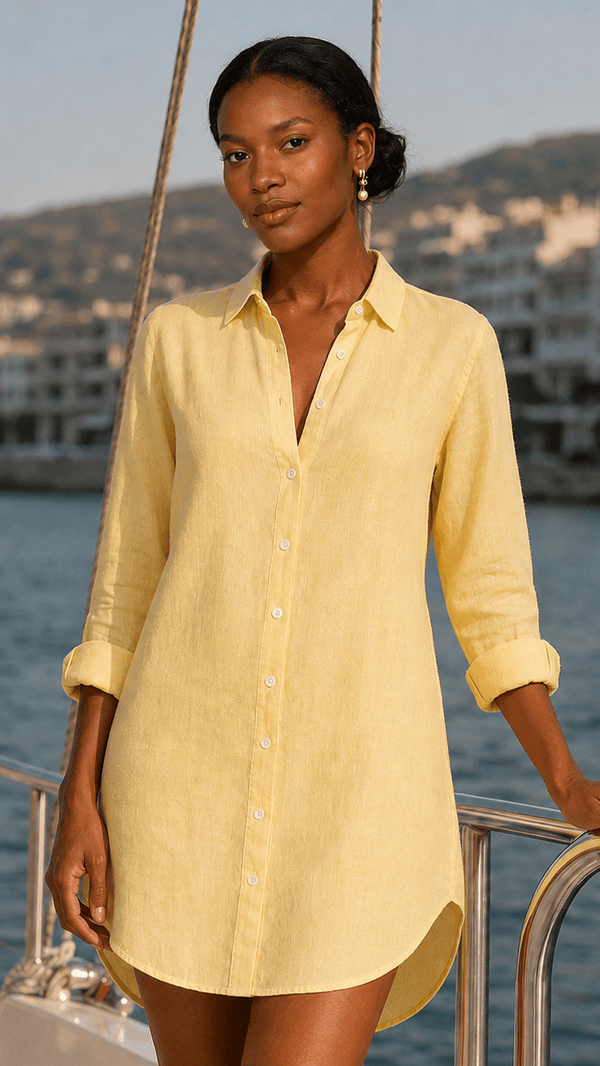
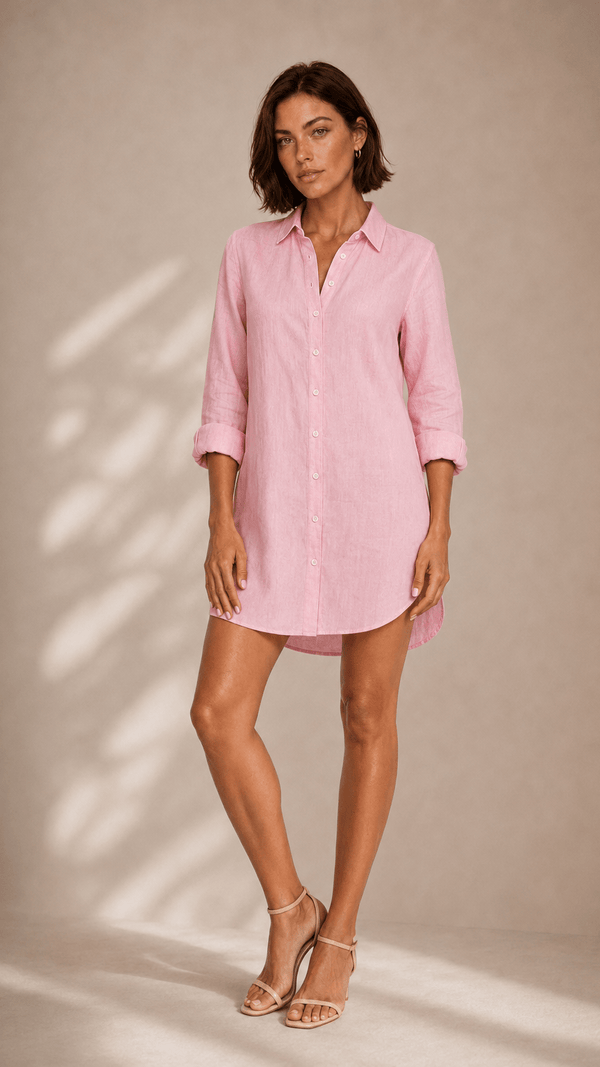
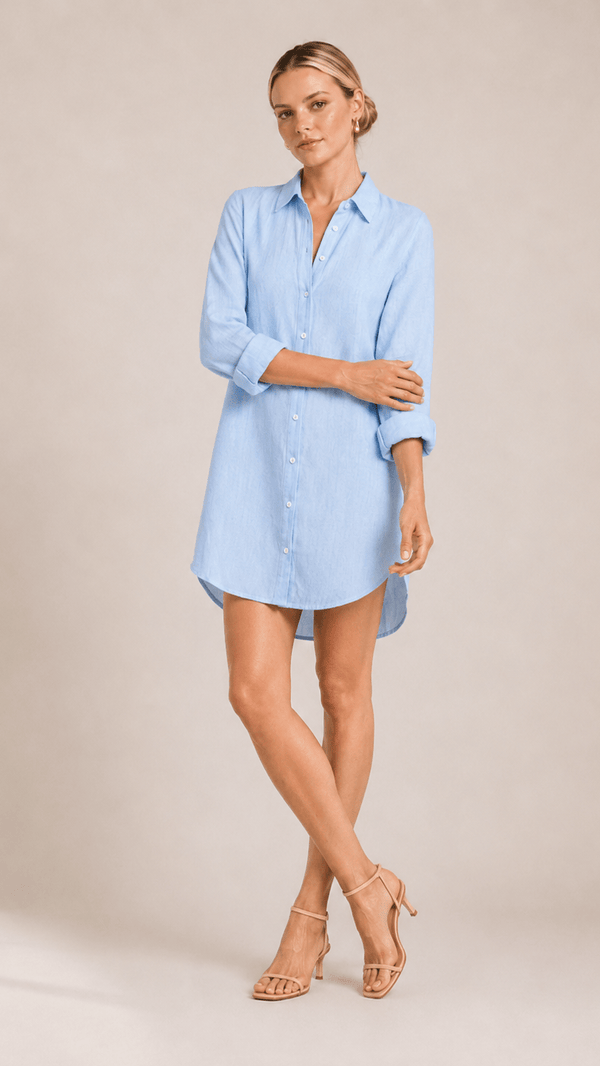
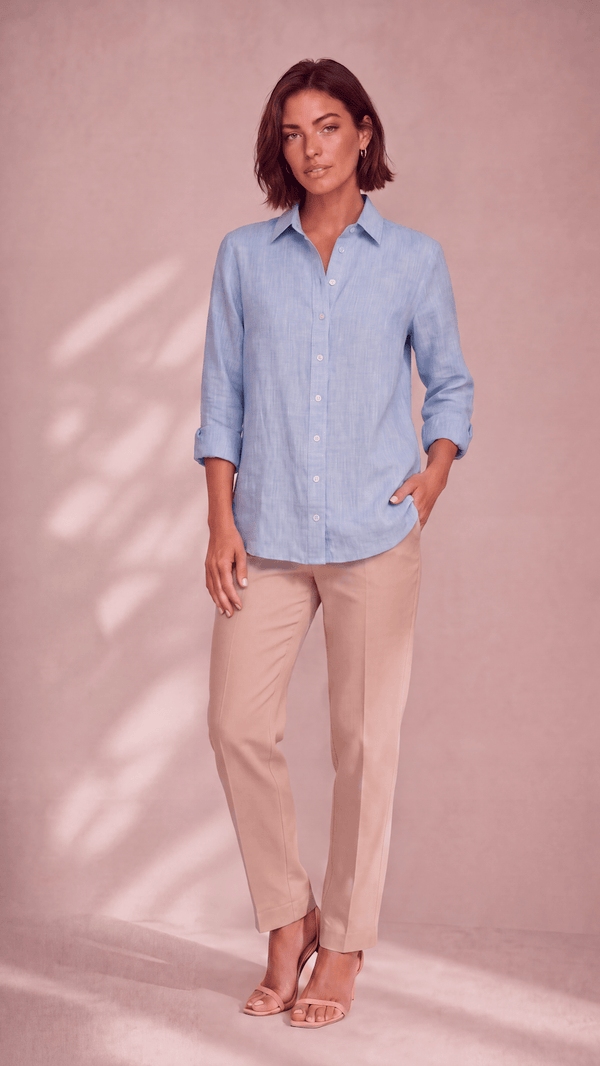
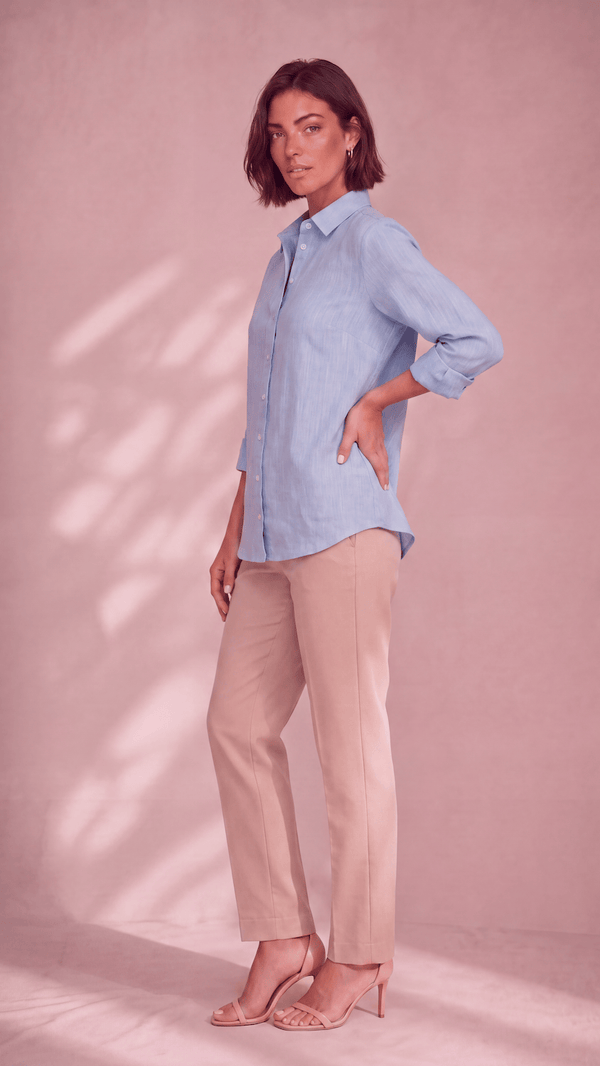
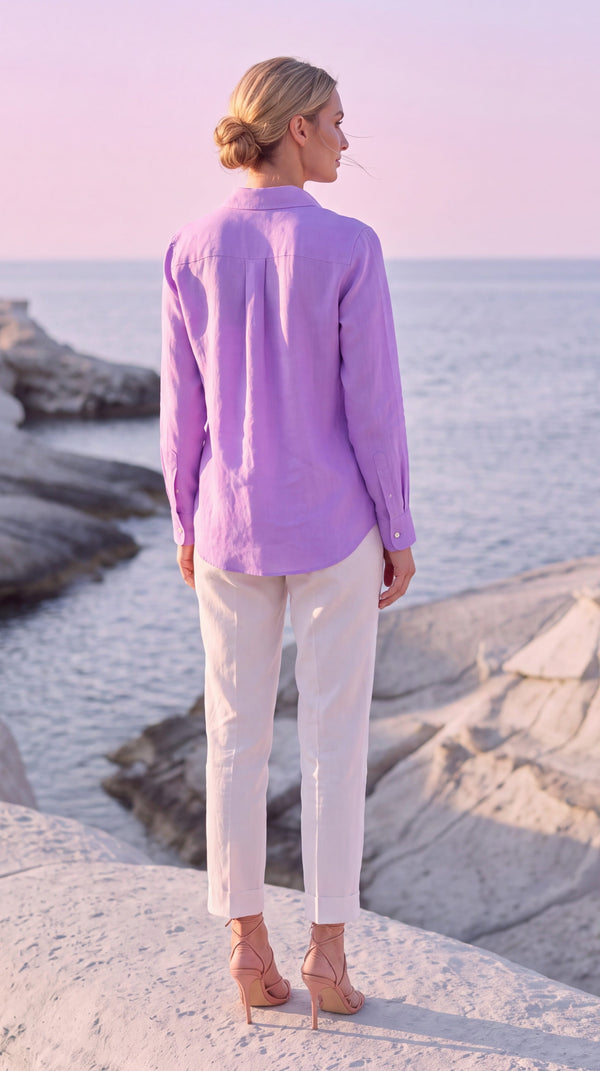
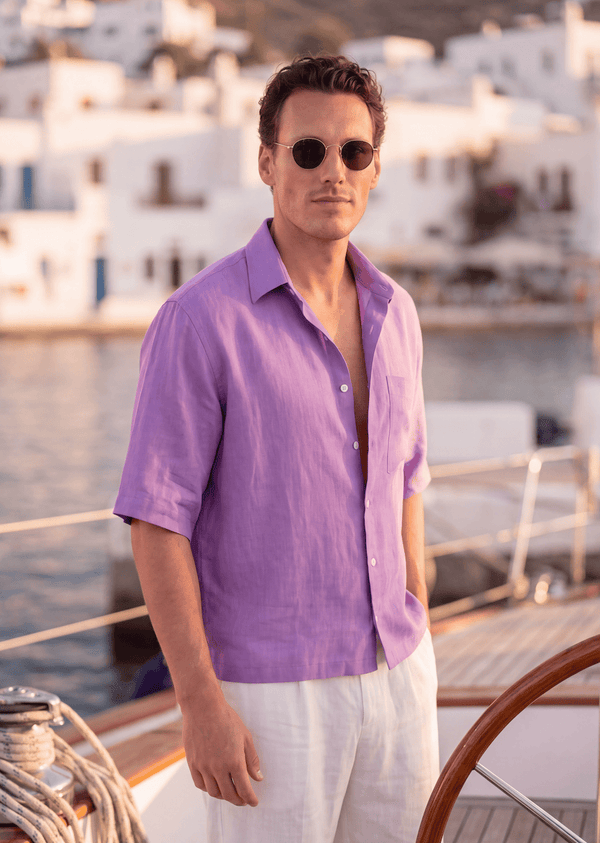
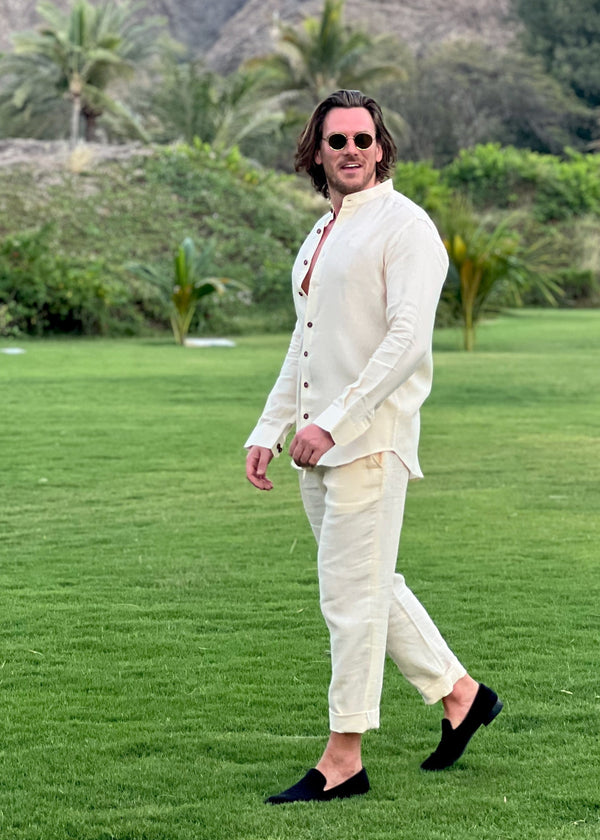
A house also edits. Rather than a new palette every few months, it keeps a small number of cuts and refines them: in the men’s linen collection, the Laos in long and short sleeves, the Monte-Carlo Male, the shorter and easier Vibes. In the women’s collection, the Amelia linen dress shirt, a dress in itself, and the PP linen blouse. Colourways are chosen for the places they will be worn: Oyster, Vanille and White for the day, Dubarry and Violet for the evening.
Finally, a house is judged by the company it keeps. Pieter Petros is presented in resort boutiques chosen one by one: One&Only Aesthesis on the Athenian Riviera, One&Only Kéa Island in the Cyclades, Four Seasons Resort and Residences Puerto Rico, Park Hyatt Dubai and its Lagoon Beach Club, Surf Club Dubai, Sofitel The Palm Beach Resort, and Tiziano Brunetto in Santa Margherita Ligure, near Portofino.
Four questions separate the two worlds quickly. Where was the flax grown? Is there a certificate, and for which colourways? Where, and by whom, is the garment made? What are the buttons made of? A label tends to answer one of them. A house answers all four, without hesitation, and that is what the word luxury should mean when it is written next to linen.
The Finest Linen in the World · The PP Atelier in Dubai · Men's Linen Collection