How Linen Is Made — From Flax Field to Finished Cloth
How Linen Is Made — From Flax Field to Finished Cloth
On the full journey of Belgian linen — from the ground in northern Belgium to the PP atelier in Dubai.
Linen begins in the ground. This is not a poetic description — it is a literal one. The flax plant grows from seed in the particular soil of northern Belgium and France, reaching full height in approximately a hundred days. It is harvested whole — pulled from the ground by the roots rather than cut, to preserve the full length of the stem and the full length of the fibre within it. That length is what makes Belgian linen what it is.
From field: retting
After harvesting, the flax undergoes retting — a process in which the stems are laid on the ground or submerged in water to allow the natural decomposition of the outer material, separating the usable flax fibre from the woody core. Water retting, the traditional method, produces the finest, most consistently coloured fibre. It is slower than other methods and requires specific conditions to work correctly. The climate of Belgium and northern France makes it possible.
“From the ground to the garment, every step is a reduction — removing everything that is not the fibre.”
— Pieter Petros, founderFrom retting: scutching
The retted stems are dried, broken, and scutched — a process of mechanical beating that removes the remaining woody material and separates the long line fibre from the shorter tow fibre. The line fibre — the longer, finer filaments — is what becomes the finest linen fabric. It is combed, drawn into a continuous thread, and spun into yarn.
From yarn: weaving
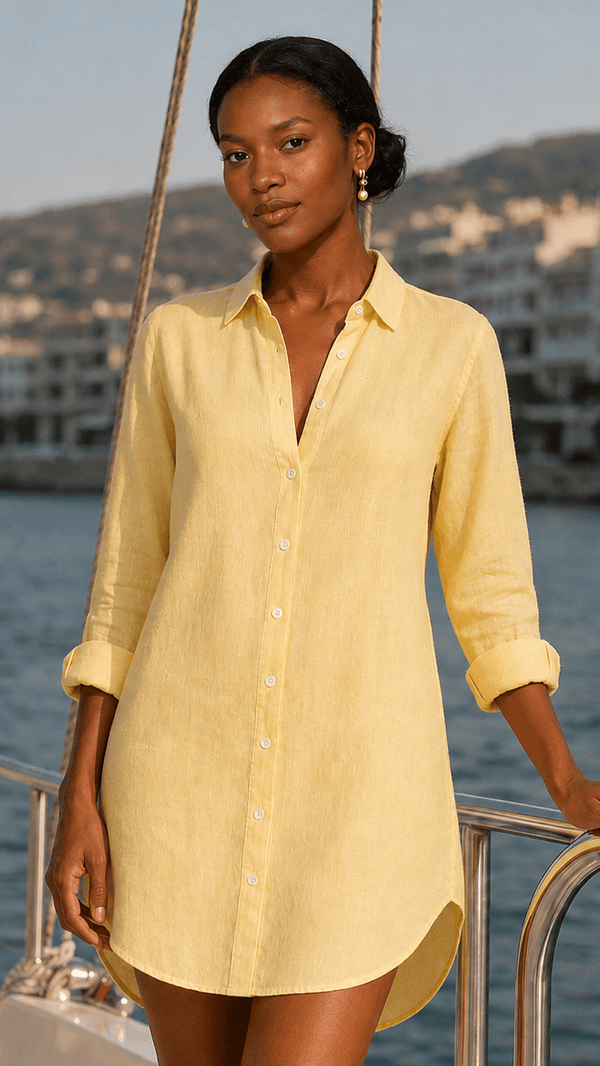
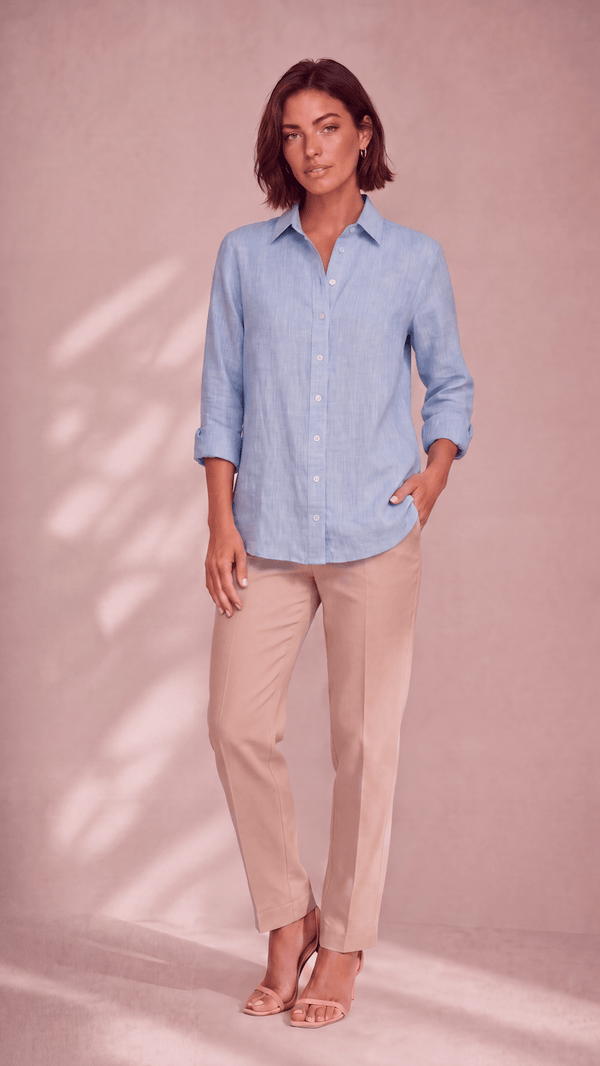
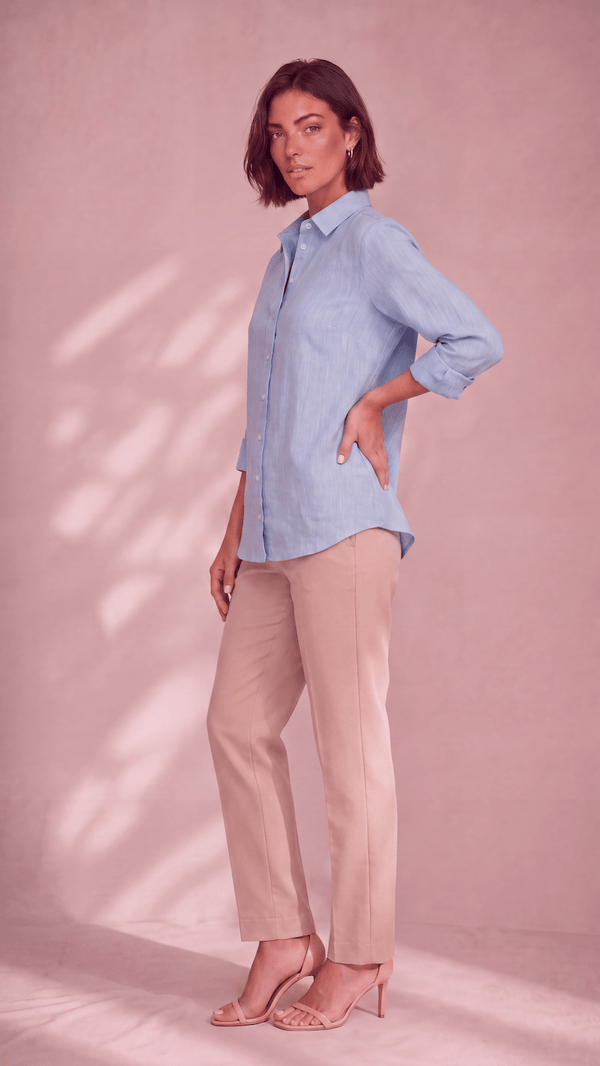
Belgian linen weaving follows traditions that are centuries old, carried out on looms that produce the particular weight and structure of the cloth. PP uses Belgian linen woven for garment use: substantial enough to hold its drape and structure, fine enough to breathe against the skin and settle with wear. The full character of the finished cloth — how it feels, how it drapes, how it improves with washing — is determined at this stage.
From cloth: the atelier
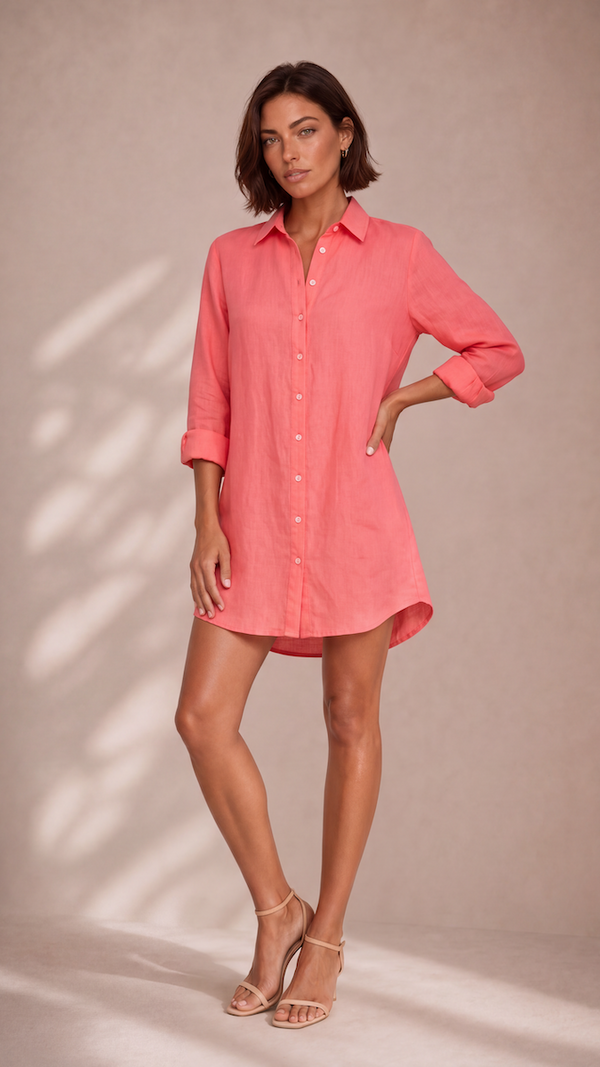
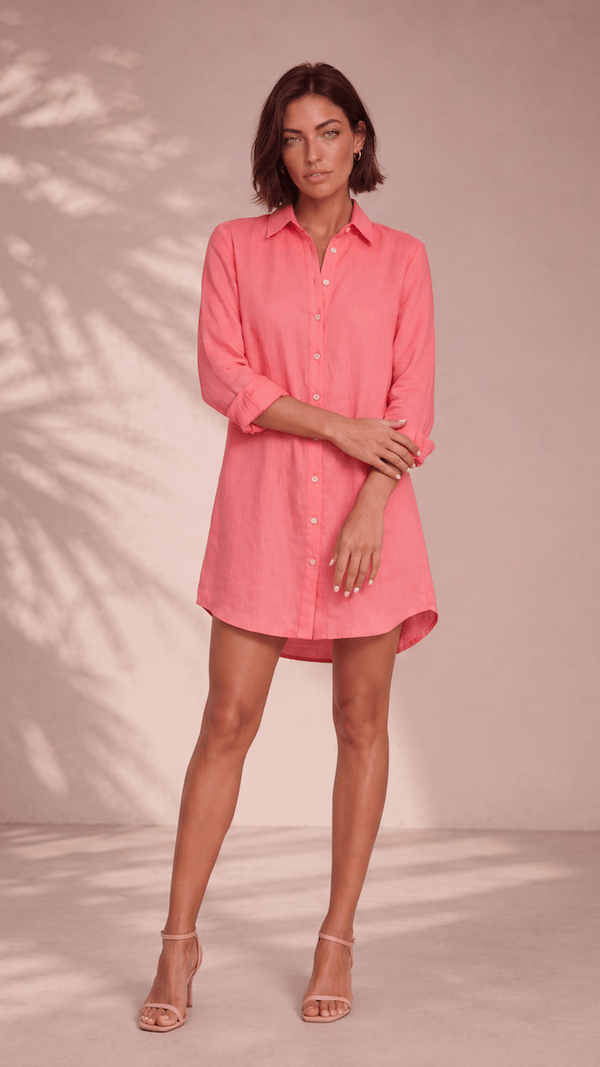
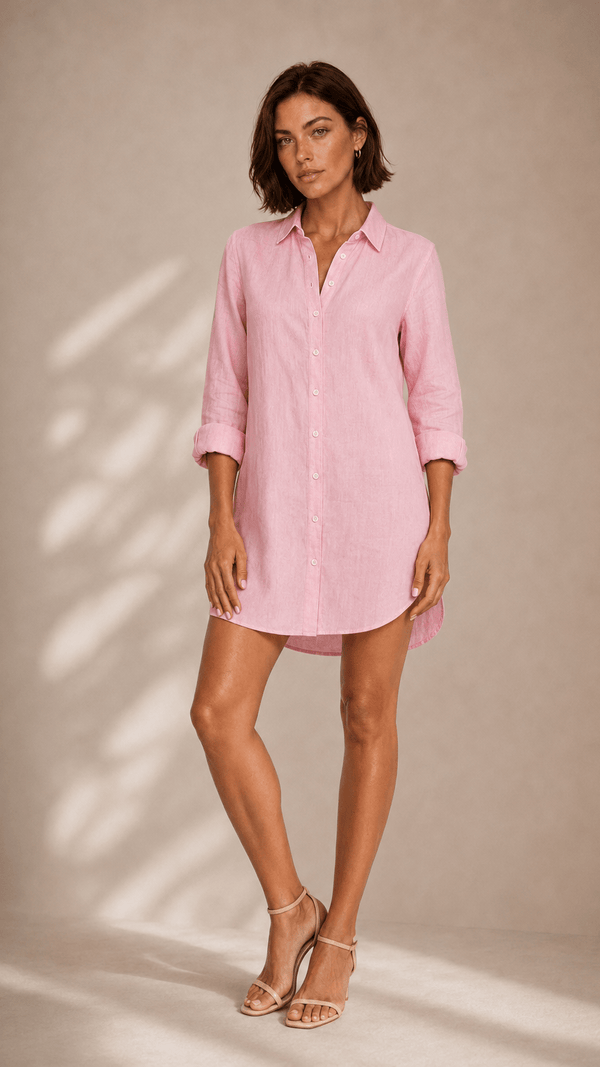
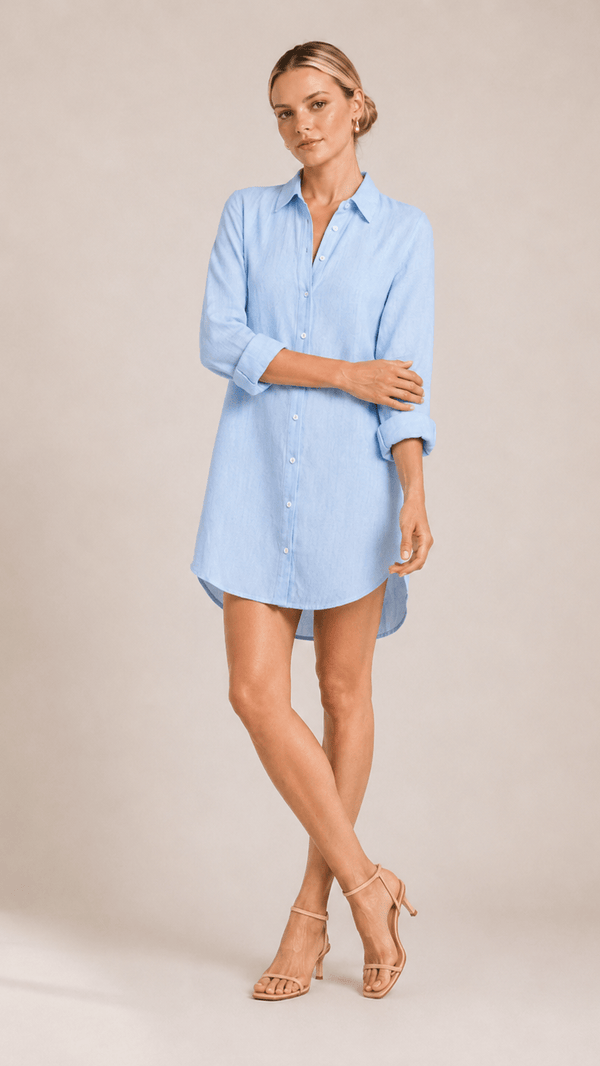
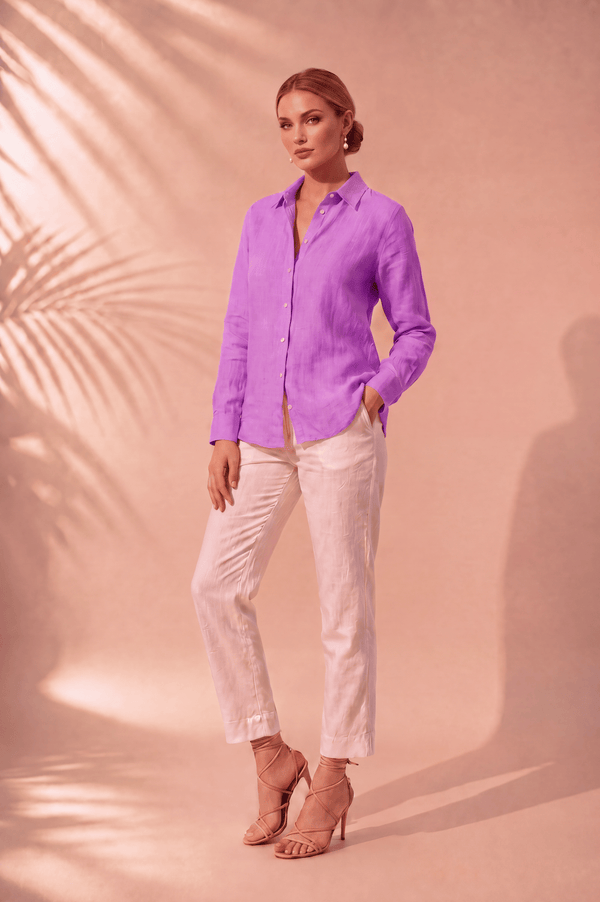
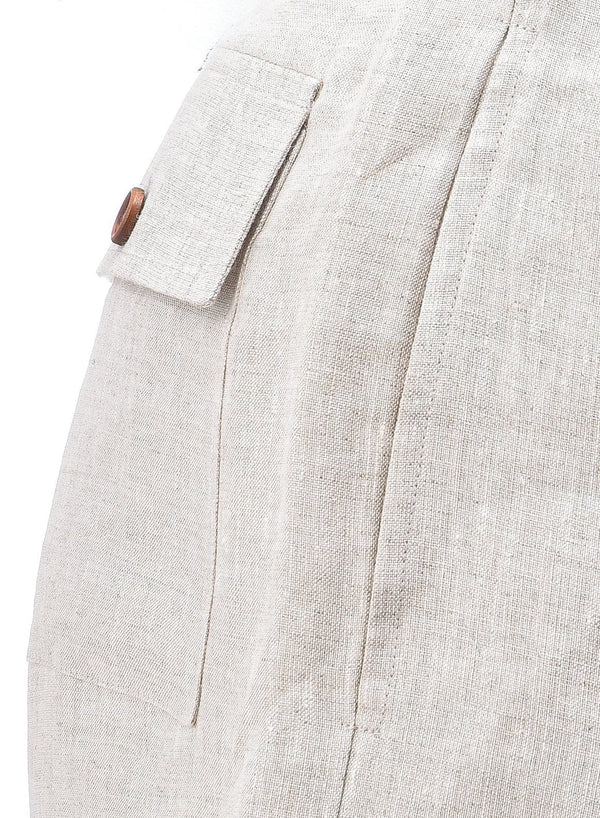
The finished cloth arrives at the PP atelier in Dubai. There it is cut by hand, constructed by hand, and finished with natural buttons — walnut, seashell, corozo nut — chosen for each garment. A certificate of origin accompanies every finished piece, confirming that the linen is what it is claimed to be: grown, retted, woven, and certified in the region that produces the finest linen in the world.
From flax field to finished garment, the process is one of reduction — removing everything that is not the fibre, until what remains is a cloth of exceptional quality and known provenance.
This is how linen has been made for thousands of years. At its finest, it is still made this way now.