What to Wear in Sri Lanka for Men — Temples, Galle Fort and Tea Hills
What to Wear in Sri Lanka for Men — Temples, Galle Fort and Tea Hills
Temple whites, a Dutch fort, the tea hills and the Indian Ocean in a single journey.
In a Sri Lankan village, the everyday garment for a man is the sarong, a tube of cotton cloth wrapped at the waist, worn with a loose shirt. In the cities, office workers wear light trousers and pressed shirts, and at the temples, white is the colour of devotion. A visitor who understands those three registers will know most of what there is to know about what to wear in Sri Lanka for men: loose cloth that breathes, long trousers wherever respect is due, and white for the sacred places.
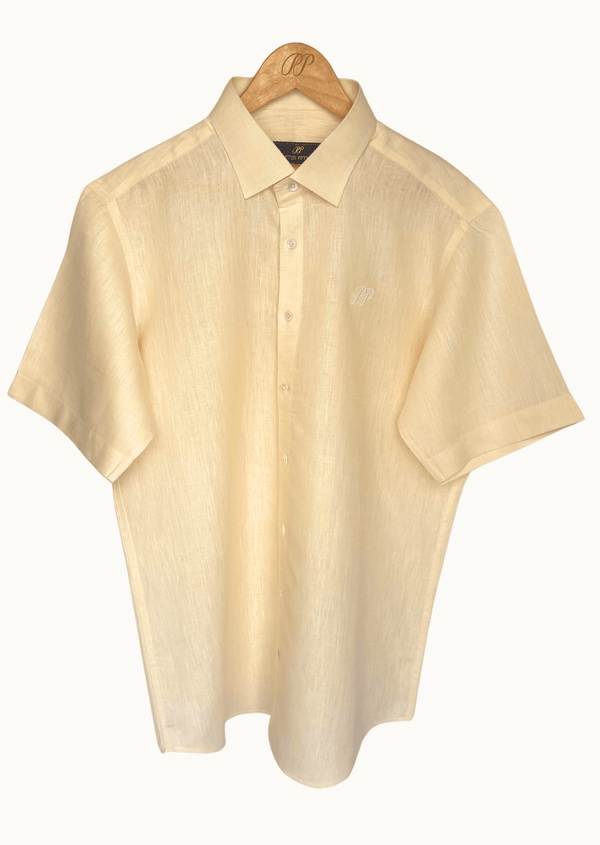
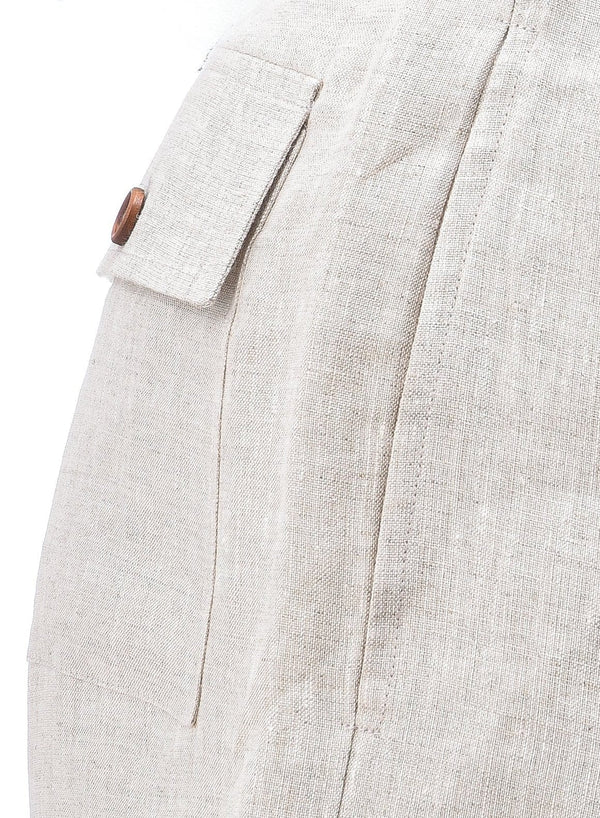
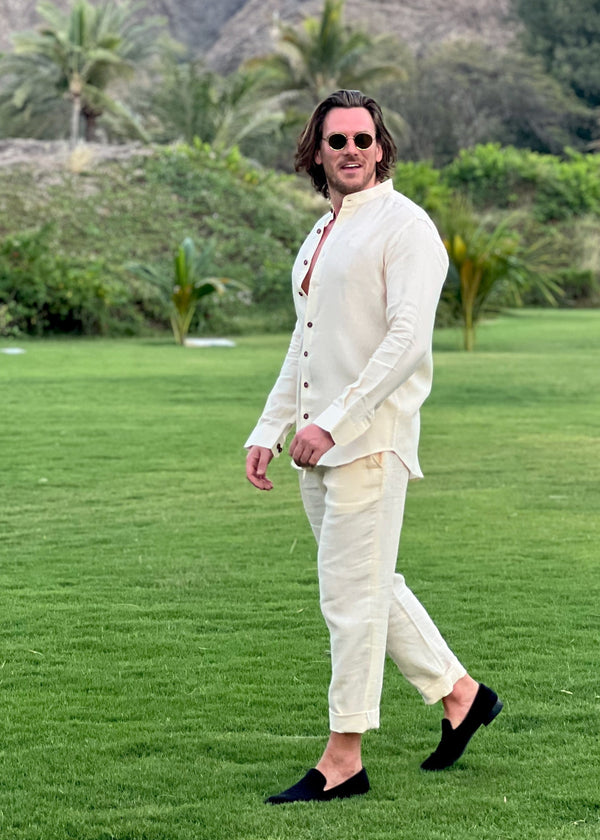
The temples come first, because they set the strictest rules. At the Temple of the Sacred Tooth Relic in Kandy, as at every Buddhist site on the island, shoulders and knees are covered, shoes and hats are removed at the entrance, and visitors walk barefoot on stone that can be very hot by midday. White clothing is customary for worshippers, particularly on Poya days, the full-moon holidays that fall every month. On Poya days the sale of alcohol is banned across the island, and the temples fill from early morning with families in white. A Laos Short Sleeve Linen Shirt in White with PP Trousers 100% Linen in White follows the custom directly. Both are in the men's linen collection.
“White linen in a temple is not a fashion statement. It is a way of showing respect.”
— Pieter Petros, founderGalle Fort, on the south-west coast, is the second fixed point of most journeys. Built by the Portuguese and rebuilt in stone by the Dutch in the seventeenth century, it is a walled town of churches, colonial houses and small hotels, with ramparts above the sea where the town walks in the early evening. It is a UNESCO World Heritage Site and a working town at once, and a man can be comfortably dressed there in a Cuba Linen Shirt in Blue with PP Casual Linen Trousers in Vanille. Inside the walls, the old colonial hotels still keep a more formal register at dinner, a point taken further in linen for Galle.
The humidity is the main fact of the coast. Sri Lanka lies a few degrees north of the equator, and the air on the south and west coasts is heavy for much of the year. Linen copes with that air well, because the flax fibre absorbs moisture and lets it go again quickly; humid weather is where the difference is clearest.
The hill country is a different climate. Nuwara Eliya stands at around 1,900 metres among the tea estates, and evenings there are cool enough for a fire in the hotel lounges. A Bliss Linen Shirt in Dark Blue, long-sleeved, with PP Casual Linen Trousers in Black and a knit over it after dark, is the outfit for dinner. Some of the old hill-country clubs keep a traditional dress code in the evening, so a jacket in the bag is a sensible precaution. The train from Kandy through the tea country to Ella is one of the great rail journeys of Asia, slow and open-windowed, and the same shirt serves the whole of a day spent on long train journeys.
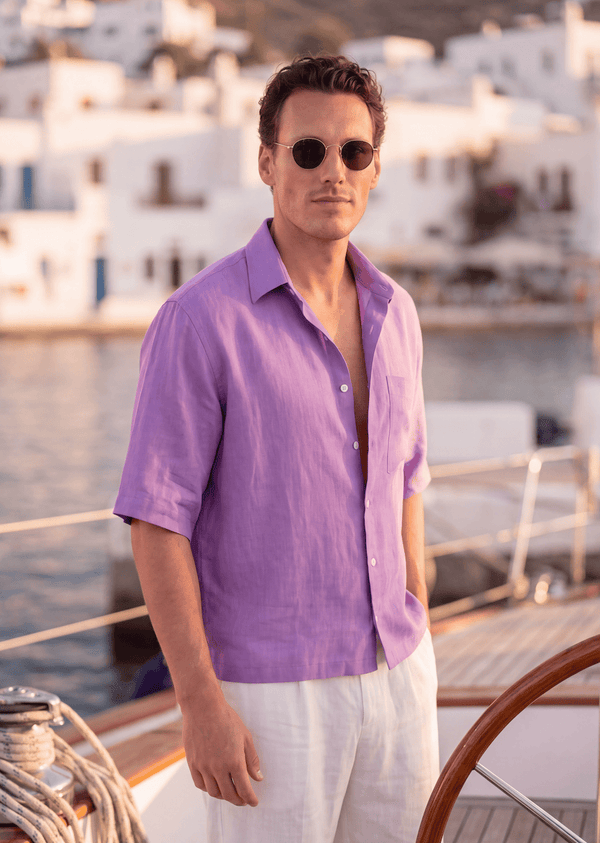
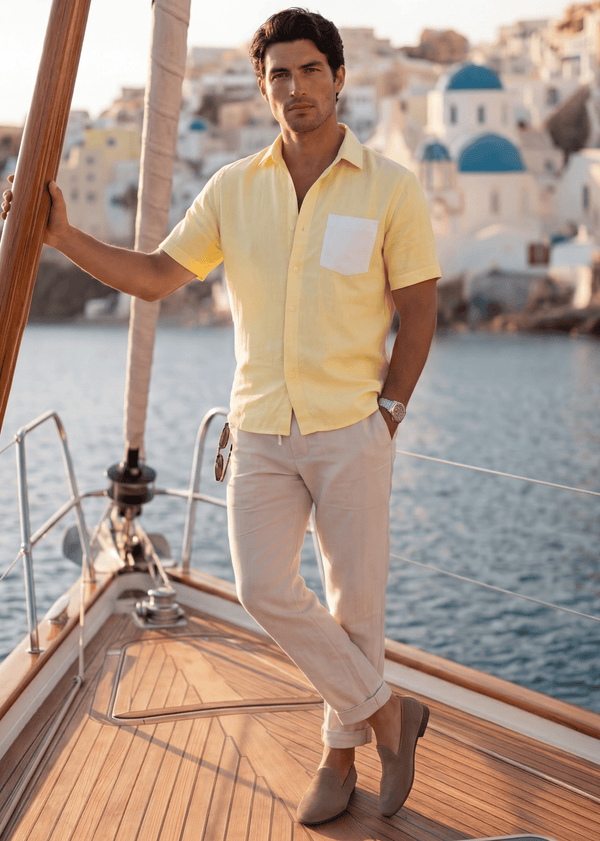
The south coast, from Bentota to Tangalle, is where the journey usually ends. Mirissa and Weligama have their surf and their beach restaurants, and the days are spent between the sea and the shade. The PP natural swim shorts in Black or Sapphire Blue belong in the water, and a Laos Short Sleeve Linen Shirt in Mint Green with PP linen shorts in Beige covers the walk to lunch. Beach restaurants on the south coast are relaxed, but towns and villages are not beach resorts, and shorts are better left at the hotel when going into them.
The seasons divide the island in two. The south-west coast and the hill country are at their driest from December to March, when the north-east monsoon brings rain to the east coast instead; from May to September the pattern reverses. October and November fall between the monsoons and can be wet across much of the island, with heavy afternoon showers, so a journey at this time should keep the days flexible.
Read more: What to Wear in Sri Lanka · What to Wear in Colombo · The Linen Brand for Sri Lanka