Linen vs Jute — Flax Fields Against the Bengal Delta
Linen vs Jute — Flax Fields Against the Bengal Delta
Two fibres from the stems of plants, one from the cool fields of northern Europe, the other from the monsoon delta of Bengal.
Flax and jute are cousins only in the loosest sense. Both are bast fibres, drawn from the long cells that run inside the stem of a plant rather than from a seed pod like cotton or an animal like wool, and both have been grown, retted and spun for thousands of years. Yet one ends up as a fine shirt and the other as a coffee sack, a rope or a sturdy bag. The comparison of linen vs jute is a useful lesson in how much a fibre’s character is decided by the plant, the climate and the way it is processed.
Linen comes from flax, Linum usitatissimum, a slender plant with blue flowers that grows in about a hundred days in the cool, damp summers of northwestern Europe. The coastal band running through northern France, Belgium and the Netherlands produces much of the world’s fibre flax, and the plant is pulled rather than cut so that the full length of fibre is kept. Jute comes from two species of Corchorus, a tall plant of the hot, humid lowlands, grown above all in the Ganges delta of Bangladesh and the Indian state of West Bengal. It is sown before the monsoon and harvested at the height of the rains, when its stems can reach three metres or more.
“A fibre carries its climate with it, long after it has left the field.”
— Pieter Petros, founderBoth are retted, a process in which microorganisms break down the natural gums that bind the fibre to the woody core of the stem. Flax is usually dew-retted, left lying in the field for several weeks while dew, rain and sun do the work. Jute is water-retted, its bundles submerged in ponds, canals or slow rivers for two to three weeks, after which the fibre is stripped by hand, washed and hung to dry. The long golden strands that come away are why jute has long been called the golden fibre.
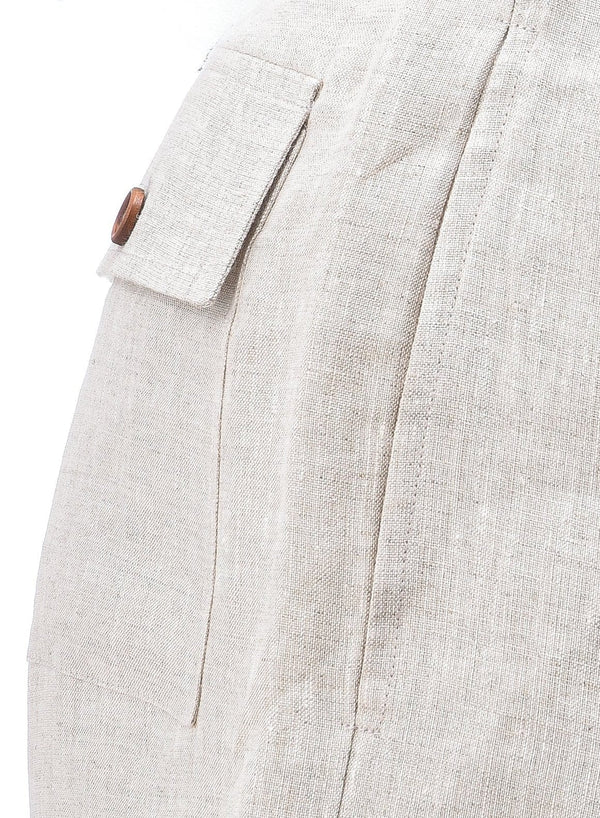
The difference that matters most lies in the fibre itself. Jute contains a much higher proportion of lignin, the substance that makes wood rigid, and its individual cells are short. The result is a fibre that is strong but stiff and coarse, with a slightly harsh hand. Flax fibre is richer in cellulose and lower in lignin, and its cells are longer, so it can be hackled and spun into fine, smooth, supple yarns. Linen is also notably strong when wet, which is why it washes well and softens with each wash; jute weakens when wet and is rarely washed at all. For anyone curious how flax compares with other bast fibres, linen vs hemp and linen vs ramie follow the same line of thought.
These properties decide the uses. Jute becomes hessian, sacking, twine, rope, carpet backing and bags: work that needs strength, cheapness and bulk rather than softness against the skin. Linen becomes shirts, trousers, sheets and fine table linen, garments and cloths that are worn close to the body and washed many times. Both are fully biodegradable, both are grown largely on rain rather than irrigation, and both return to the soil at the end of their life.
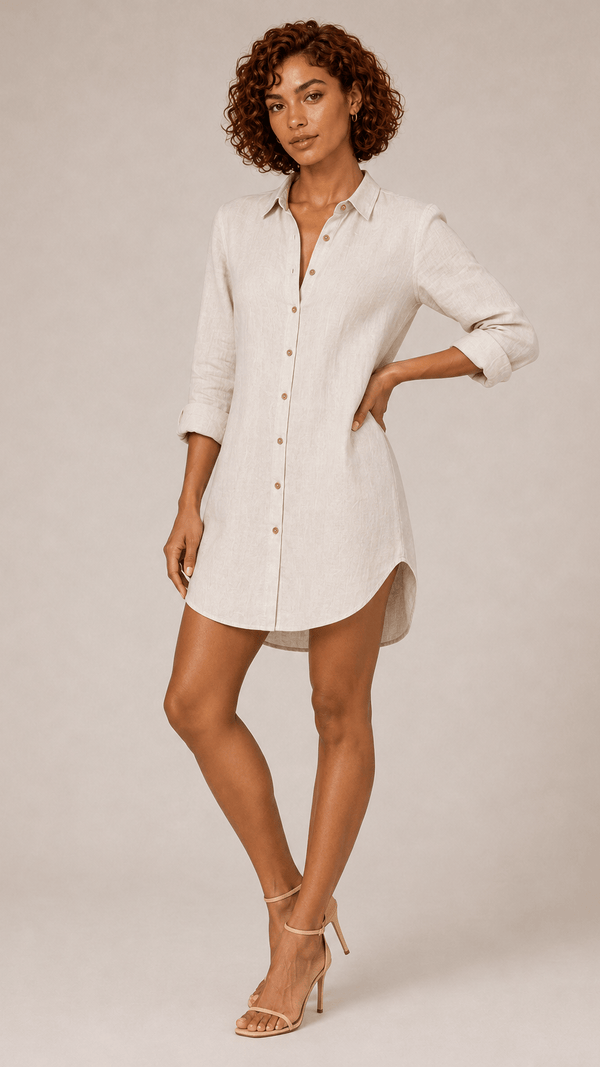
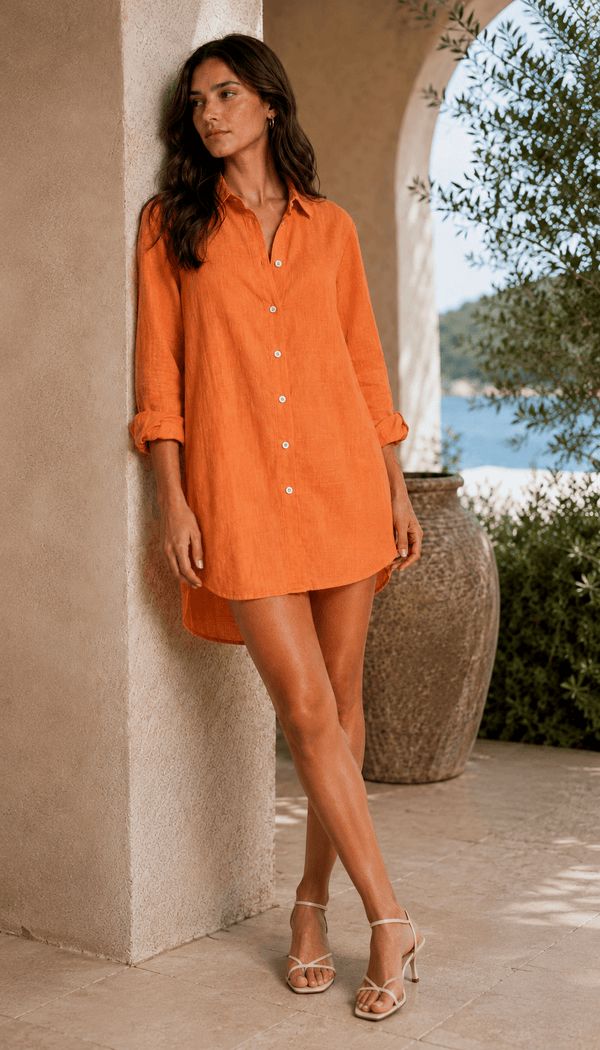
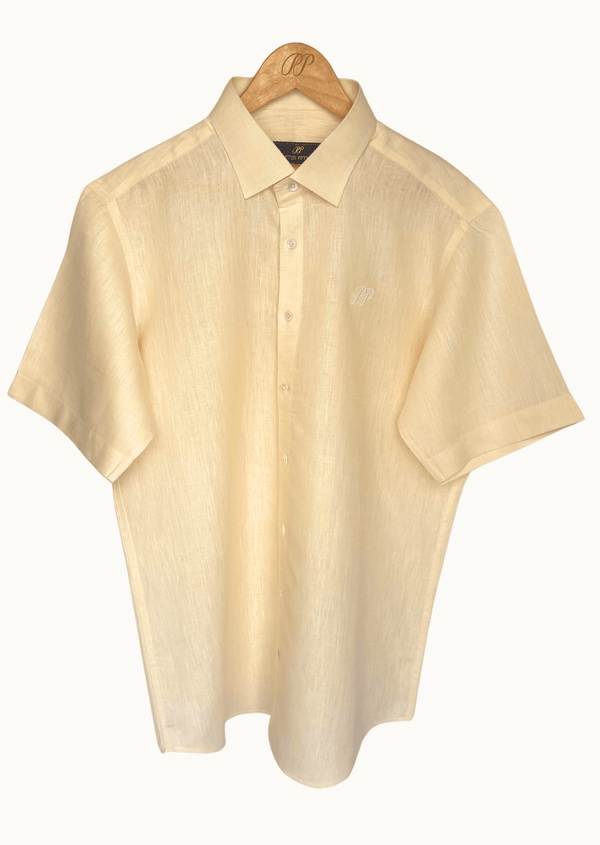
The two meet in a wardrobe more often than one might think. A linen shirt and a jute bag are a natural pairing on a beach or at a market, the bag carrying what the shirt cannot. Pieter Petros offers its own PP Jute Bag alongside the linen, a carry-all with the texture of the field still visible in its weave. Many of the shirts are cut from certified Belgian linen and made by hand at the atelier in Dubai; the Laos Short Sleeve Linen Shirt in Oyster or White shows the smooth, even surface that a long, fine fibre gives.
Natural fabric types sets the wider family side by side, from wool and silk to hemp and cotton, and how linen is made traces flax from seed to cloth.
In the Ganges delta in August, the jute is laid out in the water in long rafts of stems, and the smell of retting hangs over the villages for weeks; in Flanders the same month, the pulled flax lies in pale rows on the fields, turning silver-grey in the dew.
Read more: The 100% Belgian Linen Guide · Linen vs Bamboo