Linen vs Cotton Shirts for Men — Which Performs Better in Heat?
Linen vs Cotton Shirts for Men — Which Performs Better in Heat?
Linen vs cotton shirts men in heat — breathability, moisture management, appearance, durability, the verdict.
The linen versus cotton comparison for men's shirts in hot conditions is the most fundamental fabric question for warm-weather dressing — and the answer is specific, based on the different fibre structures of the two materials and the way those structures affect performance in heat.
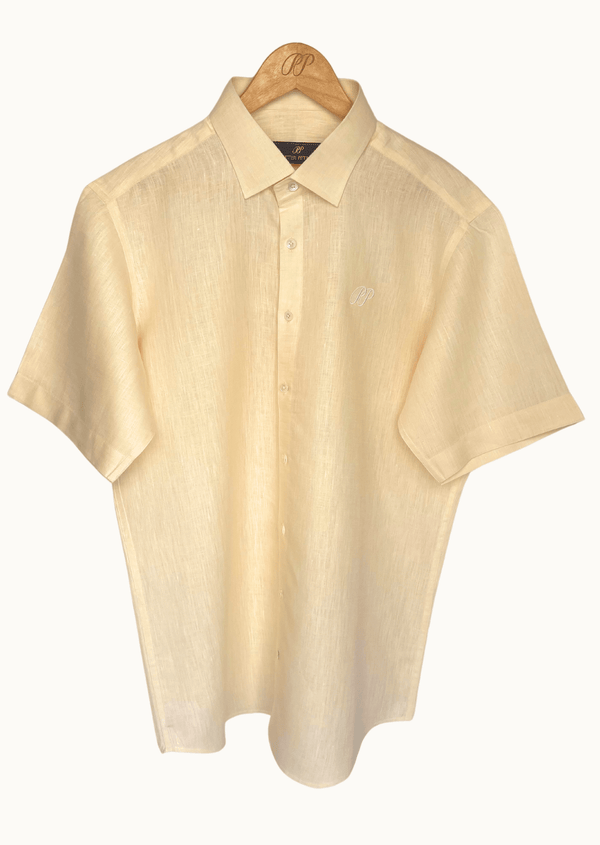
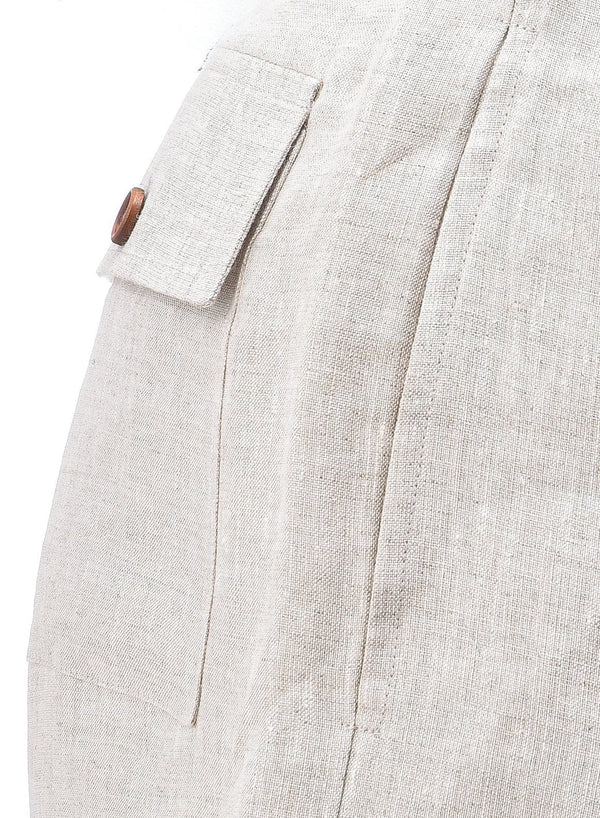
The breathability comparison. PP linen shirts are woven from flax fibre, which has a natural hollow core structure that allows air to circulate through the fabric. This is the primary source of linen's breathability advantage over cotton in heat: the air circulates through the weave, drawing warmth away from the skin. Cotton fibres do not have the same hollow core structure; cotton breathes well relative to synthetics but less effectively than linen at equivalent weights. In temperatures above 30 degrees, the breathability difference between a quality linen shirt and a cotton shirt of similar weight is felt by most wearers.
“Linen outperforms cotton in breathability and moisture management in sustained heat above 30 degrees. For the resort and warm-climate casual context — the context the PP collection is built for — linen is the correct choice.”
— Pieter Petros, founderThe moisture management comparison. Linen absorbs moisture (perspiration) quickly and releases it to the air through evaporation — the same hollow fibre structure that creates breathability also accelerates moisture evaporation. The result is that a linen shirt feels dry more quickly than a cotton shirt after perspiration. Cotton absorbs moisture effectively but releases it more slowly — a cotton shirt can feel heavier and more clingy in sustained heat than an equivalent linen shirt.
The appearance in heat. Linen develops a natural crease in heat and with wearing. Cotton also creases but holds its shape under sustained heat somewhat better than linen. For the buyer who values a crisp, pressed appearance throughout the day, this is a point in cotton's favour. For the buyer in a resort or outdoor context where the natural linen crease reads as appropriate, it is not a disadvantage.
The durability comparison. Belgian linen improves with wearing and washing over time — the long-staple flax fibre softens and becomes more fluid with each correct wash cycle. Cotton does not have this improving trajectory; it tends to degrade more consistently over time. For the buyer who views a shirt as a long-term investment rather than a seasonal purchase, the Belgian linen trajectory is the more compelling argument.
The verdict for hot conditions. Linen outperforms cotton in breathability and moisture management in sustained heat above 30 degrees. Cotton is more dimensionally stable and creases less visibly. For the resort and warm-climate casual context — the context the PP collection is built for — linen is the correct choice.
Natural Linen vs Belgian Linen · Linen Fabric Weight Guide · Men's Linen Collection