The Linen Shirt Placket — Box, French or Concealed?
The Linen Shirt Placket — Box, French or Concealed?
Box, French or concealed: three constructions, and what each says about a linen shirt.
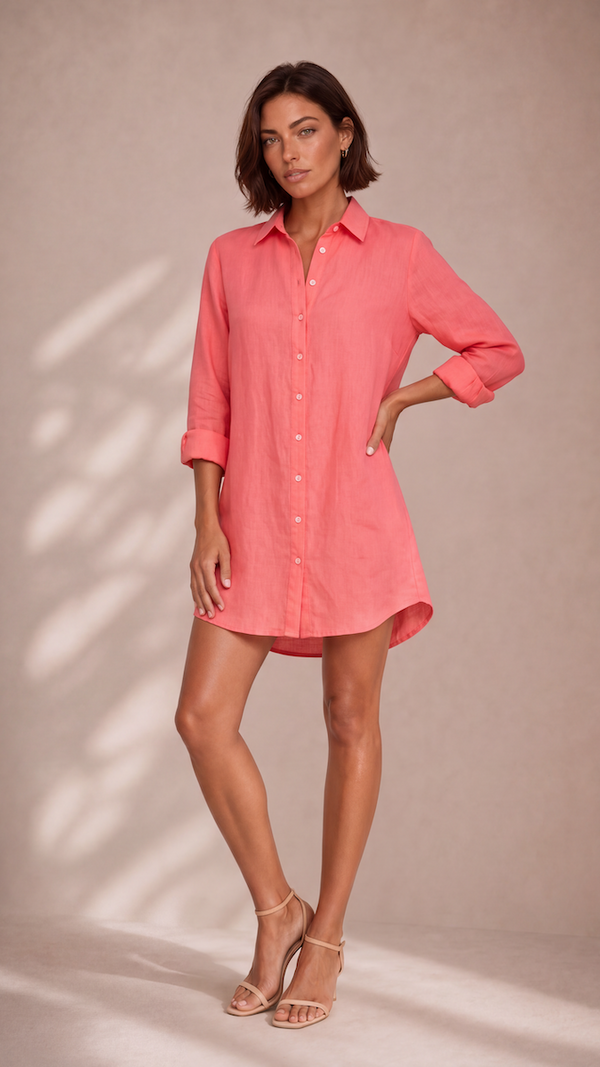
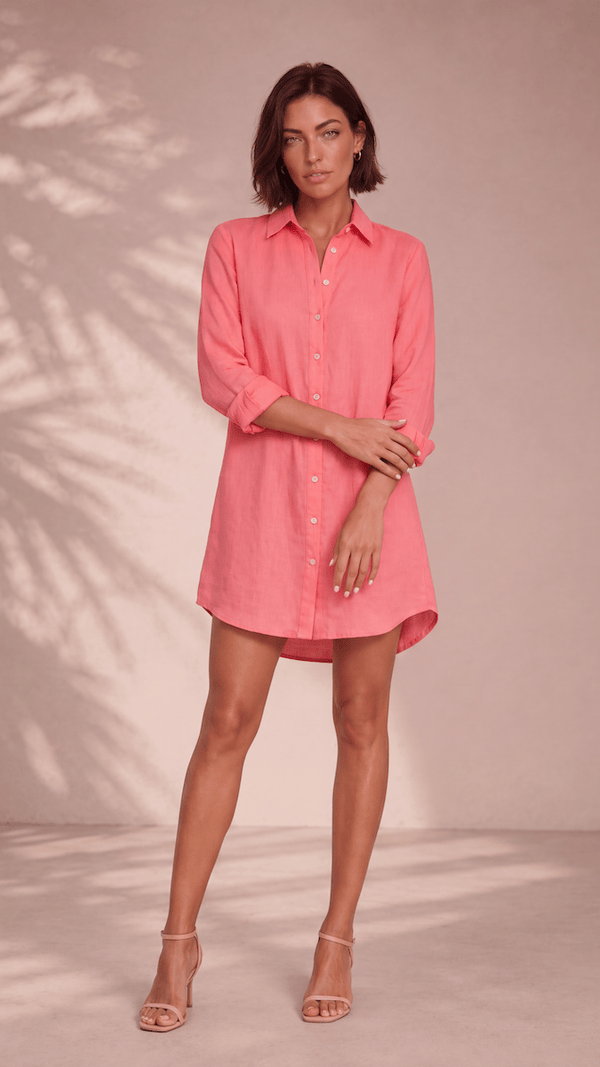
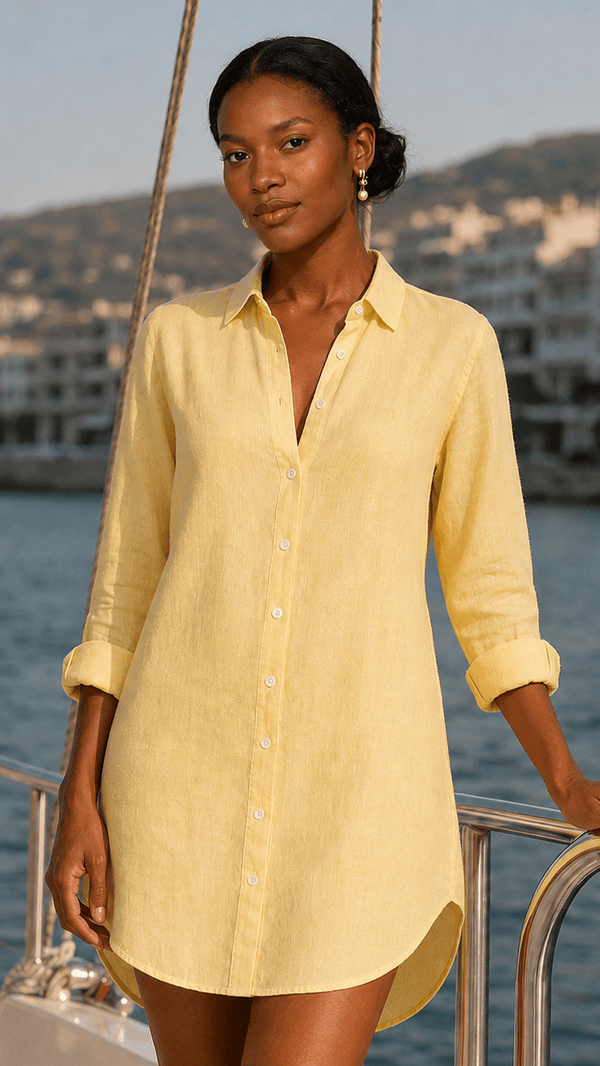
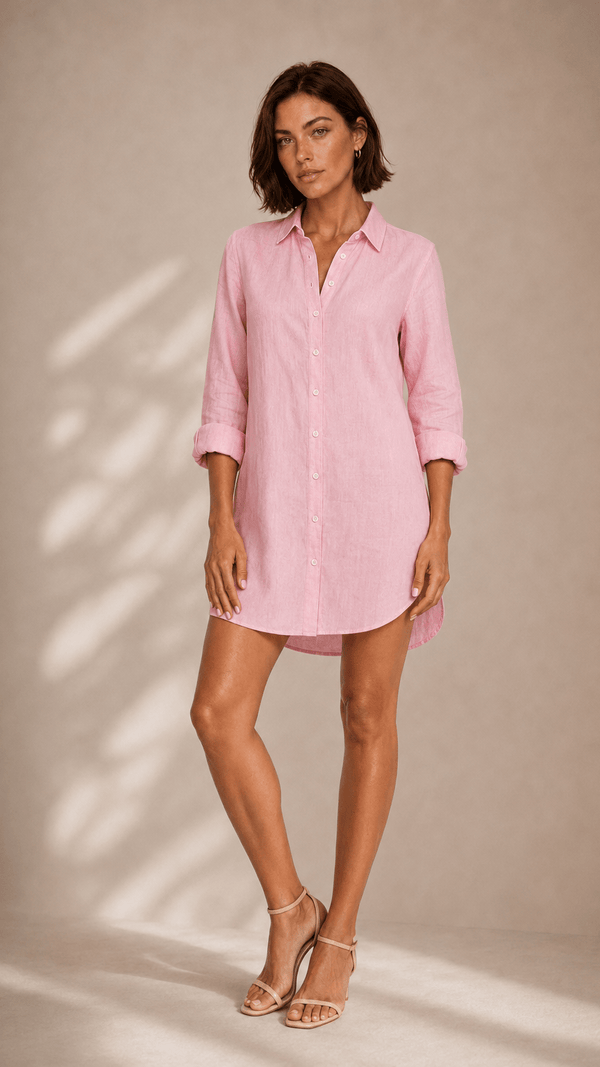
Button a shirt in front of a mirror and the eye goes, after the collar, to a single vertical line: the placket, the strip of cloth down the front that carries the buttons on one side and the buttonholes on the other. It is the part of a shirt the hands touch every time it is put on, and the part that shows most quickly whether it was made with care. On a linen shirt, where the cloth has its own movement and texture, the linen shirt placket matters more than on most.
There are three main constructions. The first, often called a front or box placket, is a band of fabric folded and stitched onto the front edge, usually with a line of topstitching on each side; it gives a firm, defined line and is the most familiar on classic shirts. The second, sometimes called a French front, has no separate band: the edge is simply folded back on itself and stitched on the inside, so the front looks clean and plain, and the shirt sits more softly. The third, the concealed or fly front, adds an extra layer that hides the buttons entirely, a formal or minimal detail. Long-sleeved shirts also have a small placket at the cuff, the sleeve placket, which lets the cuff open; on well-made shirts it often ends in a neat pointed tab.
“A shirt is read from the collar down. The placket is the second line, and it should be straight.”
— Pieter Petros, founderOn linen, each construction behaves differently. A box placket gives structure to a soft, mobile cloth and keeps the front line crisp even as the rest of the shirt relaxes. A plain front lets linen fall as it wants to, which suits relaxed, resort shirts. Neither is better; they are different intentions. What matters is that the construction suits the cloth and is executed well.
The first thing to look for is straightness. A placket should follow the straight grain of the fabric, the line of the warp threads running down the length of the cloth. Cut off the grain, it will twist after the first few washes, and the buttons will begin to wander away from the centre of the body. Linen is particularly honest in this respect: it does not hide a poor cut. The second is evenness. The placket should be the same width from collar to hem, and its topstitching should be close, even and straight, without puckering. Puckering along a placket usually signals stitching under too much tension, or an interlining that has behaved differently from the linen in washing.
Interlining deserves its own attention. Many shirts stiffen the placket with a layer of interfacing to keep it flat. On linen, a heavy or fused interlining can make the front feel stiff and board-like against an otherwise supple shirt, and over time it may bubble or separate. Well-made linen shirts tend to use a light interlining, or none, and rely on the cloth and the construction to keep the line.
The placket also has to carry the buttons. Natural buttons, seashell especially, have weight and a cool, dense feel, and the placket must hold them flat without sagging between them. Button spacing matters too: buttons set too far apart allow the front to gape across the chest, particularly when seated. The buttonholes themselves should be cleanly cut and densely stitched, and the buttons centred on them. The materials are explored in natural buttons: seashell, walnut and corozo.
Finally, look at where the placket ends. At the hem, it should finish cleanly, square or neatly turned, with no loose threads or bulk. A well-made placket is part of a coherent whole with the yoke and the seams, each detail confirming the others.
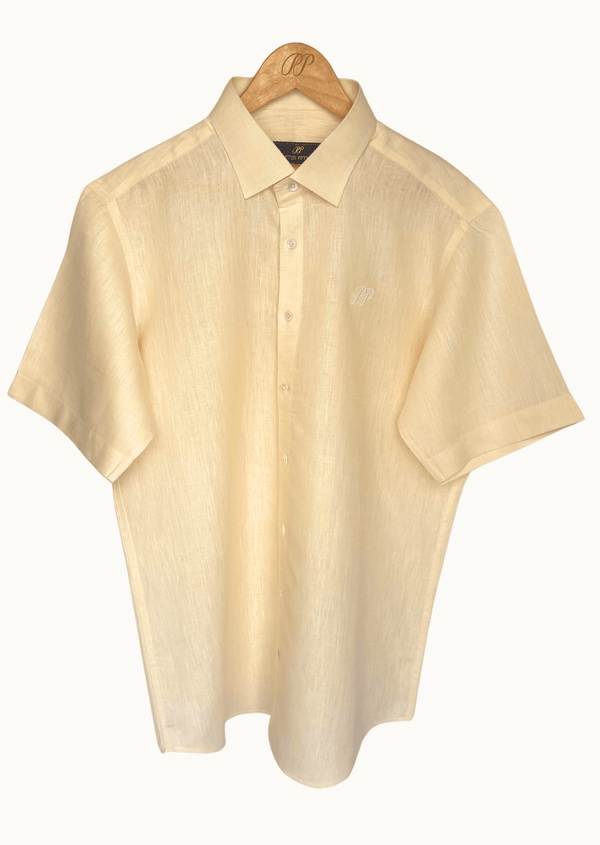
In the PP collection, most of the men's shirts, including the Laos, the Cuba, the Bliss and the Vibes, are finished with seashell buttons, while the Monte-Carlo Male carries walnut. Held in the hand, a shirt from the PP linen shirts shows its front edge first: its straightness, its stitching, how the buttons sit.
Of all the lines on a shirt, the placket is the one its wearer sees in the mirror every morning, and the one that tells them, before anyone else notices, how the shirt was made.
Read more: What Makes a Shirt Truly Luxury · The Linen Shirt Collar Guide