How Is Linen Finished — What Happens After the Loom
How Is Linen Finished — What Happens After the Loom
Why two linens from the same loom can feel nothing alike.
Linen fresh from the loom is stiff, slightly grey and a little rough to the touch. Weavers call it loomstate, or greige cloth: the yarn still carries the size that protected it during weaving, the surface is covered in tiny loose fibres, and the colour is the natural grey-beige of retted flax. How linen is finished, the series of processes that turns that raw cloth into fabric ready to be cut, decides much of how a shirt will feel, hang and age. It is the last stage of the long chain that begins in the flax field.
The earlier stages are covered elsewhere in the Journal, from the flax plant to the yarn and the weave, in how linen is spun and how linen is woven. Finishing is less written about, partly because it happens out of sight in the mill, and partly because it is a matter of judgement as much as process. The same woven linen can leave the finishing line crisp and lustrous or soft and matte, depending on what is done to it.
“The loom makes the cloth. The finishing decides its character.”
— Pieter Petros, founderSingeing. The cloth is passed rapidly over a gas flame or heated plates to burn away the short loose fibres on its surface. The fabric itself is not harmed because it moves too fast to catch; what remains is a cleaner, smoother face that takes dye evenly and shows the weave more clearly.
Desizing and scouring. Washing removes the size applied to the warp yarns, along with the natural waxes, pectins and residues left from retting. Scouring opens the fibre so that it can absorb water and dye. After this stage the cloth already feels softer and is noticeably more absorbent.
Bleaching or dyeing. Some linen is left in its natural colour, a grey-beige that varies with the harvest and the retting. White linen is bleached in stages to reach a clean white. Coloured linen is dyed, as piece-dyed cloth or from yarn dyed before weaving.
Calendering. The cloth is pressed between heavy rollers, sometimes heated, to flatten the yarns and give the surface a subtle sheen. Calendered linen feels smoother and looks more polished; the effect softens gradually with wear and washing.
Beetling. An older finish, once common in the linen mills of Ireland and northern Europe, beetling pounds the cloth for hours with rows of wooden hammers. The blows flatten the yarns and close the weave, giving a dense, cool, lustrous fabric. Few mills still do it, and beetled linen is now mostly reserved for table linen and fine tailoring.
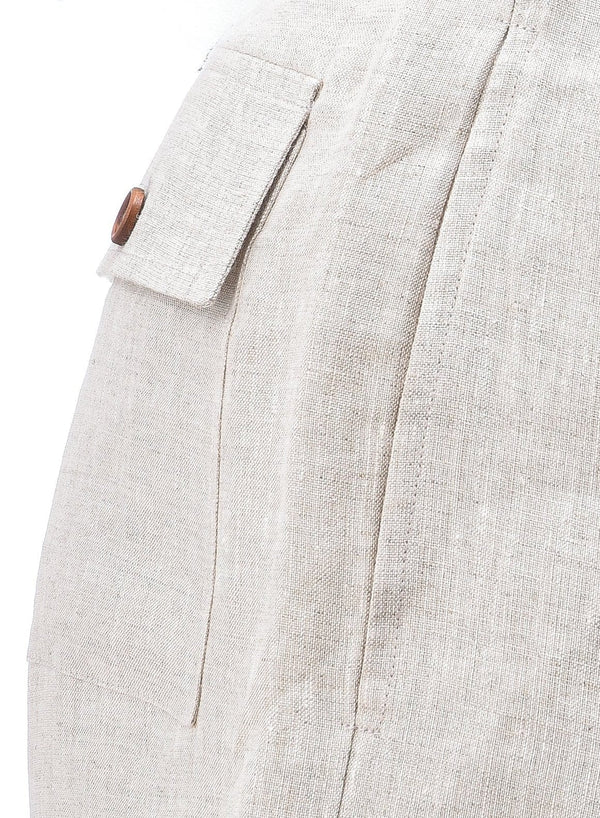
Softening. At the other end of the scale, many linens today are softened mechanically by tumbling or by washing, sometimes with enzymes, to give the relaxed, supple hand that people associate with linen holidays. The difference between a calendered and a washed linen is easy to feel in the hand; linen hand feel changes with every one of these steps.
Pre-shrinking. Linen, like any natural fibre, can relax when first washed. Mills often finish cloth with a compressive pre-shrinking step, feeding the fabric through rollers that compact it so that most of the shrinkage happens before the garment is cut. Whatever remains is small, and how much linen shrinks depends on that last step.
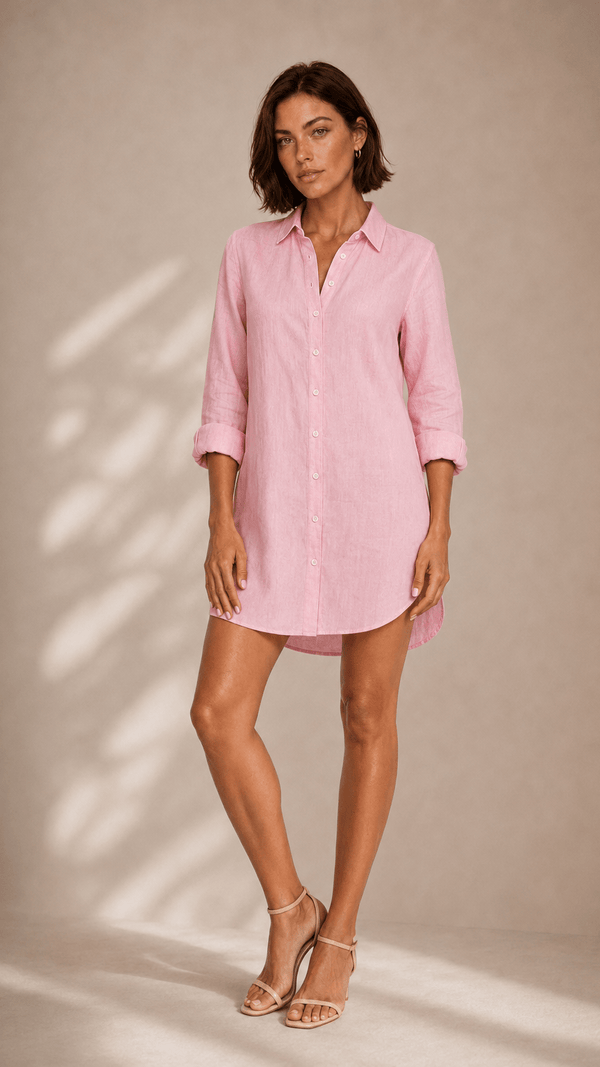
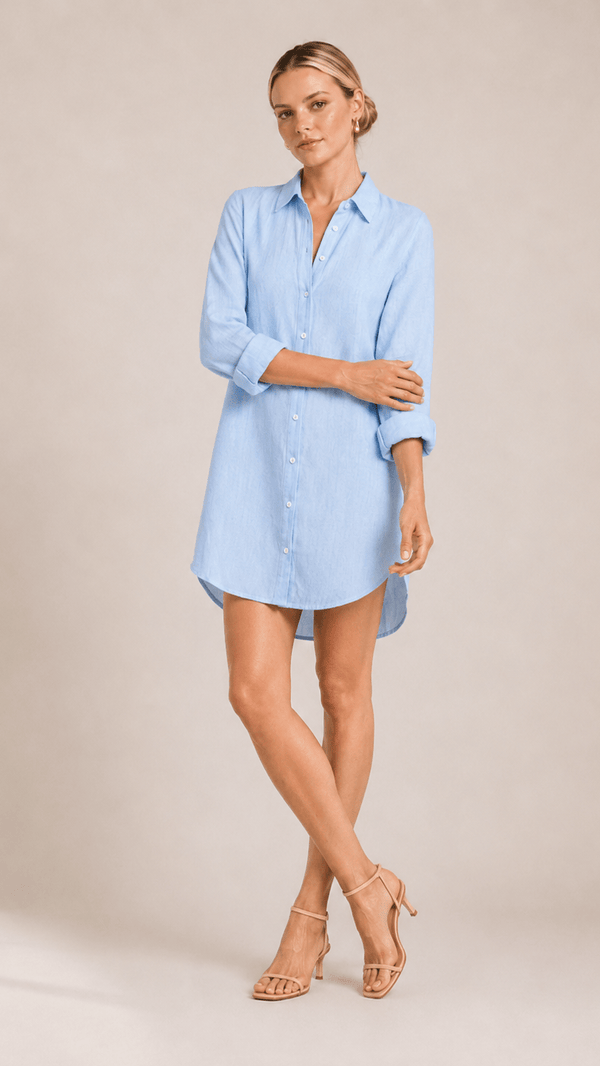
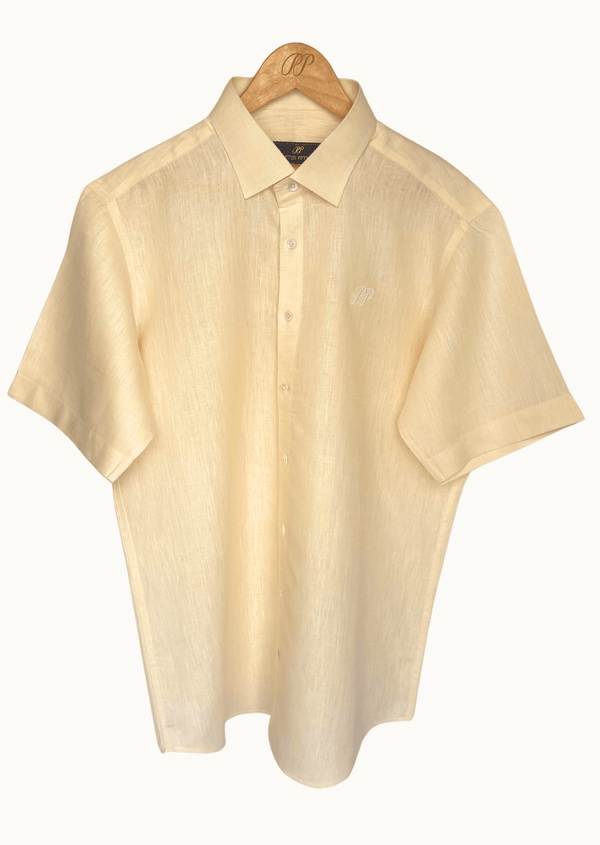
Finishing is invisible in a finished shirt, but it is felt in every wearing. A well-finished linen keeps its body while softening steadily with each wash. That is the quality that makes linen garments grow more comfortable over years rather than tiring, and why a shirt from the PP linen shirts collection feels a little different every summer it is worn.
Grey and stiff at the start of the line, supple and ready at the end: the finishing room is where flax becomes the cloth a hand recognises as linen.
Read more: How Is Flax Harvested · The Guide to 100% Belgian Linen