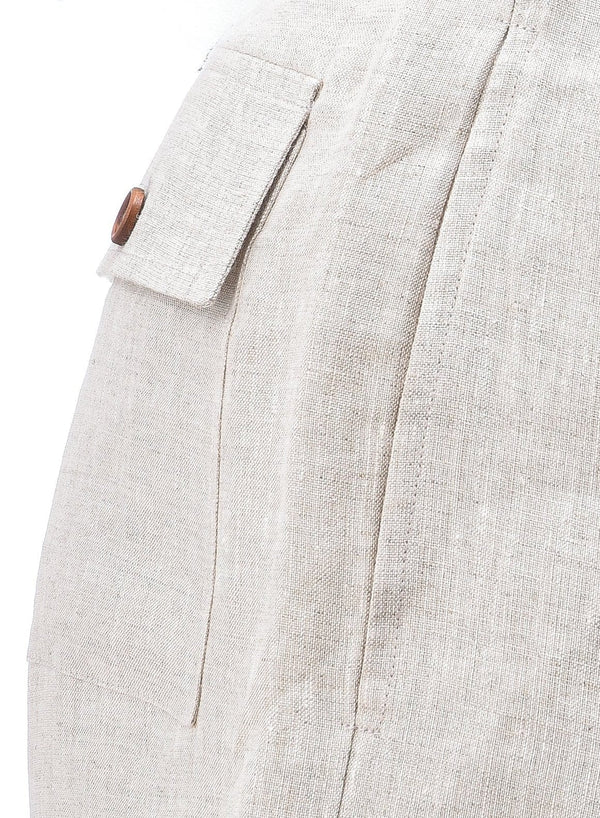
What Is Washed Linen? — How It Differs From Unwashed Linen
What Is Washed Linen? — How It Differs From Unwashed Linen
Fabric-washed, garment-washed, stonewashed: what each term means, and what is gained and given up.
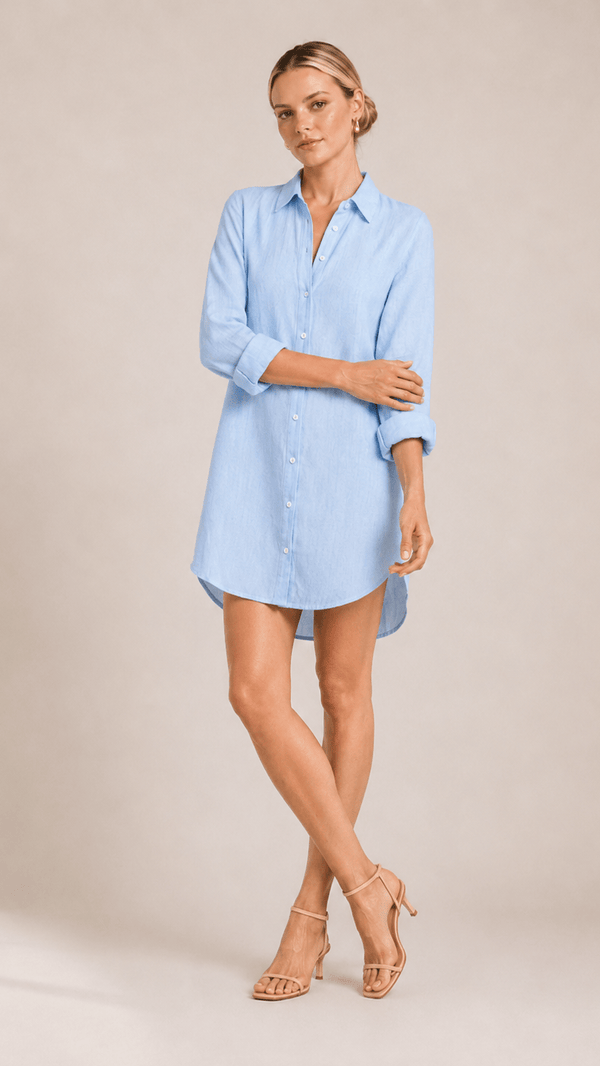
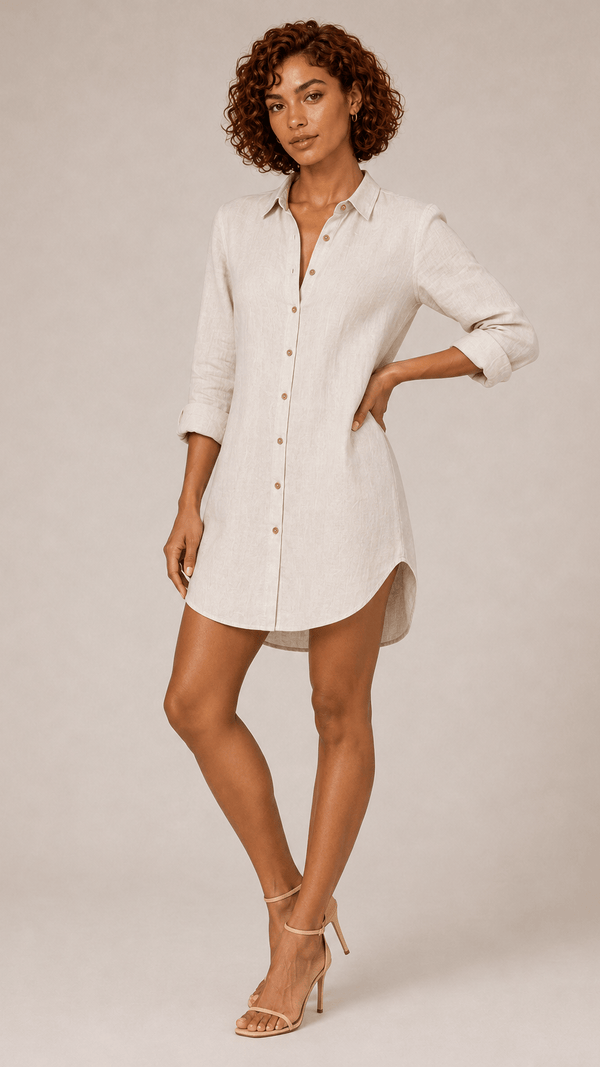
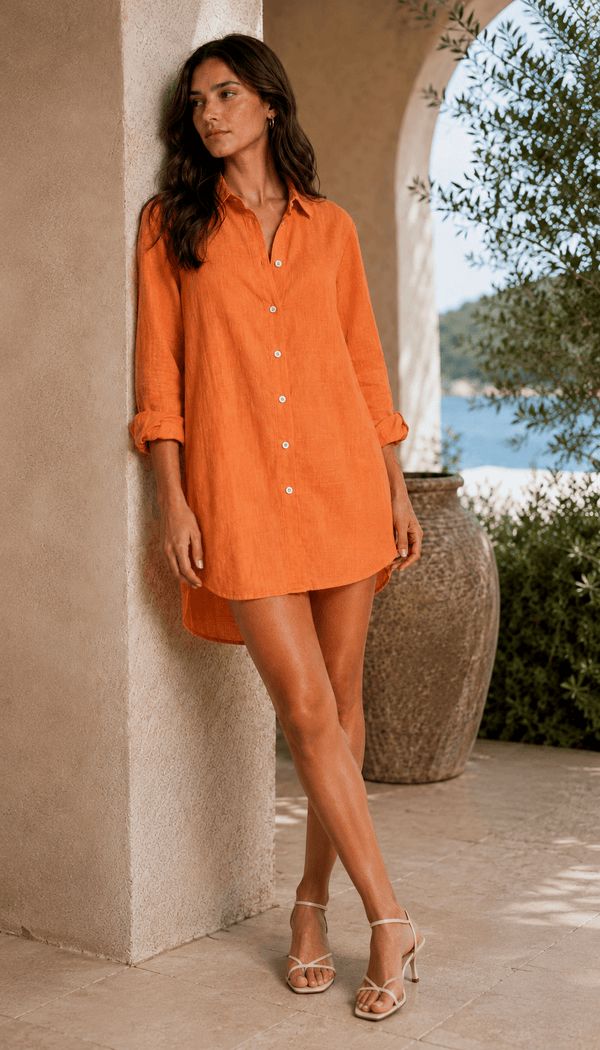
Washed linen is linen that has been washed after weaving, either as a length of cloth or as a finished garment, before it ever reaches the person who wears it. The wash softens the fibre, relaxes the weave and removes much of the shrinkage that would otherwise happen in the first home washes. The result is a cloth that feels broken in from the first day, with a matte surface and a soft, rumpled drape, in contrast to the crisper hand and slight sheen of unwashed linen.
The term covers several different processes, and labels do not always say which one was used.
Fabric-washed linen. The woven cloth is washed in large machines at the mill, then dried and finished before it is cut. Because the fabric shrinks before cutting, the garment made from it keeps its measurements well later. The surface is softened but the cloth can still be pressed to a clean line.
Garment-washed linen. The garment is sewn first from unwashed cloth and then washed whole. Seams, collar and hems all shrink together, which gives the slightly puckered, lived-in look many associate with relaxed linen. The garment is cut larger to allow for it.
Stonewashed and enzyme-washed linen. These are intensified versions. Stonewashing originally meant tumbling the cloth with pumice stones to abrade the surface; today the same softening is often achieved with enzymes, which loosen the outer fibres. Both give a very soft hand and a faded, chalky surface, and both are especially common in bed linen and table linen.
“Linen keeps a record of how it has been lived in. That is part of its character.”
— Pieter Petros, founderWhat is gained. Softness from the first wear, very little further shrinkage, and a relaxed look that does not mind creases. For bedding, where the cloth touches the skin all night, those qualities are the main reason the finish is so widely used.
What is given up. Washing takes away some of the crispness and the natural lustre that long flax fibres give a freshly finished cloth. A heavily washed shirt can look soft rather than sharp, and repeated industrial washing and abrasion can shorten the life of the surface fibres. The degree matters: a gentle mill wash changes the cloth slightly, a heavy stonewash changes it a great deal.
Unwashed linen, and how it changes. Unwashed, or finished, linen arrives with a firmer hand and a gentle sheen, and it holds a pressed line well. It then softens progressively with wear and with each wash at home, so that after a season the same shirt has a suppleness of its own. Some prefer to let that happen in their own wardrobe, the slow change traced in how linen improves with wear. Before any of it, the cloth passes through the finishing steps at the mill.
How to tell them apart. Washed linen feels soft and slightly dry to the touch, looks matte and often carries small creases even straight from the packaging. Unwashed linen feels smoother and cooler, catches the light faintly and drapes in longer, cleaner folds. Neither is a mark of quality on its own; the length and fineness of the flax fibre and the evenness of the weave matter far more, and the grades of linen quality turn on exactly those.
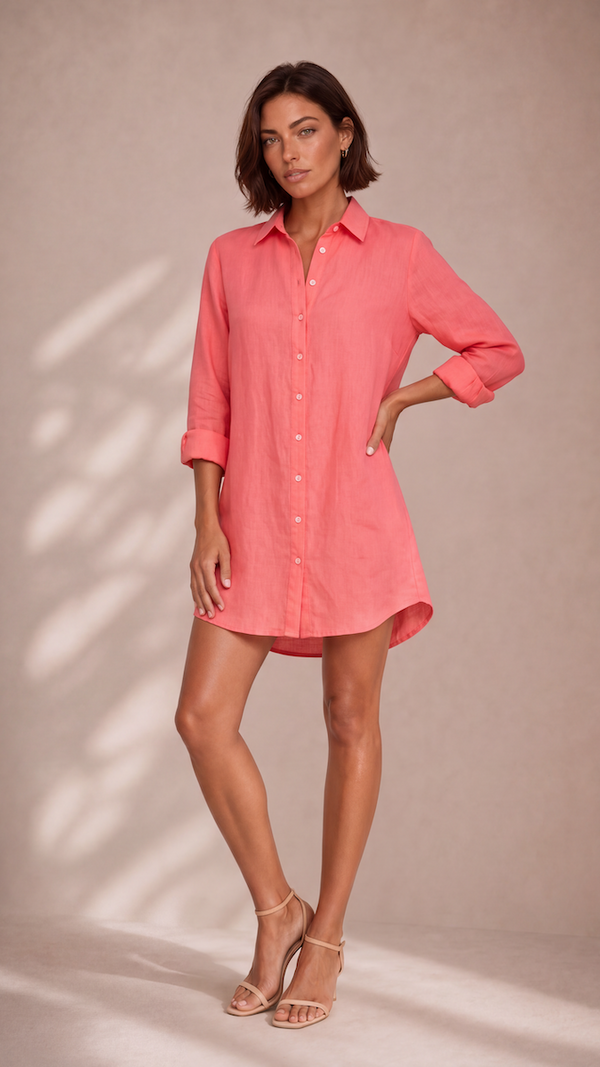
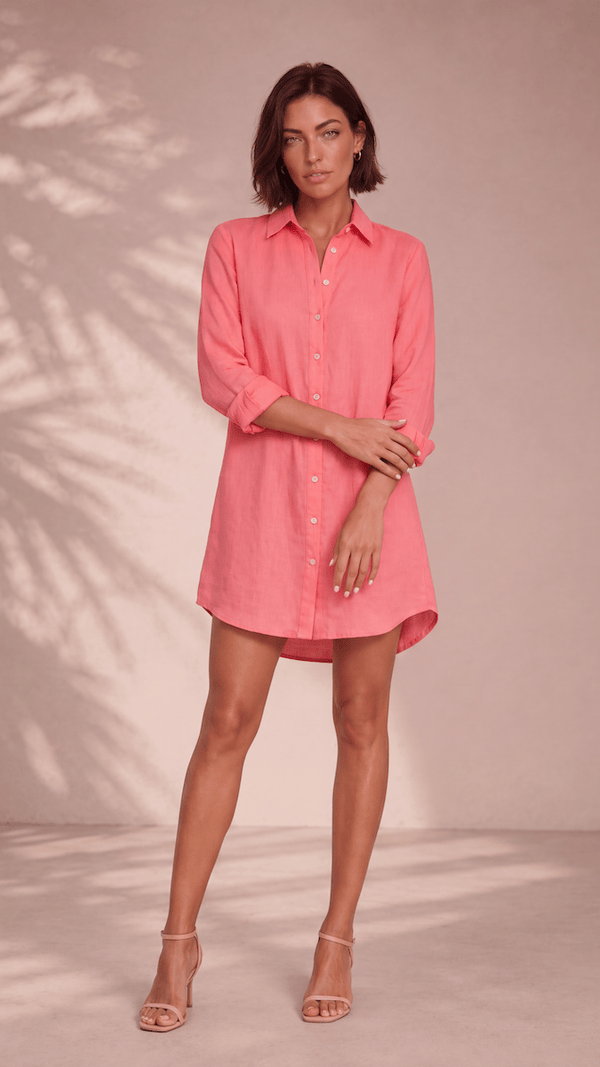
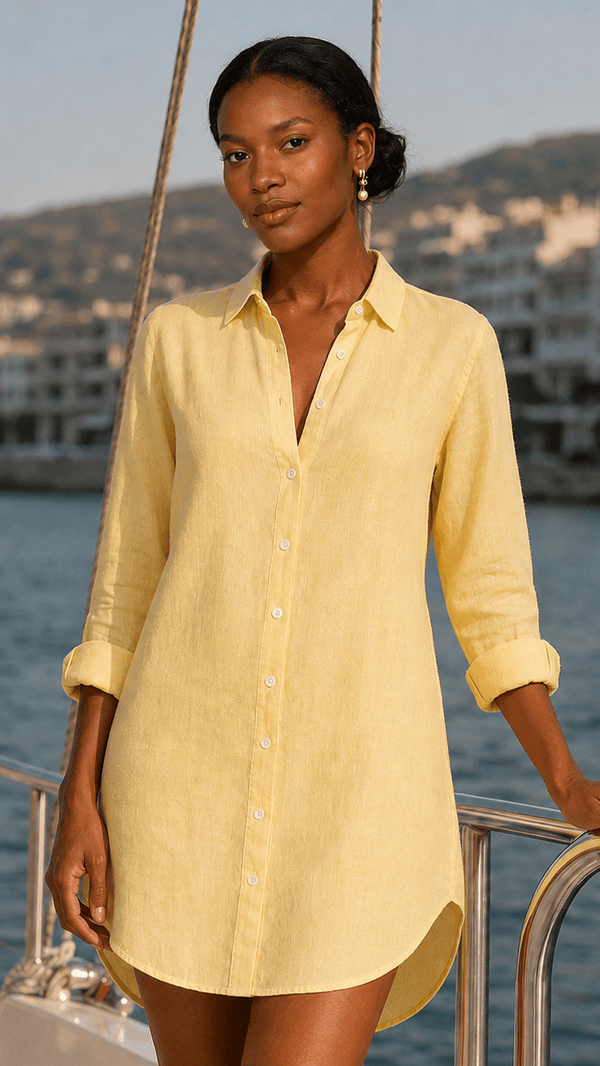
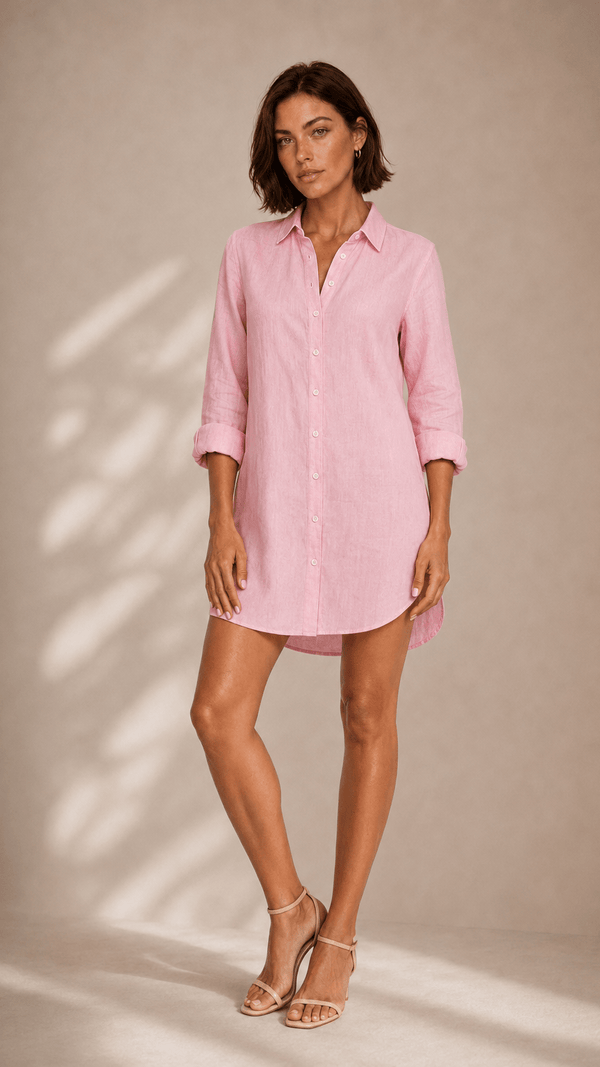
Choosing between them. For a shirt meant to look crisp at a dinner table, a cloth with some of its finish intact gives a sharper collar and placket. For a relaxed holiday shirt, beach cover or bedding, washed linen gives immediate ease. Certified Belgian linen, whose certificate follows the flax from the field to the cloth, can be finished either way; the certificate describes the origin of the fibre, not the finish.
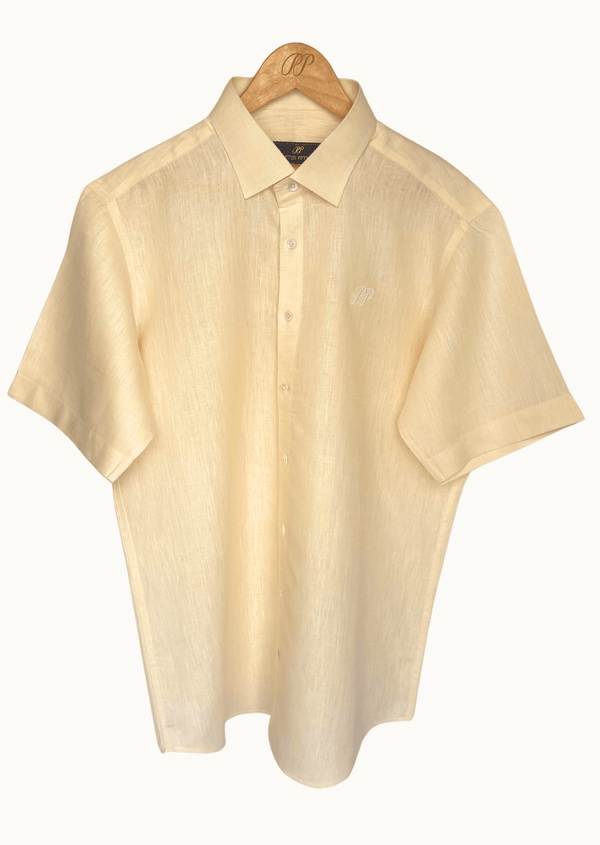
The shirts in the PP linen shirts collection are made to be worn and washed for many seasons, softening as they go. At home, a gentle cycle at 30°C is enough, and linen can be dried on a line or in the dryer on a low setting; a light press restores the line on the collar when it is wanted.
Seen this way, washed and unwashed linen are less two kinds of fabric than two points on the same path. One begins soft; the other arrives there in its own time.
Read more: Does Linen Get Softer? · Does Linen Shrink? · The 100% Belgian Linen Guide