Linen Shirt Gussets — The Small Triangle That Signals Quality
Linen Shirt Gussets — The Small Triangle That Signals Quality
Where the side seam meets the hem, a detail most people never notice says a great deal about the maker.
The bottom of the side seam, just where the curved tails of the hem begin, is the place to look on a well-made shirt. On many traditional shirts there is a small patch of fabric there, often a triangle, sometimes a little square or a rounded tab, stitched across the point where the front and back panels part. That patch is a gusset. On a linen shirt it is one of the quiet signs that the maker thought about how the garment would be worn, washed and moved in, not only how it would look on a hanger.
The word comes from the old French for a piece of armour that protected the joint beneath the arm, and the principle is the same: reinforce the place where strain gathers. In tailoring, gussets also appear under the arms of some garments and in the crotch of trousers; on a shirt, the side-seam gusset is the one a buyer is most likely to see.
“The details nobody sees are the ones that decide how long a shirt stays with you.”
— Pieter Petros, founderWhat a gusset does. A shirt with a curved hem has a split at each side, where the front and back tails separate. That split is a stress point. Every time the wearer sits, bends, reaches or tucks the shirt in, the fabric pulls at the top of the split, and without reinforcement the seam can begin to open or the cloth can tear upwards over time. A gusset spreads that tension across a wider area and closes the end of the seam firmly, so that the split stays where it was cut.
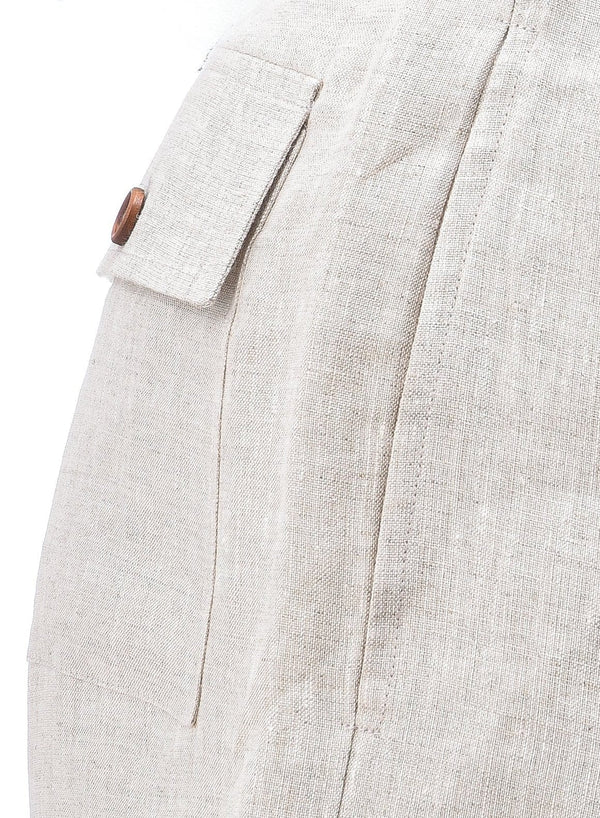
Why it matters more in linen. Linen is a strong fibre, and stronger still when wet, but it is less elastic than cotton or wool; it does not stretch to absorb a sudden pull, it holds. That stiffness is part of its beauty, giving linen its crisp drape and its natural crease. It also means that the points of strain in a linen garment benefit from careful construction. A reinforced side seam, along with the flat seams described in linen shirt seams, helps a linen shirt keep its shape through years of wear and washing.
How to recognise one. Look at the bottom of each side seam, inside and out. A gusset may be a small triangle of the shirt's own fabric, folded and stitched across the top of the split; a contrasting fabric is sometimes used as a signature. On some well-made shirts the reinforcement is achieved instead by a neat bar tack, a short, dense line of stitches across the end of the seam, or by the way the flat-felled seam and the hem are finished together. Any of these is a sign of care. A raw split with nothing holding it, or a hem that simply stops at the seam with a single line of stitching, is the sign of a shirt made quickly.
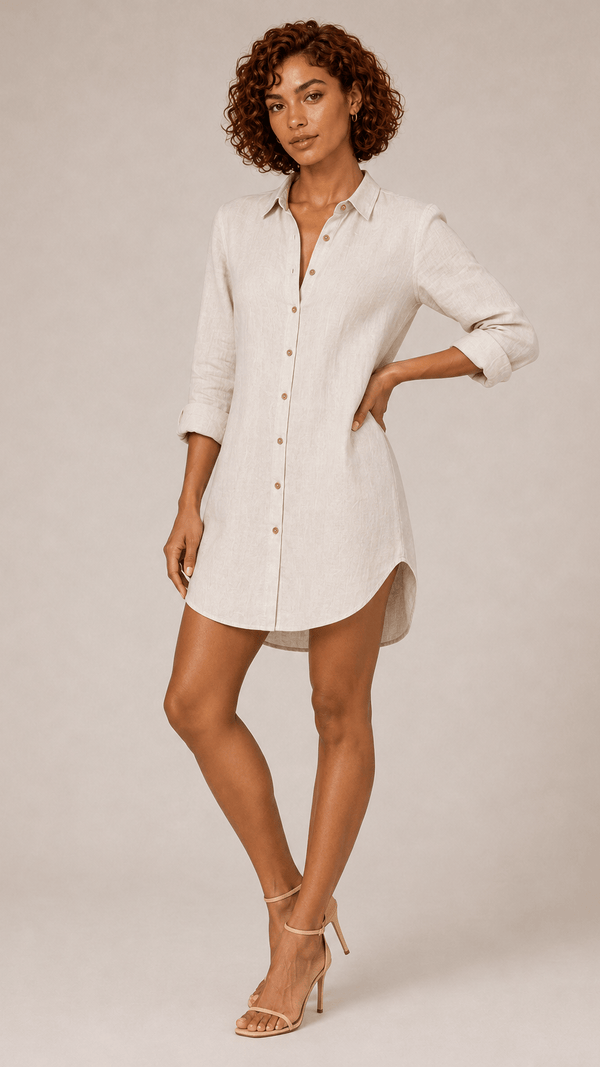
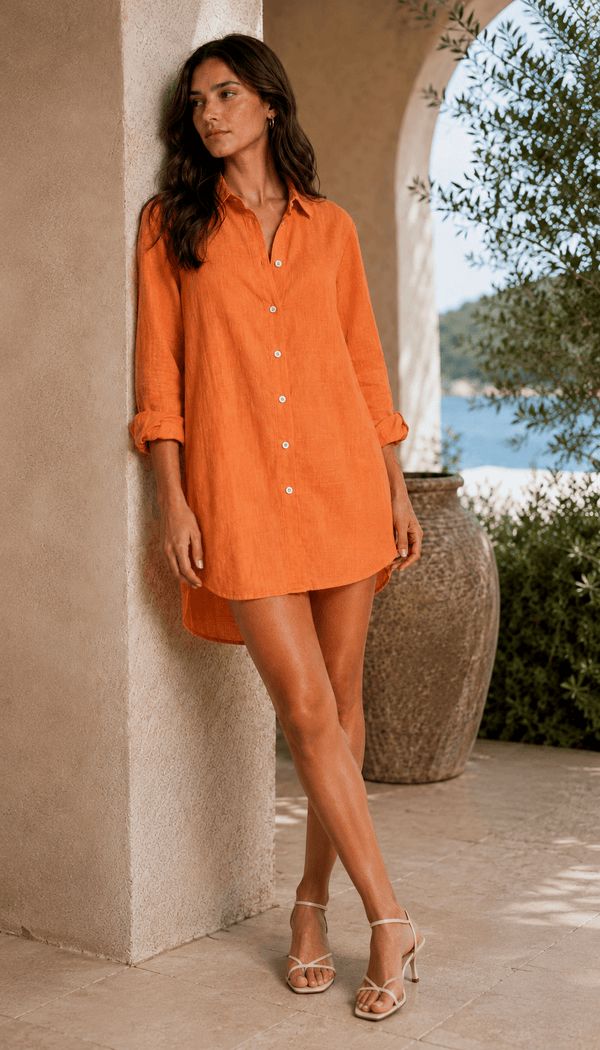
The hem it belongs to. Gussets appear on shirts with curved tails, the classic shirt hem meant to be tucked in or worn loose with a softer line at the sides. A straight-hemmed shirt, cut to be worn untucked, has a different construction at the side and often a short vent instead. Both have their place in a summer wardrobe; the hem guide explains which suits which occasion, and when a shirt is better tucked or left out.
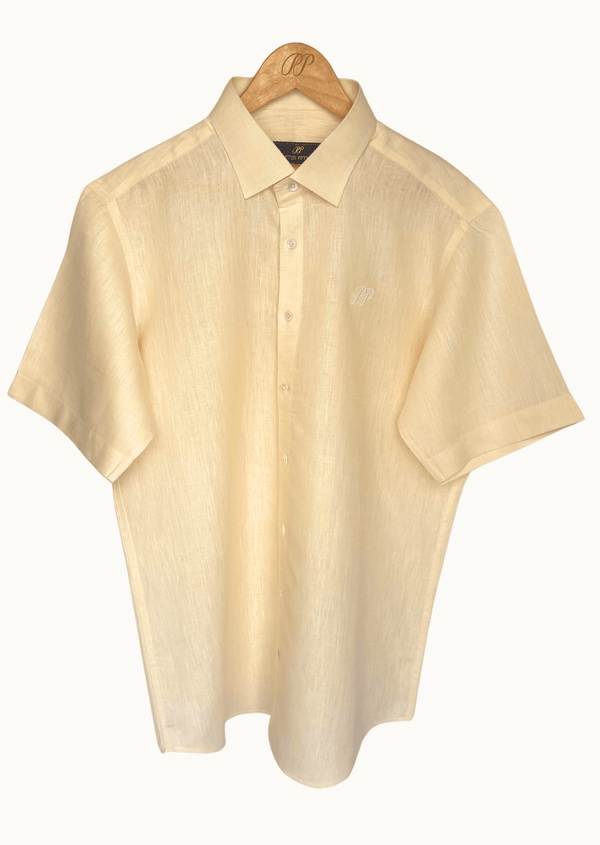
Reading the whole shirt. A gusset never stands alone. The same attention usually shows in the other places a buyer can check in a few seconds: the placket lying flat and straight, buttonholes cut cleanly and densely stitched, buttons in natural materials sewn firmly with a shank, and the grain of the cloth running true down the front. On a PP shirt, the natural buttons and the evenness of the stitching around them are the first details to check. These shirts are in the PP linen shirts collection.
Why it is worth knowing. A linen shirt is an investment in a fibre that lasts and improves; the cloth will soften and settle for years if the construction holds. Reinforcement at the points of strain is what lets the fabric show that long life. Knowing where to look, in a boutique or when a parcel arrives, turns the buying of a shirt from a matter of colour and fit into an informed choice, the kind that separates a garment kept for a decade from one replaced after a season. The full checklist of construction details is in what it means when a shirt is truly handmade.
Read more: Linen Shirt Buttonholes · Linen Shirt Stitch Density · The Linen Shirt Yoke