Best Fabrics for Hot Weather — The Most Breathable, Ranked
Best Fabrics for Hot Weather — The Most Breathable, Ranked
Every fabric worth considering for hot weather — with honest strengths, limitations, and the right context for each.
The most breathable fabrics for hot weather are linen, hemp, lightweight cotton and seersucker: natural fibres in an open weave that let air through and release moisture instead of holding it. For sustained heat, linen comes first; the others follow below, each with the setting it suits.
Breathability in fabric is not a single property — it is the result of several overlapping characteristics: fibre structure, weave density, moisture management, and thermal regulation. The fabrics that perform best in hot weather address all four simultaneously rather than excelling at one at the cost of another.
Here are some of the most commonly recommended fabrics for hot weather, along with their strengths and limitations.
“The right fabric depends on the context. For sustained heat in a professional or social setting — Belgian linen.”
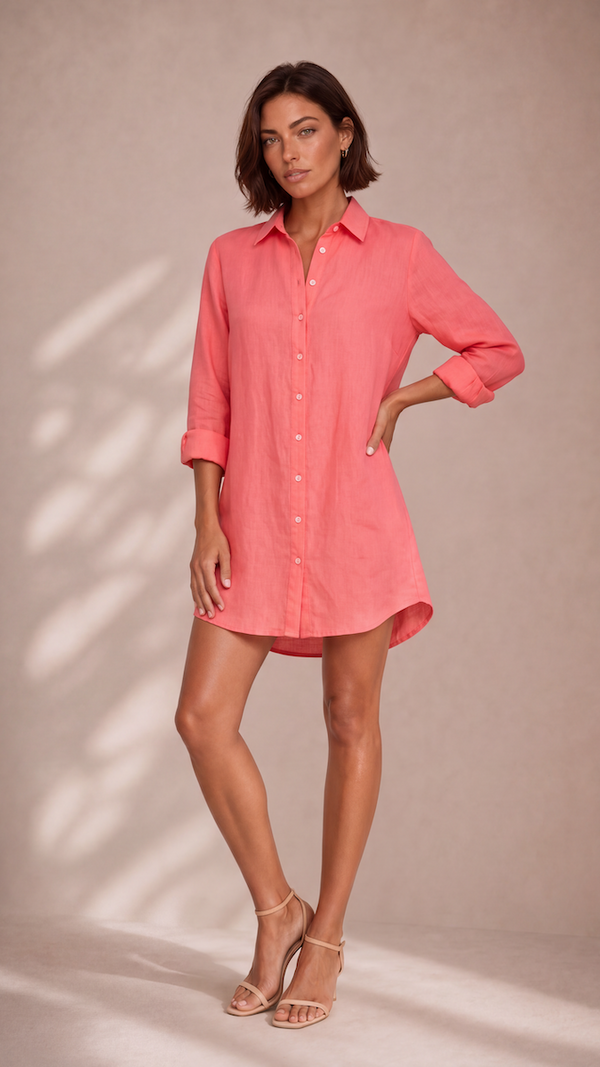
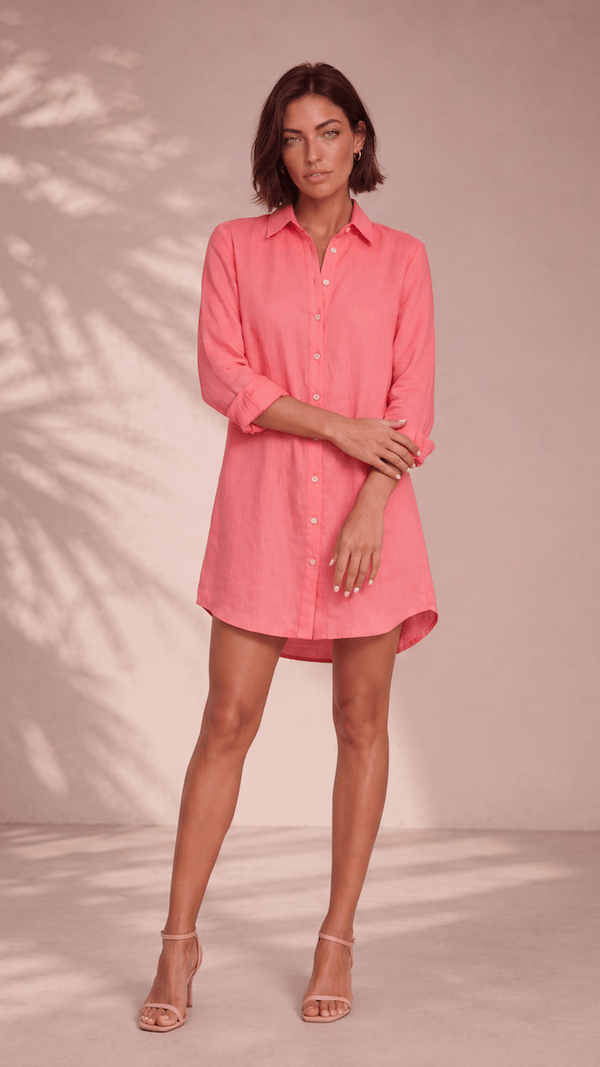
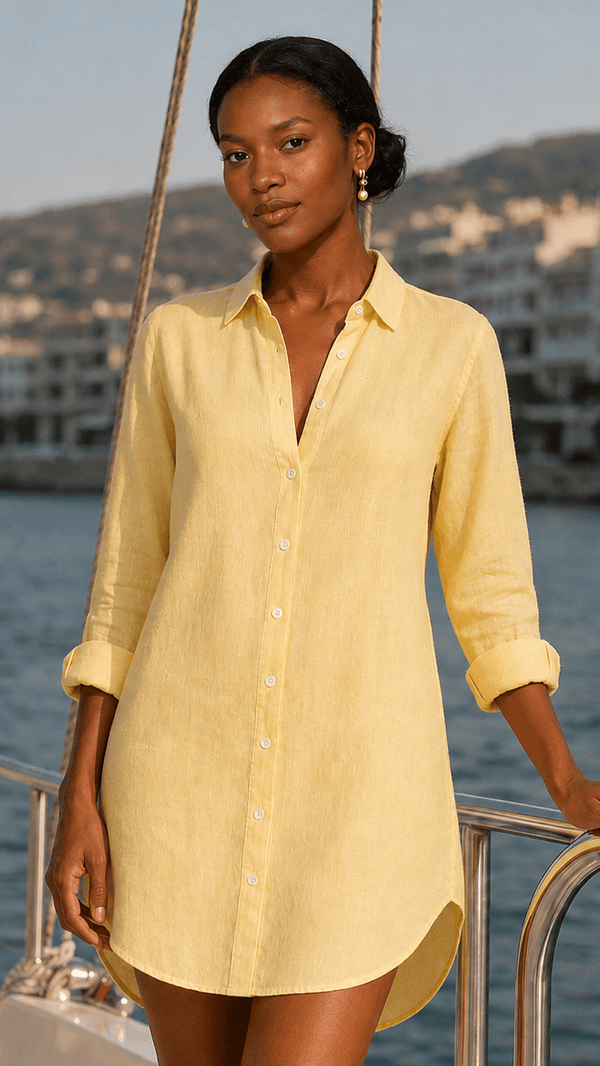
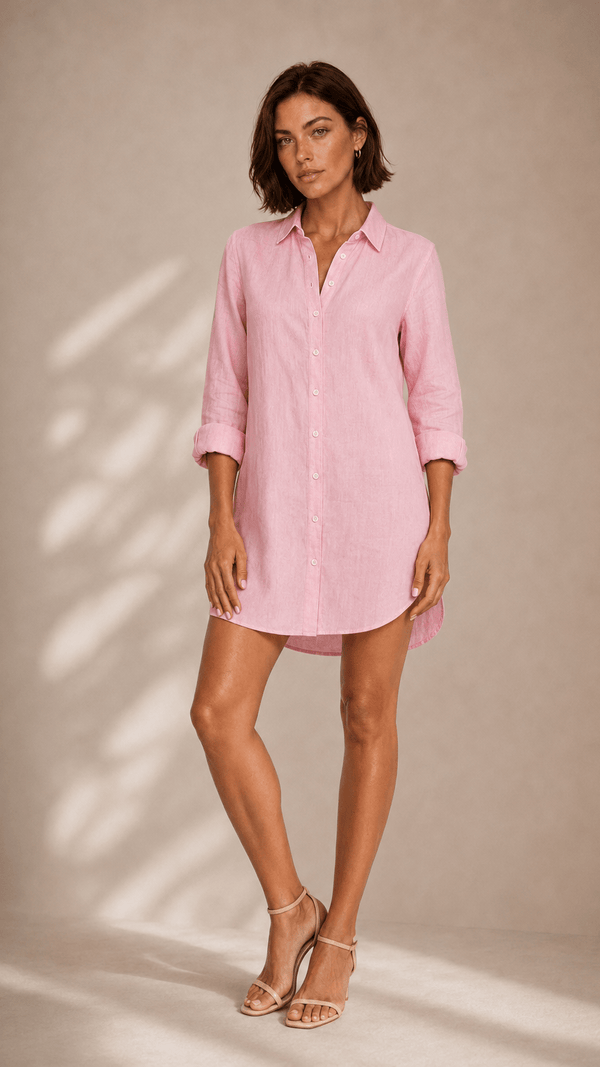
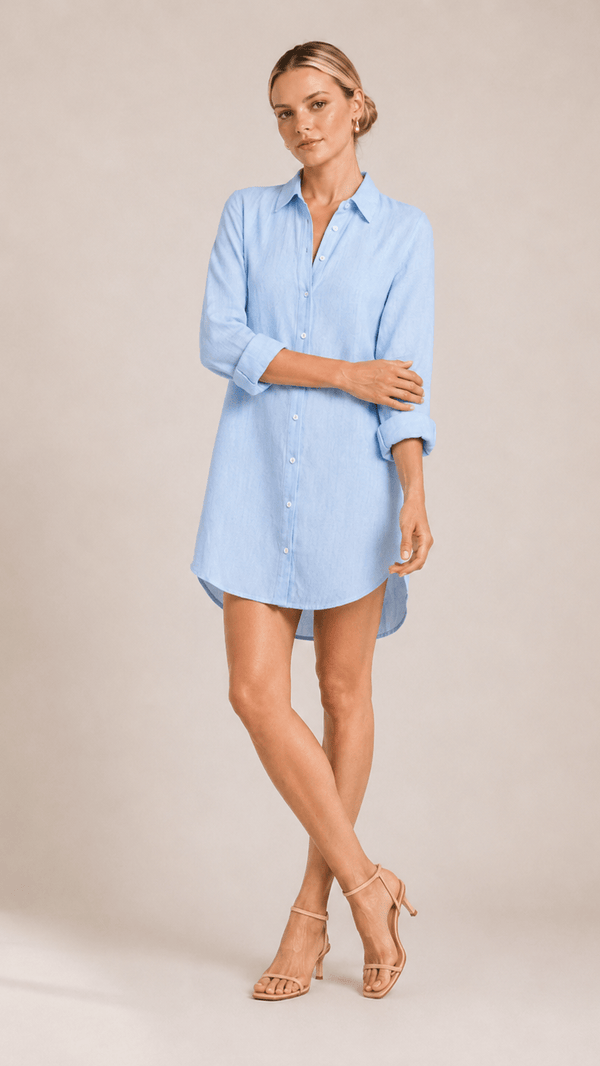
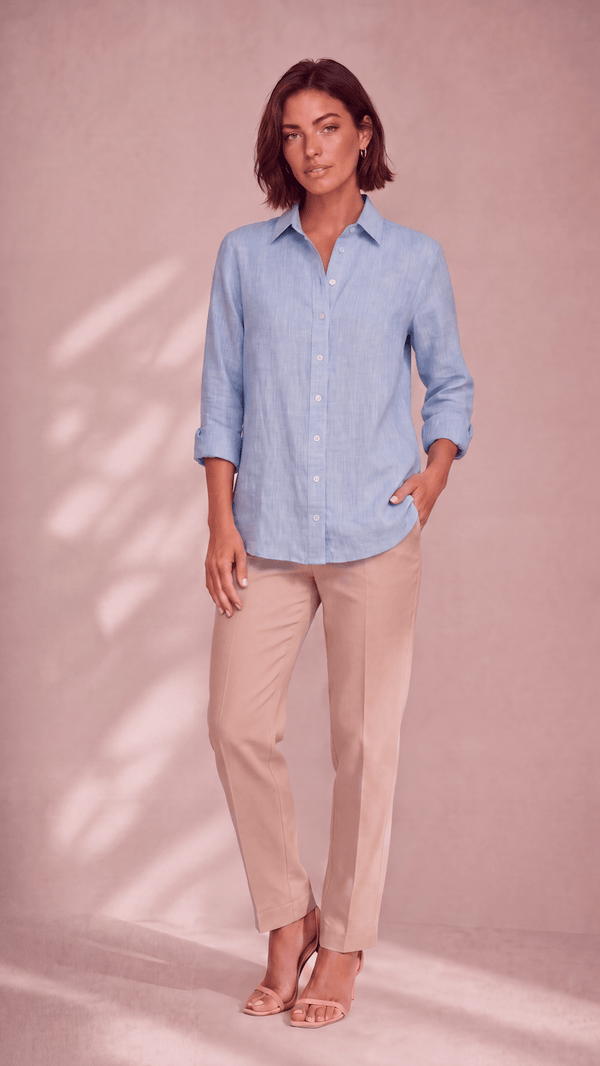
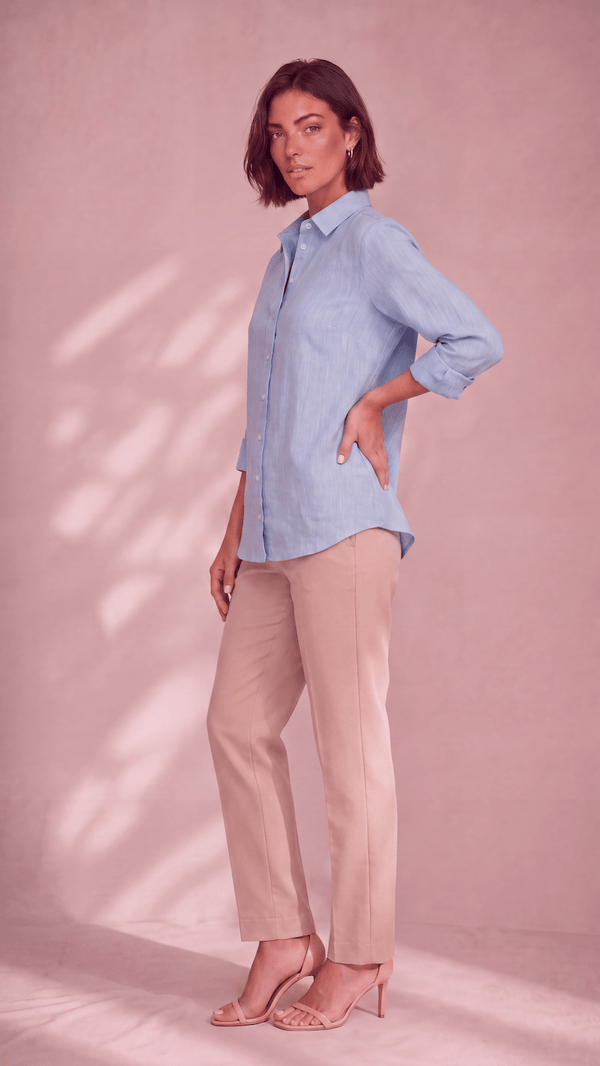
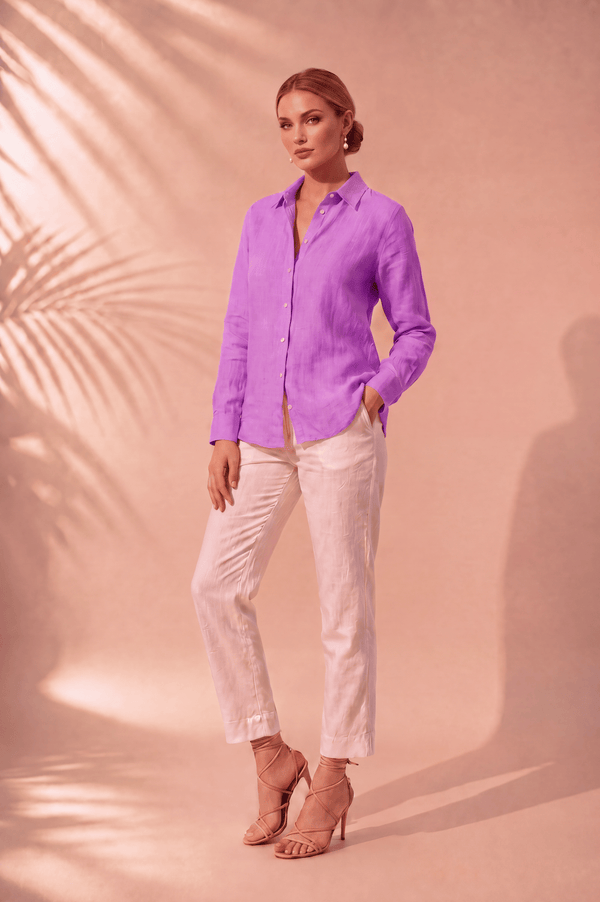
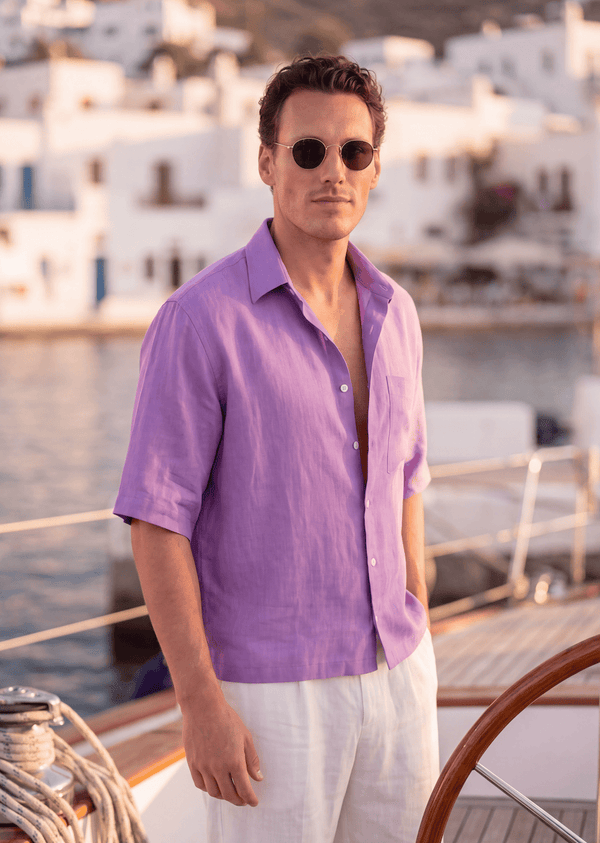
— Pieter Petros, founderBelgian linen. Among the highest-performing natural fabrics in sustained heat. The hollow flax fibre creates continuous ventilation — warm air drawn away from the skin, moisture released as vapour, the body staying regulated across a full day of heat exposure. The long-staple Belgian fibre produces a weave open enough to allow this circulation while maintaining the structural weight that prevents the fabric from collapsing against the skin. In direct sun at 40 degrees Celsius, few natural fabrics match long-staple linen for sustained heat performance. It also improves with wear — softening over a season rather than degrading.
Cotton. Breathable in light weaves — a fine poplin or a loose-weave cotton shirt performs well in moderate heat. In sustained high temperatures, cotton absorbs moisture and holds it, eventually becoming heavy and uncomfortable. The breathability of cotton is real but has a ceiling. In the Gulf in July, cotton loses to linen by the afternoon.
Hemp. Structurally similar to linen and performs comparably in heat. The fibre is slightly coarser, the hand slightly warmer, the texture more open. Hemp softens with wear as linen does. For hot-weather wear it is a strong second to Belgian linen — functionally close, aesthetically different.
Seersucker. A cotton or cotton-blend fabric with a puckered weave that holds the cloth away from the skin and creates air channels. Performs better in heat than standard cotton because of this structural distance. Traditionally associated with American summer suiting. Breathable for its category, but still limited by the cotton fibre’s moisture-retention ceiling.
Merino wool. Counterintuitive but effective. Fine merino wool regulates temperature across a wider range than most fabrics — it insulates in cool air and releases heat in warm air through the same hygroscopic mechanism. In mild heat it performs well. In extreme heat — above 35 degrees Celsius — it does not compete with linen. Best understood as a transitional fabric rather than a hot-weather specialist.
Bamboo (viscose from bamboo). Soft, lightweight, and marketed heavily as breathable and sustainable. The reality is more nuanced: bamboo fabric is technically viscose — a semi-synthetic produced through a chemical process that strips most of the bamboo fibre’s natural properties. The resulting fabric is soft and light but performs more like rayon than like a natural fibre. Breathable in a light weave, less so in a heavier one, and not biodegradable in the way that its marketing often implies.
Rayon / viscose. Lightweight and fluid, with reasonable breathability in light constructions. Not a natural fibre — produced from wood pulp through chemical processing. Comfortable in moderate heat, less stable in high heat, and not as durable as natural fibres over repeated washing.
Silk. Lightweight and smooth, silk regulates temperature well in moderate conditions. In extreme heat the tight weave that gives silk its surface reduces the airflow hot climates require. Silk is better understood as a temperature-neutral fabric than a hot-weather specialist.
Is cotton breathable in hot weather? Yes, in a light, open weave. A fine poplin or voile lets air through well and is comfortable on a warm day. What cotton does not do is release moisture quickly: once it is damp it is slow to dry, which is why a cotton shirt feels heavy by mid-afternoon in real heat, when a linen one has already dried.
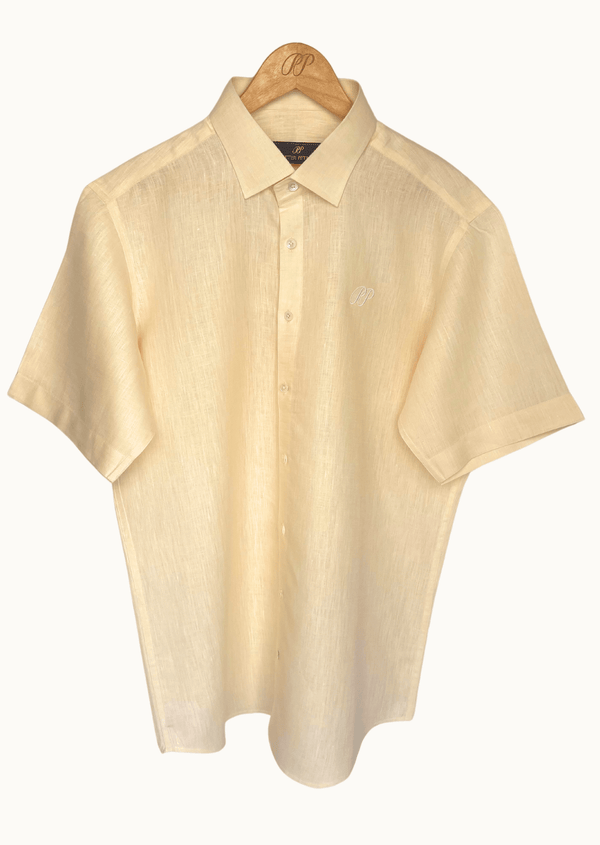
The shirt material for hot weather. For a shirt worn through a full hot day, linen is the first choice. It stands slightly away from the body, dries quickly, and stays composed when the temperature rises. A light cotton poplin is the second choice, for milder heat or air-conditioned rooms, and seersucker sits between the two. The coolest shirt is usually linen in a pale colourway, cut with room through the body. The two fibres are set side by side in linen and cotton shirts compared.
The T-shirt material for hot weather. A T-shirt is knitted rather than woven and is cut closer to the body, so it leaves less room for air to move between cloth and skin than a loose shirt in the same fibre. In heat, a light cotton or linen jersey in a relaxed cut is the right choice. When the day is truly hot, a loose linen shirt worn open at the collar is usually the cooler choice.
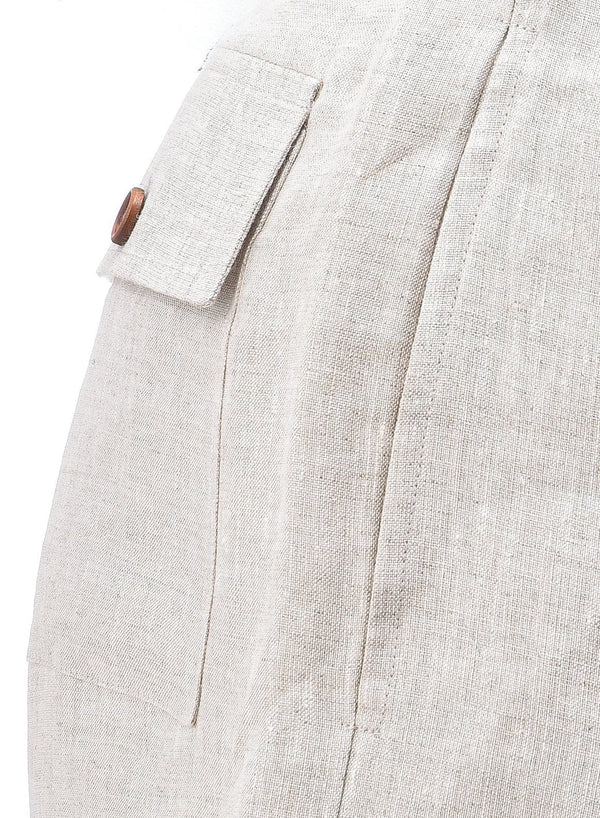
How to choose breathable clothing for a hot climate. Four things decide how cool a garment feels. The fibre: natural fibres absorb moisture, and linen and hemp let it go again soonest. The weave: open enough that a little light shows through when the cloth is held up. The weight: a lighter cloth holds less heat and dries sooner. The cut and the colour: room for air to move between cloth and skin, and pale colourways, which take up less of the sun’s heat than dark ones.
The right fabric depends on the context. No single fabric is correct for every situation in heat.
For office wear, social occasions, and resort life in hot weather: Belgian linen. It holds its structure, manages moisture without becoming heavy, and reads correctly across every professional and social setting. Cotton works in lighter weaves for moderate temperatures.
For outdoor activity, tennis, and sport in heat: certified Belgian linen performs here too. The PP natural tennis collection — the tennis shirt, tennis shorts, and tennis sets — is made from the same certified Belgian linen as the full PP range. The hollow flax fibre wicks moisture and breathes in physical exertion as well as in the social setting that follows it. PP linen is the natural fabric choice for the full day: the court, the club, and the dinner.
For humid tropical climates: linen and hemp perform well. The breathability of the hollow flax fibre handles humidity better than cotton, which absorbs moisture and holds it against the skin.
For transitional seasons — warm days, cool evenings: merino wool handles temperature variation better than any fabric on this list. Fine merino at a mild temperature is more comfortable than linen, which performs best in sustained heat rather than variable conditions.
For the Gulf in summer, the Mediterranean in July, or any sustained heat above 35 degrees in a professional or social context: Belgian linen remains the strongest answer. The combination of breathability, structural hold, and appropriate register for non-sporting occasions is not matched by any other fabric on this list.
The hierarchy above is a guide, not a rule. Context determines the correct fabric more than any ranking.
Linen vs Cotton — What the Difference Feels Like · Men's Linen Collection · The Belgian Linen Guide