How to Tell if Linen Is Real — Six Tests You Can Do by Hand
How to Tell if Linen Is Real — Six Tests You Can Do by Hand
The label is a start. The cloth itself, held in the hand and against the light, tells the rest.
The word "linen" is used loosely. In shops and online it can describe a cloth made entirely from flax, a blend in which flax is only part of the yarn, or a cotton woven to imitate linen's texture, sometimes sold as "linen-look". To tell if linen is real, it helps to understand what you are holding. Flax fibre has a handful of physical traits that no imitation reproduces completely, and most of them can be checked in a minute, without tools.
This piece is about telling real linen from imitation. Judging the grade of a genuine linen is a separate question, covered in how to identify premium linen.
“Real linen has a character you can feel with your eyes closed. It is cool, it is alive, and it is never perfectly even.”
— Pieter Petros, founder1. Read the label, then the origin. A garment of pure linen says "100% linen". Anything else, such as linen with cotton or viscose, is a blend and will behave differently. Origin matters too. Flax is a plant, and linen is the cloth spun and woven from its fibre, which is why flax and linen are not interchangeable words. The Belgian Linen® certificate follows the flax from the field to the woven cloth, so a certified fabric carries a documented origin rather than a claim. The certificate of origin is worth knowing about for anyone who wants that assurance.
2. Feel the temperature. Lay the back of your hand on the cloth. Real linen feels distinctly cool to the touch, cooler than cotton of the same weight, because flax fibre draws heat away from the skin. This is the same quality that makes linen pleasant in hot weather, and it is often the very first thing people notice when they hold a good piece. Linen's hand feel has more to it than temperature alone.
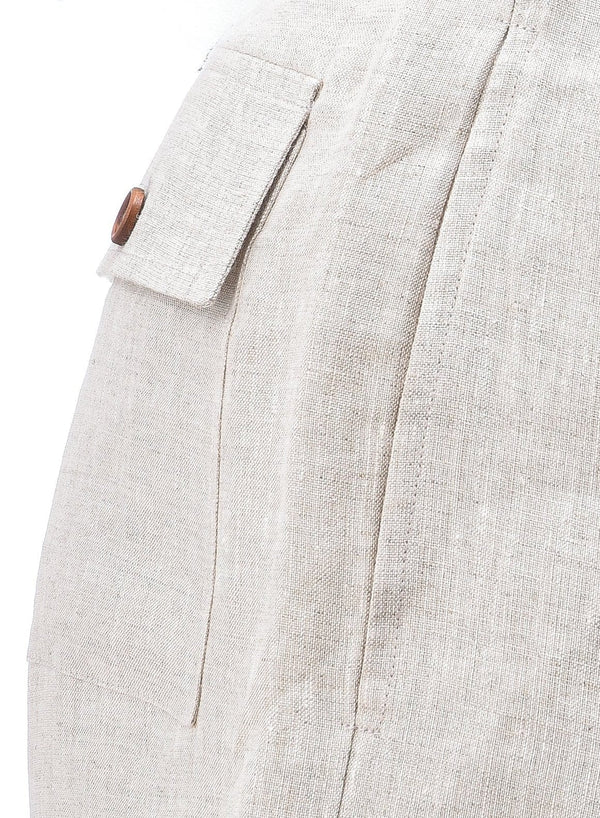
3. Look for slubs. Run a finger along the weave and look closely. Linen yarn is never perfectly uniform: it has small, irregular thickenings called slubs, where the natural fibre bunches slightly. They are a sign of the plant, not a flaw. A cloth whose surface looks absolutely even, with every thread the same thickness, is probably not pure linen, or has been heavily processed.
4. Crush it in your palm. Take a corner of the fabric, squeeze it tightly for a few seconds and let go. Pure linen creases sharply and the creases stay, softening only slowly. Cotton creases more softly and blends often barely crease at all. The crease is one of linen's signatures, and wearers who love the fabric accept it as part of its look.
5. Try a drop of water. Put a single drop of water on the cloth. Linen takes it in quickly and spreads it, because flax fibre is highly absorbent; it can take up a considerable share of its own weight in moisture before it feels damp. A drop that sits on the surface for a long time suggests a blend or a heavy finish.
6. Hold it to the light. Look through a single layer towards a window. In linen you will see a slightly irregular weave, with threads of varying thickness and small variations in density. That gentle unevenness is how linen looks; machine-perfect regularity usually belongs to another fibre.
And over time. Real linen changes with wear. It becomes softer and more supple with every wash while keeping its strength, which is why good linen garments last for many years. A fabric that feels stiff and papery at first and gradually relaxes is behaving exactly as flax should.
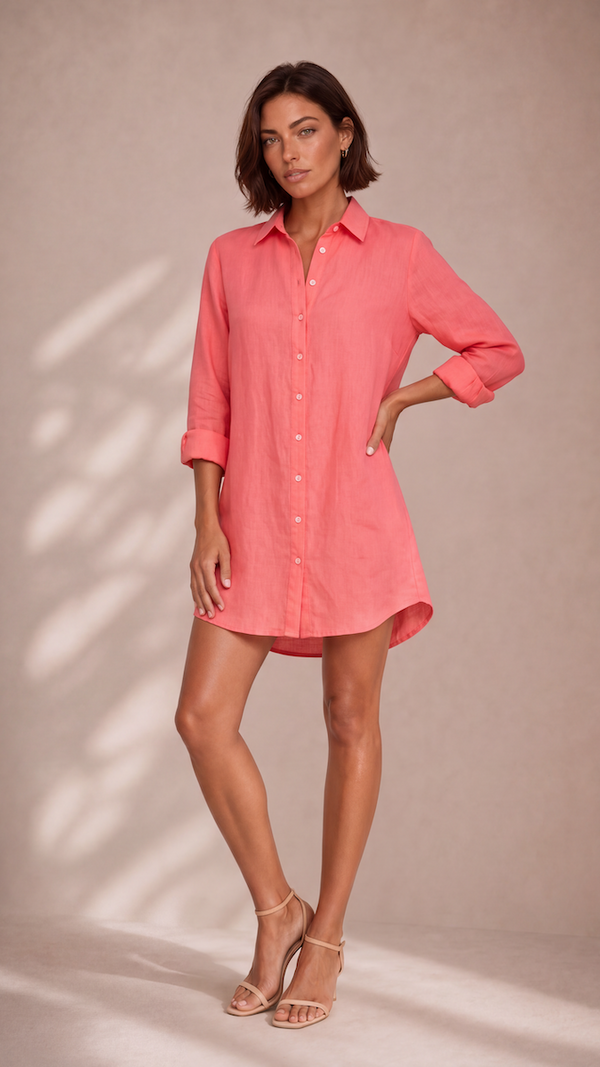
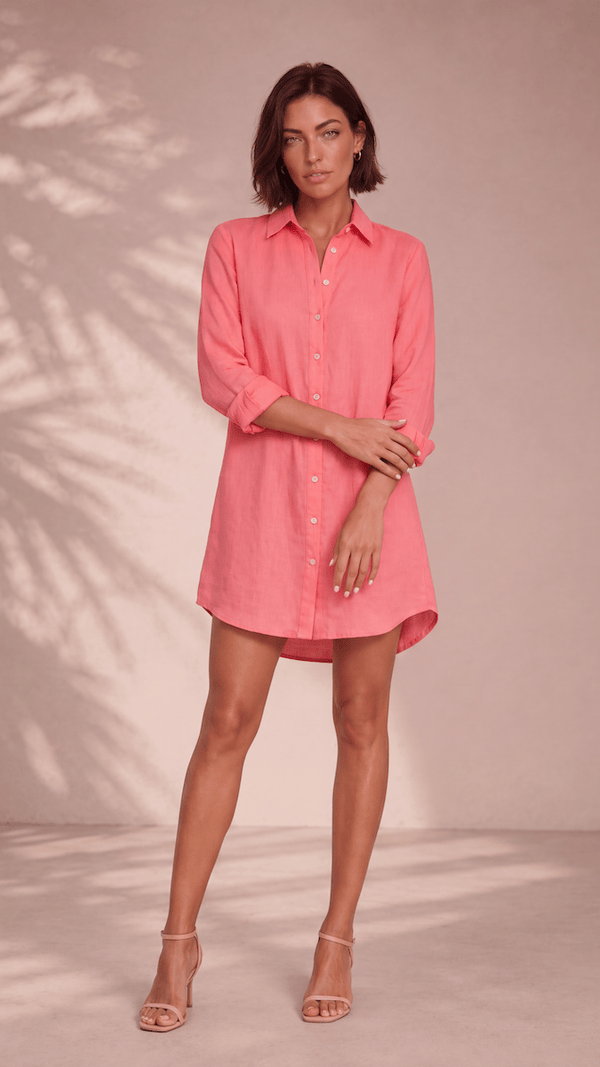
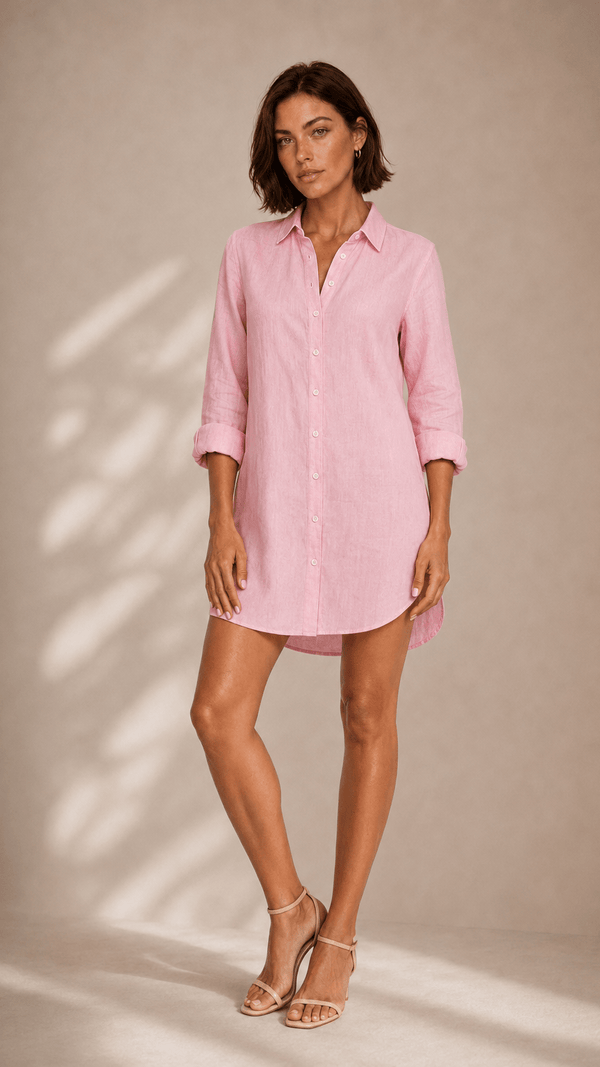
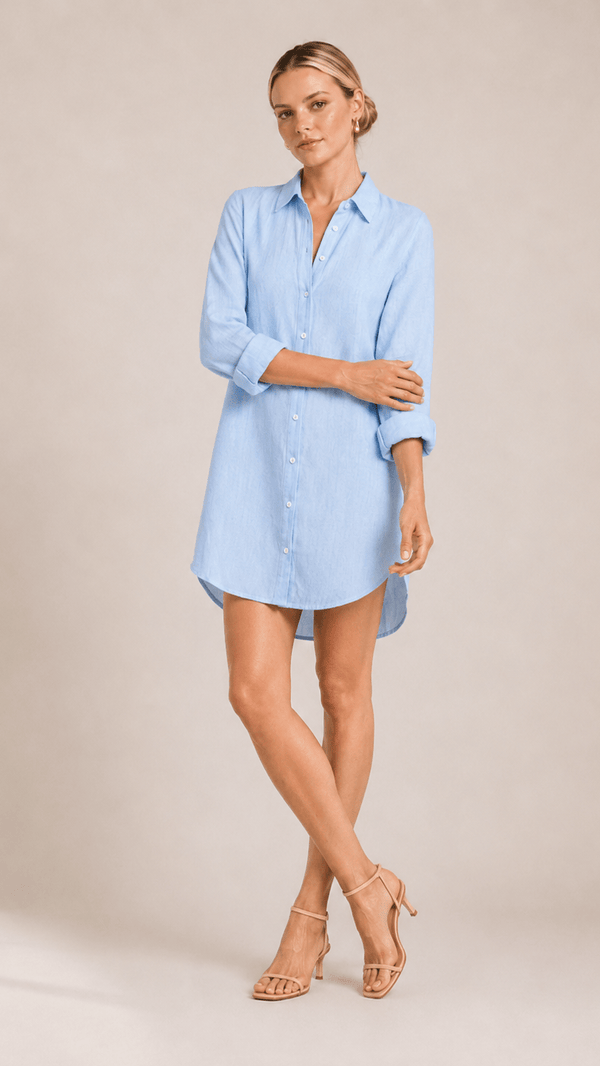
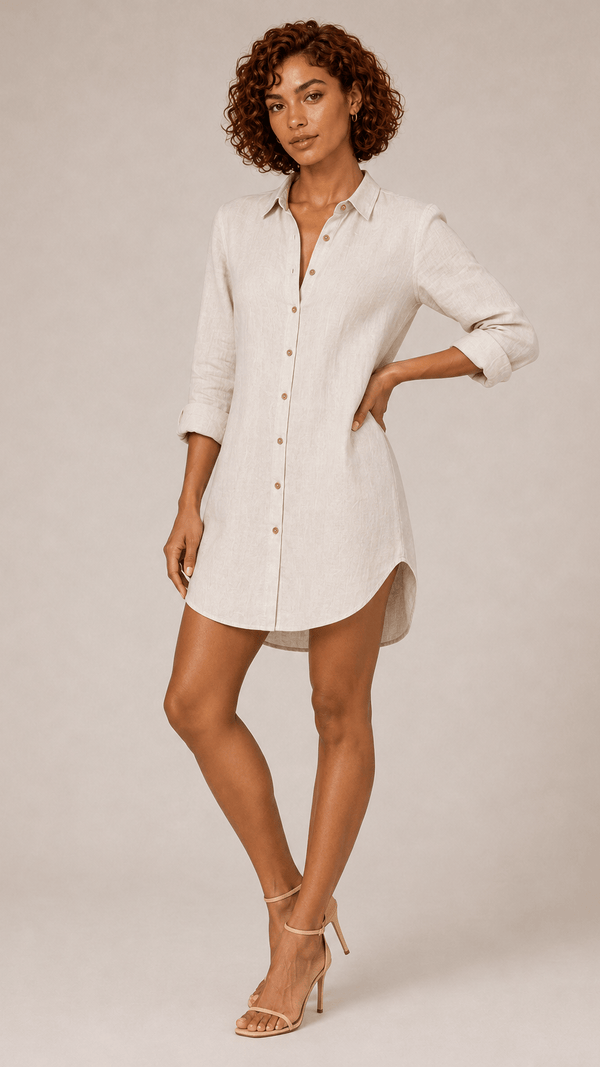
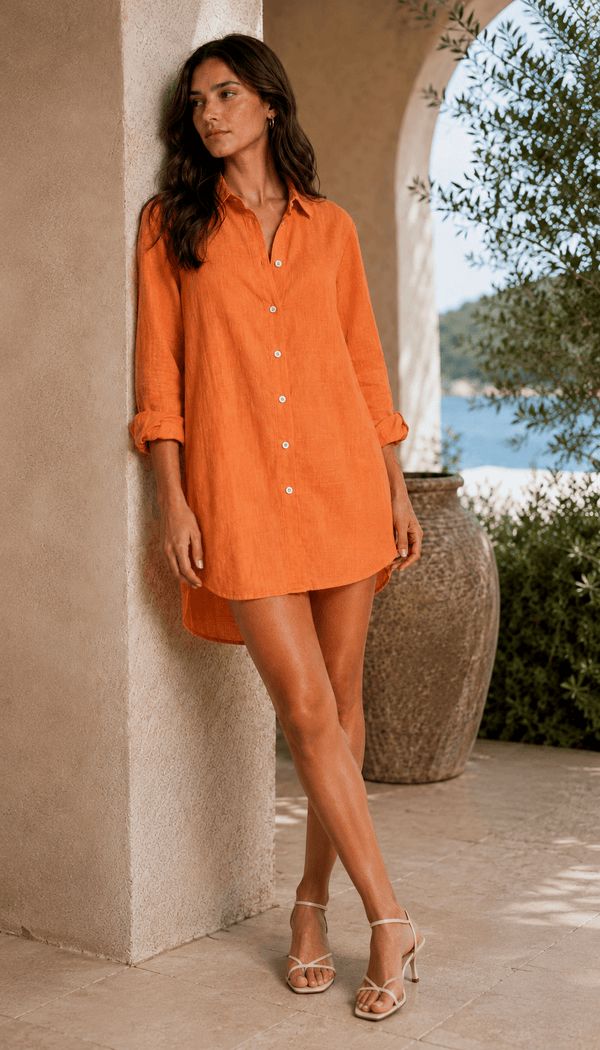
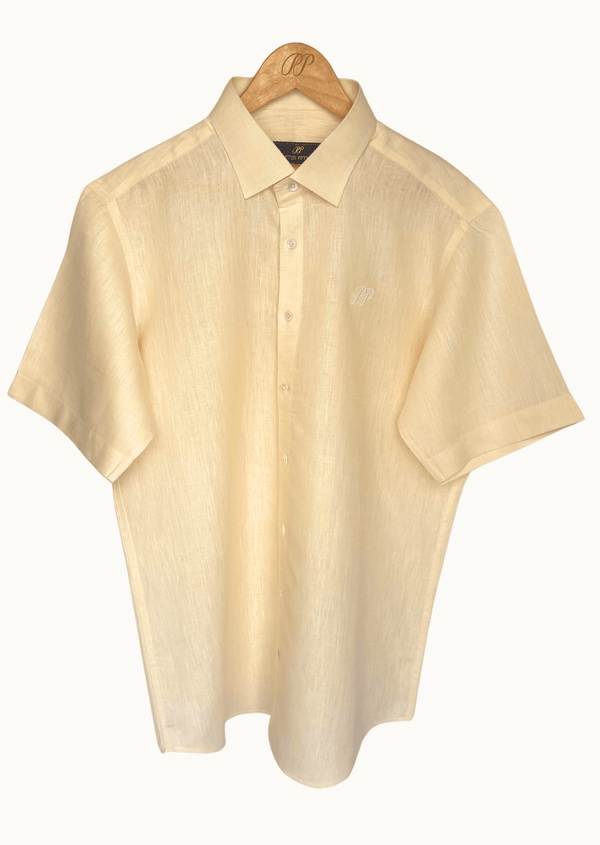
The Pieter Petros collection is built on natural fibres, and the core of the collection is certified Belgian linen, handmade into garments in the Dubai atelier and in Belgium. The men's shirts in the HIM linen collection and the women's pieces in the HER linen collection can be judged by exactly these six tests.
Read more: What Is Belgian Linen · The 100% Belgian Linen Guide