The Coolest Linen Shirt Colour for Hot Weather — Colour, Weave and Cut
The Coolest Linen Shirt Colour for Hot Weather — Colour, Weave and Cut
Why a pale linen shirt is cooler in the sun, why a loose cut matters just as much, and where the deeper colourways belong.
In hot weather the coolest linen shirt is a pale one, white, Oyster or Vanille, cut loose and woven open enough to let air through. Colour decides how much of the sun’s heat the cloth takes in; the cut and the weave decide whether that heat ever reaches the skin, and in practice they count for just as much.
Both halves of that answer are worth understanding, because the second one surprises people. A pale surface reflects more of the light that falls on it than a dark one, so a white shirt standing in full sun is cooler to the touch than a navy shirt of the same cloth. That much is ordinary physics, and anyone who has left two shirts on a sun lounger at noon has felt the difference with the back of a hand.
“Choose the colour for the hour, and the cut for the whole day.”
— Pieter Petros, founderThe less obvious half was measured in the desert. In 1980 the journal Nature published a study by Amiram Shkolnik, C. Richard Taylor, Virginia Finch and Arieh Borut with a simple question: why do Bedouin wear black robes in hot deserts? They found that the heat gained by a person in the desert sun was the same in a black robe as in a white one. The black cloth absorbed more of the sun, but that extra heat was lost before it reached the skin, and the robes were worn loose. The lesson for a shirt is plain. A dark shirt cut close and pressed against the back is a different garment from a loose one in which air can move, and a pale shirt that clings gives away much of its advantage.
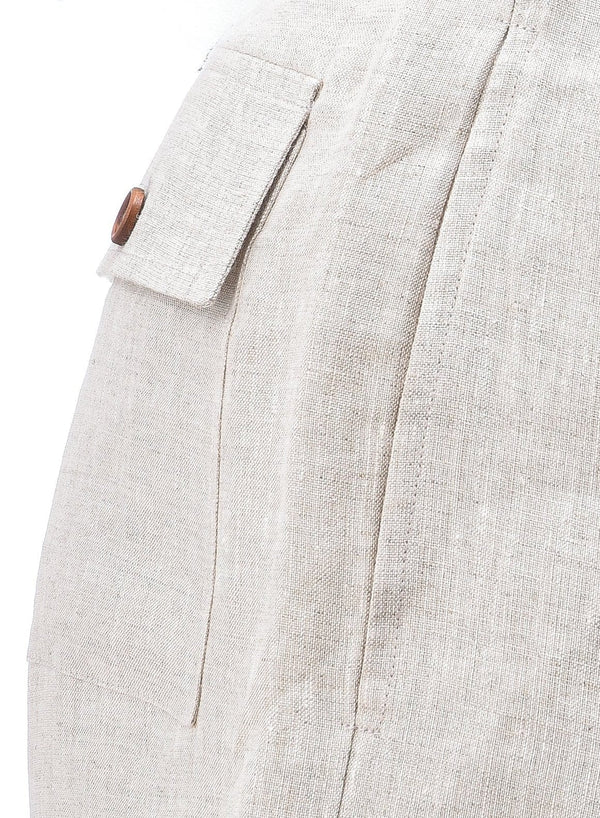
So the colour question cannot be separated from the cloth. Four things decide how a linen shirt behaves in heat. The fibre: linen takes up moisture from the skin and gives it back to the air quickly, which is why it still feels dry when a cotton shirt has turned heavy; what linen does in heat is set out in its own chapter. The weave: held up to a window, a summer linen should let a little light through. The weight: a lighter cloth holds less heat and dries sooner. And the origin: certified Belgian linen is woven from flax grown in the cool, damp coastal belt of Flanders and northern France, and its certificate follows the fibre from the field to the cloth.
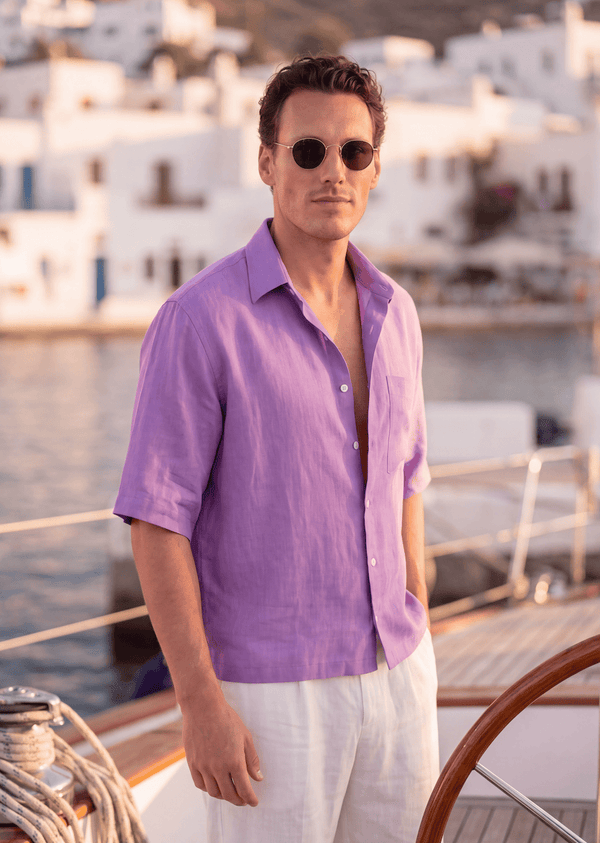
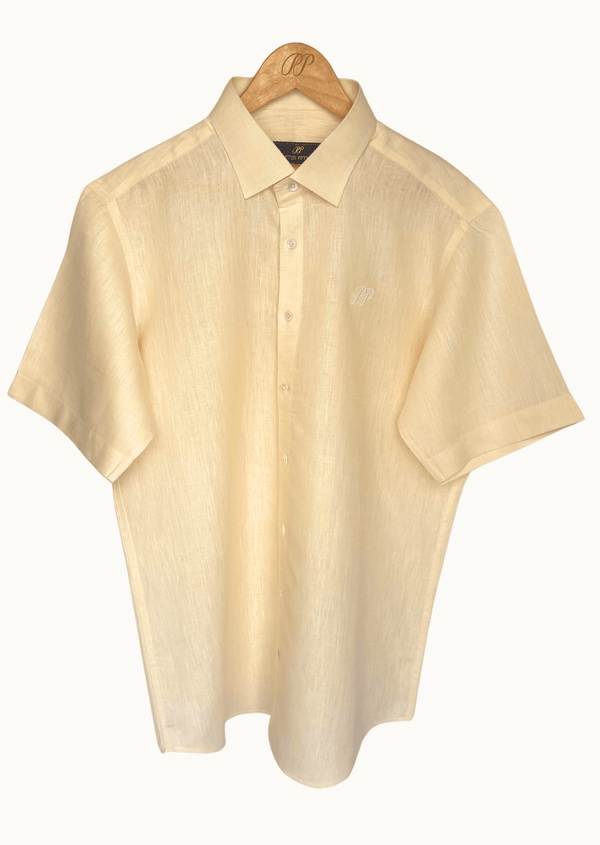
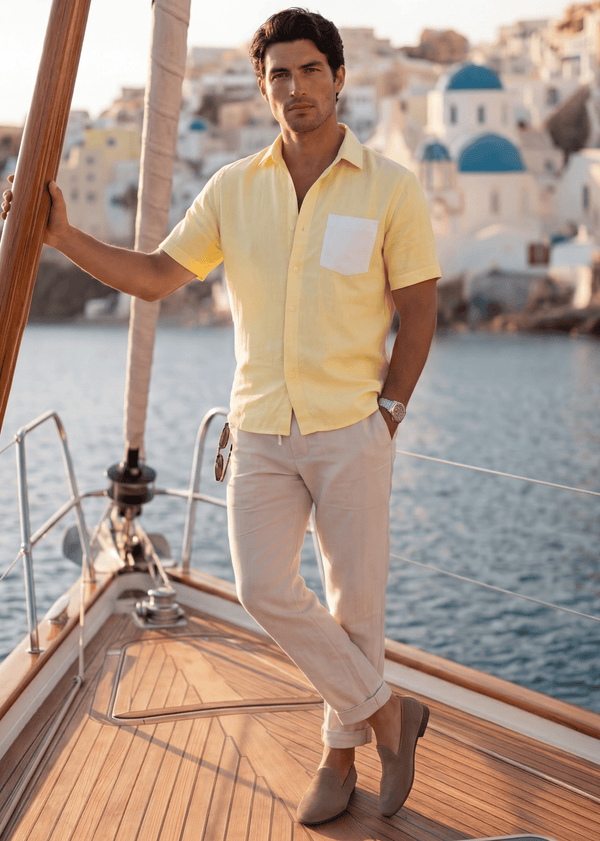
Within the men’s linen collection, the palest colourways are the natural choice for hours in direct sun. The Laos Short Sleeve Linen Shirt in White, Oyster or Vanille, all in certified Belgian linen, is cut with room through the body, and its short sleeves leave the forearms free on the hottest afternoons. Sky Blue and Light Blue sit just behind them, light enough for open sun and softer than white against tanned skin. Lemon Yellow and Mint Green are pale as well, and they hold their character in the bright, flat light of the tropics.
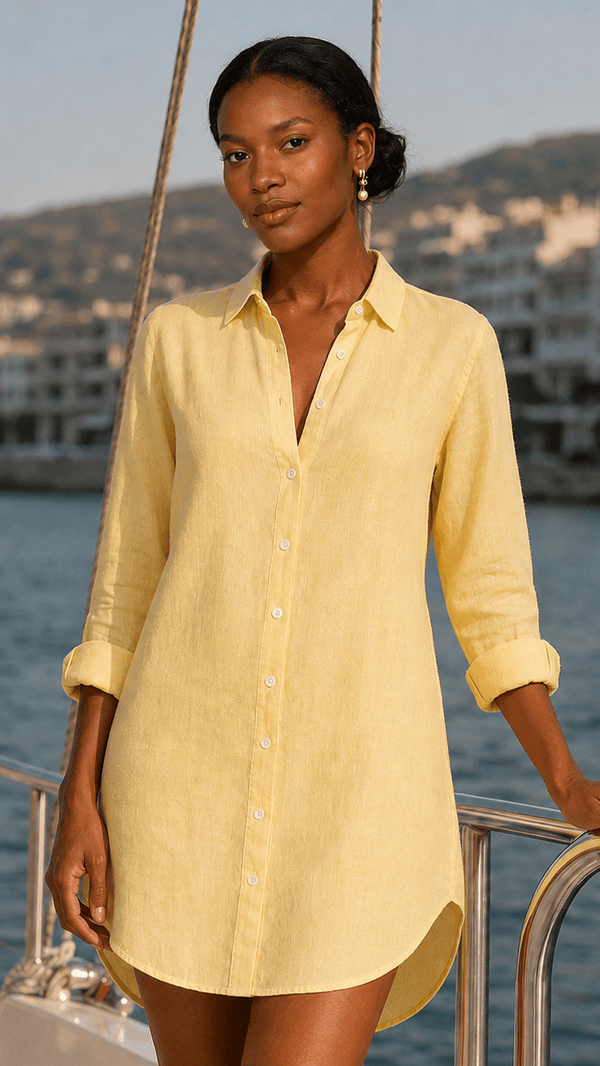
When the sun is fierce, the instinct is to bare as much skin as possible, yet in desert cities and on open water many people find that the opposite works better: a long-sleeved shirt in a pale colour, worn loose and open at the collar, shades the arms without trapping heat. The Laos Long Sleeve Linen Shirt in Oyster or Beige Cream is made for that kind of day, on the deck of a boat or walking through a market at midday. The Monte-Carlo Male in Vanille, with its walnut buttons, carries the same pale register into a lunch that runs late.
None of this makes navy or Dubarry a mistake. The deeper colourways belong to the shade and to the evening, when the sun no longer works on the cloth and a darker shirt looks composed at a dinner table; the Laos Long Sleeve Linen Shirt in Dark Blue and the Vibes Linen Shirt in Dubarry are made for that hour. There is a practical point in their favour, too. Dye itself absorbs ultraviolet light, so a deeply coloured cloth generally lets less of it through than a pale cloth of the same weave, which matters to anyone sitting on an open terrace in the late afternoon.
How the shirt is worn changes as much as which shirt is chosen. Leave it untucked, so that air can move in at the hem and out at the open collar. Choose a size that stands slightly away from the shoulders and back. Roll long sleeves to the elbow rather than reaching for a tighter short-sleeved cut. And keep the swim shorts for the water: at the beach, a white linen shirt goes on over dry PP swim shorts for lunch, never into the sea.
In practice, the choice follows the day. For a beach, a boat or a city street in open sun above 35°C: white, Oyster or Vanille, loose, with short or rolled sleeves. For a humid climate, where the air itself is the difficulty: the lightest weight and the loosest cut, in any pale colourway, as linen in humid weather explains. For shaded terraces, air-conditioned interiors and evenings: the full range, navy included. Anyone who wants one shirt for all three will find that Oyster does the most, pale enough for noon and warm enough in tone to sit well at dinner.
Heat is rarely the moment to make a statement with colour. It is the moment to let the cloth do its work and to keep the deeper shades for the cool of the evening, when they look their most considered. For fit, fabric and sleeve length beyond the question of colour, choosing a linen shirt for hot weather covers the rest.
Read more: The Most Breathable Fabrics for Hot Weather · Linen Shirt Colour Guide for Men · Linen vs Cotton Shirts for Men