What to Wear in San Miguel de Allende — Warm Days, Cold Nights
What to Wear in San Miguel de Allende — Warm Days, Cold Nights
Pink stone, steep cobbles and a highland dry season that swings almost twenty degrees between noon and midnight.
San Miguel de Allende is a town of thresholds: a carved wooden door on a cobbled street, a courtyard of bougainvillea behind it, a roof terrace above that looks across domes to the hills. Each has its own temperature. The town stands at about 1,900 metres in the state of Guanajuato, and in the dry season, from November to May, the noon sun is warm and strong while the nights of December and January fall close to six degrees. A wardrobe for San Miguel de Allende is built around that swing, with linen as the base and a knit never far away.
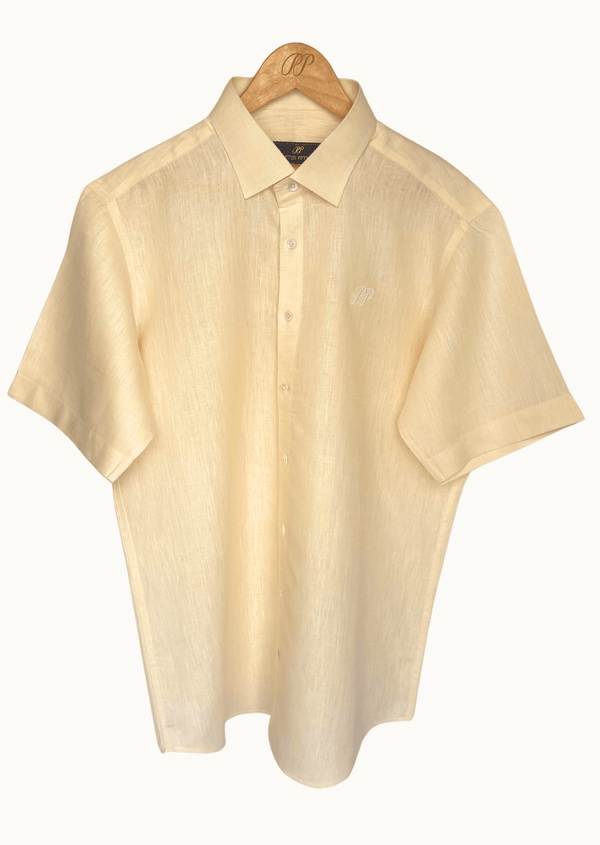
The historic centre and the nearby Sanctuary of Atotonilco have been on the UNESCO list since 2008, and the town's centre still revolves around one building. The Parroquia de San Miguel Arcángel acquired its pink neo-Gothic façade in the late nineteenth century, raised by a local mason, Zeferino Gutiérrez, who is said to have worked from postcards of European cathedrals. Churches here are working churches. For a visit, shoulders and knees are covered: for her, a PP linen blouse in Orchid with a long skirt; for him, a Male Linen Shirt in Grey with long trousers.
“At altitude the sun is generous and the night is not. A good wardrobe here is a conversation between the two.”
— Pieter Petros, founderMornings start in the Jardín, the main square under its clipped laurel trees, where shoeshine stands open early and the light is still cool. A Laos Long Sleeve Linen Shirt in Oyster with PP Casual Linen Trousers in Roosewood Pink and a light knit over the shoulders is right at eight, and by eleven the knit is in a bag and the sleeves are rolled. The streets are steep and paved in uneven stone, so the shoe matters as much as the shirt: a leather sole with some grip, or a woven loafer, never anything thin.
North of the centre, Fábrica La Aurora is a reminder that the town once made cloth. The cotton mill worked here from the early twentieth century until 1991; today its long halls hold galleries, antique dealers and design studios, with the old machinery left in place among them. It is a good place to spend a late morning, and the walk back down Calle Hidalgo passes the old washing place at El Chorro, where the spring that gave the town its water still runs beneath the trees.
Afternoons are the warmest part of the day, around twenty-four degrees in winter and close to thirty in April and May, before the summer rains. This is the hour for lunch in a courtyard, a siesta, or a day trip. Atotonilco, a short drive north, holds its sanctuary, its walls and ceilings painted over decades in the eighteenth century. Around it, natural hot springs feed pools set in gardens and stone tunnels; for those, PP natural swim shorts in Vanille, and a linen shirt for lunch beside the water afterwards.
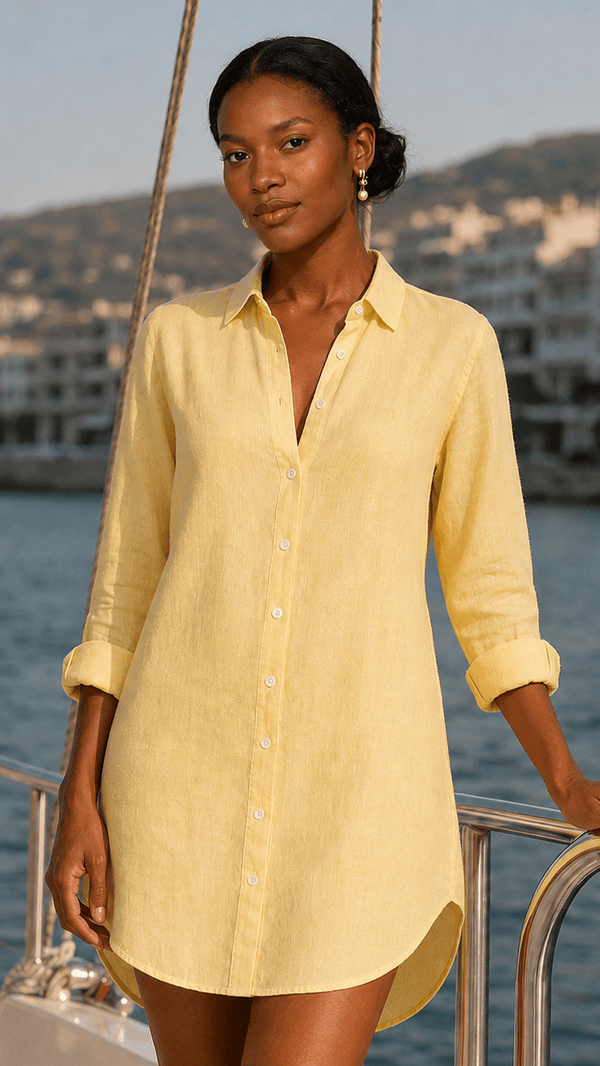
At sunset the town goes up. Roof terraces across the centre, among them the one at the Rosewood San Miguel de Allende, face the Parroquia as its stone turns from pink to rose and the bells begin. It cools quickly once the sun has gone. For her, the Amelia linen dress shirt in Blue, worn as a dress, with a wool wrap and a closed shoe; for him, the Oyster shirt with sleeves down under a fine merino knit. The town's evening register is closer to the highland calm of Mexico City than to the beach clubs of Punta Mita.
December has a ritual of its own. From the sixteenth to the twenty-fourth, the posadas move through the streets each evening, re-enacting Joseph and Mary's search for shelter, with candles, songs and a piñata at the house that finally opens its door. Nights are at their coldest then; a coat over linen is entirely reasonable after dark.
San Miguel is also a town of weddings, and their custom is the callejoneada. After the ceremony the guests follow a brass band through the lanes, led by mojigangas, giant papier-mâché figures of the bride and groom, sometimes with a donkey hung with flowers. A destination wedding here asks for a lightweight suit or a Monte-Carlo Male in Oatmeal under a jacket, and for her a long dress or the blouse with a silk skirt. The procession climbs and descends the cobbles for an hour or more, and by the time it reaches the Jardín again, the whole town has stopped to watch it pass.
Read more: What to Wear in Careyes · What to Wear in Tulum