Linen vs Flannel — Two Natural Cloths for Opposite Seasons
Linen vs Flannel — Two Natural Cloths for Opposite Seasons
A brushed winter cloth and a summer weave, compared fibre by fibre.
On a December morning in London or Brussels, a flannel shirt or flannel trousers feel exactly right. Eight hours later, stepping off a plane in Dubai or the Maldives, the same cloth feels like a blanket. Linen vs flannel is not a contest between a good cloth and a bad one. Both are natural, both are old, and both are excellent at opposite tasks. Understanding why helps a traveller pack for both ends of a winter-sun journey.
What flannel is
Flannel is defined less by its fibre than by its finish. It is a soft cloth, traditionally woven from wool and later also from cotton, whose surface has been brushed, or napped, to raise a fine layer of loose fibre ends. That raised nap is what gives flannel its softness and its warmth. It holds a thin layer of still air close to the body, and still air is one of the most effective insulators there is. Wool flannel, in grey, has been the cloth of tailored trousers for generations; cotton flannel became the soft check shirt of colder climates.
What linen is
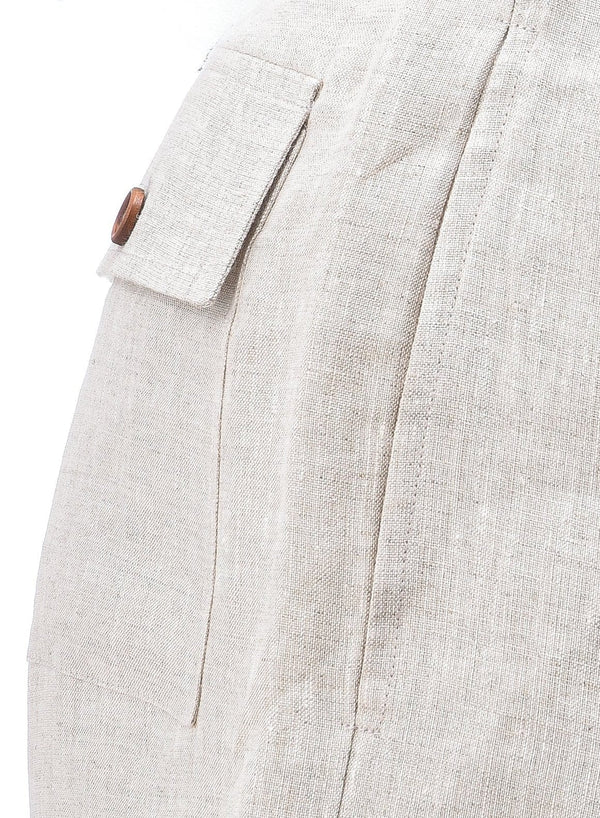
Linen is woven from flax, a bast fibre taken from the stem of the plant. The fibres are long, smooth and relatively stiff, and the cloth is most often a plain weave with a flat, slightly irregular surface. There is no nap. Instead of trapping air, a linen cloth lets it move through, and the fibre itself absorbs moisture readily and releases it to the air. Where flannel creates warmth by stillness, linen creates comfort by movement.
“Flannel keeps the warmth in and linen lets it go. A winter-sun journey needs one at each end.”
— Pieter Petros, founderSurface and hand
Hold the two side by side and the difference is immediate. Flannel is soft, warm to the touch, almost fuzzy; it drapes heavily and quietly. Linen is cool to the touch, crisp when new and softer with every wash, and it falls with a certain body and visible texture. Flannel tends to mute colour slightly, through its nap; linen shows colour clearly, with the subtle variation of its yarn.
Weight
Flannel is generally a mid to heavy cloth, because the brushing needs a certain body of yarn to work on. Shirting linen is light, often a fraction of the weight of a flannel trouser cloth. The linen weight guide explains how weight affects the way a linen garment wears.
Comparison with wool more broadly
Flannel is one finish among many in the wool family, and the broader comparison between flax and fleece is set out in linen vs wool. The essential point holds for flannel too: wool and its brushed cloths are built to keep heat in; linen is built to let it out.
Packing for winter sun
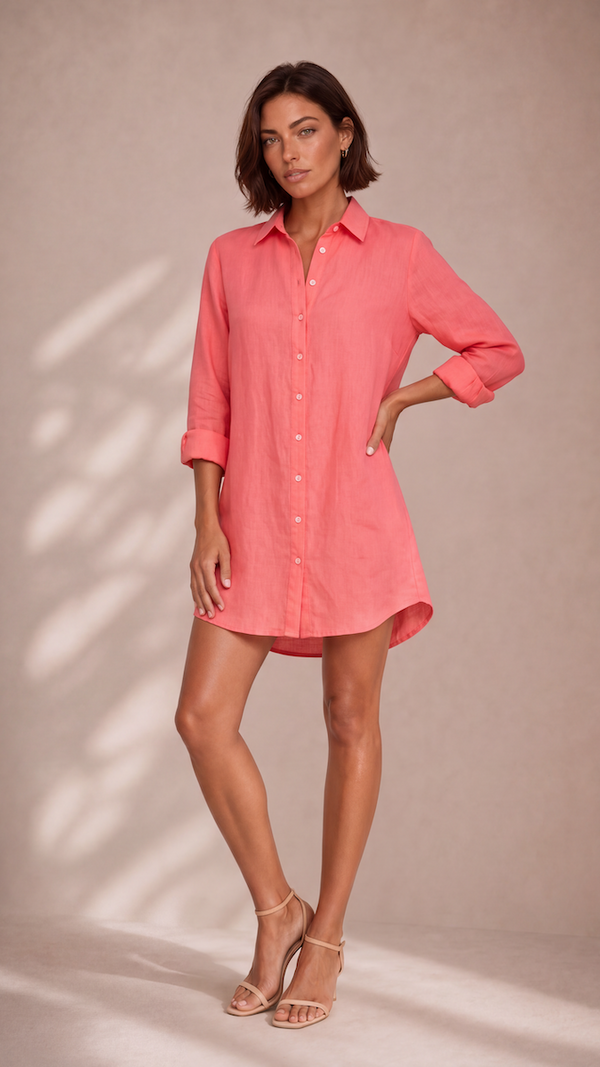
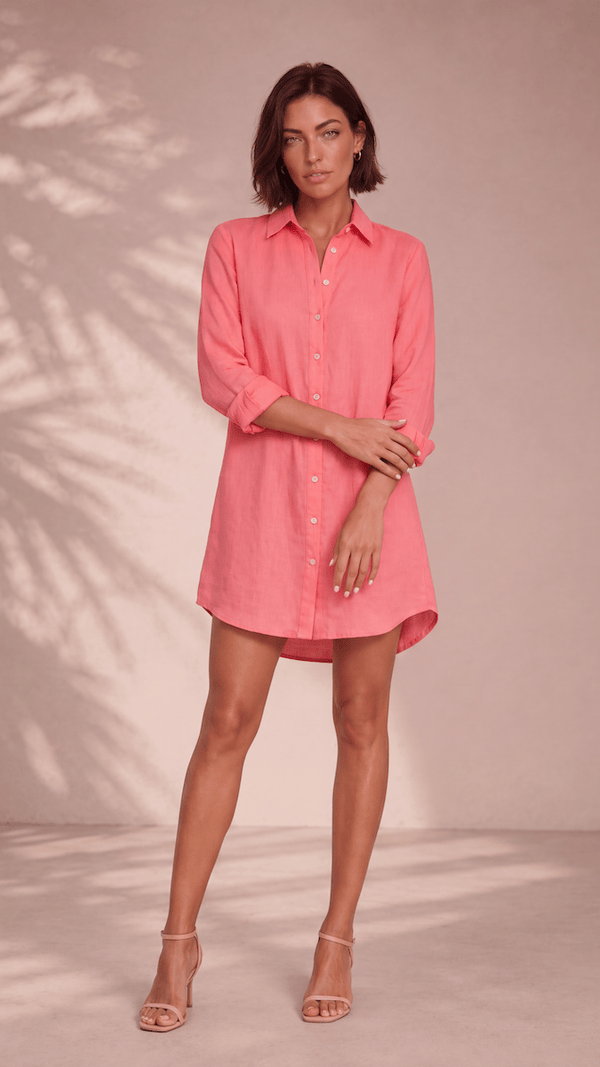
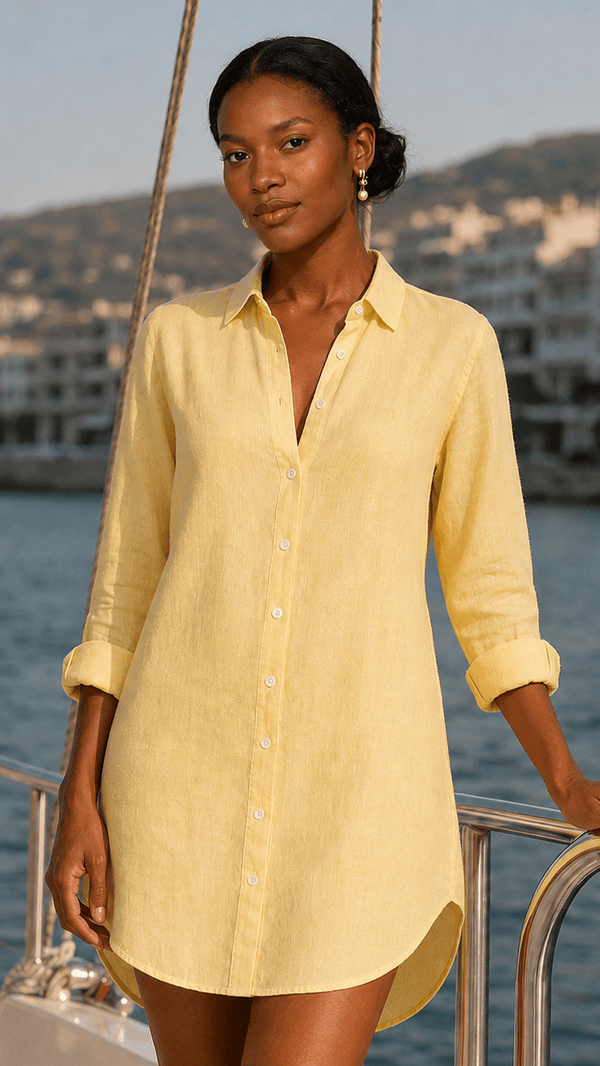
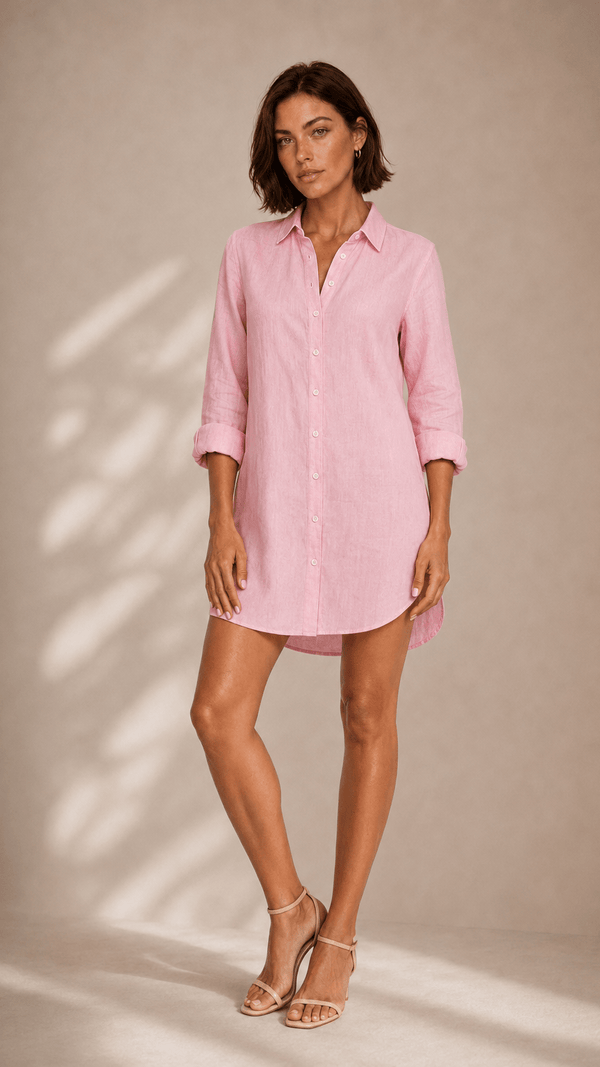
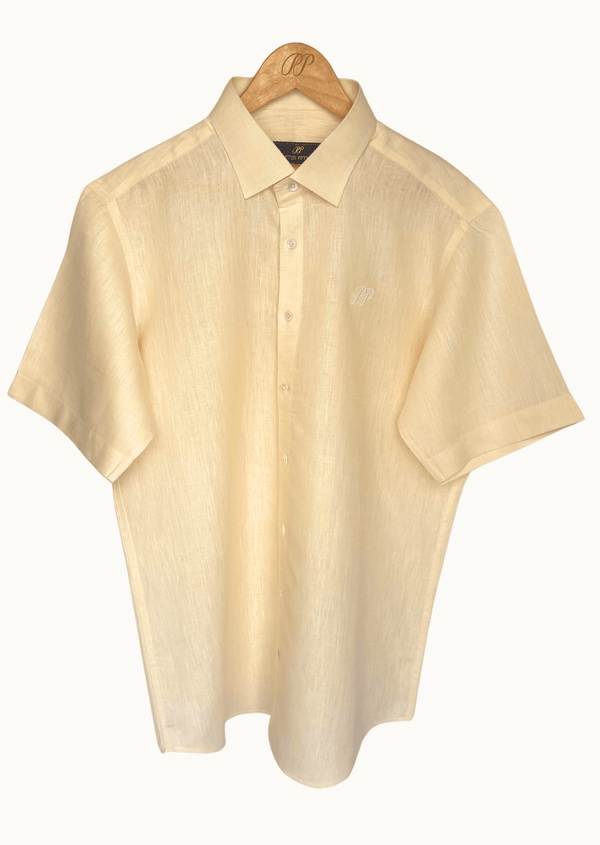
This is where the two meet in practice. A traveller leaving northern Europe in December for the Gulf, the Indian Ocean or the Caribbean leaves in one season and arrives in another. Flannel trousers and a knit on the plane; a linen shirt, linen trousers and swim shorts in the bag. On arrival, the flannel goes to the bottom of the case and stays there until the return flight. The thinking is set out in full in linen for winter sun. For the warm half of the journey, the PP linen shirts cover that arrival.
Can linen be worn in winter?
It can, in milder climates and in layers, and those who want to try will find guidance in the guide to linen in winter. But the honest answer to linen vs flannel is that each is at its finest in its own climate. Flannel belongs to grey skies, fires and long walks in cold air. Linen belongs to heat, sun and the open window.
Age and character
The two cloths also age differently. Flannel's nap softens and, over years of wear, flattens at the points of most friction, the seat and the knee of a trouser. Linen grows softer with washing while its surface stays flat. Neither ageing is a fault; each is the honest record of a natural fibre in use.
Read more: Linen vs Cashmere · Linen for Long-Haul Flights