Linen vs Linen — How to Tell the Difference Between Grades
Linen vs Linen — How to Tell the Difference Between Grades
A technical guide to linen grades — the hand test, the drape test, the wash test, and what certification confirms.
Not all linen is the same fabric. The word describes a fibre category — cloth made from flax — not a quality standard. Within that category the range is wider than most people realise.
The grade is determined primarily by fibre length. Long-staple flax — the kind grown in northern Belgium and northern France, certified by origin — produces fibres of exceptional length. Longer fibres spin into finer, more consistent yarn. Finer yarn produces cloth with a smooth surface, a fluid drape, and a structural quality that holds its shape without stiffness.
“Premium linen is smooth from the first wear and becomes more so. That is the test. Everything else is secondary.”
— Pieter Petros, founderShort-staple linen, grown in other regions or processed more quickly, produces shorter fibres. Short fibres spin into coarser yarn. Coarser yarn produces cloth that is rougher to the hand, stiffer in its initial drape, and more likely to pill or lose its surface texture with washing.
How to tell the difference:
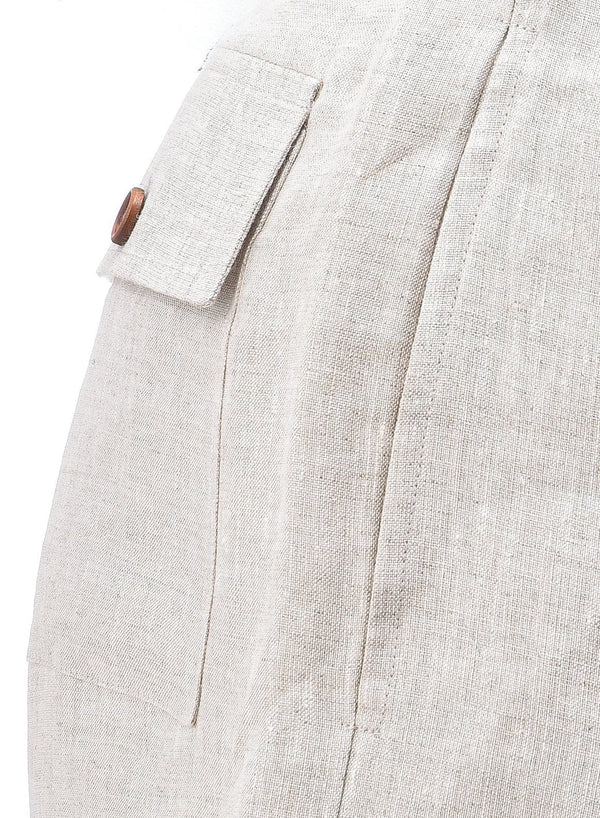
The hand test. Run the back of your fingers across the surface. Premium long-staple linen is smooth — the individual fibres do not register against the skin. Lower-grade linen has a perceptible texture that can range from mildly rough to scratchy on first contact.
The drape test. Hold the cloth away from the body and release it. Premium linen falls in a continuous, fluid line. Lower-grade linen creases into angular folds or hangs without movement.
The wash test. This takes time but is definitive. Premium linen — long-staple, well-processed — softens with each wash without losing structure or drape. Lower-grade linen may soften initially but begins to pill, lose its hand, or go limp within the first season.
The certification check. Belgian linen carries a protected designation of origin — a legal standard confirmed by document, not by label. A certificate of origin accompanying the finished garment is the clearest external confirmation that the linen is long-staple and from the certified region.
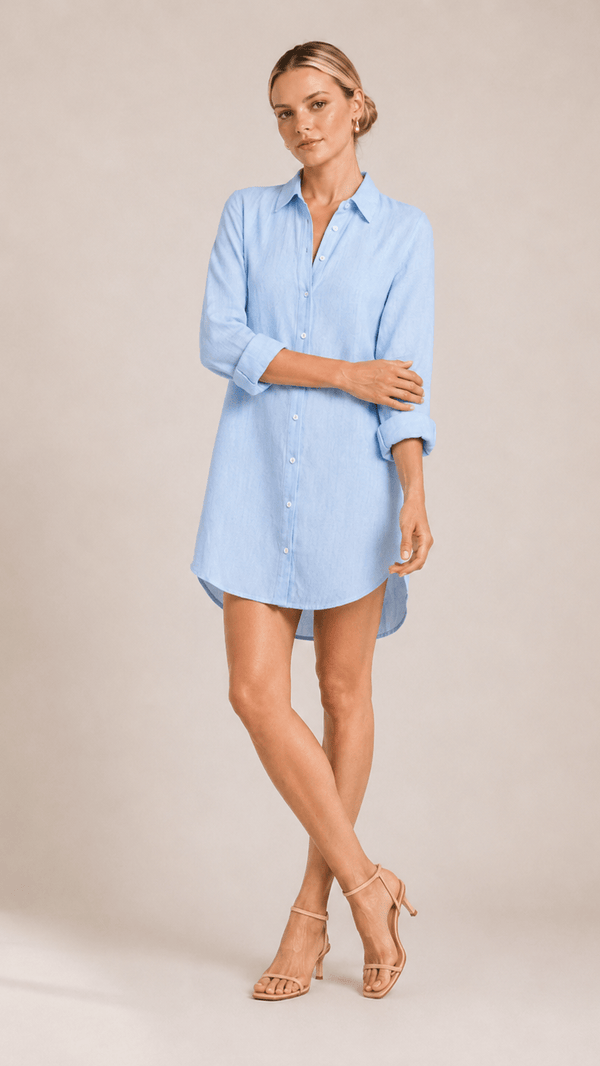
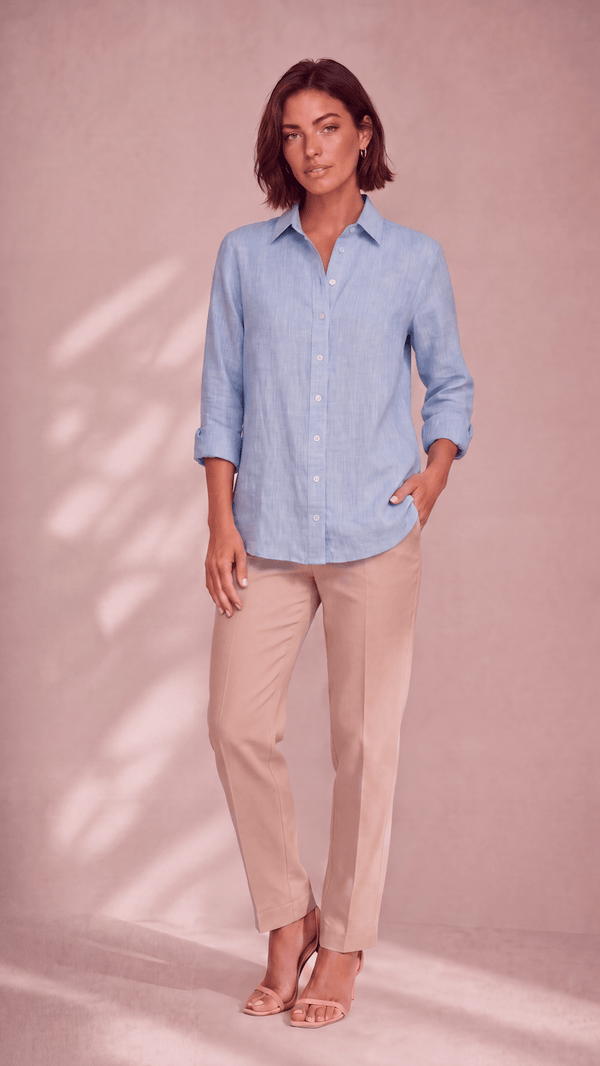
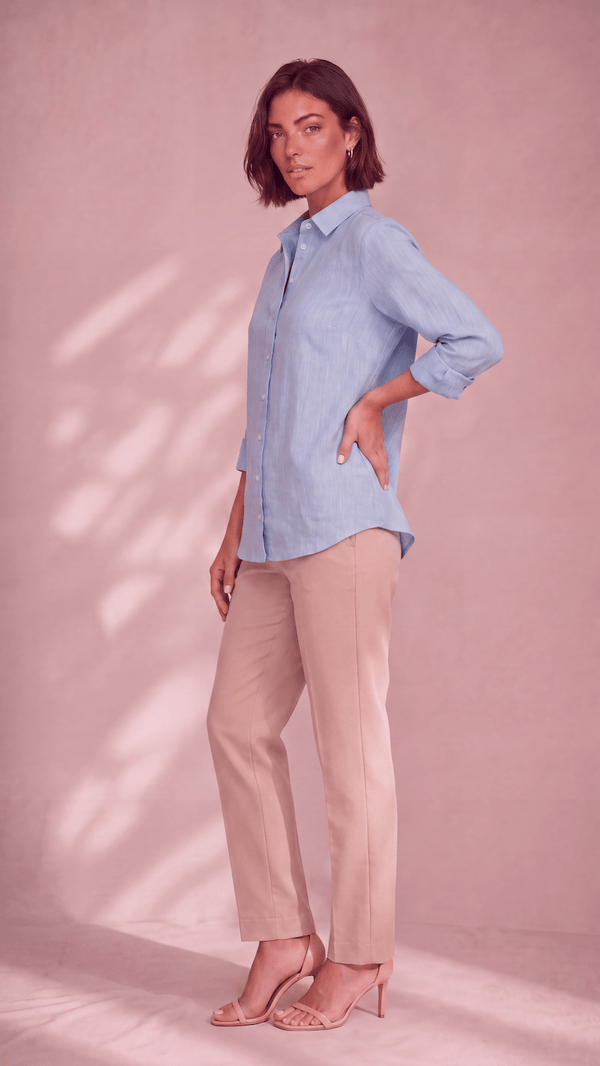
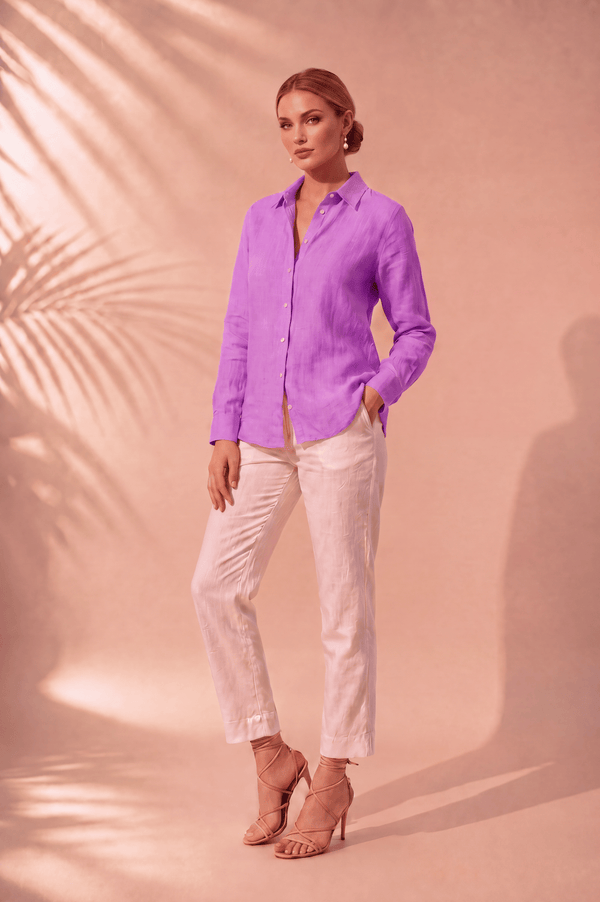
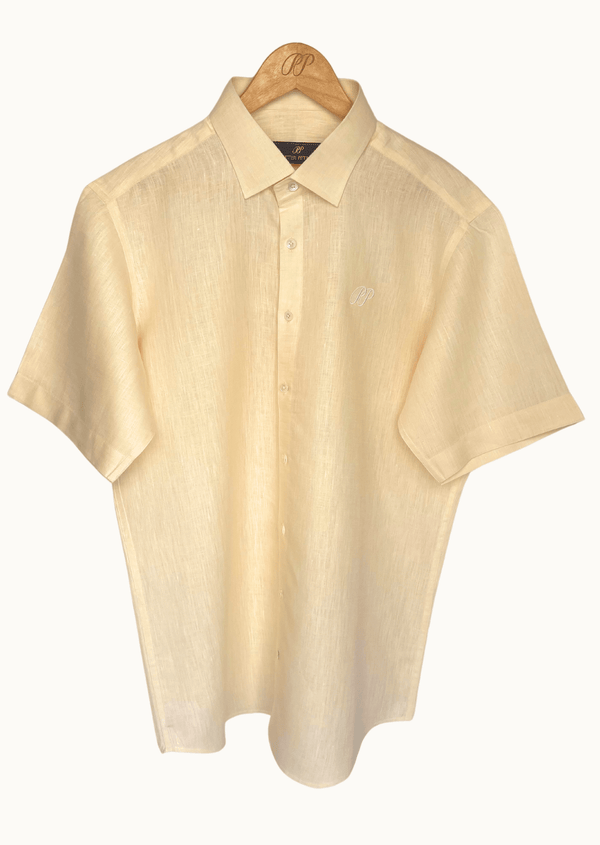
PP uses certified Belgian linen in every garment. The certificate comes with every piece.
How to Identify Premium Linen · Why Belgian Linen Improves with Washing