Linen Care Tips — The Complete Guide to Keeping Natural Fabric Perfect
Linen Care Tips — The Complete Guide to Keeping Natural Fabric Perfect
The complete linen care guide — washing, drying, ironing, storage, stain treatment, and why correct care makes Belgian linen better over time.
Linen care is simple once the principles are understood. The flax fibre is durable, wash-resistant, and improves with correct handling. The mistakes that damage linen are almost always the result of treating it like cotton or synthetic fabric rather than understanding its specific properties.
Washing. Machine wash at 30-40 degrees Celsius on a gentle cycle. This is the correct temperature range for Belgian linen — warm enough to clean effectively, cool enough to prevent shrinkage and colour loss over repeated washes. Avoid hot water: anything above 60 degrees accelerates colour fading and can cause shrinkage, particularly in garments that have not been pre-washed. No fabric softener — it coats the flax fibre and prevents the natural softening process that makes Belgian linen improve with washing.
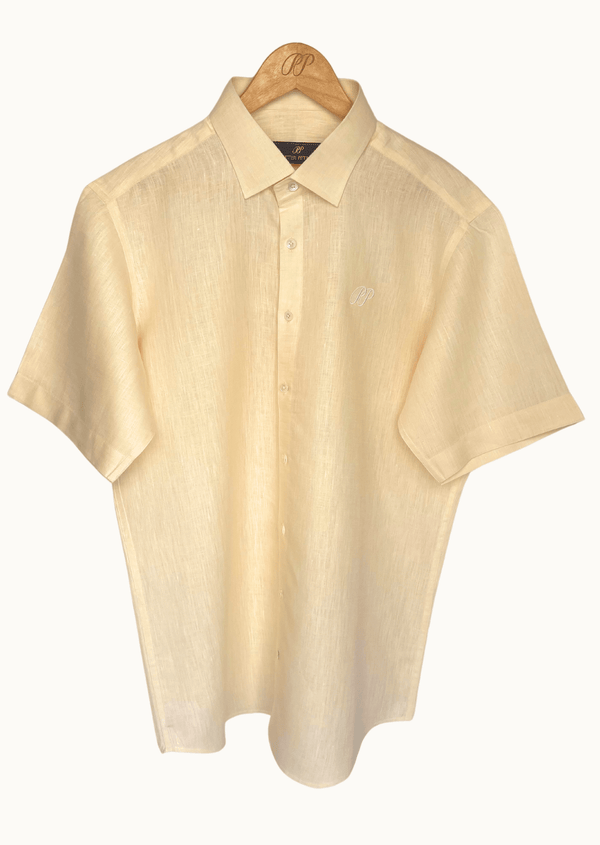
“The PP Belgian linen shirt that has been washed fifty times correctly is a better shirt than the one that has been washed five times incorrectly.”
— Pieter Petros, founderDrying. Hang dry wherever possible. Linen dried naturally retains its shape and softens more evenly than tumble-dried linen. If using a tumble dryer, use the lowest heat setting and remove the garment while still slightly damp to prevent over-drying, which can make the fabric feel stiff and brittle over time. Never leave linen in a hot dryer until bone dry on a repeated basis.
Ironing. Iron while the garment is still slightly damp for the smoothest result. A steam iron on a medium to high setting works well. Iron on the reverse side for darker colours to prevent surface sheen. If the garment has dried completely, mist lightly with water before ironing. Or do not iron at all — the natural texture of linen is part of its character, and a worn linen shirt carries this correctly.
Storage. Hang or fold in a breathable space away from direct light. Avoid plastic garment bags — linen needs to breathe. Wash before storing for any extended period. No cedar or mothballs needed; linen is not susceptible to moth damage.
Stains. Treat promptly with cool water and a mild soap. Most linen stains respond well to prompt cool-water treatment. Avoid hot water on fresh stains — it can set them. For stubborn stains, a gentle enzyme-based stain remover applied before washing is effective.
The overriding principle: linen improves with regular, correct washing. Each cycle at the right temperature with the right detergent makes the fabric softer and more fluid. The PP Belgian linen shirt that has been washed fifty times correctly is a better shirt than the one that has been washed five times incorrectly.
How to Wash Linen Shirts · How to Store Linen · Men's Linen Collection