How to Iron Linen Shirts — The Right Method for a Crisp Finish
How to Iron Linen Shirts — The Right Method for a Crisp Finish
The correct method for ironing linen shirts — moisture, heat, and the sequence that produces a crisp finish.
Linen irons well — better than most fabrics — when the method is correct. The two variables that determine the result are moisture and heat. Get both right and the fabric responds immediately. Get either wrong and the result is either stubborn creases or a scorched surface.
The correct method:
“Iron while the fabric is still slightly damp. This is the single most important step.”
— Pieter Petros, founderIron while damp. This is the most important step. Linen that has dried completely is significantly harder to iron than linen that retains some moisture. The ideal is to iron immediately after removing from the line or dryer while still slightly damp — around 20 to 30% moisture remaining. If the garment has dried fully, use a spray bottle to dampen the fabric evenly before ironing. Or use a steam iron, which introduces moisture and heat simultaneously.
Heat setting: medium-high to high. Most irons have a linen setting — use it. Linen can tolerate more heat than cotton or synthetic fabrics, and a hotter iron produces a crisper result in fewer passes. An iron that is too cool drags across the surface without releasing the creases.
Iron on the reverse side. For coloured garments, ironing on the reverse side prevents any possibility of sheen or marks on the face of the fabric. For white or undyed linen, either side works. This is a standard precaution rather than a strict requirement.
Work section by section. Collar first, then the placket, then each sleeve, then the body. Moving logically through the garment rather than randomly avoids re-creasing sections already ironed.
Hang immediately after ironing. A freshly ironed linen shirt placed in a folded pile will crease within minutes. Hang on a wide-shouldered hanger as soon as the iron lifts.
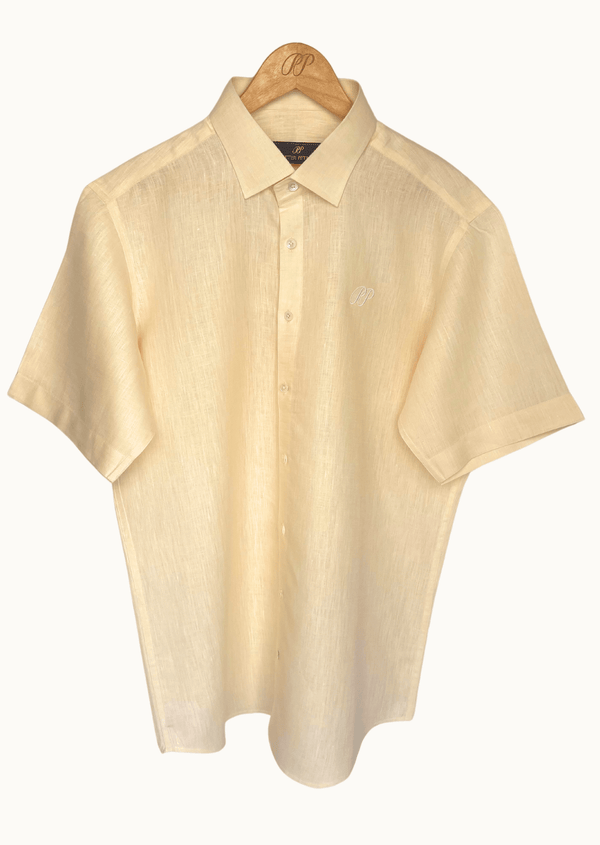
The result of a correctly ironed Belgian linen shirt is a clean, pressed surface with a slight natural texture visible in the weave. It does not look like a synthetic fabric or a heavily starched cotton. It looks like fine linen ironed well.
One important note: avoid ironing over stains, as heat can permanently set them into the fibre. Treat any marks before ironing.
For those who prefer the relaxed look: linen worn un-ironed, air-dried and hung immediately after washing, carries a different but equally valid quality. Both are correct. The choice is a matter of context and preference.
Does Linen Wrinkle · How to Wash Linen Shirts · Men's Linen Collection