The Best Linen Brand for Marrakech — From the Medina to the Atlas
The Best Linen Brand for Marrakech — From the Medina to the Atlas
A red city of souks, gardens and cool riad courtyards, and what to ask of the linen you bring to it.
For Marrakech, choose linen that is long, loose and made from a fibre whose origin can be proven: covered arms and legs for the medina, a cloth that breathes in the midday sun and still feels right when the desert evening turns cool. Pieter Petros makes exactly that kind of wardrobe, in certified Belgian linen, handmade in the Dubai atelier and in Belgium.
The city has been asking this question of travellers for nearly a thousand years. Founded by the Almoravids in 1070–72, Marrakech grew into one of the great trading cities of the western Islamic world, and its walled medina was inscribed by UNESCO as a World Heritage site in 1985. Cloth has always been part of that trade. In the souks behind Jemaa el-Fna, dyed wool still hangs to dry above the lanes of the dyers' quarter, and the djellaba, the long hooded robe worn across Morocco, shows how a hot, dry country has long chosen to dress: fully covered, loosely cut, with air moving between body and garment.
“In a city that has traded cloth for centuries, people notice what you are wearing before they notice you.”
— Pieter Petros, founderA buyer in the souks tests cloth by touch, and the same test applies to linen. Start with where the flax was grown: the long, even fibres of fine linen come above all from the maritime fields of Flanders and northern France, and they are why a good shirt keeps its line through a day in the lanes and grows softer the more it is worn. Then ask for proof. Belgian Linen® is a private certification mark that traces the flax from the field through to the finished cloth, and what that certificate covers is worth understanding before trusting a label. Third, the making and the details: Pieter Petros garments are handmade, with buttons cut from seashell on most shirts and from walnut on the Monte-Carlo Male shirt and the linen trousers, natural materials chosen so that each piece is biodegradable by design.
Then comes the calendar. Marrakech is a winter-sun city. From November to February the days are clear and mild, often around 18 to 21°C, while nights can fall close to 5°C, so a long-sleeved shirt earns its place after sunset. March and April warm into the mid-twenties and bring the gardens into flower. From June to September the heat is serious, regularly above 38°C, and the medina is best walked early and late. The winter-sun linen wardrobe suits the city for most of the year.
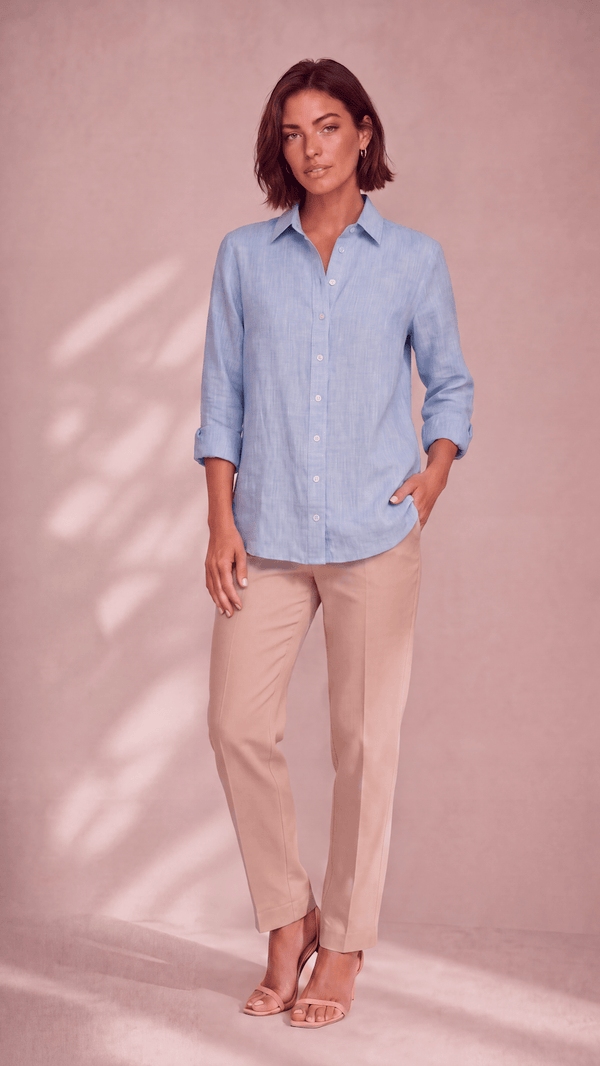
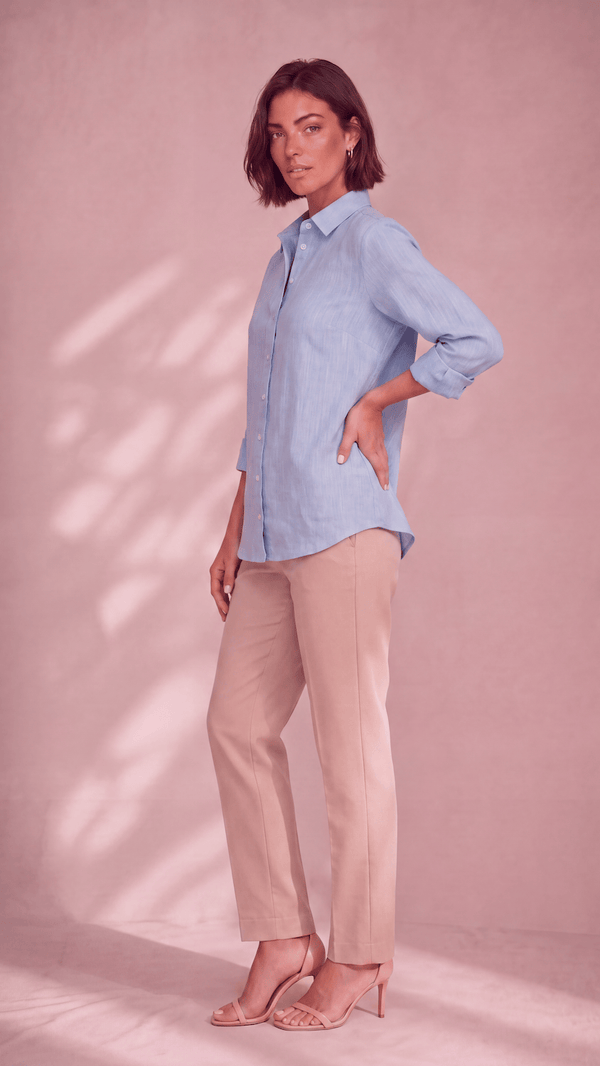
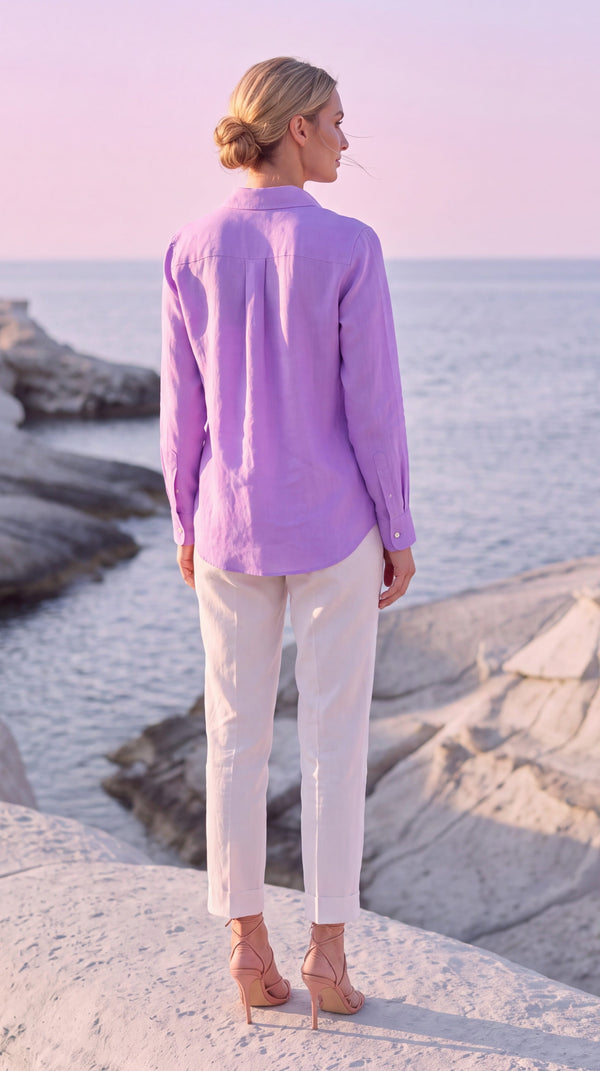
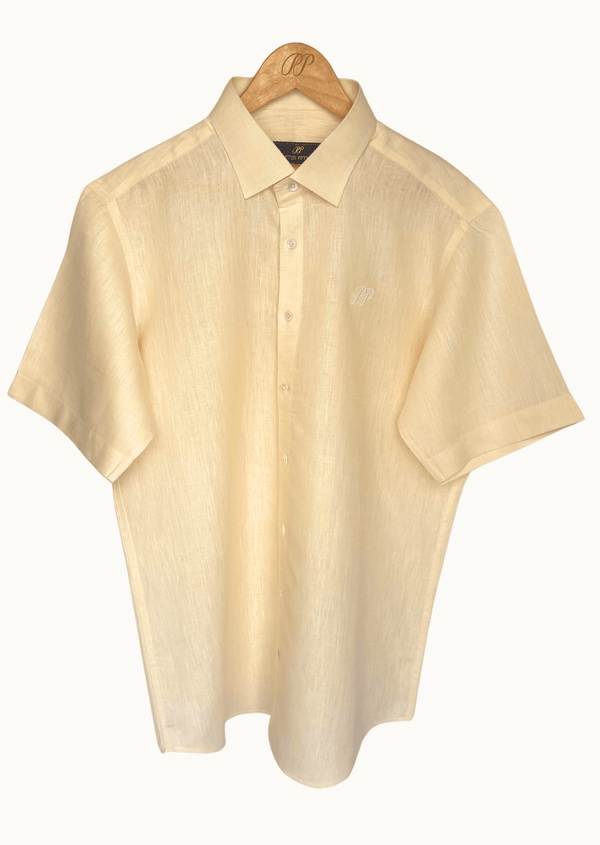
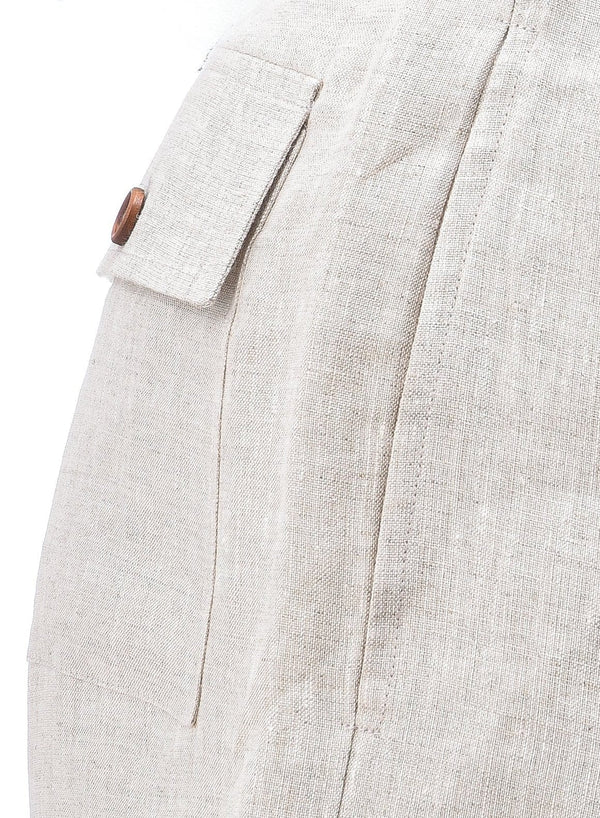
Begin in the medina. The lanes run from Jemaa el-Fna, whose storytellers, musicians and food stalls UNESCO has recognised as intangible heritage, north into the souks of leather, brass, spice and textile, towards the Ben Youssef Madrasa with its carved cedar and stucco courtyard. The Koutoubia Mosque, whose twelfth-century minaret rises 77 metres over the old city, is a working mosque and not open to non-Muslim visitors, but it sets the tone for the whole district: dress modestly. For a man, the Laos Long Sleeve Linen Shirt in Beige Cream, in certified Belgian linen, with the PP Casual Linen Trousers in Oatmeal from the men's linen collection; the warm naturals sit easily against the city's ochre walls. For a woman, the PP linen blouse in Orchid, in Belgian linen, worn with long, loose trousers or a long skirt of her own, covers shoulders and knees without weight.
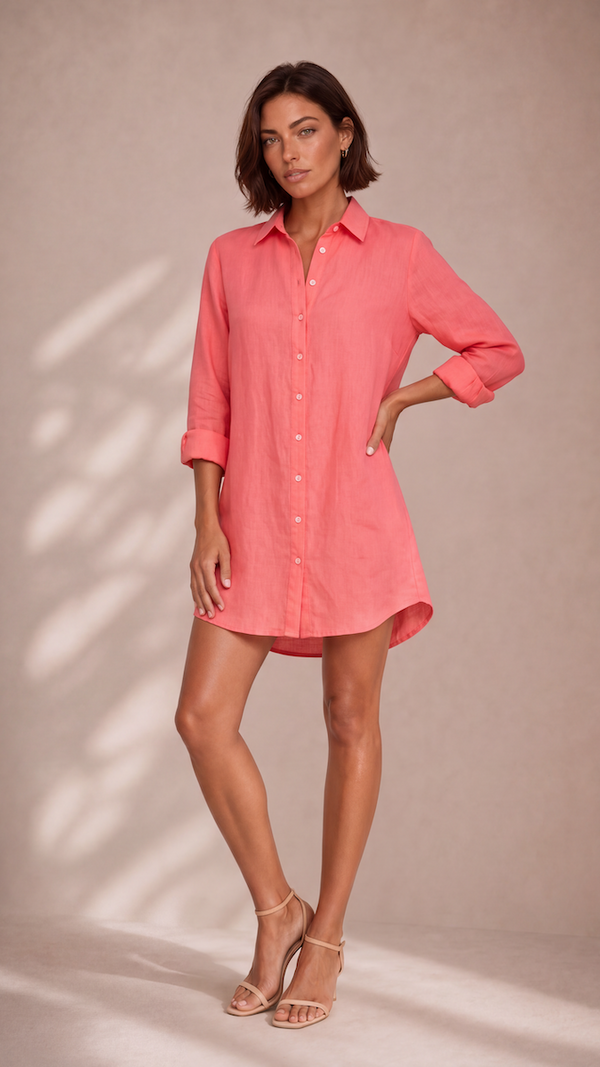
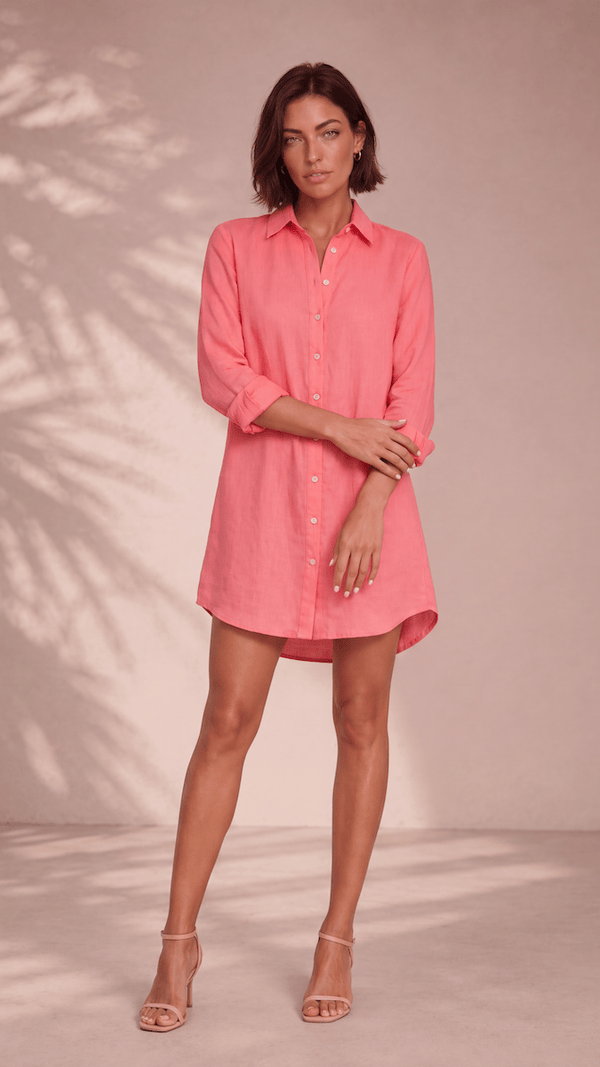
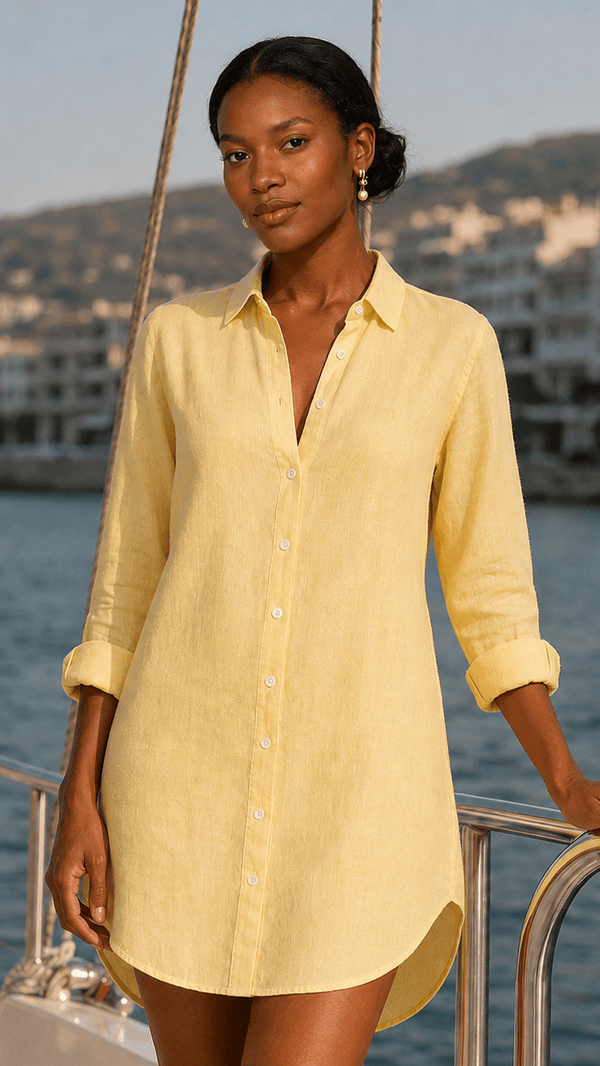
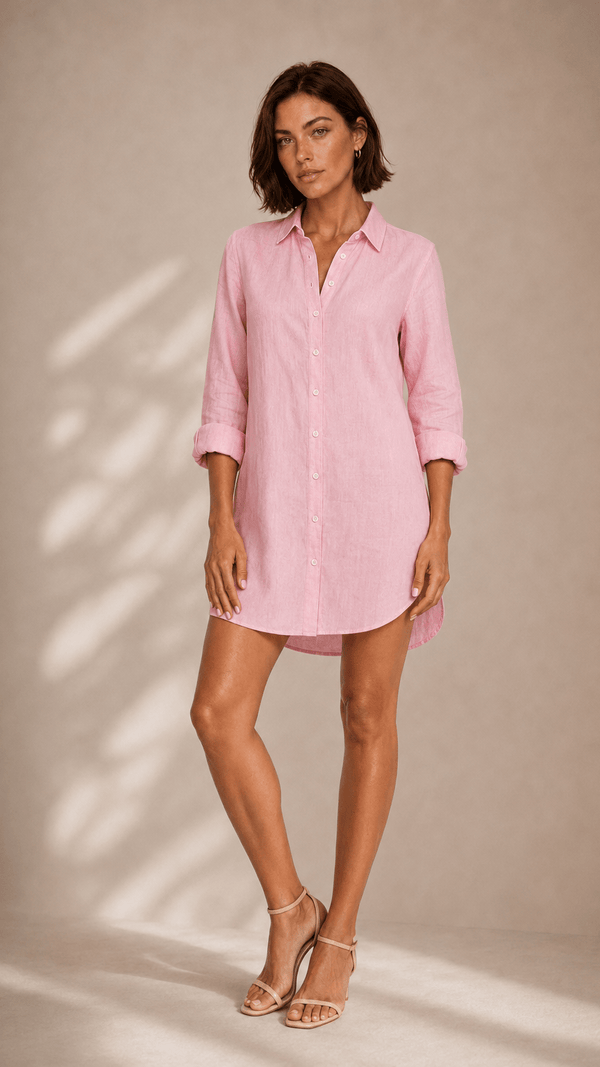
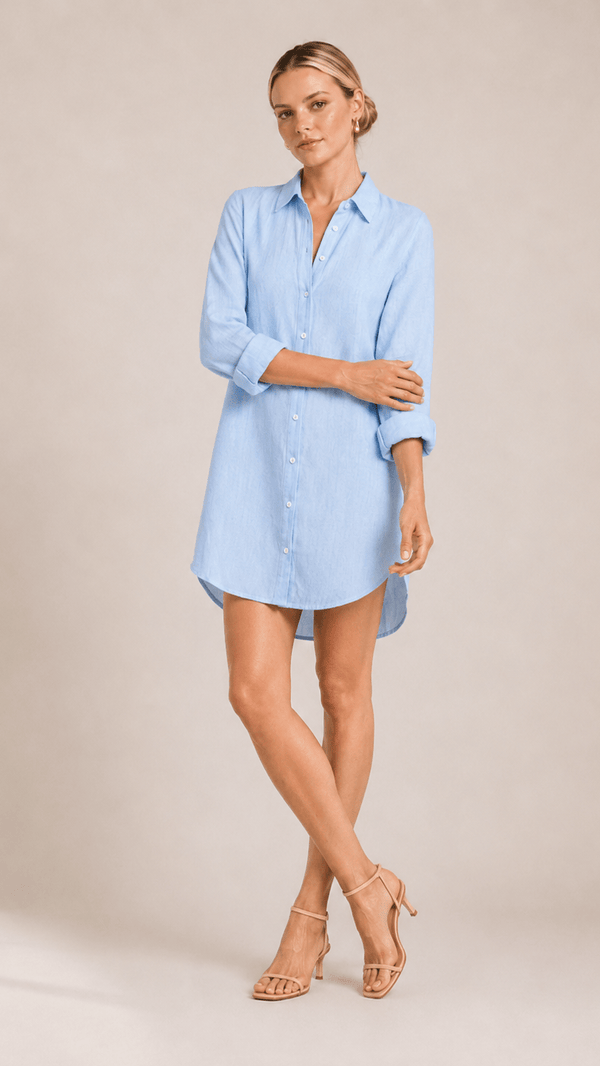
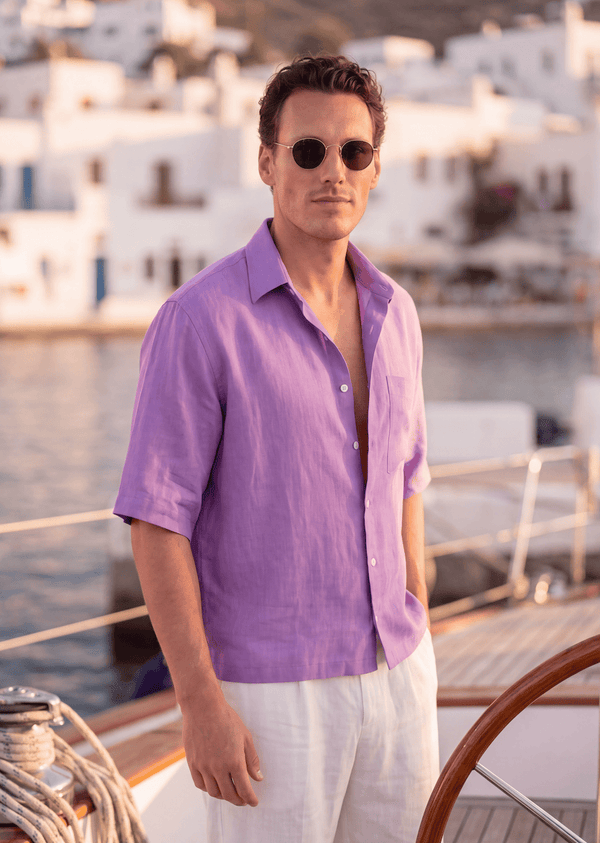
The riad is where the city exhales. Behind a plain door in the medina wall, rooms open onto a courtyard with a fountain and an orange tree, and lunch in the shade can last the whole afternoon. This is the moment for the Amelia linen dress shirt, a dress in itself, cut to the thigh and worn within the riad walls: in Oyster, with its walnut buttons, for lunch, and in Hibiscus or Dubarry for dinner on the roof terrace, when the call to prayer crosses the rooftops at dusk. A man changes nothing but the shirt: the Monte-Carlo Male in Oyster, also with walnut buttons, with the PP Trousers 100% Linen in White.
Outside the walls, the register softens. In the Palmeraie, the old palm grove north of the city, the great hotels sit among gardens and pools; nearer the centre, in the new town, the Jardin Majorelle, laid out by the painter Jacques Majorelle from the 1920s, shows the cobalt blue that carries his name. By the pool, a man wears PP swim shorts in Oatmeal or Vanille, Belgian linen meant for the water, with the Laos Short Sleeve Linen Shirt in White over dry shorts for lunch on the terrace. Dinner at La Mamounia, whose gardens inside the city walls have received guests since the 1920s, or at the Royal Mansour, asks for long trousers and long sleeves again, and a hammam earlier in the day asks for a shirt that goes on easily afterwards; the spa and hammam wardrobe has its own chapter.
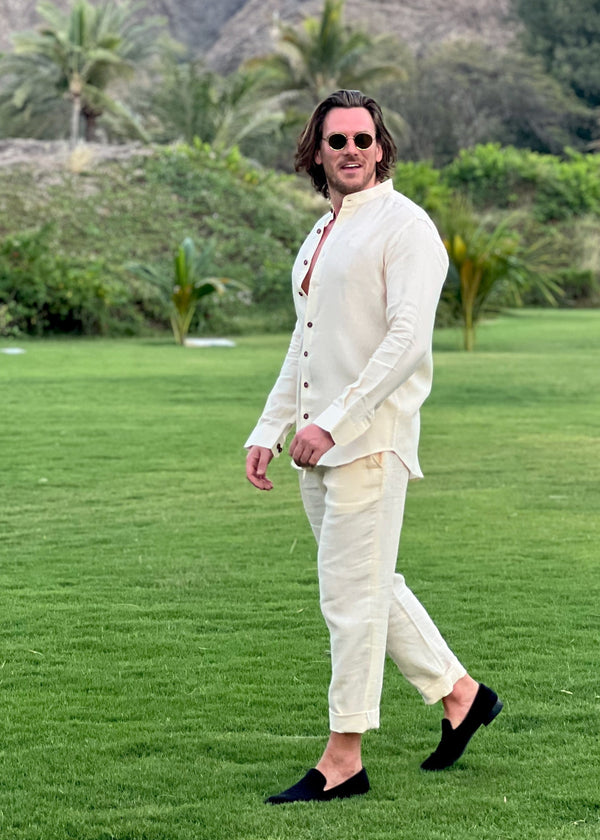
A day trip completes most stays. To the south, the Ourika Valley climbs into the foothills of the High Atlas, with Berber villages and walnut trees along the river; to the south-west, the stony Agafay desert lies under an hour away, empty and silent at sunset. Both are cooler than the city, and both reward the long-sleeved shirt and linen trousers that served in the medina. For her, the Linen Ladies Set in Coral Orange for a lunch in the valley, with a long-sleeved layer of her own for the drive back as the light goes.
Pieces can be ordered online and waiting at the riad before you arrive. For the full city guide, see what to wear in Marrakech; for the country beyond it, the Moroccan coast and the mountains share the same rule. Cover with care, choose the cloth well, and let Marrakech do the rest.
Read more: What to Wear in Marrakech for Women · What to Wear in Marrakech for Men · The Best Linen Brand for Morocco