Belgian Linen for Sensitive Skin — What Natural Fabric Actually Does
Belgian Linen for Sensitive Skin — What Natural Fabric Actually Does
On what Belgian linen does and does not do against sensitive skin — and why the details of what touches it are worth knowing.
Sensitive skin is not a condition that responds to generic advice. What works against one skin type does not work against another. But there is a consistent observation across a wide range of skin sensitivities — eczema, rosacea, contact dermatitis, general reactivity — and that is this: reducing what the skin is exposed to is more reliably effective than treating what it reacts to.
Belgian linen reduces the variables.
“Reducing what the skin is exposed to is more reliably effective than treating what it reacts to.”
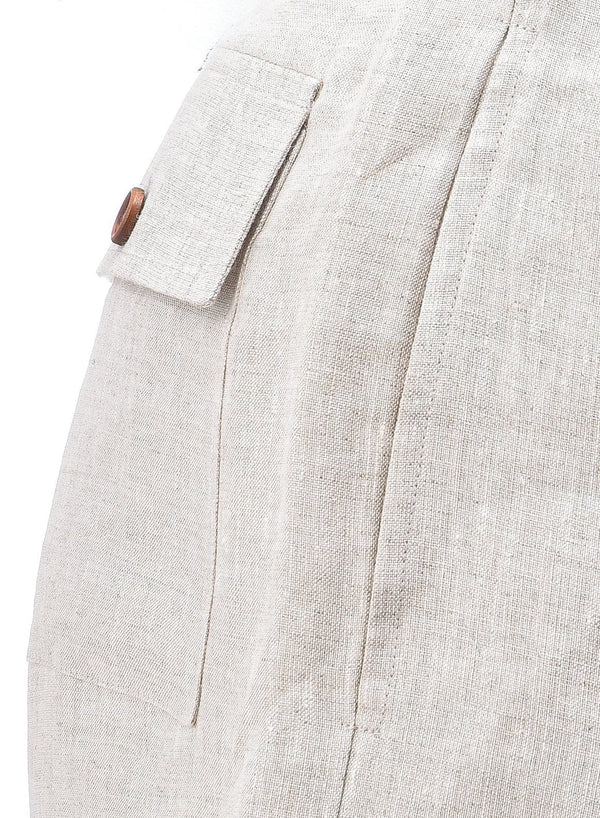
— Pieter Petros, founderThe flax fibre, once processed correctly, produces a fabric with a smooth, consistent surface that generates very little friction against the skin. This is not true of all linen — short-staple linen, poorly processed, can scratch and irritate. Long-staple Belgian linen, certified by origin and properly finished, settles against the skin in a way that does not generate the low-level surface friction that accumulates across a full day of wear.
The fabric also breathes continuously. For skin that reacts to heat and moisture concentration — which describes a significant proportion of sensitive skin presentations — this is the relevant property. The Belgian linen cloth moves warmth and moisture away from the skin rather than allowing either to pool at the surface. The skin stays closer to its resting state across a full day.
There is also what the fabric does not contain. Natural fabric from a confirmed origin — traceable to the fields it came from, processed without the synthetic additions that most performance fabrics require — arrives at the skin without the chemical variables that processed fabrics carry. A PP garment comes with a certificate of origin confirming this provenance. What is in contact with the skin is the cloth itself, and what the cloth is made from is the flax plant. That is the full list.
PP does not make medical claims about its fabrics. What it can confirm, materially, is that the fabric is what it says it is, from where it says it comes, and that the properties of long-staple Belgian linen are the properties of long-staple Belgian linen. For sensitive skin, the details of what touches it are worth knowing.
Natural clothing and the skin · Natural fabric and the body · Women’s linen collection