The Belgian Linen Certification — What It Is and Why It Matters
The Belgian Linen Certification — What It Is and Why It Matters
What the Belgian Linen® mark requires, what its certificate proves, and how to read a linen label with confidence.
The Belgian Linen® certification is a registered mark for linen cloth that meets two conditions: it is woven in Belgium, and at least 85 percent of its weight is flax grown in Europe. Each certified batch of cloth is given its own identification, so its certificate follows the flax from the field to the fabric and the claim can be traced rather than taken on faith.
That is what the mark is. Just as useful is knowing what it is not. It is a private certification mark held by the Belgian linen industry, not a protected designation of origin under European law, and it certifies the cloth rather than the garment made from it.
“A word on a label is a claim. A certificate that follows the flax from the field to the fabric is proof.”
— Pieter Petros, founderWhy weaving in Belgium? Flanders has woven linen for centuries. The River Lys, flowing through Kortrijk, was once so central to flax that it was called the Golden River, and the region’s mills still hold the skills built over that long history. The mark ties the cloth to that tradition of weaving, while the 85 percent rule ties it to European flax, most of which grows along the coast from Normandy through Flanders to the Netherlands, the region that supplies around three-quarters of the world’s long flax fibre.
How the certification works. Only member weavers of the Belgian linen association may certify their cloth. Once a batch is approved, it is given a unique identification number that links the fabric back to its source. Makers who buy that certified cloth may then apply for permission to use the mark on their packaging and in what they write about their garments. The result is a chain of documents, from the field to the fabric, that a buyer can rely on. How this differs from the general paperwork of trade is explained in what a certificate of origin for linen is.
How to read a label. “Belgian Linen®” with the mark refers to certified cloth. Phrases such as “Belgian flax”, “linen from Belgium” or “European linen” may describe something true, but they do not by themselves promise the same weaving and the same traceability. The difference between certified and uncertified cloth is set out in natural linen versus Belgian linen.
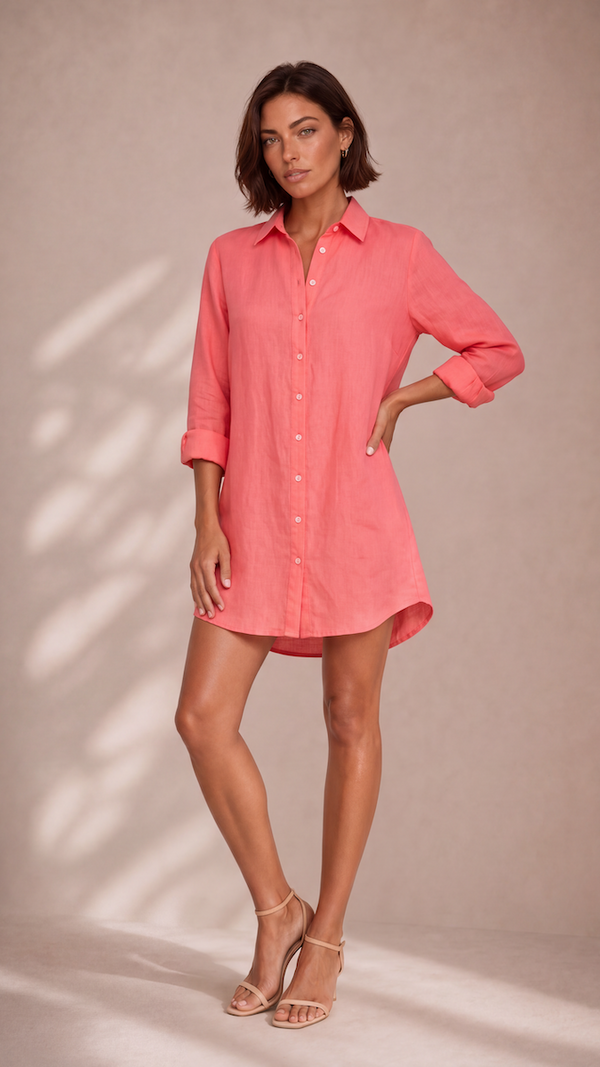
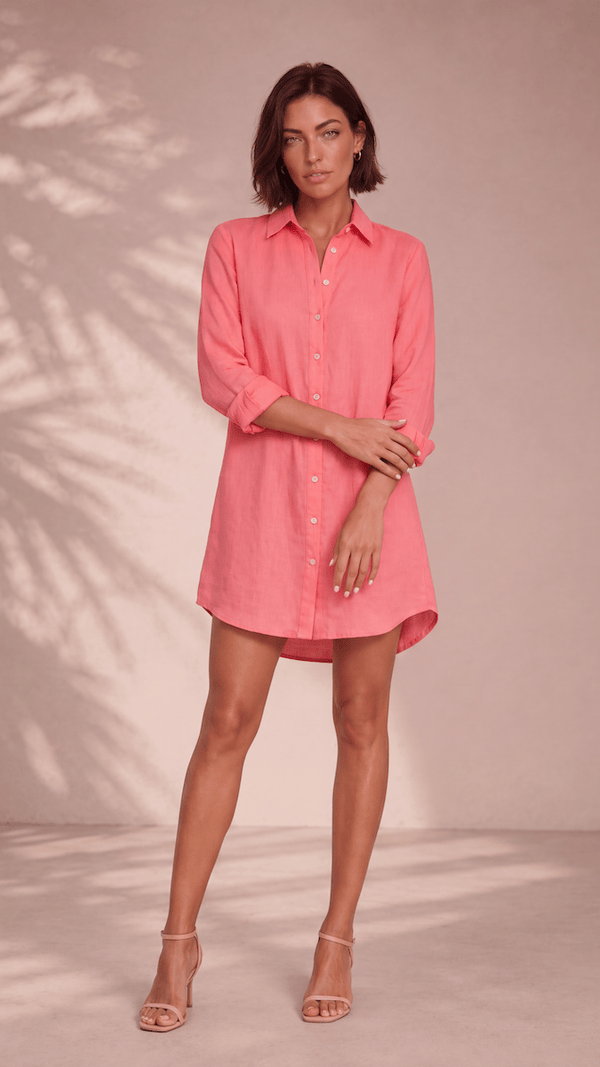
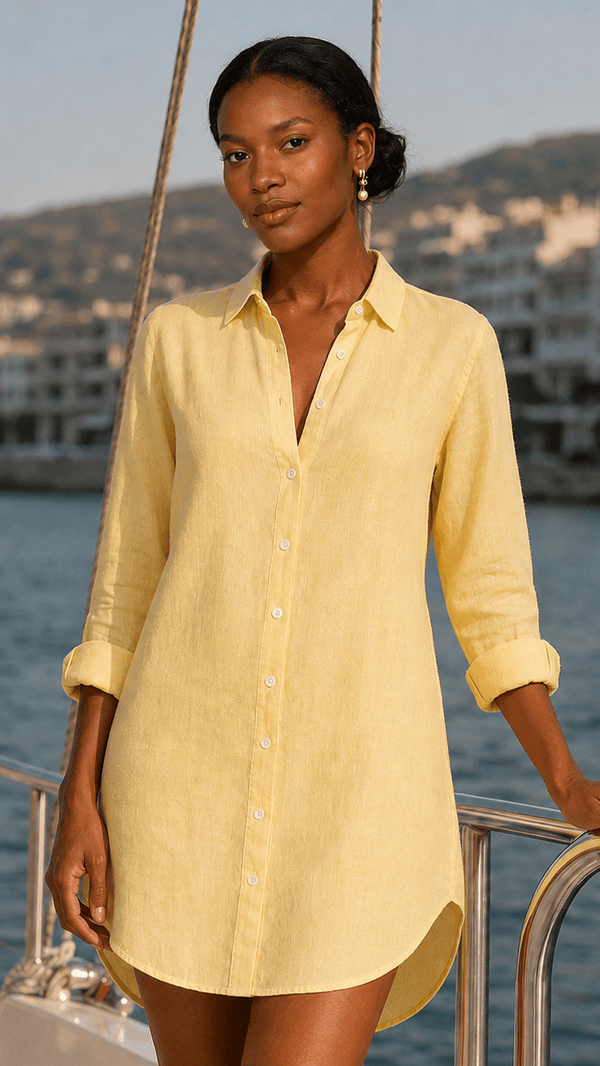
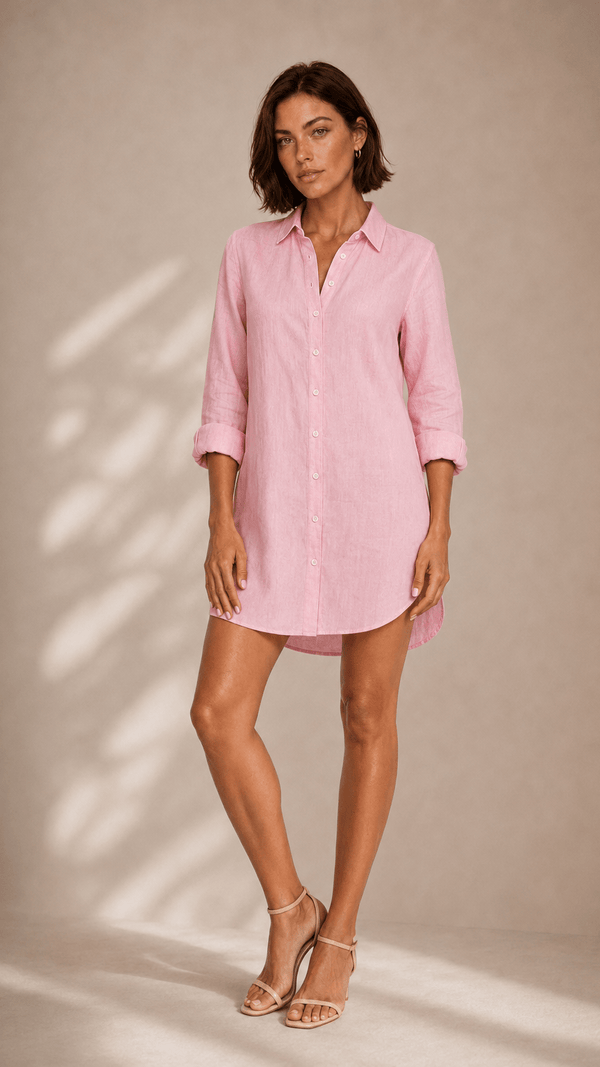
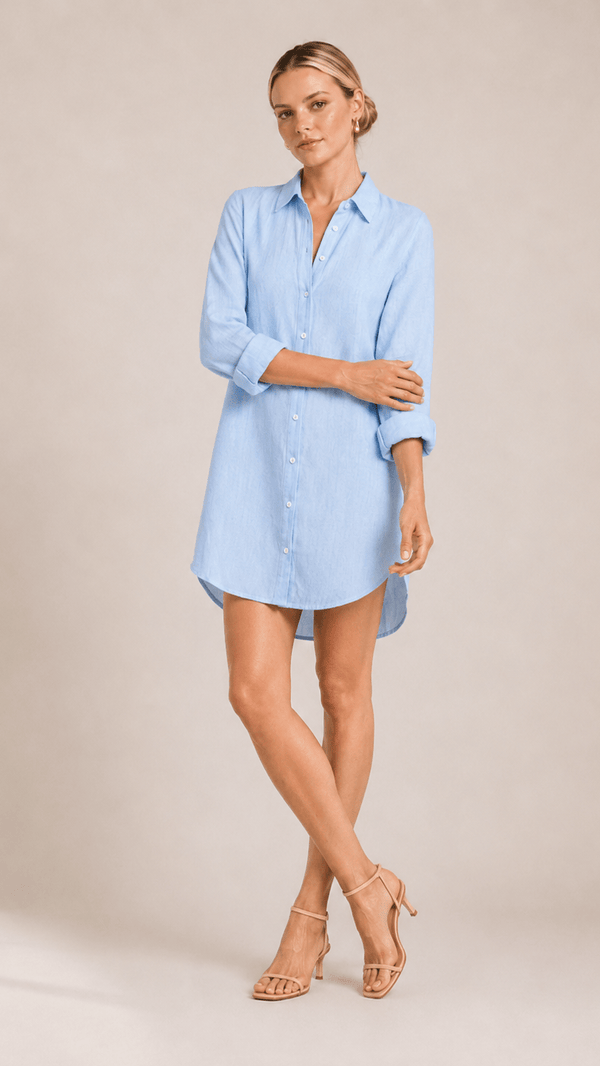
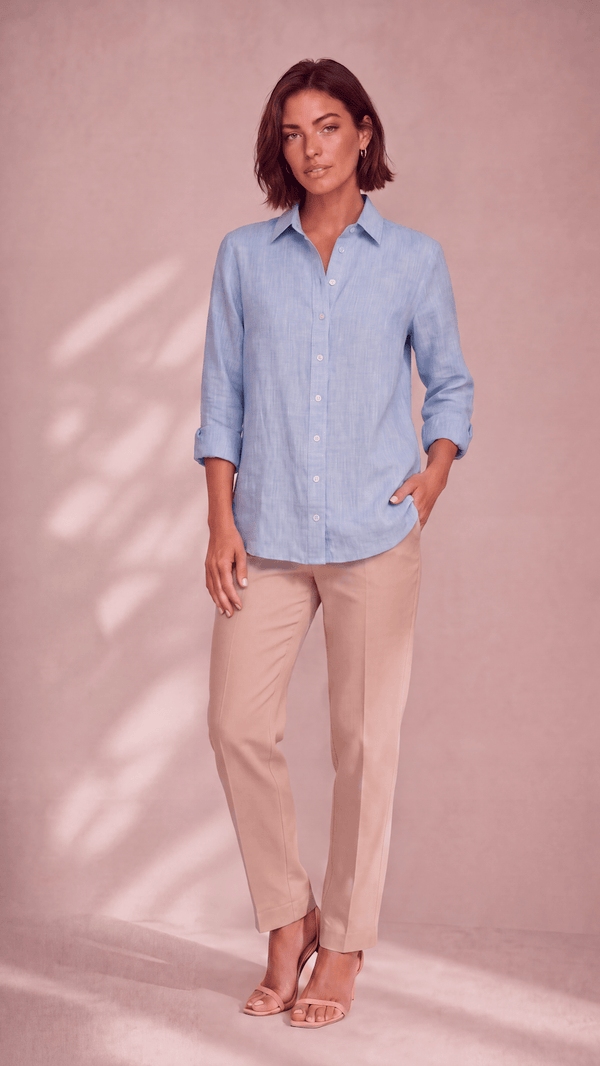
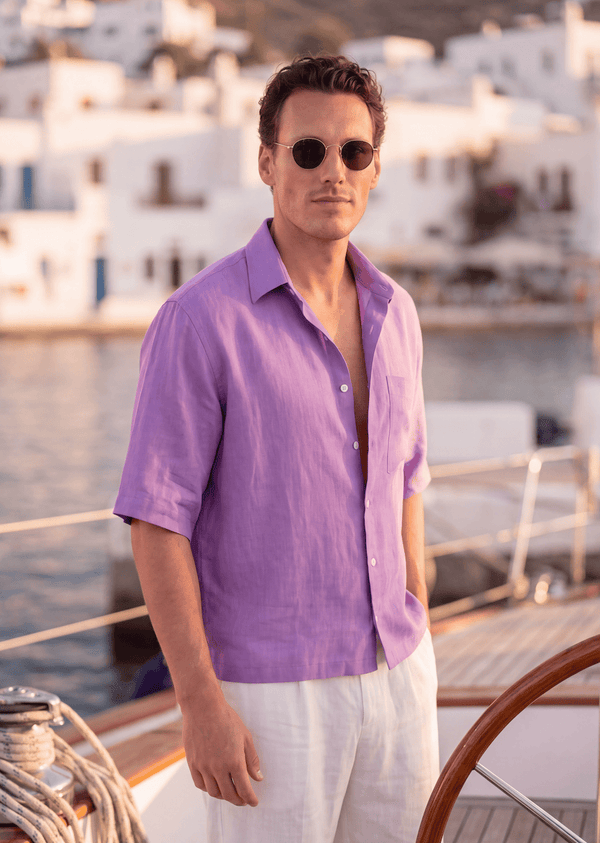
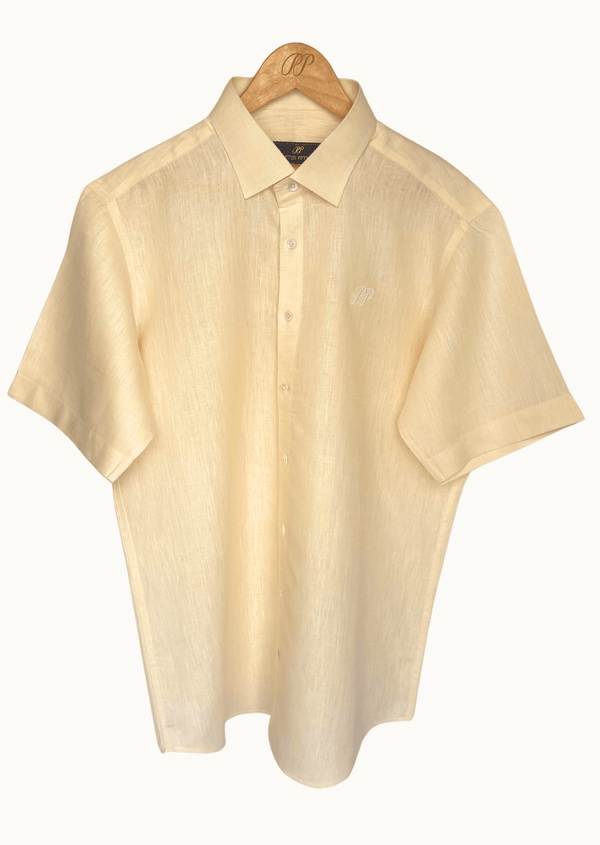
What it means in a Pieter Petros garment. PP uses certified Belgian linen for much of the collection and names it colourway by colourway. In the men’s linen collection, certified colourways include White, Oyster, Vanille, Oatmeal, Beige Cream, Lemon Yellow, Dubarry, Violet and Coral Orange, and the PP swim shorts are made entirely of Belgian linen. In the women’s collection, the Amelia linen dress shirt is certified in Coral Orange, Violet, Hibiscus, Oyster and Dubarry, and the PP linen blouse in Orchid. Where a piece is natural linen rather than certified, the product page says so. The certificate of origin accompanies the certified garments.
What the certificate does not replace. It proves the origin of the cloth; the rest of the garment is the maker’s responsibility. At Pieter Petros that means handwork in the Dubai atelier and in Belgium, seashell buttons on the shirts, walnut on the Monte-Carlo Male and on the shorts and trousers, and no synthetic material anywhere, so that each piece is biodegradable by design.
Why it matters to the buyer. Linen is sold under many descriptions, and the word alone says nothing about where the flax grew or where it was woven. The certificate is the one part of a linen garment that can be checked on paper before it is ever worn. Keep it with the piece, as you would the papers of anything made to last.