Linen for Air-Conditioned Interiors — Hot Outside, Cold Inside
Linen for Air-Conditioned Interiors — Hot Outside, Cold Inside
In the Gulf, the coldest part of the day is often indoors. Dressing for twenty degrees of difference behind a glass door.
Anyone who has lived in Dubai, Doha or Riyadh knows the moment. The glass doors of a mall or an office tower slide open, and forty-odd degrees of summer air give way, in a single step, to a lobby set somewhere around twenty. Many of Dubai's bus shelters are air-conditioned too. For much of the year in the Gulf, the hardest dressing problem is not the heat itself but the passage between heat and cold, many times a day. Linen for air conditioning is a quieter subject than linen for the beach, but for those who live here it is the more useful one.
The difficulty lies in the transition. A walk across a car park or a street in the afternoon is enough to warm the body and dampen a shirt; step straight into a cold interior, and the damp cloth against the skin cools quickly. The heavier and slower-drying the shirt, the longer that chill lasts. Linen helps here, because flax fibre gives up moisture readily, so the damp from the walk outside lingers less than it would in a heavier cloth. The cloth itself, which feels pleasantly cool on a hot day, can feel cooler still in a cold room, and that is where a little planning comes in.
“In the Gulf you dress for two climates every day. One of them is outdoors.”
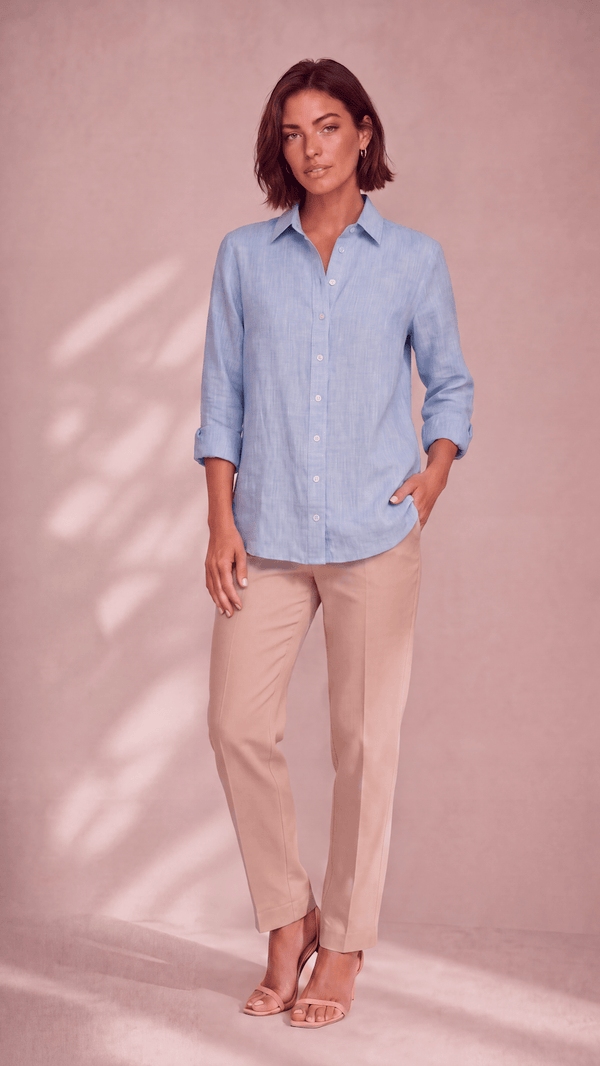
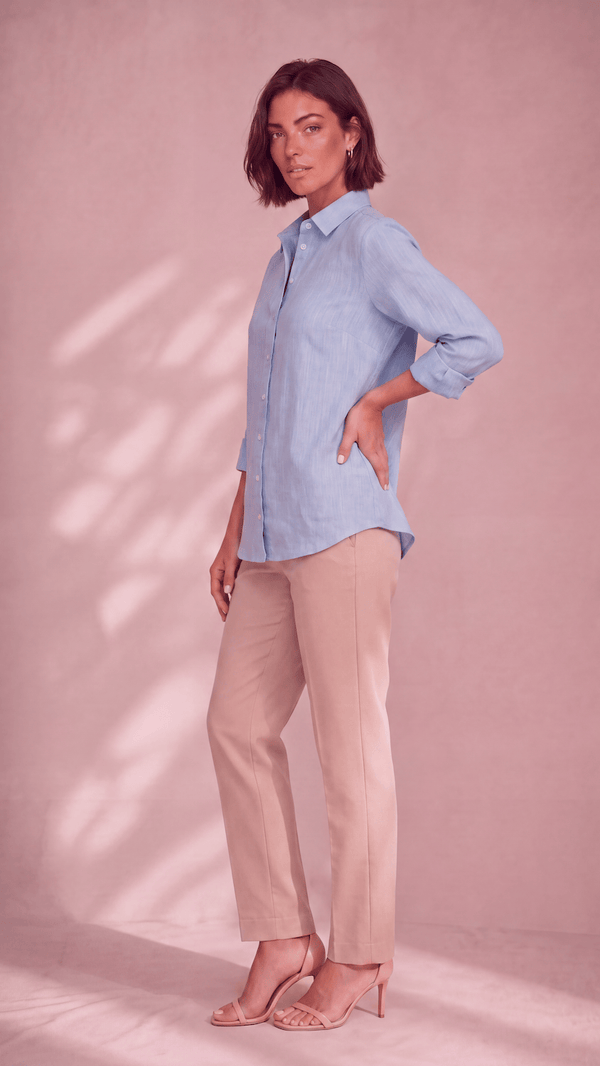
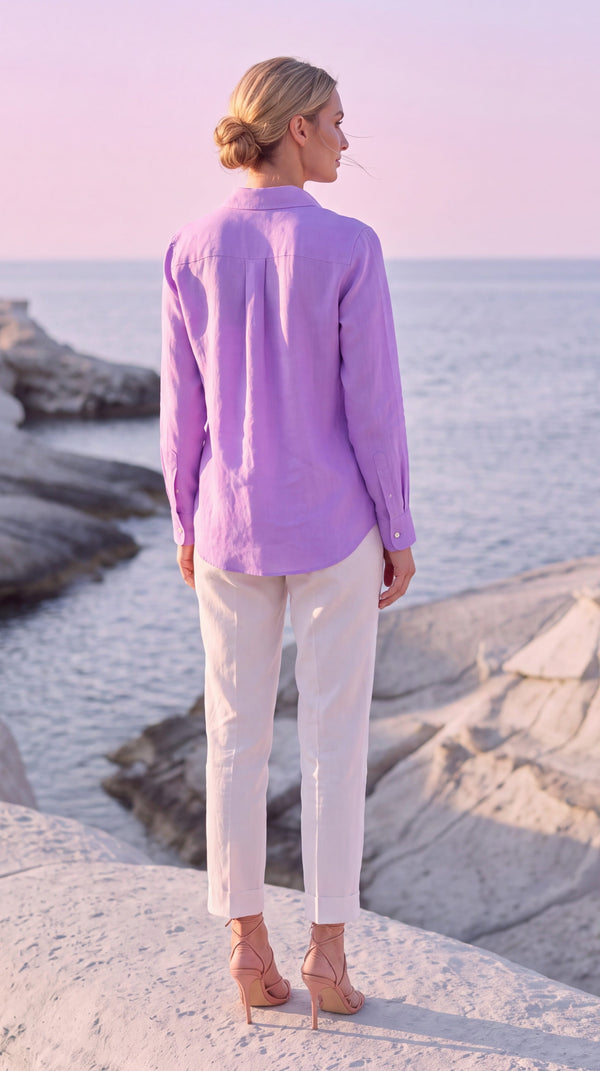
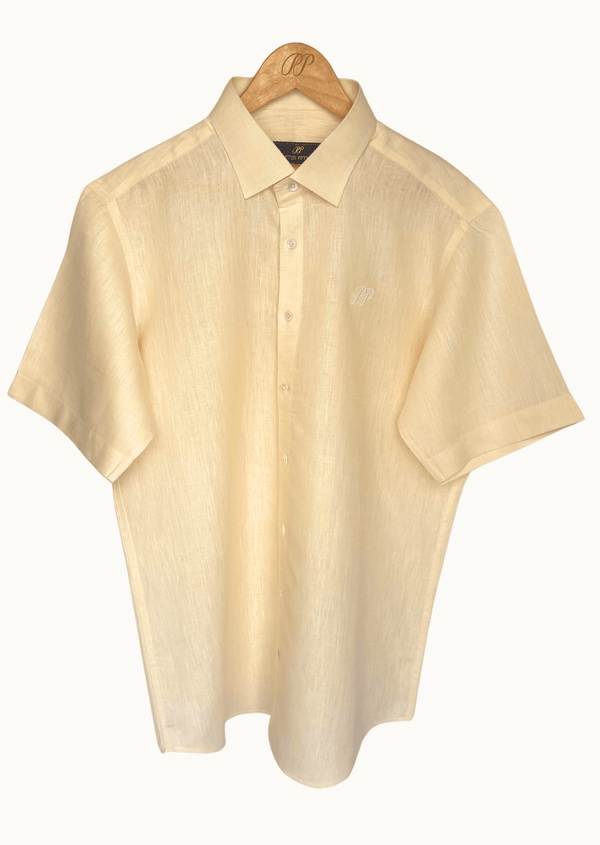
— Pieter Petros, founderThe first answer is the sleeve. A long-sleeved linen shirt does twice the work of a short-sleeved one in an air-conditioned city: sleeves rolled outdoors, sleeves down in the meeting room, the cinema or the restaurant. For men, the Laos Long Sleeve Linen Shirt in Oyster or Dark Blue and the Bliss Linen Shirt in Vanille or Dark Blue suit it well. For women, the PP linen blouse already has the sleeve, and is light enough to wear all day; in Orchid or Sky Blue it moves from a lunch outdoors to an afternoon in a gallery without thought, and our PP linen blouse guide describes its cut.
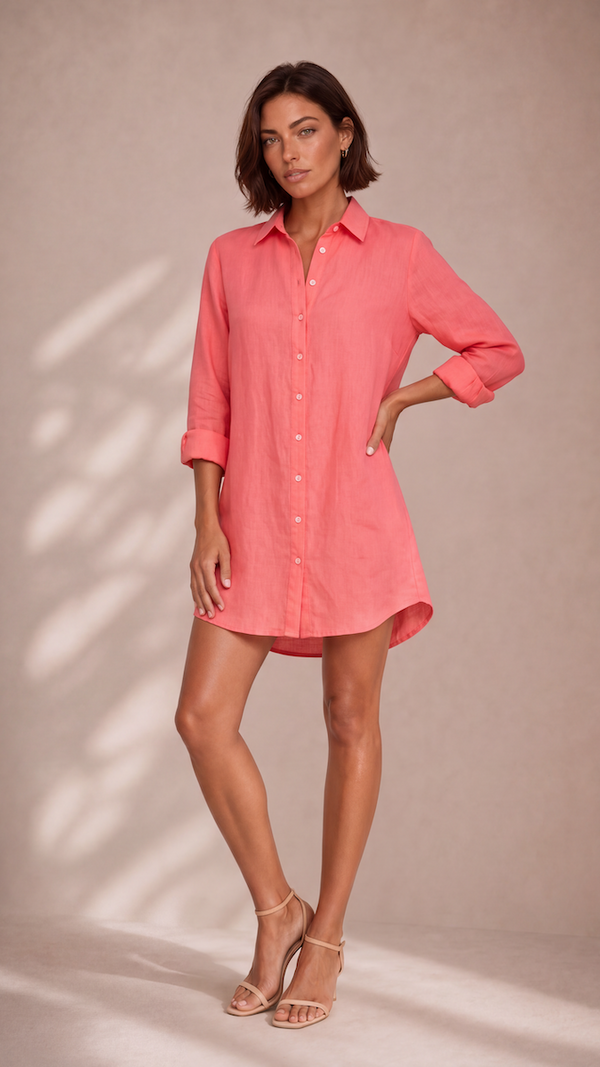
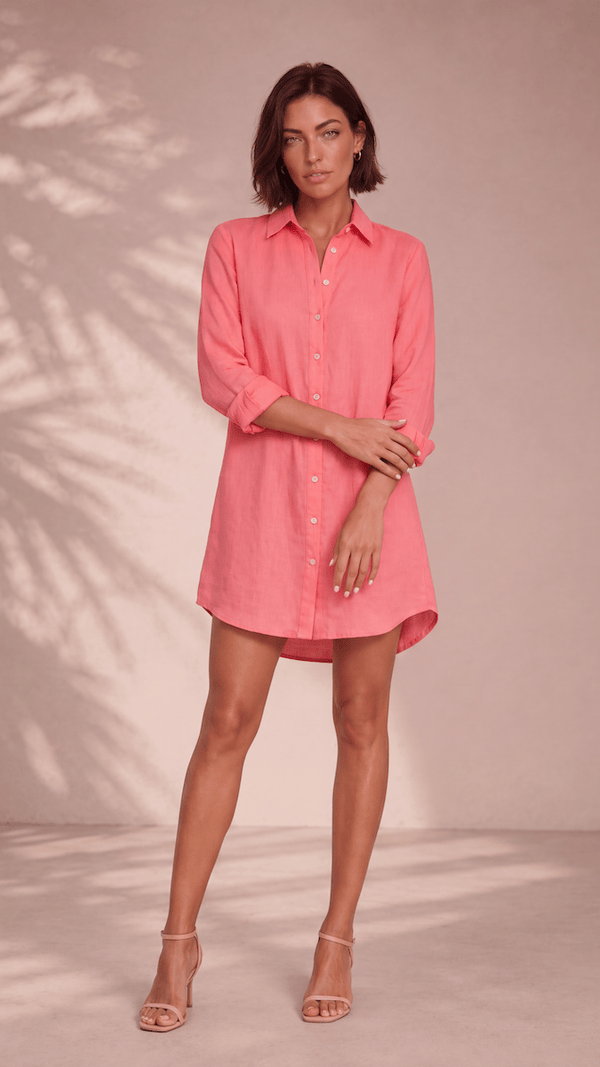
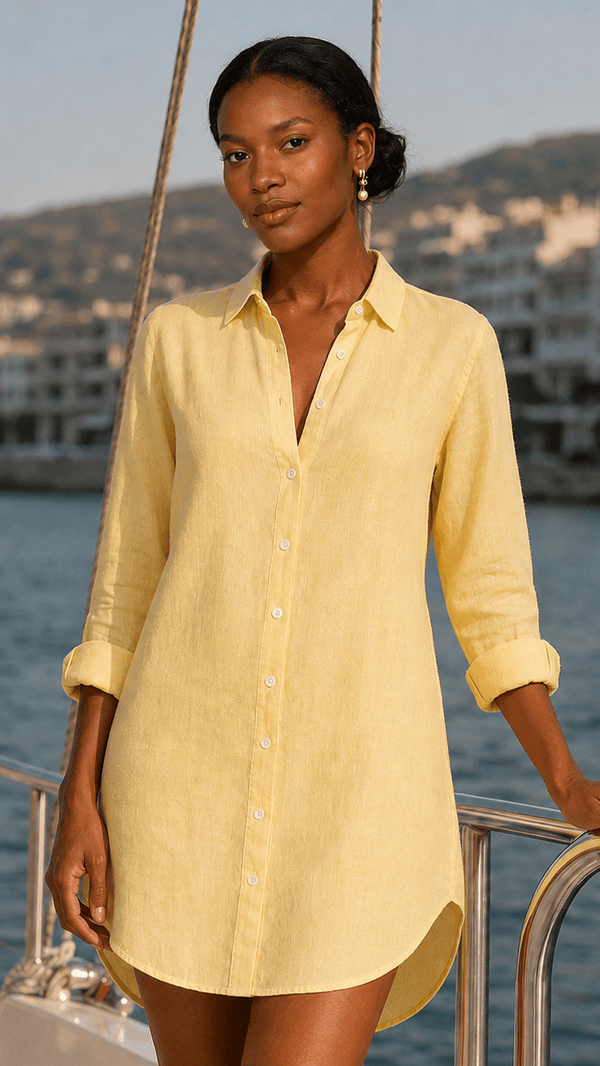
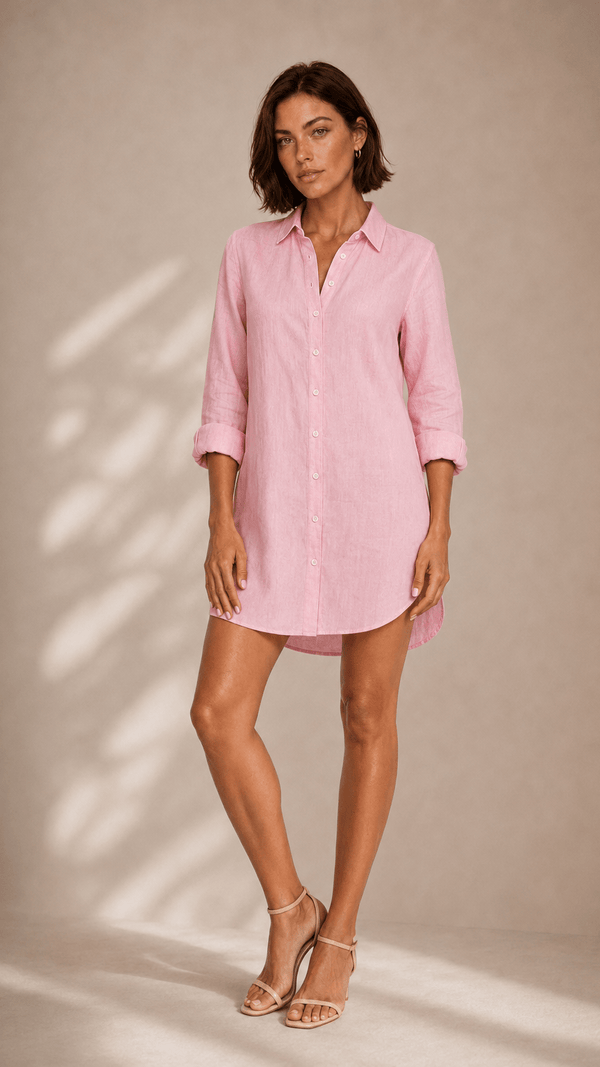
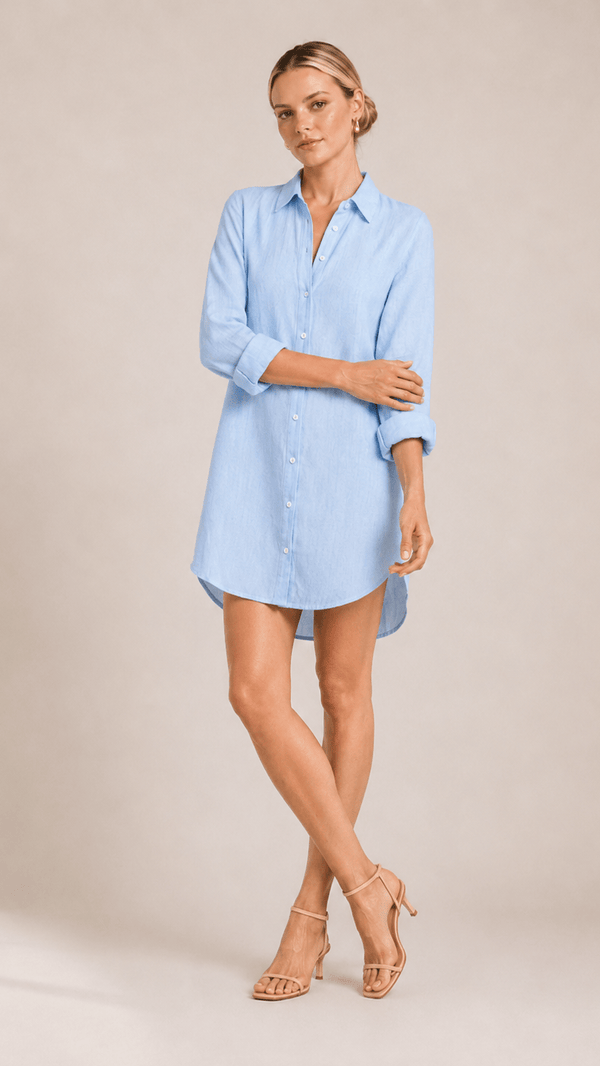
The second answer is a layer that does not need to be a coat. For men, a gilet over a linen shirt adds warmth across the chest and back, where the cold of an interior is felt most, while leaving the arms free. A PP gilet is light enough to live in a bag until the meeting-room door. A linen blazer serves the same purpose in more formal settings, from a hotel dinner to a client meeting, and the PP linen blazer guide covers it. For women, a fine knit or a light shawl kept in a bag is enough. Over the Amelia linen dress shirt, worn as a dress, a light knit kept in the bag turns a garment for a terrace into one for a cold restaurant.
Some interiors are colder than others, and they are worth knowing. Cinemas and long-haul aircraft cabins tend to be the coldest of all; malls, airports and hotel lobbies come next; offices vary by floor and by who controls the thermostat. For a day of travel, the same principles apply at altitude, and linen for long-haul flights takes them further. For office life specifically, from a Dubai trading floor to a Riyadh boardroom, linen at the Gulf office covers what is appropriate and when.
The seasons change the balance. From May to September, the outdoor heat is the dominant force and the interiors are at their coldest by contrast. In October the outdoor temperature begins to fall, the gap narrows, and the evenings outdoors become the reason to live here; by December, a linen shirt and a light layer are right both inside and out. The Gulf winter wardrobe picks up from there.
Linen will not make a cold room warm; the knit or the gilet does that. What it spares is the worst of the passage: the damp from outside stays less long in the cloth, and when the doors open again onto the heat, the same shirt is already the right one.
Read more: The Linen Shirt at the Office in Dubai · What to Wear in Dubai