Is Linen Good for Hot Weather? — What the Fabric Does in Heat
Is Linen Good for Hot Weather? — What the Fabric Does in Heat
Why linen is widely regarded as one of the best natural fabrics for hot weather — structure, airflow, and performance.
Yes. Linen is widely regarded as one of the best natural fabrics for hot weather, and the reason lies in the structure of the flax fibre rather than in any finishing treatment.
The structure of flax fibres and the relatively open weave commonly used in linen fabrics promote airflow — drawing heat away from the body and releasing moisture as vapour rather than holding it against the skin. In sustained heat, this continuous ventilation keeps the body significantly cooler than cotton, which absorbs moisture and holds it, or synthetic fabrics, which trap heat entirely.
“For hot weather, linen remains one of the most practical and widely preferred natural fabric choices.”
— Pieter Petros, founderLinen also has a quality sometimes described as hygroscopic — it absorbs a small amount of moisture from the skin and releases it to the atmosphere, so the fabric stays dry against the body even in conditions where perspiration is unavoidable. The sensation is one of the fabric breathing with the body rather than simply sitting against it.
The performance of linen in specific hot-weather conditions:
Dry heat — desert and Gulf climates. Belgian linen performs exceptionally well in the dry heat of the Gulf, where temperatures regularly exceed 40 degrees Celsius. The combination of ventilation and low moisture retention means the body stays regulated across a full day of wear in a way that no synthetic fabric achieves in the same conditions.
Humid heat — Mediterranean and tropical. In humid conditions, linen's ability to release moisture is particularly valuable. The fabric does not become heavy or clingy in the way cotton does when humidity is high.
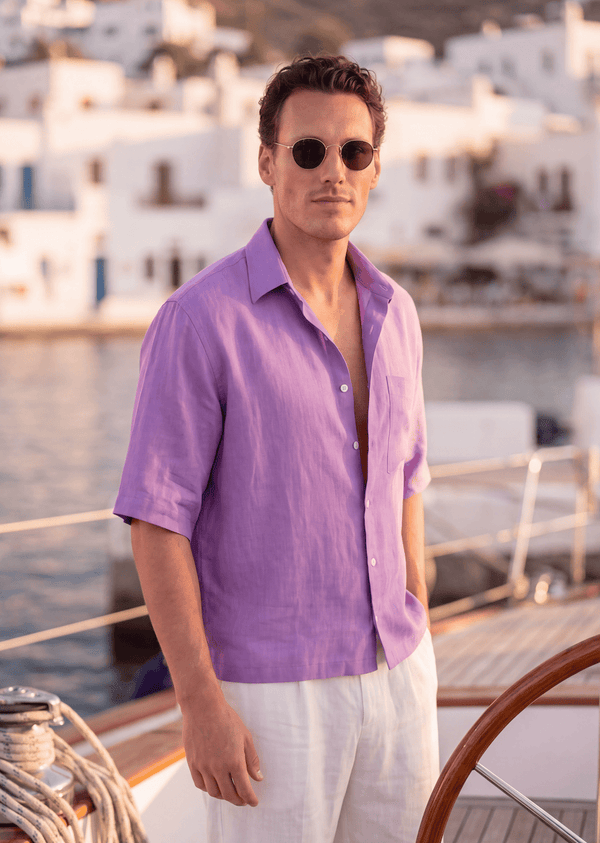
Direct sun. Linen's weight and weave provide a degree of UV protection that lighter, more open fabrics do not. A well-woven Belgian linen shirt worn in direct Mediterranean or Gulf sun offers meaningful protection while remaining breathable.
The qualification: linen wrinkles in heat. The natural movement of the body in a hot day produces creases in linen that synthetic fabrics resist. This is a property of the natural fibre and, in most contexts, part of its character rather than a practical limitation.
For hot weather, linen remains one of the most practical and widely preferred natural fabric choices.
Most Breathable Fabric for Hot Weather · Linen vs Polyester · Men's Linen Collection