How Is Linen Dyed? — From Flax Fibre to Lasting Colour
How Is Linen Dyed? — From Flax Fibre to Lasting Colour
Retting, bleaching, yarn dyeing and piece dyeing: where colour enters a linen cloth, and why it settles differently from cotton.
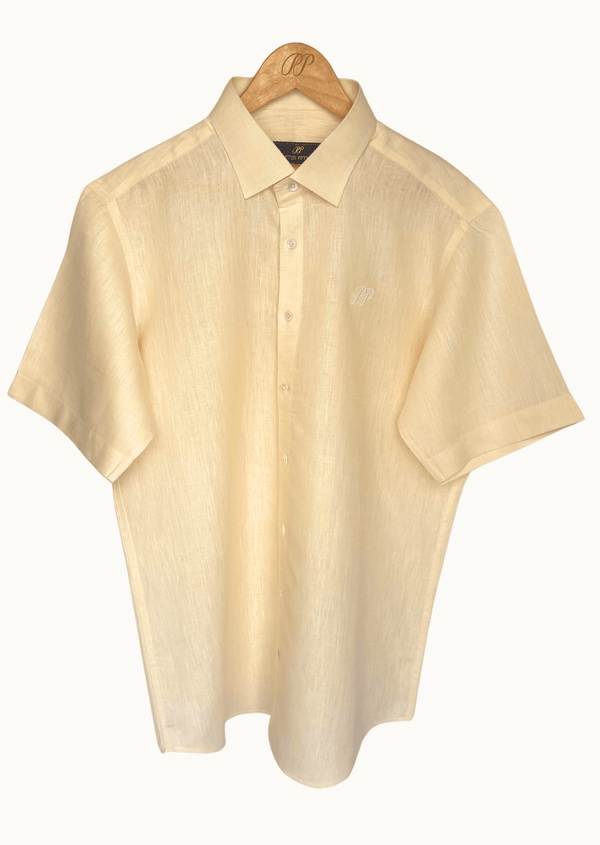
Linen is never colourless. Before any dye touches it, flax fibre already has a colour of its own, somewhere between ivory, straw and silver-grey, depending on how the plant was grown and retted. Every white linen shirt began as something warmer, and every Dubarry or Orchid began as that same natural tone. Understanding how linen is dyed starts there, with the colour the fibre brings to the process, and with the stages at which a maker can choose to change it.
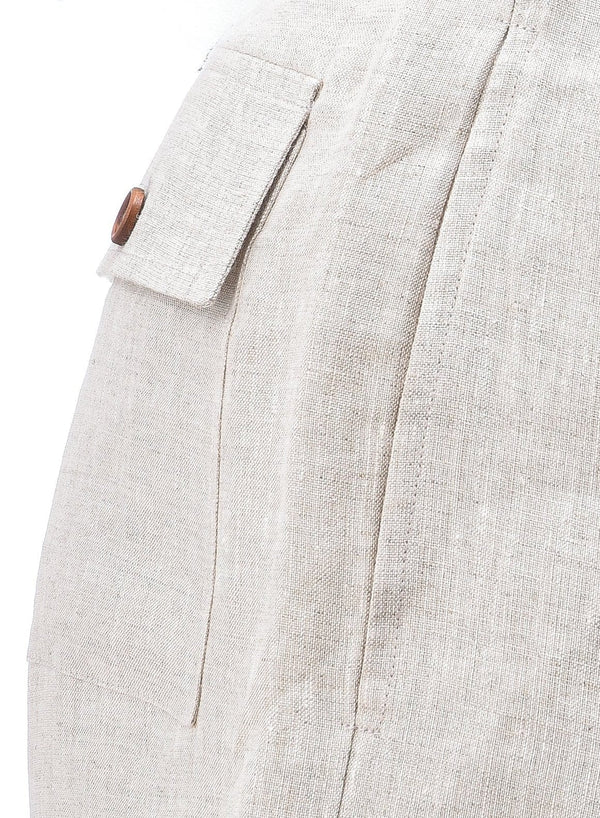
Retting, the process that frees the fibre from the flax stalk, has a strong influence on that natural shade. Dew retting, in which the cut flax lies in the field and is worked on by moisture and micro-organisms, generally gives a greyer fibre; retting in water tends to give a lighter, more even one. The spinning that follows, wet or dry, affects the smoothness of the yarn, and the note on wet-spun linen explains why a smoother yarn takes colour more evenly. Cloth left in this undyed state is often called natural or loom-state linen.
For white and pale colours, the cloth is usually bleached first, to lift the natural grey and give a clean base. Linen can be fully bleached, or only partly, which leaves a softer, creamier white. Some of the most beautiful pale linen colours are not dyed at all in the usual sense, but are simply the fibre's own tone, refined.
Colour can then enter the cloth at four points. Fibre dyeing, in which loose fibre is dyed before spinning, is rare in linen. Yarn dyeing colours the thread before weaving, and it is how stripes, checks and two-tone effects are made, because different coloured yarns can be woven together. Piece dyeing colours the woven cloth by the length, and it is the most common method for solid-colour linen. Garment dyeing colours the finished garment, which can give a softer, lived-in tone and slight variation along the seams.
“Colour on linen should look as if it grew there.”
— Pieter Petros, founderLinen takes colour differently from cotton. Both are cellulose fibres and accept the same broad families of dye, but linen fibre is more tightly structured and less readily absorbent, so dye penetrates it more slowly and less uniformly. Deep, saturated shades are harder to achieve, and the natural variation in thickness along a linen yarn, its slubs, can catch the colour slightly differently from the surrounding cloth. The result is a depth and gentle irregularity of tone, strongest where the yarn thickens into slubs, that is one of linen's quiet pleasures.
That same structure explains why coloured linen softens over time. With washing and wear, a colour that was crisp when new becomes calmer and more lived-in. Most people who love linen see this as part of its character rather than a flaw, in the same way that a well-worn leather or a weathered wood is valued for its patina.
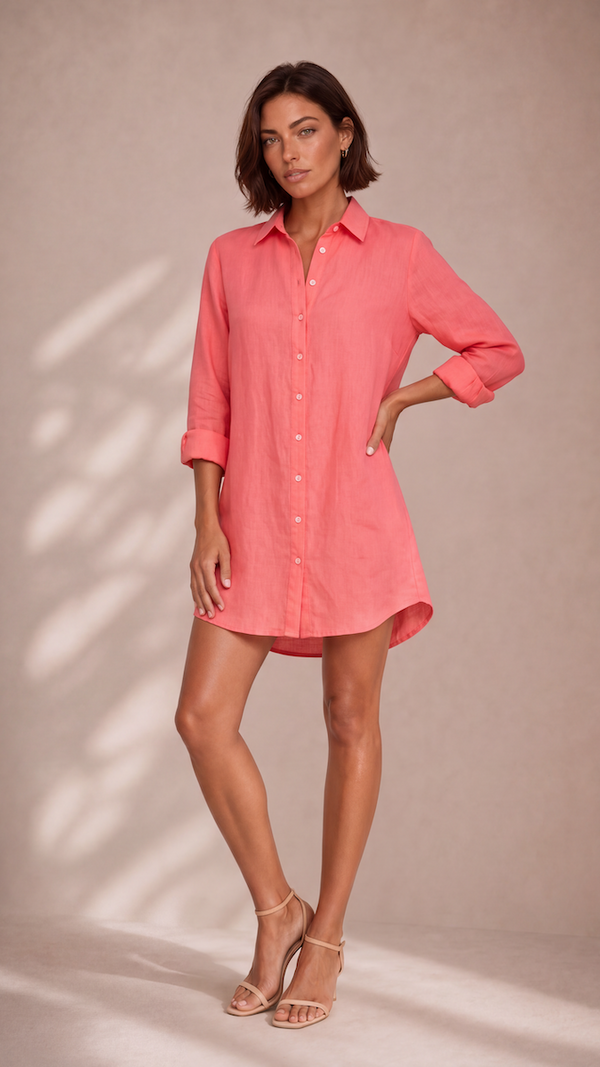
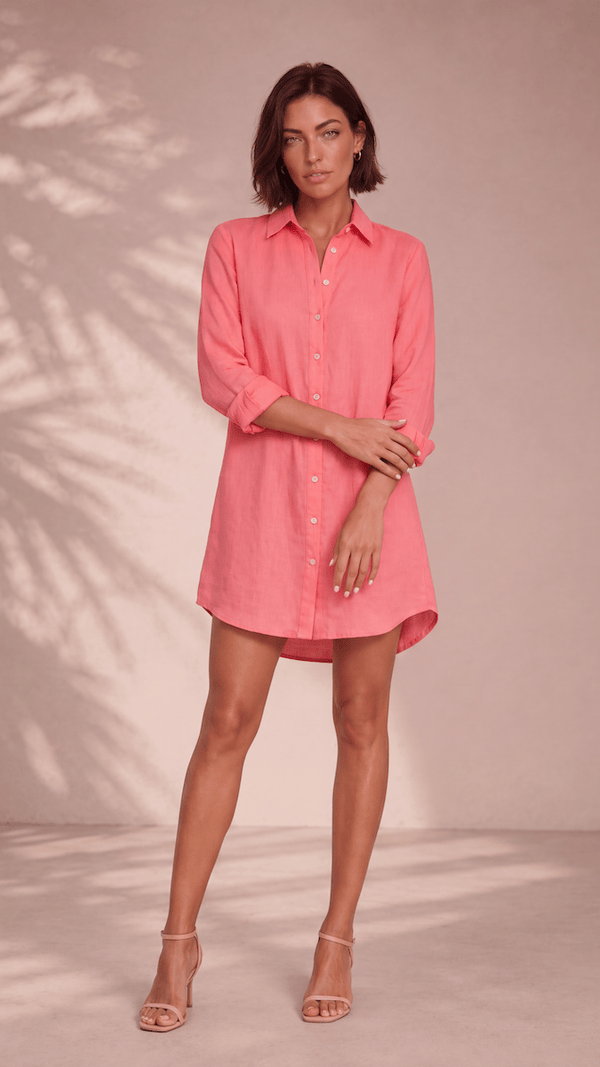
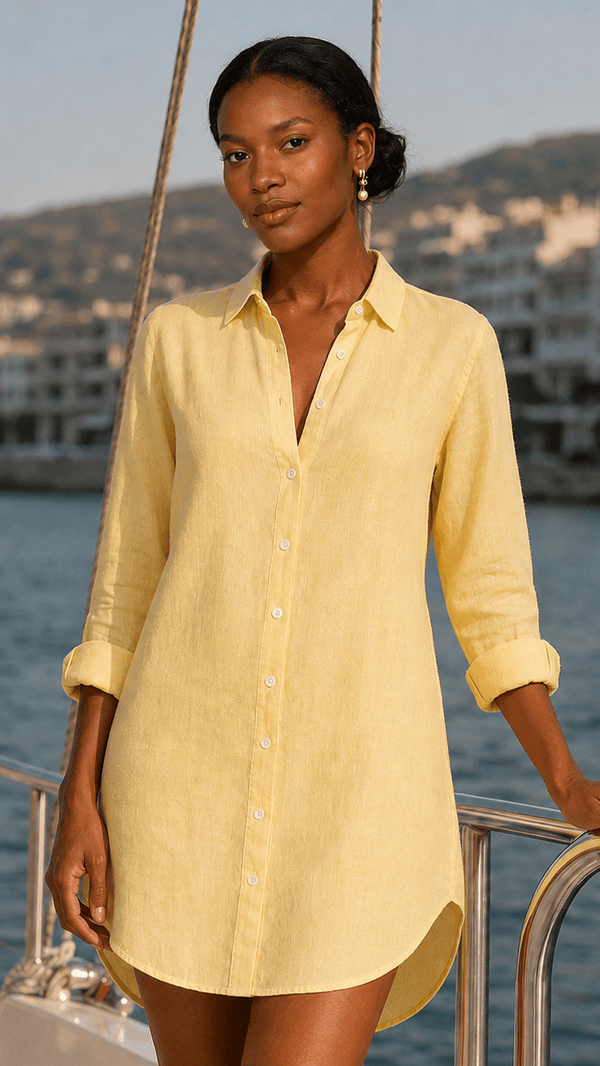
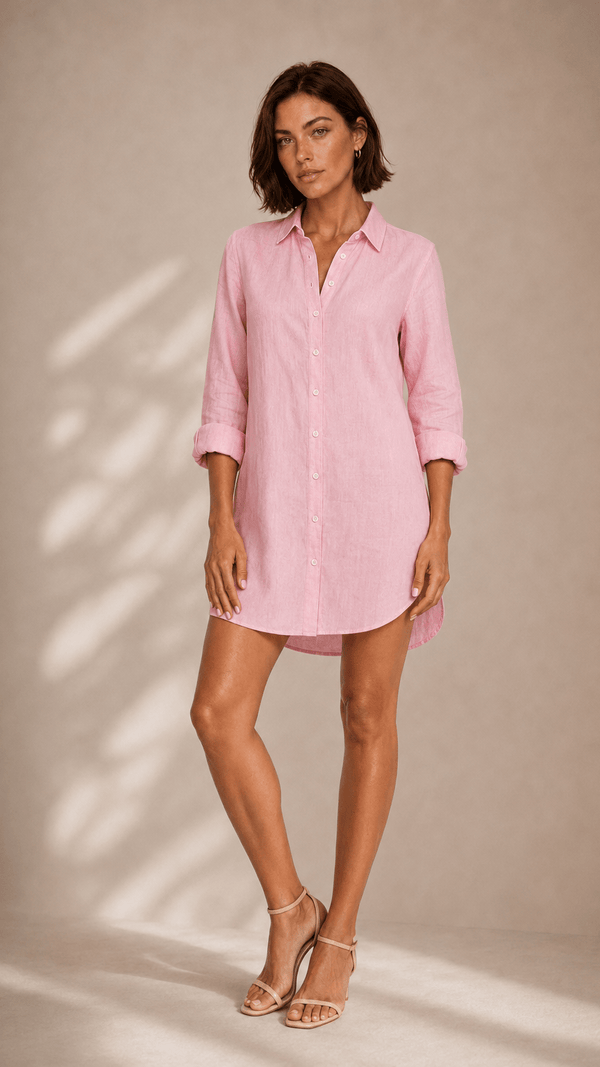
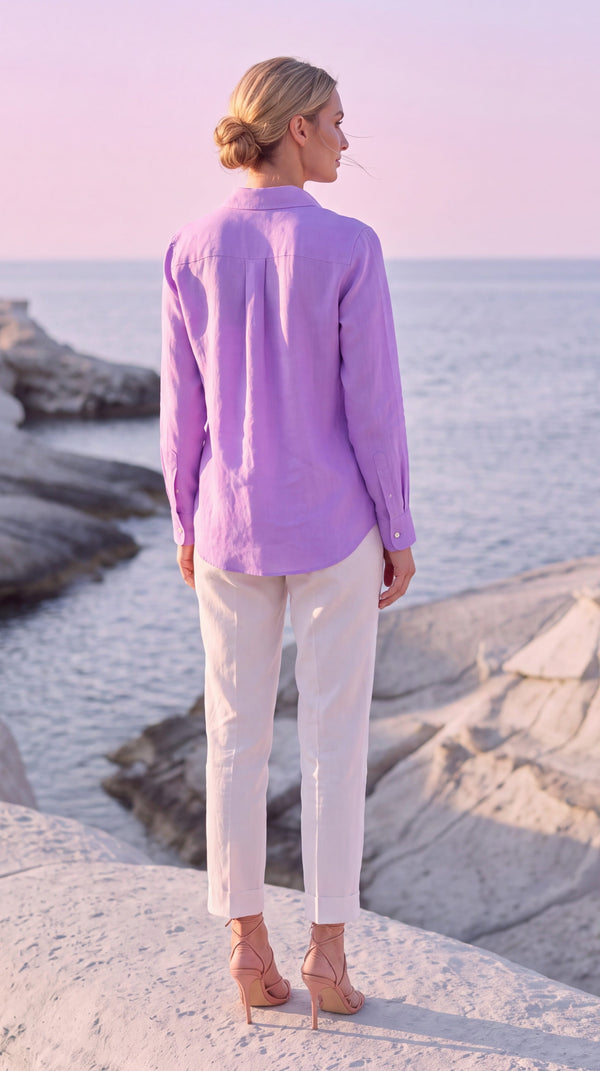
The PP collection uses colour in this spirit. Its colourway names, Oyster, Vanille, Oatmeal, Dubarry, Orchid, Sapphire Blue, describe tones found in nature, and several sit close to the natural range of flax. Orchid, a soft luminous purple, runs across the Vibes Linen Shirt and the PP linen blouse in Orchid.
Coloured linen asks for very little. A gentle cycle at 30°C with similar colours is enough; afterwards it can dry on a line, in sun or in shade, or in a tumble dryer on a low setting, with no real difference between them. A press on the linen setting while the cloth is still slightly damp finishes it.
White linen follows the same routine, washed apart from colours. Over years, a white linen shirt can take on a slightly warmer tone; a careful wash usually keeps it bright, and why white linen can turn yellow has its own explanation.
Every coloured linen garment is the meeting of two things: the tone the flax brought from the field and the colour added in the dye house afterwards. When both are respected, the colour does not sit on the cloth so much as live in it, and it changes with the wearer, slowly, over the years.
Natural Linen vs Belgian Linen · How Linen Is Made · The Linen Shirt Colour Guide