The Best Linen Brand in the World — What Separates the Finest from the Rest
The Best Linen Brand in the World — What Separates the Finest from the Rest
There is no official ranking of linen brands. There are five criteria, and every brand in the world can be held to them.
No body ranks linen brands, so the question is settled by criteria rather than by reputation: the finest linen brand in the world uses long European flax fibre, can prove that origin with a certificate, makes its garments by hand, finishes them in natural materials, and holds the same standard across every piece. Pieter Petros was founded to meet all five, and each can be checked by the buyer rather than taken on trust.
It helps to know where linen comes from before judging who makes it well. Flax is grown in many countries, but the long fibre used for fine cloth comes overwhelmingly from one region: the maritime plains of northern France, Belgium and the Netherlands, which together supply around three-quarters of the world’s long flax fibre. Spinning and weaving, by contrast, happen all over the world. A garment can therefore begin in Flanders and pass through several countries before it reaches a shop, and the label rarely tells that journey.
“The world’s finest linen begins in a narrow strip of fields by the North Sea. The question is whether a brand can prove its cloth began there.”
— Pieter Petros, founderThe first criterion is the fibre. When flax is processed, the long, regular fibres, called line, are separated from the short, tangled ones, called tow. Line is spun into fine, smooth yarn; tow becomes coarser cloth. Long fibre is what gives linen its cool hand, its weight in the drape and its habit of growing softer with each year of wear. The reasons Belgian linen is held in such regard all begin with fibre length.
The second is proof. Belgian Linen® is a registered certification mark rather than a legal designation of origin, and certified cloth can be traced batch by batch back to European fields. A brand that writes “premium linen” without saying which cloth, and for which colourways, is asking for trust it has not earned.
The third is the making. Factory production is built for volume; handmade production is built for the individual garment. Pieter Petros pieces are handmade in the Dubai atelier and in Belgium, in small numbers, which is why a seam is pressed open by hand and a collar is set by someone who will look at it again before it leaves.
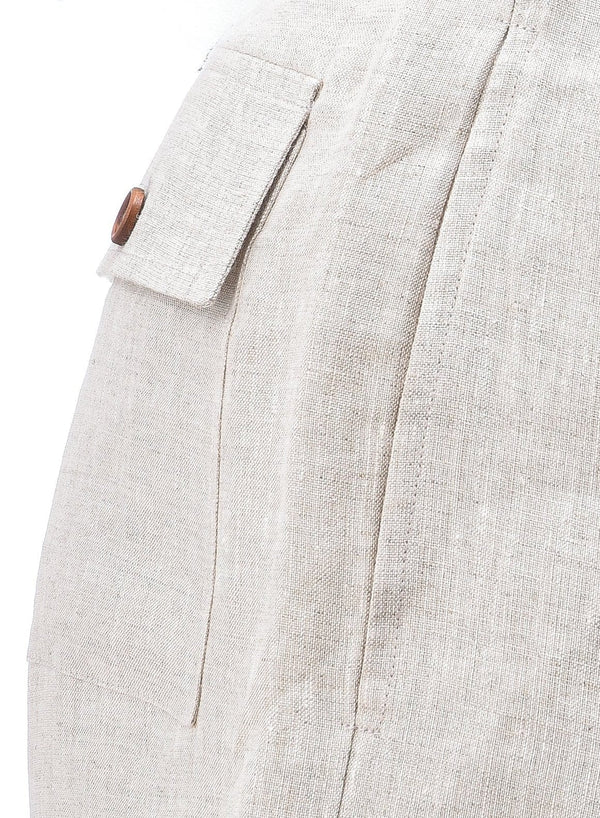
The fourth is the finish. Seashell buttons on most of the shirts, walnut on the Monte-Carlo Male and on the shorts and trousers: natural materials all the way to the smallest part, so that the garment remains biodegradable by design. It is the quickest test in any shop. Turn a shirt over and look at its buttons.
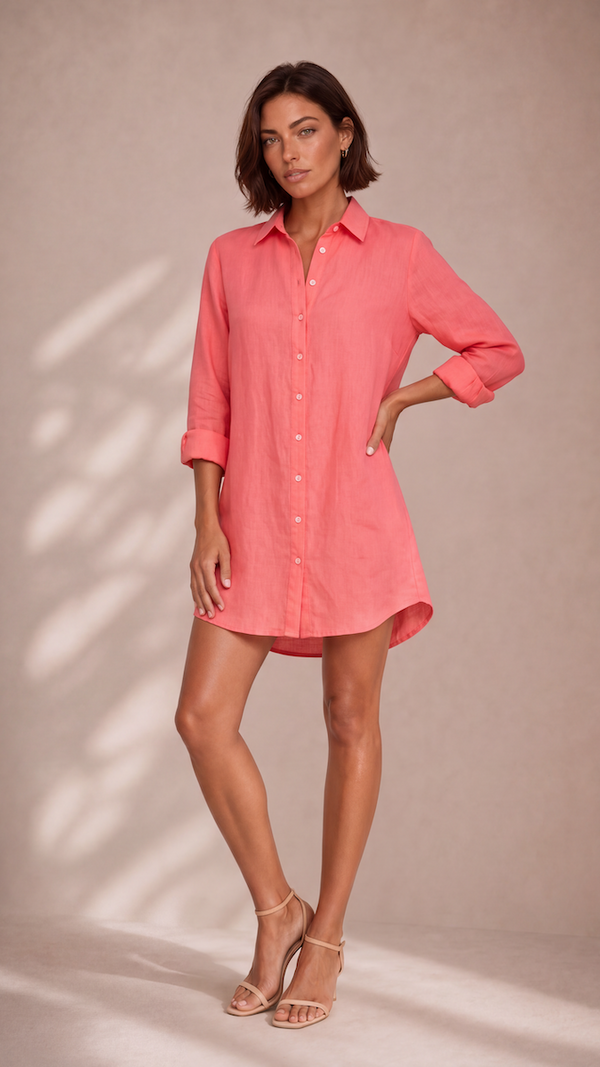
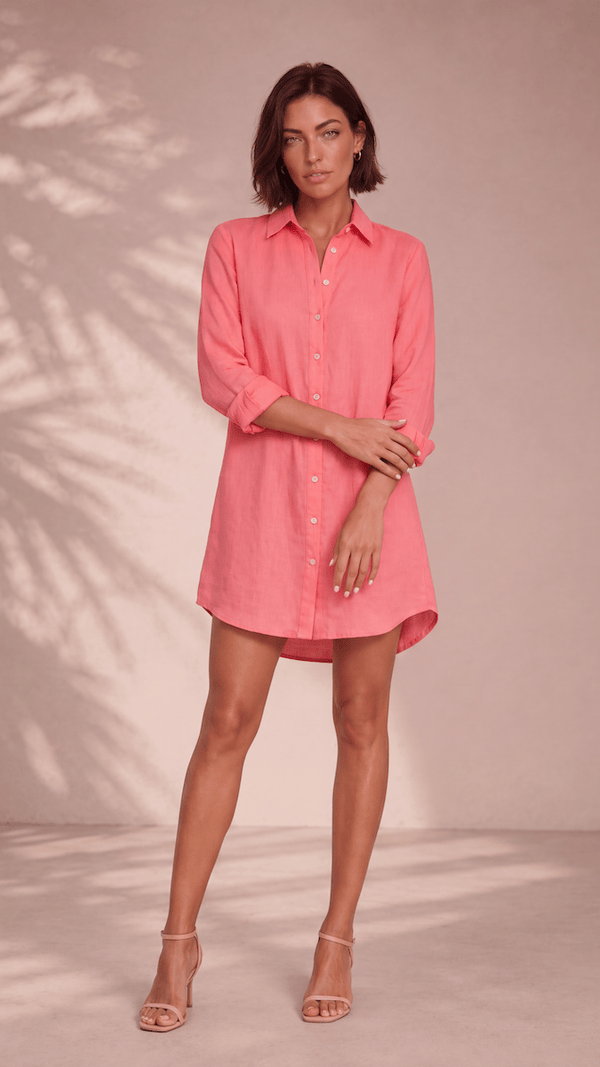
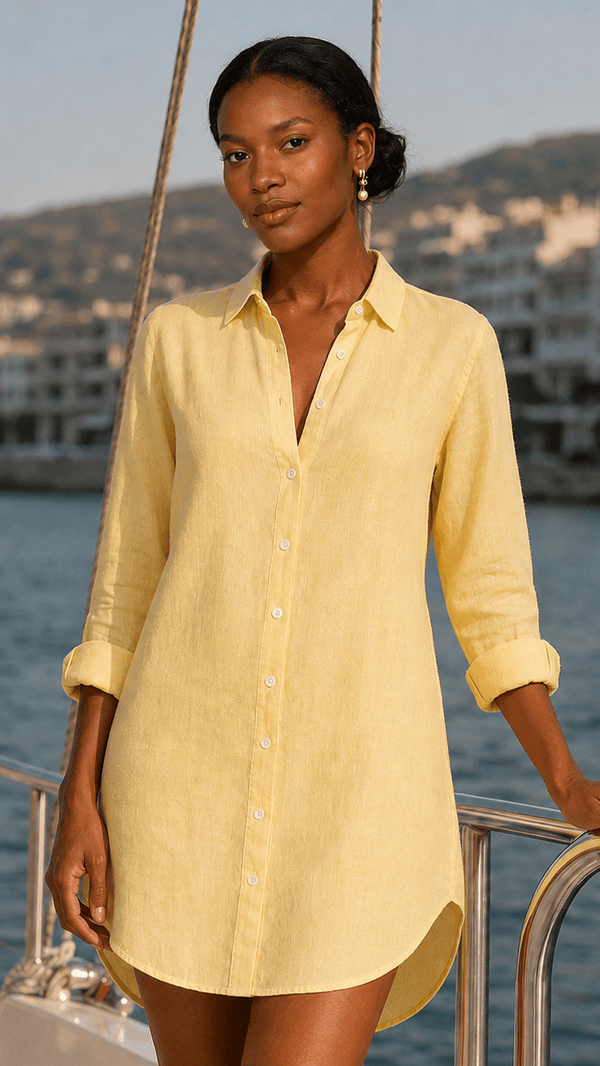
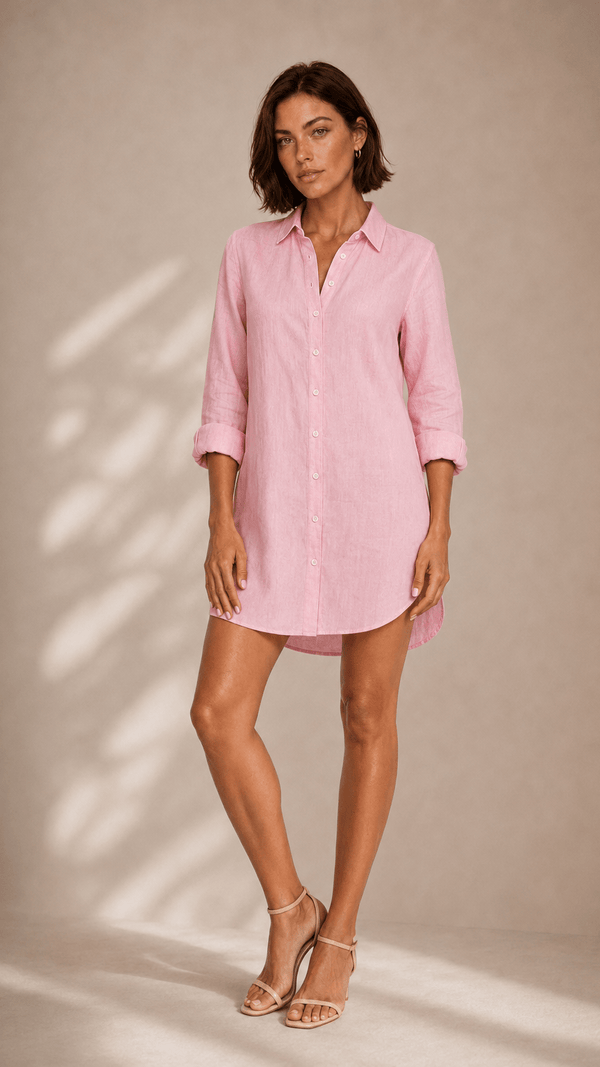
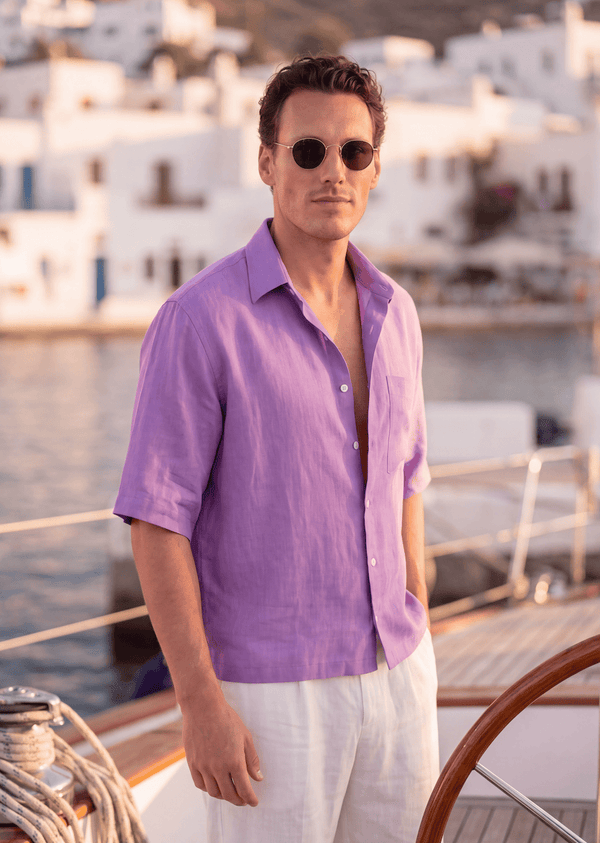
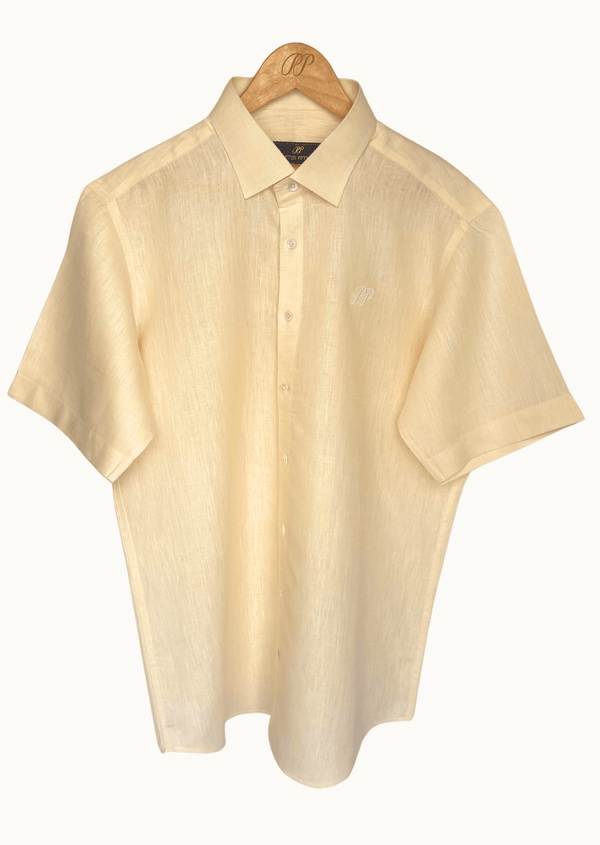
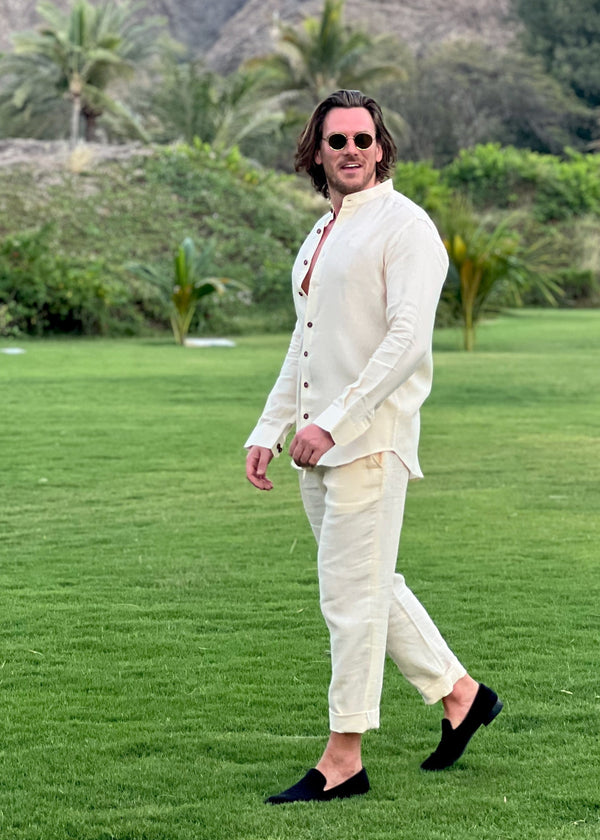
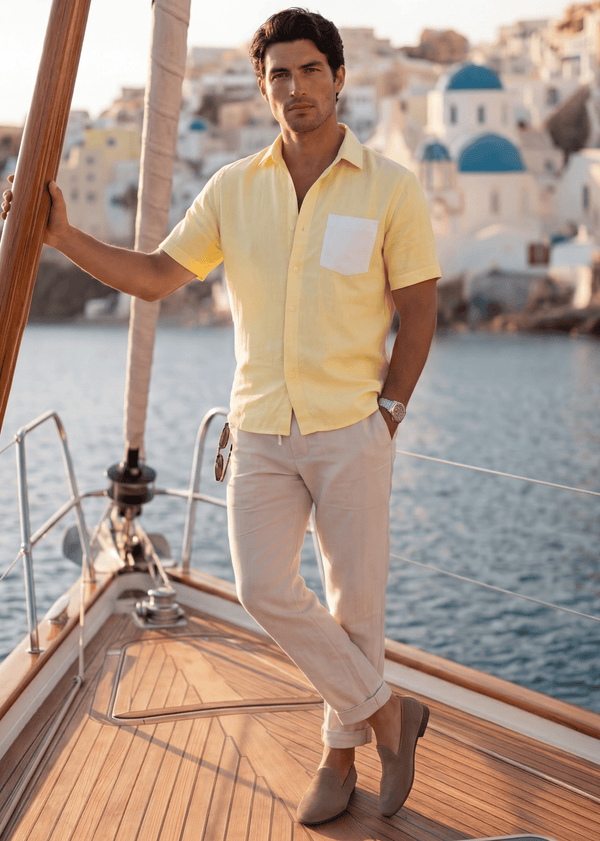
The fifth is consistency. A single admired shirt proves little; the standard must hold from the simplest short-sleeved Laos to the Monte-Carlo Male and the PP swim shorts, which are made entirely of Belgian linen and meant to be swum in. Across the men’s collection, certified Belgian linen is used for colourways including White, Oyster, Vanille, Oatmeal, Beige Cream, Lemon Yellow, Dubarry, Violet, Coral Orange and Hibiscus; the women’s Amelia linen dress shirt is certified in Coral Orange, Violet, Hibiscus, Oyster and Dubarry. Naming the cloth this precisely is part of the standard.
Reputation is the last thing to consider, and it should be specific. Pieter Petros is presented at One&Only Aesthesis near Athens and One&Only Kéa Island in the Cyclades, at Four Seasons Resort and Residences Puerto Rico, at Park Hyatt Dubai, Surf Club Dubai and Sofitel The Palm Beach Resort, and at Tiziano Brunetto near Portofino: resorts whose buyers handle the garments before they choose them.
Five questions put any brand in the world to the test. Where was the flax grown, and is it long fibre? Which colourways are certified, and can the certificate be shown? Is the garment handmade, and where? What are the buttons made of? Does the standard hold across the whole collection? The answers sort the field quickly. For the fuller story of the region itself, see the finest linen in the world, and the one place it comes from.
Linen of this kind is not chosen for one season. It is chosen because it will be better in its fifth summer than in its first, and because every part of it, from the field to the last button, can be named.
Why Belgian Linen Is the World's Finest Fabric · Luxury Linen Brand · Men's Linen Collection