Why Is Linen So Expensive? — The Real Cost of Quality Natural Fabric
Why Is Linen So Expensive? — The Real Cost of Quality Natural Fabric
Why linen is more expensive than cotton — the agricultural, processing, certification, and making costs that contribute to the price.
Linen is more expensive than cotton and most synthetic fabrics for several reasons that are verifiable and specific. Understanding them is the fastest route to understanding whether the price is justified — and many buyers find the higher cost justified by the longevity and performance the fabric delivers.
The agricultural cost. Flax is a more demanding crop than cotton. It is grown in a specific climate corridor — northern Belgium and northern France for the finest variety — and requires specific soil conditions, careful harvesting, and a labour-intensive retting process to extract the fibre from the plant stem. The fibre yield per hectare of flax is lower than cotton, which means the raw material cost is higher before any processing begins.
“Many buyers find the higher cost of certified Belgian linen justified by the longevity and performance the fabric delivers. The cost-per-wearing across a decade is a different calculation from the cost at point of purchase.”
— Pieter Petros, founderThe processing cost. The extraction of linen fibre from the flax stem — retting, scutching, hackling — is a multi-stage process that is more complex than the ginning of cotton. The resulting long-staple fibre then requires specialist spinning equipment and processes. Each stage adds cost that is reflected in the finished fabric price.
The certification cost. Belgian linen carries an origin certification system — documentation from field through production. Maintaining this certification infrastructure across the supply chain adds cost that is not present in uncertified linen production.
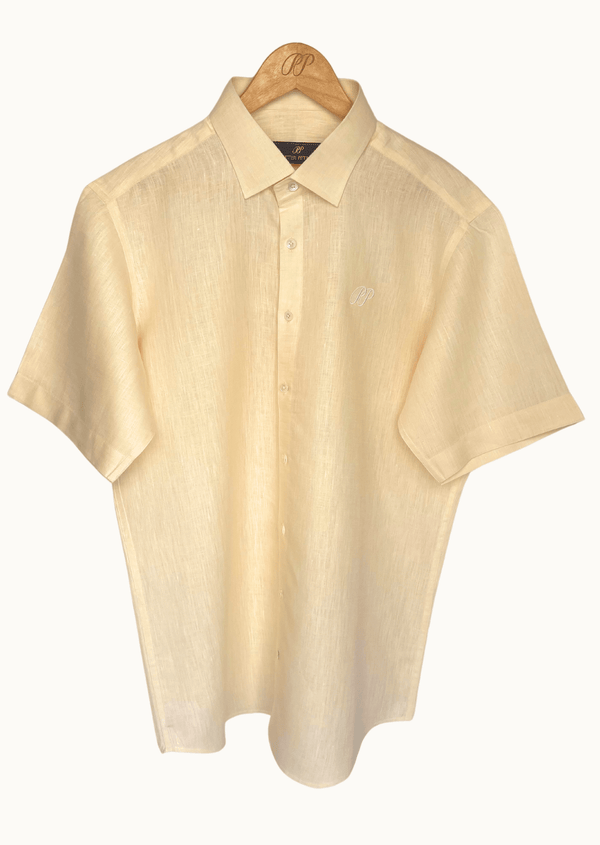
The making cost. A linen shirt made by hand at a small atelier — cut, sewn, and finished by makers who understand the specific properties of the cloth — costs more to produce than one assembled on a high-volume production line. The making cost for a PP linen shirt reflects the atelier standard.
The lifespan. A PP linen shirt that lasts eight to ten years with correct care, improving in quality for the first two to three years, has a cost per wearing that is significantly lower than a cheaper shirt replaced multiple times over the same period.
Why Is Linen Expensive · What Luxury Fashion Actually Costs · Men's Linen Collection