Why Linen Is Better Than Cotton for Warm Weather — The Specific Case
Why Linen Is Better Than Cotton for Warm Weather — The Specific Case
Why linen is better than cotton for warm weather — breathability, moisture management, improving trajectory.
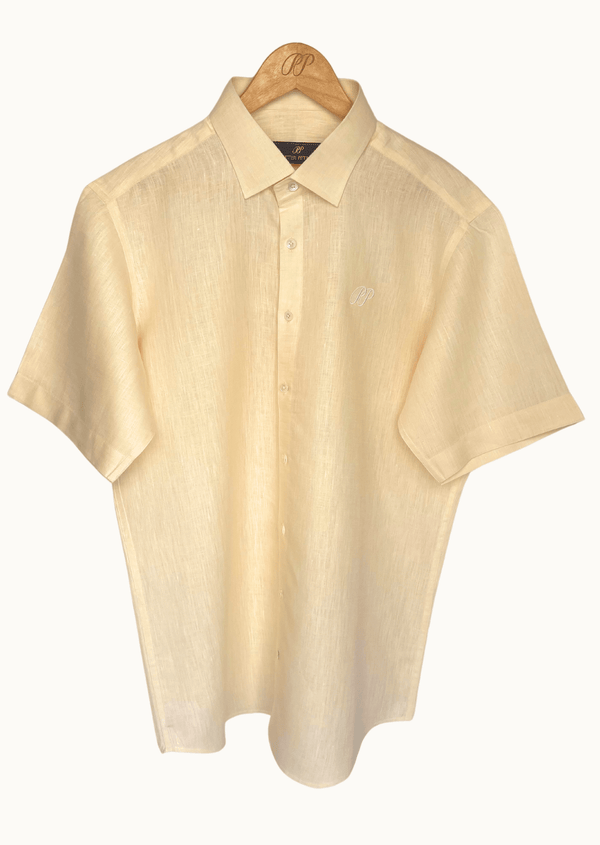
Linen is better than cotton for warm weather for three specific reasons that apply to PP linen shirts directly. that are grounded in the material properties of each fibre — not in brand preference or marketing, but in how the fibres behave in heat. Understanding these three reasons provides the clearest practical answer to the question.
Reason one: breathability. The hollow-core structure of flax fibre allows more air to circulate through the weave of a linen shirt than through an equivalent cotton shirt. More air circulation means more effective removal of body heat from the skin surface. In temperatures above 30 degrees, this difference produces a noticeably cooler wearing experience in linen than in cotton of comparable weight. Many buyers who have worn both fabrics in sustained heat find this the most immediately noticeable difference.
“Many buyers who have worn both fabrics in sustained heat find the breathability difference the most immediately noticeable. Belgian linen manages the absorption-evaporation cycle more effectively than cotton in sustained heat above 30 degrees.”
— Pieter Petros, founderReason two: moisture management. Linen absorbs perspiration rapidly and releases it through evaporation quickly. Cotton absorbs well but releases more slowly — a cotton shirt saturated with perspiration feels heavier and more uncomfortable than an equivalent linen shirt in the same conditions. The evaporation speed of linen is directly related to the open weave structure that also produces its breathability; the two properties are connected.
Reason three: the improving trajectory. A quality linen shirt improves with every correct wash cycle over its lifetime. Cotton shirts maintain and then gradually degrade — the fabric thins, the colour fades, the shape loses its definition. Belgian linen does the opposite: it softens, becomes more fluid, and becomes more comfortable with each season of correct care. For the buyer who views clothing as a long-term investment, this trajectory is the most compelling argument for linen over cotton.
The one cotton advantage. Cotton holds its shape and resists creasing more effectively than linen. In a formal business context where a consistently pressed appearance is required throughout the day, cotton shirts maintain their presentation more reliably. For the resort, outdoor, and warm-climate casual contexts where PP linen is most worn, the crease of natural linen reads as appropriate rather than as a disadvantage.
Linen vs Cotton Shirts Men · Does Linen Breathe · Men's Linen Collection