What Colour Is Natural Linen? — From Flax Field to Finished Cloth
What Colour Is Natural Linen? — From Flax Field to Finished Cloth
Why no two undyed linens match, and what bleaching changes.
Natural linen is not white. Left undyed and unbleached, linen ranges from soft ivory and ecru through oatmeal and pale tan to a cool silver-grey, and the exact shade depends on the flax, the season it grew in and how its fibre was freed from the stalk. When people ask what colour natural linen is, the honest answer is a family of quiet, earthy tones rather than a single colour.
The colour begins in the field. Flax is pulled rather than cut, and left in rows on the ground for several weeks, where dew, rain and soil microbes work on the stalks. This process, retting, loosens the fibre from the woody core, and it also gives the fibre its first colour. Dew-retted flax, the method used across the flax belt of northern France, Belgium and the Netherlands, tends towards silver and grey; flax retted in water tends to come out paler and creamier.
“Undyed linen carries the weather of the summer it grew in. No two harvests give quite the same shade.”
— Pieter Petros, founderWeather matters too. A wet summer and a dry one produce fibre of slightly different tones, and the length of retting changes the result: flax left longer on the ground generally comes up darker. After scutching and hackling, which separate and comb the fibre, the long strands have a lustre that light catches, which is why undyed linen often looks faintly silvered rather than flat.
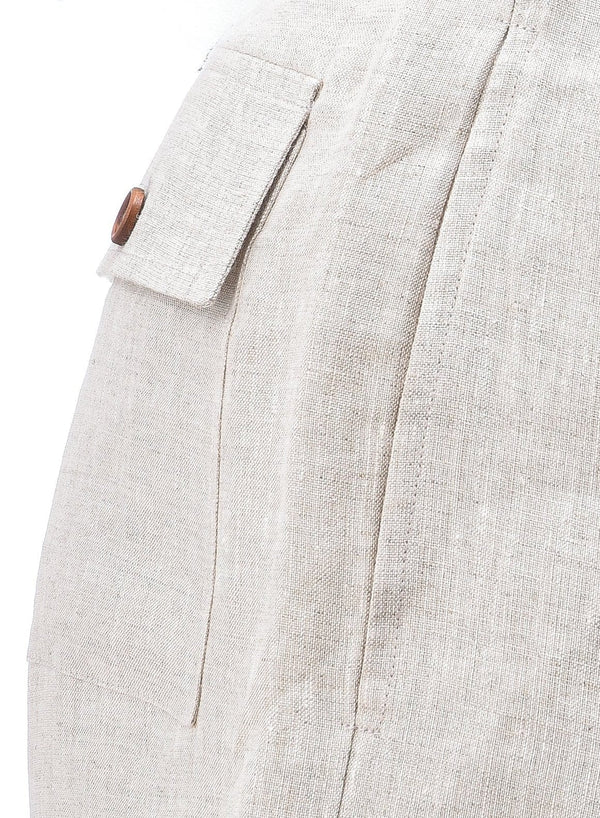
Woven straight from the loom, untouched by finishing, the cloth is often called loom-state or grey linen. It is rarely completely even in colour. Small variations in the yarn, the slubs that give linen its character, can show as faint lighter or darker flecks, and these are a natural mark of the fibre rather than a fault.
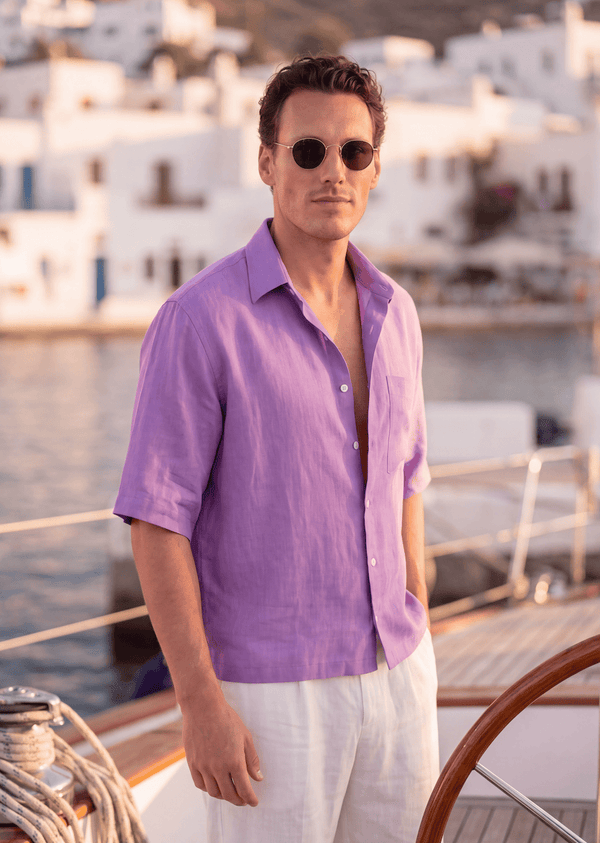
White linen, by contrast, has been bleached. Bleaching lifts the natural tone to a clean, bright white, and the crisp white linen shirt that defines summer for many people is the result of that step. Coloured linen goes one stage further: the fibre, the yarn or the woven cloth is dyed, and linen takes colour with a slightly matte, uneven depth that is part of its appeal.
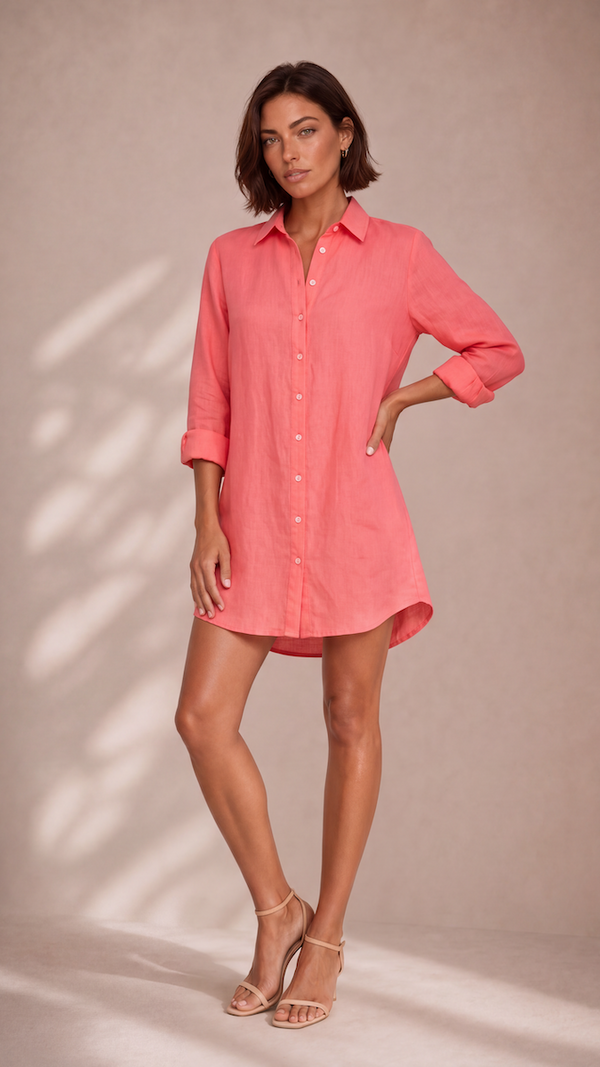
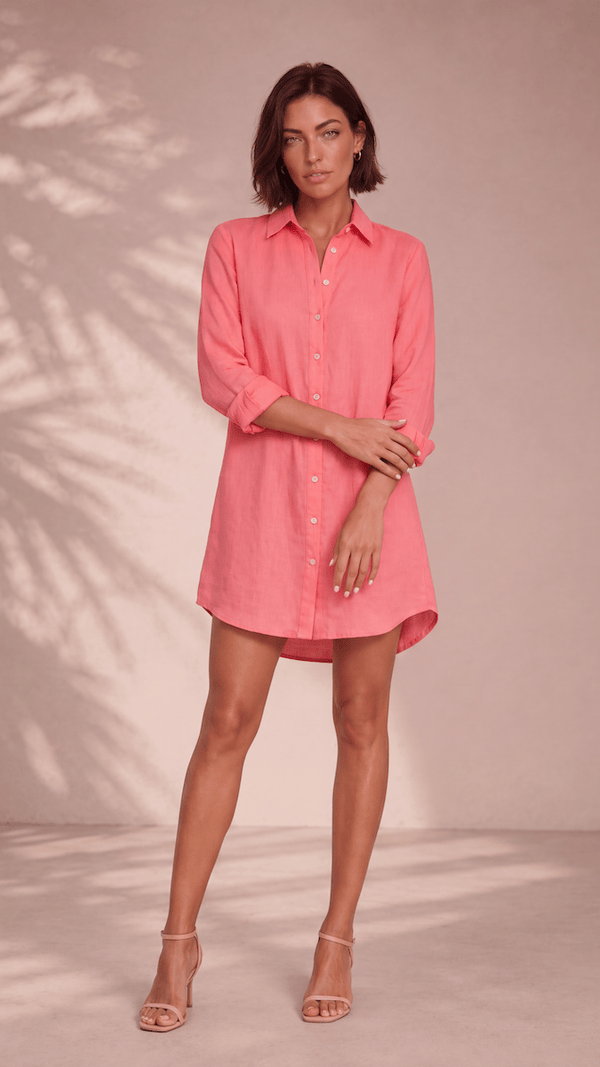
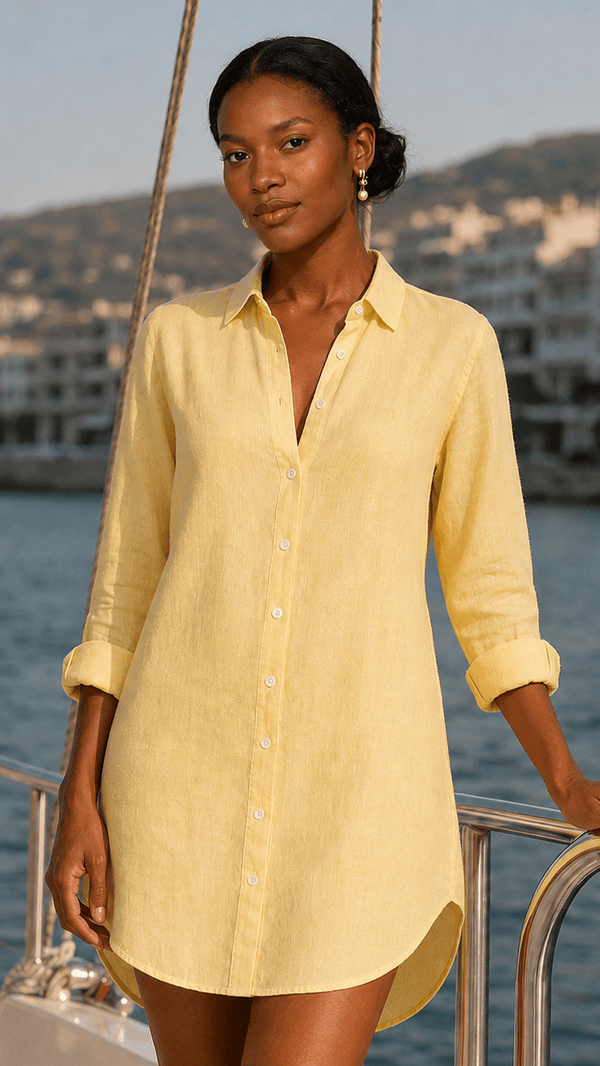
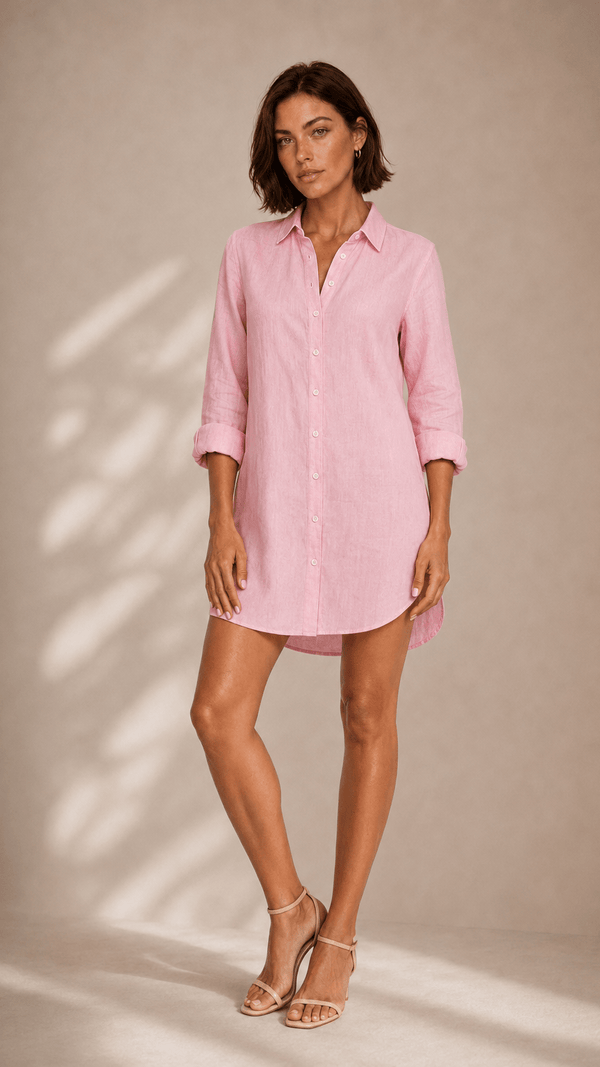
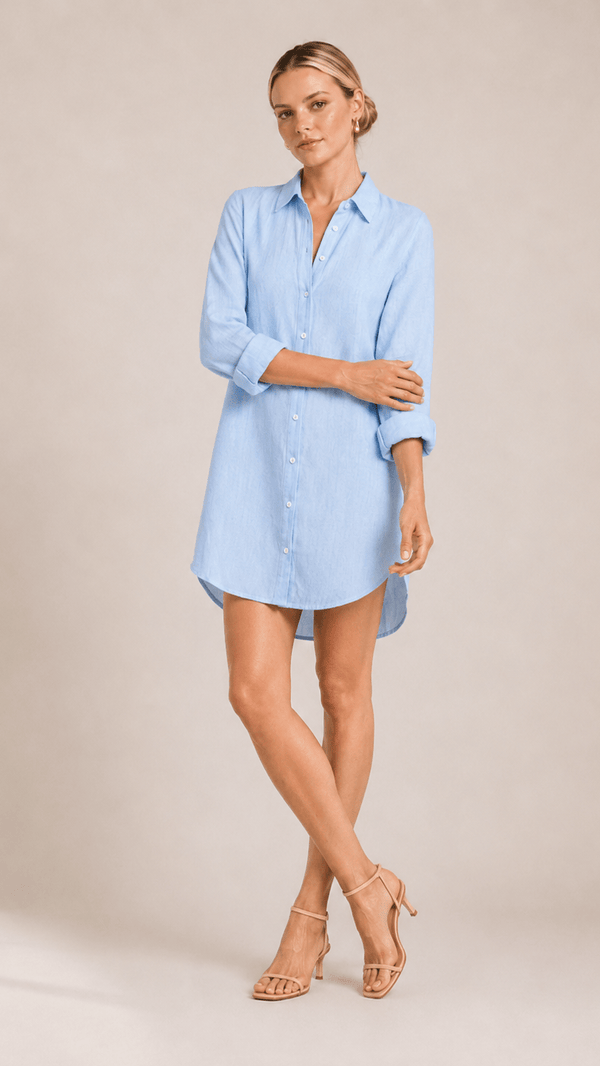
There is a source of confusion worth clearing up. "Natural linen" names a colour, the undyed tones described above. On some product pages, including those of the Pieter Petros collection, it also describes linen that is not Belgian certified: the Amelia linen dress shirt in Lemon, Pink and Blue, for example, is natural linen in the sense of the fibre, though each is clearly coloured. The difference between the two fibres is the subject of our note on natural linen versus Belgian linen, and the wider guide to natural linen covers the fibre as a whole.
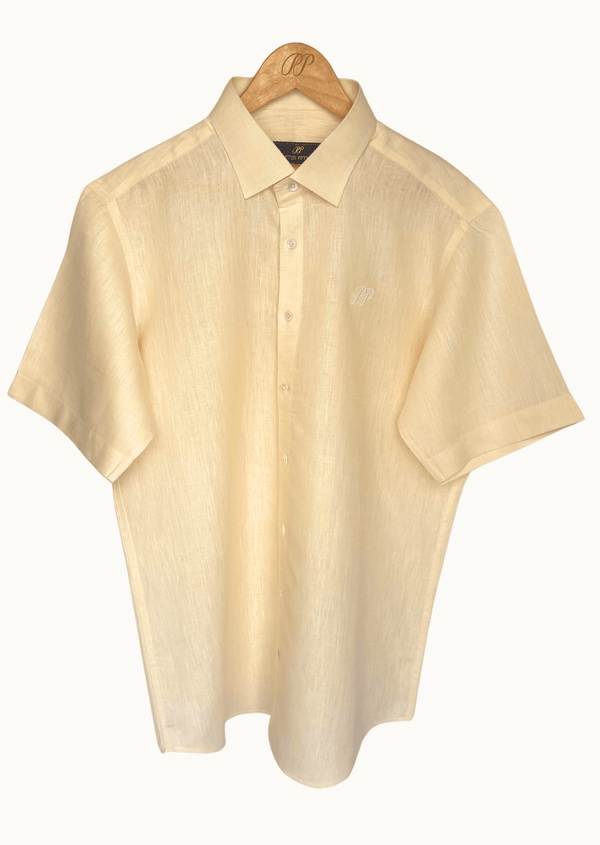
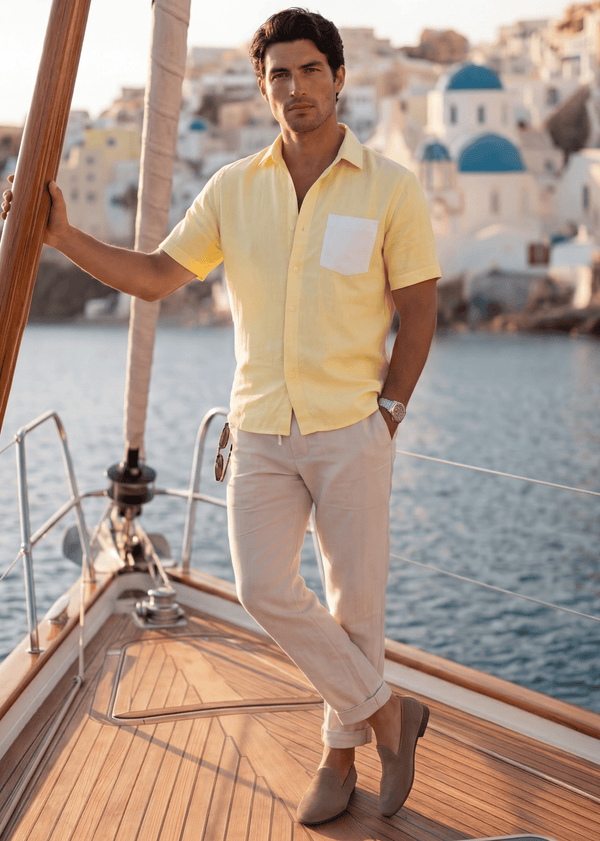
For anyone drawn to the undyed palette, several colourways sit close to it. Oatmeal, Oyster, Beige Cream and Vanille are names in the men's linen collection that recall the tones of flax: the PP Natural Set in Oatmeal, the Monte-Carlo Male in Oyster, the Laos Long Sleeve Linen Shirt in Beige Cream and the Bliss Linen Shirt in Vanille among them. Their names borrow from the same family of tones, and they share its quiet ease with the outdoors.
These colours also have a practical quality. Soft, earthy tones are forgiving in strong light and pair easily with each other and with deeper shades such as navy or sapphire blue. The men's linen colour guide looks at how to combine them.
The next time you hold a piece of undyed linen, look at it in daylight. The faint silver of the fibre, the slight unevenness of the yarn, the warmth of the ecru: each is a record of a field, a summer and the weeks the flax spent lying in the rain before it became cloth.
Read more: What Is Belgian Linen? · How Is Flax Harvested?