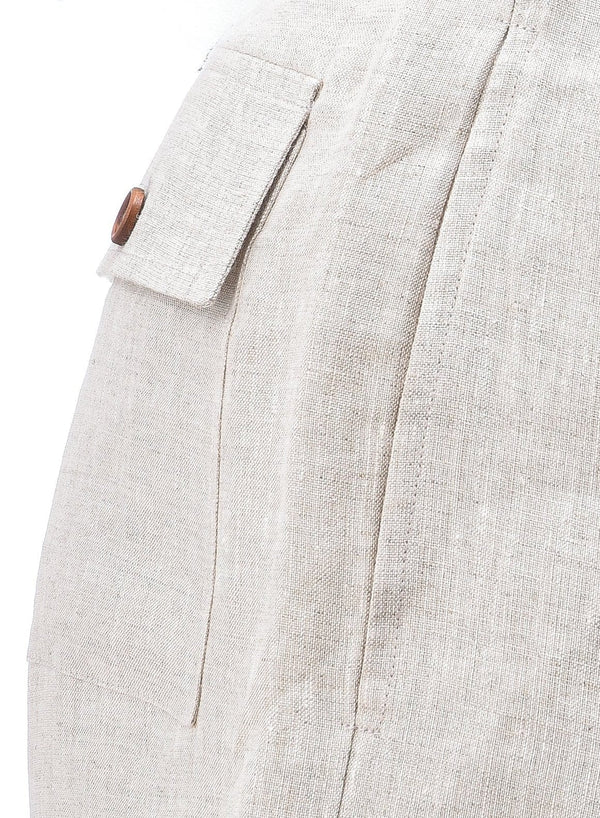
Linen vs Denim — Heat Cloth Against Work Cloth
Linen vs Denim — Heat Cloth Against Work Cloth
A twill built for work and a plain weave built for heat. How the two cloths differ, and where each one belongs.
Denim and linen sit at opposite ends of most wardrobes, yet both are natural cloths with long working histories. Denim is a cotton twill, dense and diagonal, first valued for its toughness; linen is woven from flax, usually as a plain weave, and has been worn in hot countries for thousands of years. Comparing linen vs denim is less a question of which is better than of what each does with heat, weight and time, and of when a man or woman should reach for one rather than the other.
The difference starts in the weave. Classic denim is a warp-faced twill: the blue warp yarns pass over several weft yarns at a time, which creates the diagonal line on its face and pushes most of the blue to the outside, while the undyed weft shows on the inside. The result is a tight, heavy, hard-wearing cloth. Linen shirting is usually a plain weave, each yarn passing over one and under the next, which gives a more open structure through which air can move. Our guide to linen weave types covers the variations; for this comparison, plain weave against twill is the heart of it.
“Every cloth ages. What matters is whether it ages towards comfort.”
— Pieter Petros, founderWeight follows from weave. Denim for jeans is commonly woven at twelve ounces per square yard or more; even shirting denim is usually heavier than linen shirting. More cloth means more warmth held against the body, which is welcome in a northern autumn and much less so in a Gulf afternoon or on a Mediterranean terrace in August. Linen is lighter, and flax fibre draws heat away from the skin, which is why a linen shirt feels cool to the touch when first put on. Cotton is absorbent too, but a heavy twill holds what it absorbs for longer; in humid heat, a denim shirt can feel damp long after a linen one has recovered. The wider question of cotton in heat is explored in linen vs cotton in hot weather.
Both cloths age, and both age well, but differently. Denim's character comes from its dye: indigo sits on the surface of the yarn, and as the cloth is worn and washed it rubs away at the points of greatest wear, at the knee, the pocket and the seat, leaving a record of how it was worn. Linen's character comes from its fibre: with washing it softens and relaxes, the hand becomes fuller and the surface gains a soft lustre. A denim garment changes its look over the years; a linen garment changes its feel.
Their behaviour through the day is also different, and it is fair to say so. Denim holds its shape and shows few creases; linen creases readily, and the creases are part of how it looks. Denim is stiff when new and needs time to break in; linen is comfortable from the first wear and becomes more so. Denim is warm and wind-resistant; linen is cool and breathable. Neither is a flaw. Each is the nature of the cloth.
For a closer cousin of denim, chambray is worth knowing: it uses a coloured warp and a white weft like denim, but in a plain weave, and linen vs chambray sets the two side by side. For trousers, linen trousers vs chinos takes the comparison with cotton twill further.
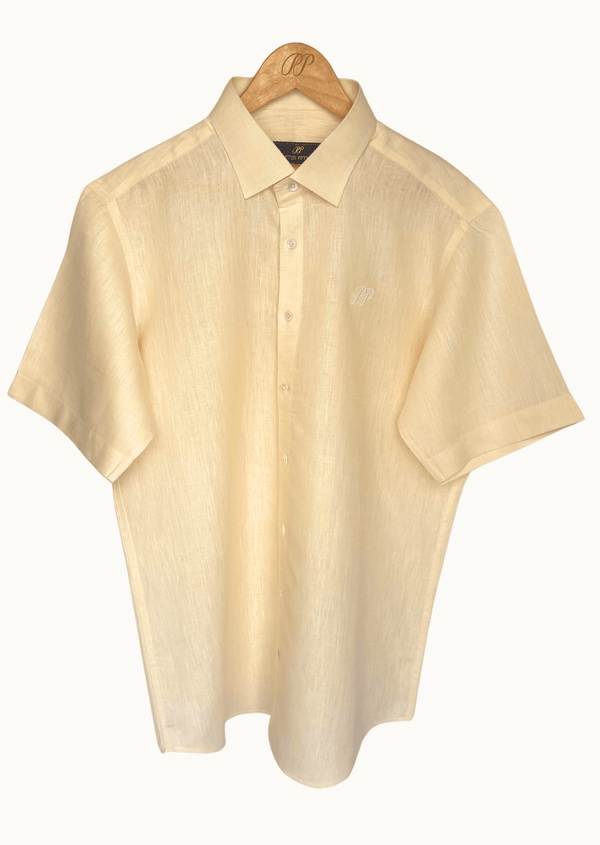
Where does each belong? Denim belongs to cool cities, to autumn and winter, to travel days when a single pair of trousers must survive anything. Linen belongs to heat: to Gulf winters and Mediterranean summers, to resort days and evenings outdoors. The two also meet. A Laos Long Sleeve Linen Shirt in Dark Blue or a Bliss Linen Shirt in Vanille, worn with dark jeans on a cool evening, is an easy combination; in warmer weather, the same shirt with the PP Trousers 100% Linen in White turns the outfit wholly to linen.
The Pieter Petros collection is built on linen, for warm places from Dubai to the Greek islands. Denim has its own long tradition, and it is a good one; it simply belongs to other weather.
Read more: The Linen Fabric Weight Guide · How Linen Improves with Wear