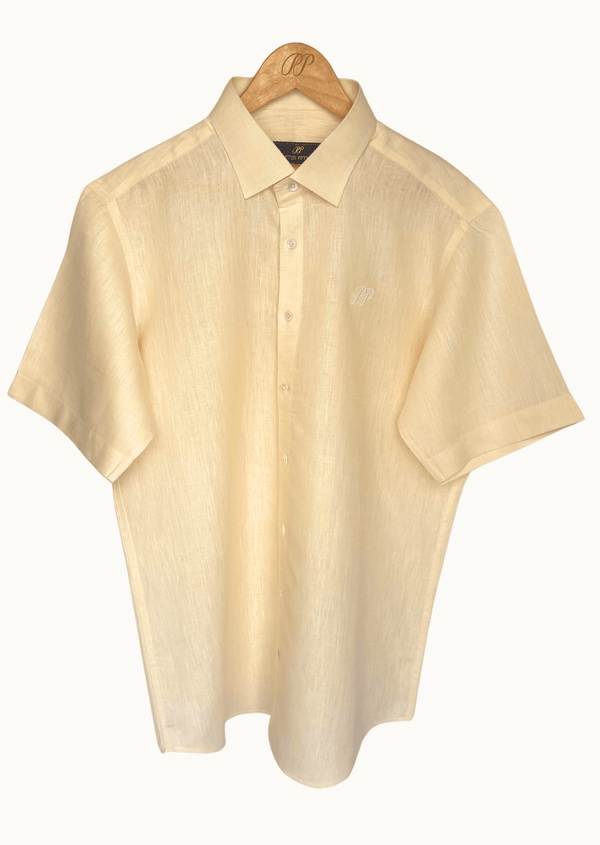
Linen Shirt Fit — How Should a Linen Shirt Fit?
Linen Shirt Fit — How Should a Linen Shirt Fit?
The linen shirt fit guide for men — shoulder position, chest ease, sleeve length, body length, and why correct cut matters more than fabric stretch.
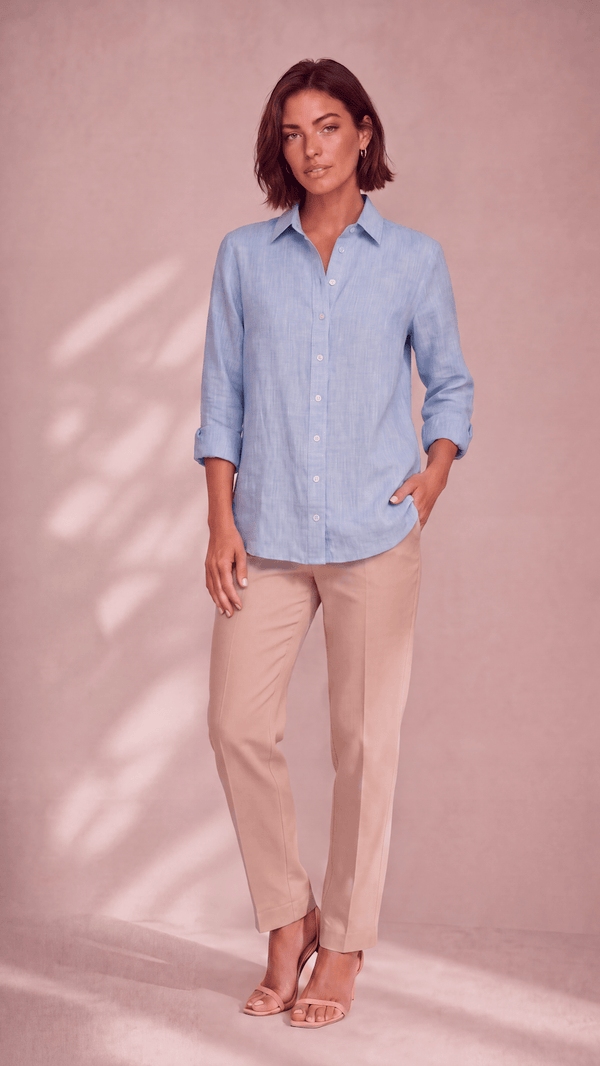
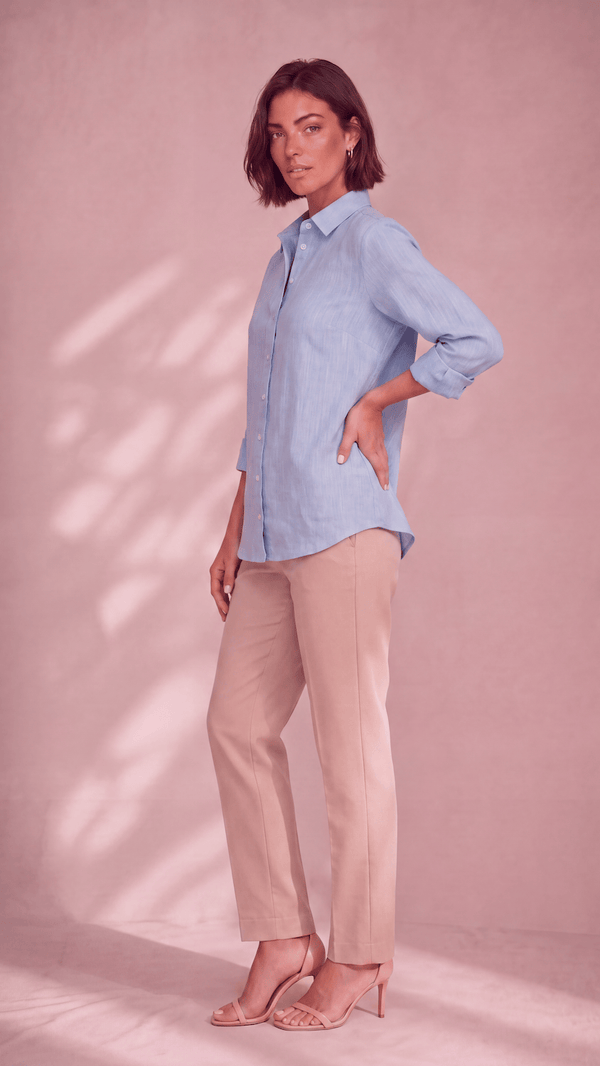
A linen shirt should fit with the shoulder seam at the edge of your shoulder, 5 to 8 centimetres of ease across the chest, sleeves that reach the wrist bone and a hem that falls to the mid-hip when worn untucked. It should sit relaxed rather than close, because linen does not stretch to accommodate a snug fit.
That is the one specific and important way the fit of a linen shirt differs from the fit of a cotton shirt: what the pattern cutting delivers is what the shirt produces. Understanding what correct fit looks like for a linen shirt, and how it differs from the cotton shirt fit most people are accustomed to, prevents the frustration of buying the wrong size.
The shoulder. The shoulder seam should sit at the edge of the shoulder — the natural point where the shoulder rounds down to the upper arm. If the seam falls below this point, the shirt is too large through the shoulder; if it pulls toward the neck, it is too small. In linen, the shoulder seam position is particularly visible because the fabric holds the shape set by the cut rather than recovering toward the correct position as a stretchy fabric might.
“A correctly fitting linen shirt should have enough ease through the chest and body to allow the fabric to drape naturally. The fit is achieved through cut, not through the fabric’s elasticity.”
— Pieter Petros, founderThe chest and body. A correctly fitting linen shirt should have enough ease through the chest and body to allow the fabric to drape naturally — typically 5 to 8 centimetres of ease across the chest in a relaxed fit. Too tight and the shirt pulls at the buttons and across the back; too loose and the fabric hangs without structure. Linen's natural drape means a relaxed fit reads as considered rather than oversized. A simple test: fasten the shirt and reach forward with both arms. If the fabric pulls into creases that radiate from the buttons, or tightens across the shoulder blades, the shirt is too close.
The sleeve length. The sleeve should reach to the wrist bone when the arm is extended — slightly longer than a cuffed shirt but shorter than a shirt worn with cufflinks. A PP linen shirt with sleeves that are too long is easily rolled; one that is too short is uncomfortable.
How long should a linen shirt be?
The body length. The shirt should cover the waistband when tucked — typically 5 to 7 centimetres below the natural waist. Untucked, it should fall to the mid-hip without being so long that it reads as a tunic.
The right length depends on how you intend to wear it. A shirt worn mostly untucked — over swim shorts at a beach club, with linen trousers on a terrace — looks most at ease when the hem ends around the middle of the seat, covering the waistband with a little room to spare. A shirt you will tuck in for dinner needs enough length to stay in place when you sit and reach. The way length changes from one setting to the next is covered in the guide to wearing linen tucked or untucked.
Are linen shirts supposed to be loose?
Relaxed, yes; loose, no. A linen shirt is meant to sit slightly away from the body so that air can move between fabric and skin — that space is a large part of why linen feels cool in heat. But relaxed is not the same as oversized. The shoulder seam still belongs at the shoulder edge, and the sleeves still end at the wrist. Extra width belongs in the chest and body, not in a dropped shoulder or a sleeve that covers the hand, unless the shirt has been deliberately cut with an oversized silhouette.
Because linen does not stretch, it is worth resisting the instinct to size down for a closer look. A shirt that is snug on the first wear stays snug; it will relax a little through the body with wear, as explained in does linen stretch, but it will not grow into a size it was never cut to be.
Classic fit or slim fit linen shirt?
A classic fit is cut straight through the body with generous ease at the chest and waist, and it is the cut that suits linen most naturally: the fabric falls in clean vertical lines and moves with you rather than clinging. A slim fit takes in the waist and back for a closer silhouette, and in linen it suits a slender frame and cooler evening settings, where the extra air around the body matters less. The differences between the two are set out in the classic fit linen shirt guide. Whichever cut you choose, the shoulder, sleeve and length points above apply in the same way.
The collar. Fastened at the top button, the collar should allow one or two fingers between fabric and neck. Worn open, as linen usually is in warm weather, it should lie flat and frame the neck without spreading or gaping.
PP Linen Shirt Size Guide · Linen Shirt Benefits · Men's Linen Collection